
Japan International Cooperation Agency

JICA Laos Office

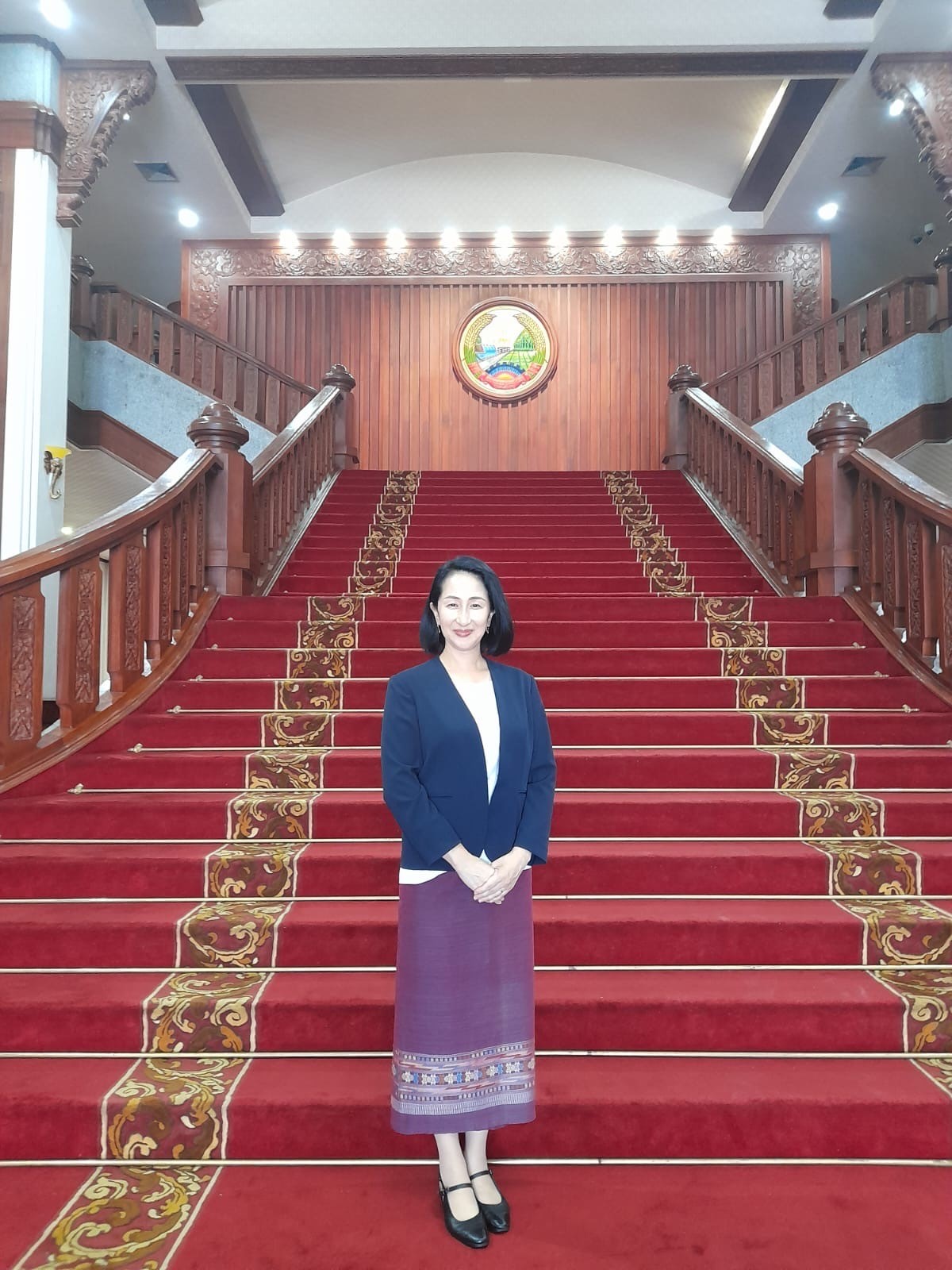
Message from the Chief Representative

Thank you for your interest in JICA's activities in the Lao People's Democratic Republic (Laos).

Laos is a country that appeals to visitors for many reasons. Not only is it blessed with natural beauty, lush greenery and historic temples, it is also home to the UNESCO World Heritage site of Luang Prabang. Most of all, I believe that the gentle and modest nature of Lao People charm all who visit the country.

Japan and Laos have a longstanding history of friendship and cooperation dating back to the establishment of diplomatic relations in 1955. Indeed, 1965 marked an historic moment for both nations when Laos became the first country in the world to receive Japanese Overseas Cooperation Volunteers (JOCV). This friendly relationship is reflected in a number of postal stamps and banknotes commemorating the completion of several momentous Japanese Official Development Assistance projects within the country.

Over the years, Japan has continued to foster positive relations and significantly increased its cooperation with Laos through the activities of JICA, which has become the country's leading bilateral donor.

In order to support Laos in achieving the Millennium Development Goals by 2015, and in graduating from the Least Developed Countries Index by 2020, Japan provides the country with assistance in four key areas: agriculture, infrastructure/environment, education, and health. In line with this policy, JICA oversees and implements a number of national and regional projects and programs throughout the country.

Though we are making a significant positive contribution in many key development areas, there is much more that we can still do. With this in mind, I have been deliberating over concepts for further development, appropriate to Laos, since I arrived at my post in 2010.

While many ASEAN countries have pursued industrialization with their rich labor forces, I am of the view that the source of competitiveness for Laos is not the size of the labor force, but the bountiful and beautiful natural resources, and the unspoiled environment. By making the most of these advantages, I believe that Laos is in a unique position to differentiate itself and its development framework from the rest of the ASEAN countries.

I would like to share an example of policy support by JICA in line with this approach to development. The Vientiane Capital Urban Development Master Plan for 2030, proposed by the Lao Ministry of Public Works and Transport, was approved at a cabinet meeting in January 2012. The Master Plan, formulated by the Lao government with the support of JICA, proposes to establish a "multi-core structure" to planning, which aims to control the expansion of the existing urban center in a sustainable manner – creating sub-centers and urban clusters to avoid over-concentration and disordered growth. The approval of the Master Plan by the Lao authorities is a significant step towards creating an environmentally friendly capital and marks a meaningful contribution by JICA in line with this aim.

Another strategic undertaking, which would effectively utilize the country's resources in an environmentally and financially sustainable manner, would be the introduction of low-emission transport systems such as electric vehicles.

Laos is in a unique position to utilize its rich clean energy resources, produced by hydroelectric power, instead of relying on imported oil to meet its transport system needs. It has an abundance of supply, competitive electricity pricing, the advantage of being a "land-linked" country, and a relatively small number of registered vehicles. These factors, along with the strong interest shown by the Lao government in developing alternative transport systems, and the possibility of utilizing Official Development Assistance, provide a favorable environment for this new undertaking. The introduction of low-emission transport systems could help Laos to establish a model for creating eco-friendly cities and an eco-friendly country; and Japan's advanced technology could contribute to, for example, the introduction of low-emission electric vehicles in the urban transport sector. JICA fully supports the Lao authorities in their efforts to develop these ideas further.

I firmly believe that developing countries working in partnership with Japan and its private, public and academic bodies, can establish a win-win situation in pursuit of sustainable development, appropriate to individual country needs.

With this in mind, the JICA Laos Office will continue its commitment to support development appropriate to Laos, helping the country and its people to fully realize their goals.

Masato Togawa, Chief Representative
JICA Laos Office

PAGE TOP

Copyright © Japan International Cooperation Agency