

In-country training programme was successfully conducted in Brunei Darussalam, 17-20 May 2025!
One of the key outputs of the ARCH Project, the development of standardized training courses, has been led by a Sub-Working Group established under Project Working Group 2 and jointly steered by Thailand and Japan.
The courses developed include
- 1 . the Basic Course on Disaster Health Management (B-Course) and,
- 2 . the EMT Coordination Course (C-Course).
In 2023, pilot implementation of both courses was successfully conducted for participants from ASEAN Member States (AMS) as B-course in Thailand and C-course in Malaysia. Following its initial implementation in Thailand, the B-Course has also been conducted domestically in Singapore and the Philippines, based on the standard curriculum by utilizing their own resources.
The implementation in Brunei Darussalam this time was primarily proposed and driven by Knowledge Co-creation Programme (KCCP) participants and was realized by their strategic approach effort with the colleagues from the activities of the ARCH Project such as Regional Collaboration Drill (RCD).
The organizing team, primarily composed of personnel from the Ministry of Health, commented that “while it is extremely difficult to propose and bring about changes in national policy, we hope that the implementation of this course will serve as a breakthrough and help advance policy development in the field of disaster health management, which has long been at a standstill.”
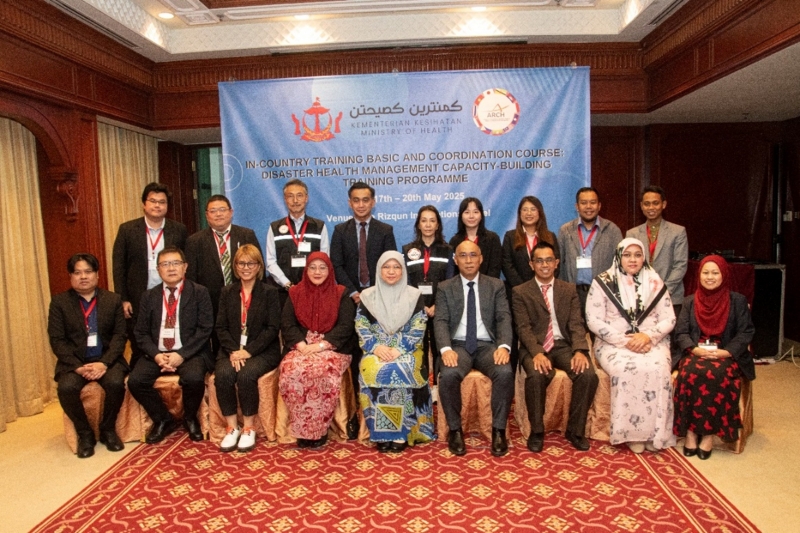
Dr. Hajah Rafidah binti Haji Gharif, Acting Permanent Secretary (center),
Ministry of Health, Brunei Darussalam
The B-Course and C-Course were conducted in parallel. The facilitators skillfully adapted and structured both curricula, efficiently rotating and sharing limited resources between the two courses.
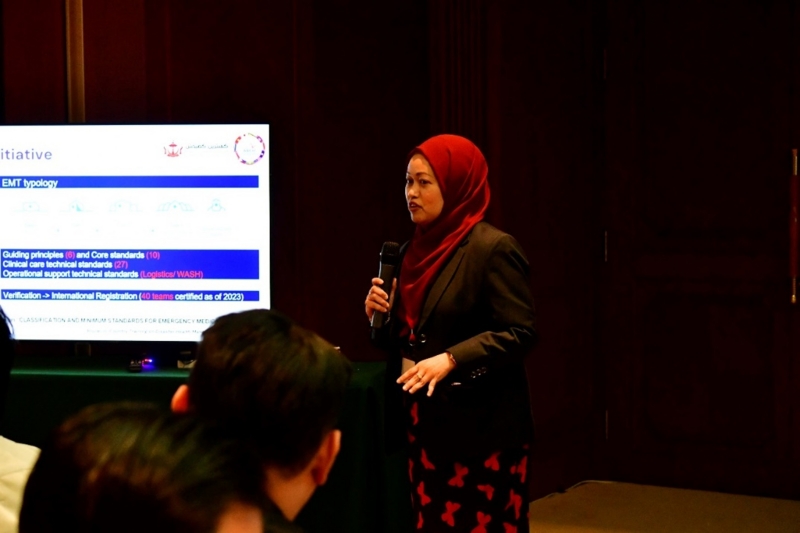
Dr. Norazlina, who played a core role in developing and delivering the course.
At the start of the program, participants from both courses attended the common sessions required for all. These sessions reviewed the fundamental national regulations (including legal frameworks) for disaster management and response, the overall coordination structure, the chain of command during emergencies, and procedures related to receiving international assistance.
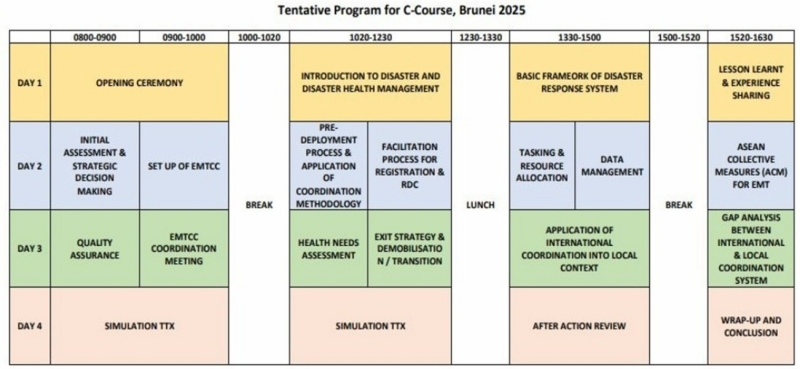
Training Schedule
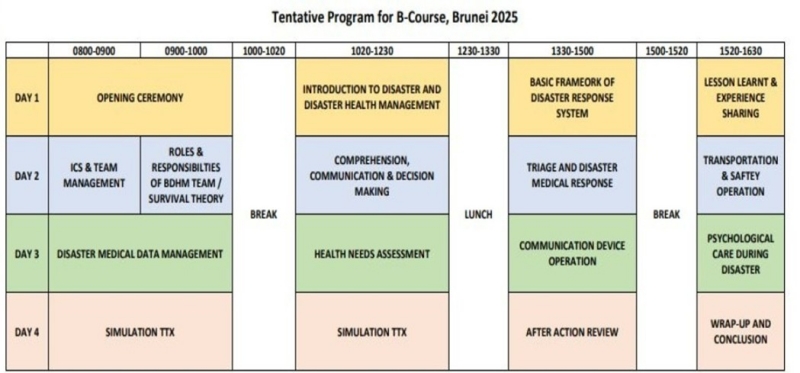
B-Course was attended mainly by healthcare professionals and logistics personnel belonging to EMTs, who are more directly engaged in field operations. They learned basic perspectives on situational observations and assessment during emergencies, exercise of essential skills, and emergency communication, among other topics.
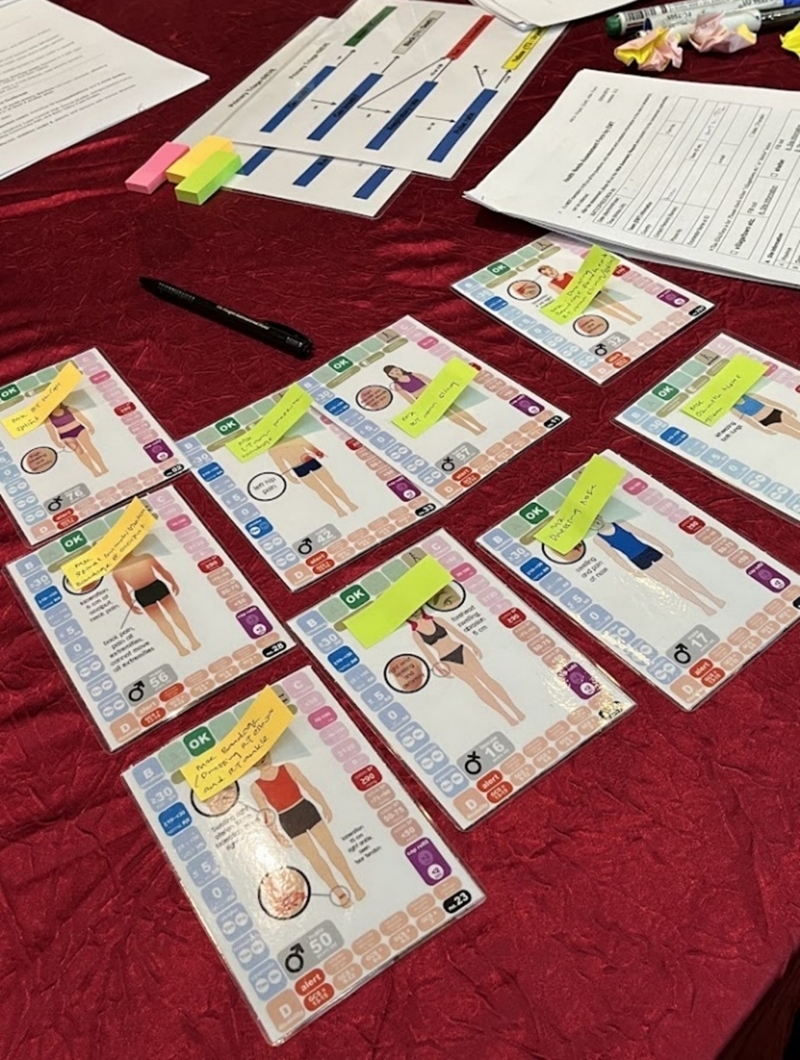
The patient card for the B-Course developed by the Thai taskforce team,
and contributed for the effective training in Brunei.
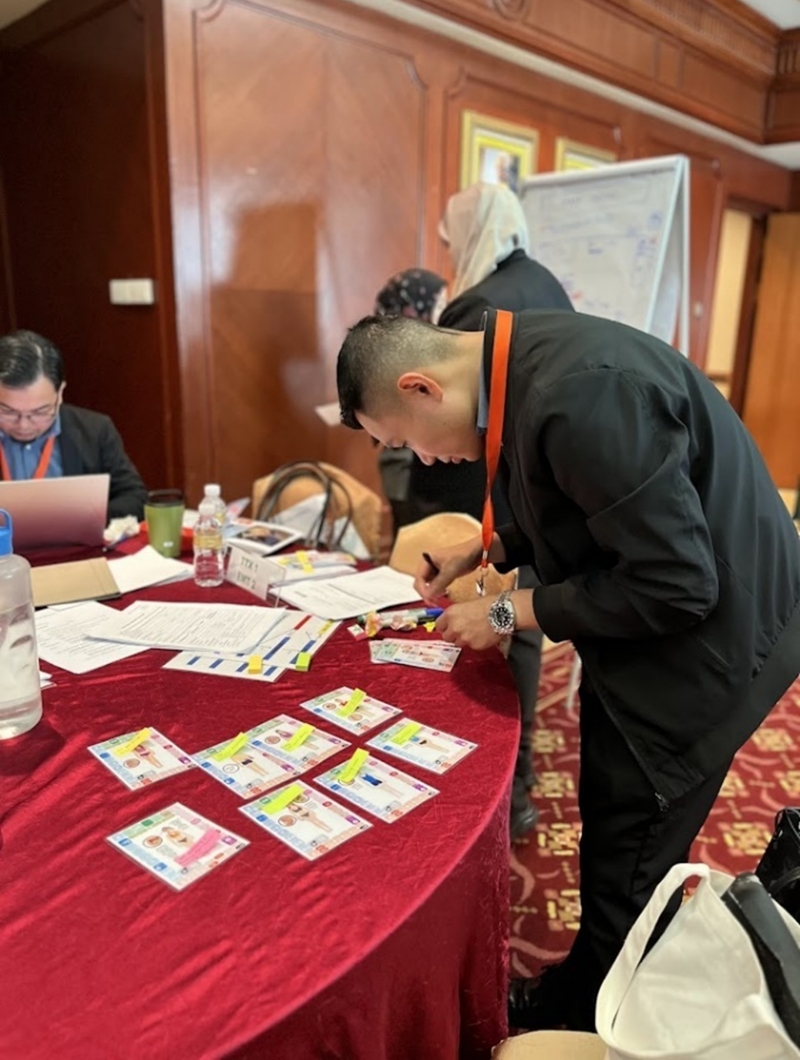
C-Course participants were officials affiliated with the Ministry of Health or partner organizations serving as decision-making bodies in disaster medical response. They learned about initial response at the onset of a disaster, situation assessment and decision-making, as well as coordination and management principles with international assisting countries.
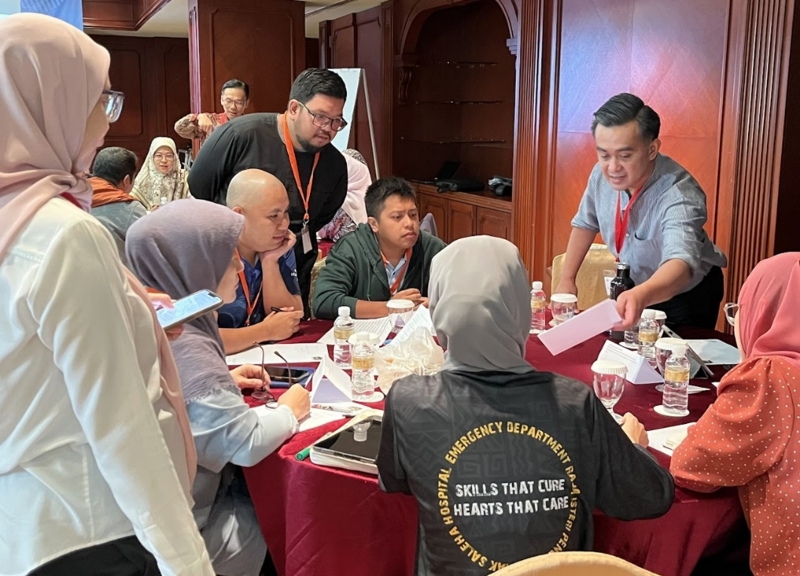
Dr. Ali (right), who has been involved in the development of the training as a member of the ARCH Project Working Group together with Dr. Norazlina.
On the final day of the program, all participants from both courses took part in a joint, comprehensive tabletop exercise (TTX) to confirm and reinforce the outcomes of their learning. The scenario focused on a major flood centered around a river mouth area, and Brunei, which has oil plants, a compounded complex disaster involved in and around those facilities was also incorporated into the scenario. Brunei’s ExCON (the team responsible for planning, managing, and controlling disaster response exercises) monitored the progress of EMTCC and EMTs concurrently in real time through an online chronology method and conducted timely injects in the scenario progression, employing a highly effective facilitation approach.
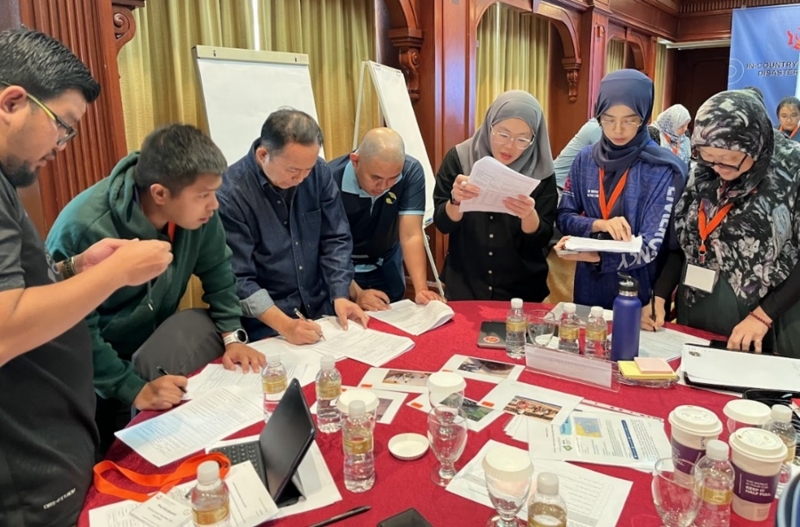
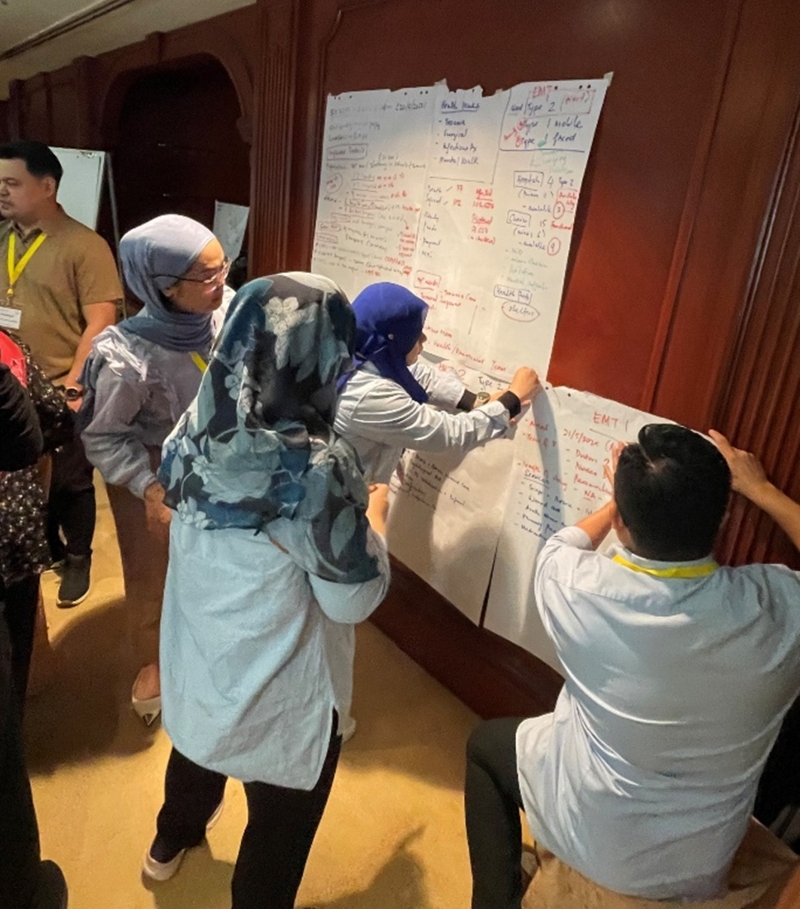
TTX on the last programme.
Implementing the outcomes of the training together with the teammates.
Although Brunei is not frequently affected by disasters, it has been promoting the development of disaster health management and medical systems by leveraging ARCH Project participants with a high level of English proficiency and strategic thinking skills. The domestic implementation of the courses developed by the ARCH Project in collaboration with the Thai taskforce team and Japan Advisory Committee of the ARCH Project serves as a valuable case example. It is expected to contribute to further course improvements and the promotion of regional exercises in the future.