

The 4th ARCH Project “Knowledge Co-Creation Program (KCCP) Disaster Health Management in ASEAN Countries” Conducted — Aiming for Mutual Learning and Knowledge Co-Creation in Disaster Health Management between ASEAN and Japan —
The ARCH Project has continuously implemented country-specific training with the aim of strengthening capacity in the field of disaster health management and enhancing regional collaboration mechanisms in the ASEAN region. This year, the 4th Knowledge Co-Creation Program (KCCP) was held to further advance professional competencies and strengthen regional cooperation through sharing of knowledge and experiences among Japan and ASEAN Member States.
From October 20 to November 8, 2025, twenty participants from Ministries of Health, educational and academic institutions, and medical institutes in the ASEAN region were invited to Japan for the 4th KCCP. In addition to lectures and exercises, the training sought to enhance regional cooperation in disaster health management under the ASEAN vision of “One ASEAN, One Response” through knowledge sharing and discussion among participants.
Lectures and Site Visits
From October 21 to October 31, lectures were held at the Senri Critical Care Medical Center, the main venue, delivered by experts in disaster medicine and related fields in Japan. Participants studied a wide range of topics related to disaster response and disaster health management.
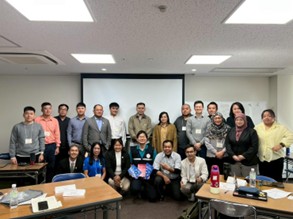
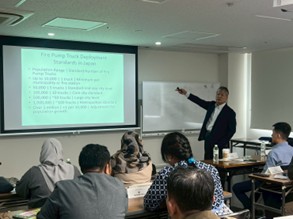
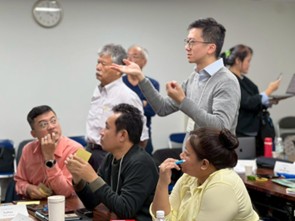
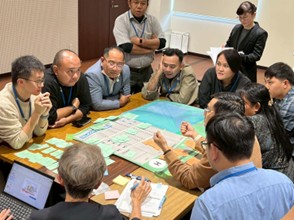
At the Senri Critical Care and Medical Center, participants attended lectures and actively engaged in discussions, group exercises, practical sessions, and experience-sharing activities with instructors and fellow participants
Participants also visited the North Osaka Command Centre and Osaka Saiseikai Senri Hospital to gain insight into Japan’s emergency response system and efforts to strengthen hospital disaster preparedness.
At the Japanese Red Cross Osaka Hospital, participants engaged in practical learning on the disaster response framework of the International Red Cross and Red Crescent Movement, as well as on the management systems for medicine and equipment of Emergency Medical Teams (EMTs) at the logistics center.
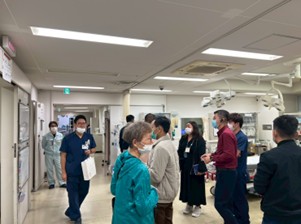
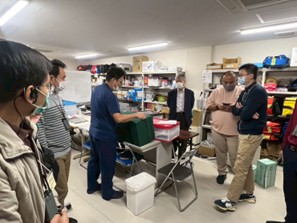
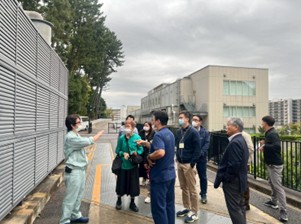
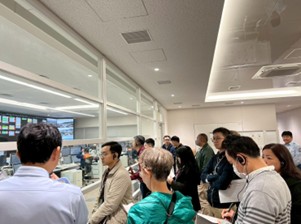
Through site visits to the North Osaka Command Center and Osaka Saiseikai Senri Hospital, participants deepened their understanding of Japan’s emergency medical system and hospital-based disaster management practices.
A new component introduced this year included learning about considerations required for socially vulnerable populations—such as gender aspects, persons with disabilities, and the elderly—during disasters. Participants also discussed necessary considerations for coordinating EMT deployments in the ASEAN region.
In addition, participants joined the MIMMS J-HELP (Major Incident Medical Management and Support Japan Hospital Evacuation and Life Support Planning for Major Incident Course), where they systematically learned the knowledge and skills required for hospital evacuation following major incidents or large-scale disasters through lectures, discussions, and tabletop exercises.
At the Disaster Reduction and Human Renovation Institution, participants deepened their understanding of the 1995 Great Hanshin-Awaji Earthquake through exhibits and videos, recognizing the importance of disaster response, recovery processes, and disaster risk reduction.
Through these learning activities, participants developed a comprehensive understanding of Japan’s disaster medical system from both theoretical and practical perspectives.
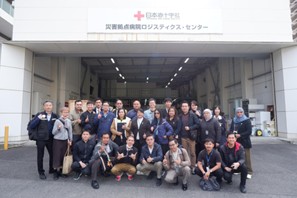
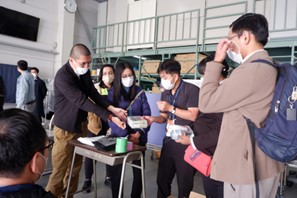
At the Japanese Red Cross Osaka Hospital, participants learned about the disaster response framework of the International Red Cross and Red Crescent Movement, as well as the management of medicines and equipment for the Emergency Response Unit (ERU).
Experience-Sharing Sessions
During the training, participants conducted sharing sessions on the progress of national-level targets under the “Plan of Action to Implement the ASEAN Leaders’ Declaration on Disaster Health Management (2019–2025)” and on their experience on emergency medical response following the major earthquake that occurred in Myanmar in March 2025.
These sessions facilitated mutual understanding of challenges and lessons learned across countries and contributed to strengthening the regional knowledge base.
The 22nd Senri Medical Rally
On November 2, participants joined the 22nd Senri Medical Rally. In this event, they formed emergency medical teams consisting of physicians, nurses, and others, and practiced response and treatment for simulated patients across multiple scenario stations, thereby enhancing their practical skills.
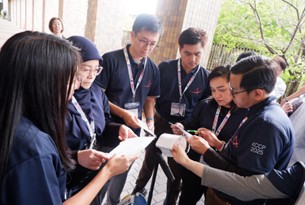
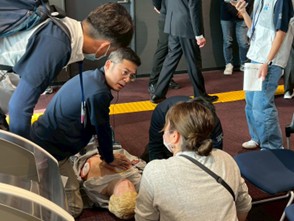
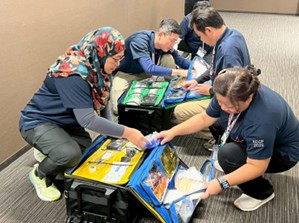
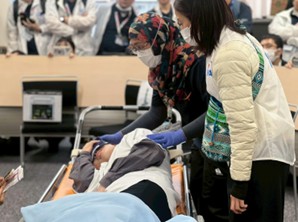
During the 22nd Senri Medical Rally, the ASEAN KCCP team managed simulated patients, applying their practical skills in a realistic setting.
Presentation of Country-Specific Indicators on Disaster Health Management
ASEAN is currently revising the aforementioned “Plan of Action,” including the review of national-level targets, for the next five-year period (2026–2030). In line with this process, participants worked on developing draft “indicators” to assess progress in achieving national-level targets in their respective countries.
At the presentation held on November 6, indicators developed based on each country’s situation, challenges, and future plans were introduced, followed by active discussions.
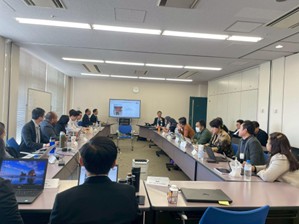
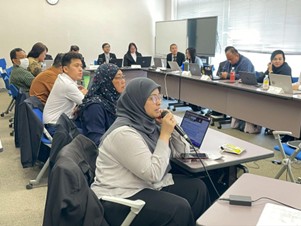
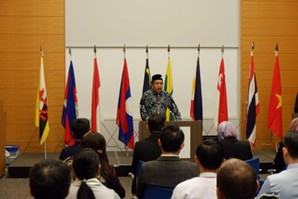
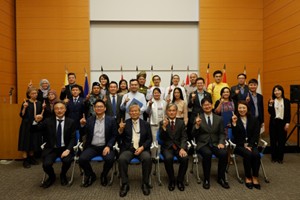
At the JICA Kansai Center, a presentation and closing ceremony were held to share the indicators developed during the training to monitor the achievement of national-level targets, highlighting the outcomes of the 4th KCCP.
Future Expectations
While the ARCH Project Phase 2 will conclude in March 2026, the knowledge and experience gained through this training—as well as the human network built among participants—are expected to serve as a vital foundation for further advancing collaboration in disaster medicine across the ASEAN region.