

The 3rd Annual Progress Report Meeting was Held and Project Achievements were Shared
From March 16 to 18, 2026, the 3rd Annual Progress Report Meeting on improving the quality of health services was held at a hotel in Harare for three days. As the culmination of this project, a total of 112 participants attended this meeting, including representatives from the Ministry of Health and Child Care (MoHCC), Provincial Health Executives (PHEs), target hospitals, district hospitals, development partners, the Embassy of Japan in Zimbabwe, and JICA.
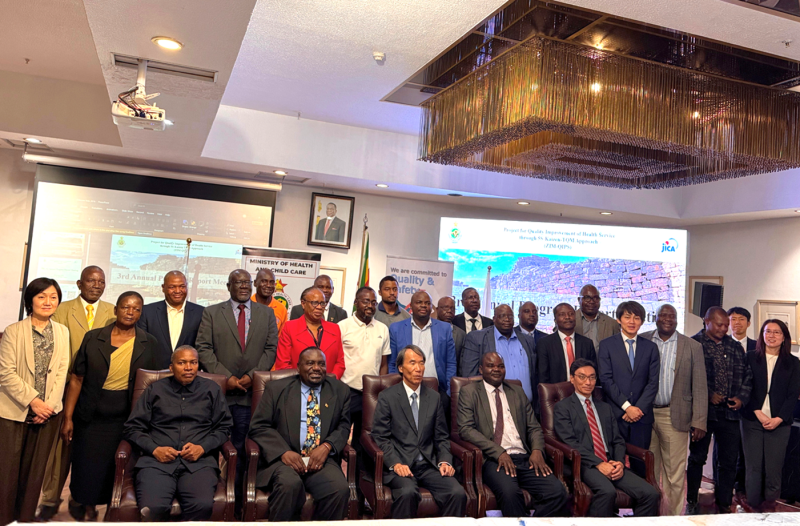
Group photo of representatives from participating facilities at the Annual Progress Report Meeting
[Endline Survey Results and Project Achievements]
During this meeting, the project achievements and the endline survey results were presented. As major achievements, it was shared that 3,698 hospital and PHE staff have received training on Quality Improvement (QI) activities so far, and over 300 cases of “5S / Quick KAIZEN Activity” to improve operational efficiency have been reported over the past two years. The endline survey confirmed that 10 target hospitals achieved a score of 70% or more in the external monitoring and supervision by the project, and all target hospitals are practicing KAIZEN with QC story. From this, it was confirmed that 5S-KAIZEN activities have been successfully promoted and strengthened at the service provision level in the target hospitals.
Additionally, the median patient waiting time across 14 target hospitals met the MoHCC standards: 240 minutes for central hospitals and 180 minutes for provincial hospitals, demonstrating a certain level of improvement in healthcare service delivery. Furthermore, the average score of the Staff Experience Survey improved from 69.4% in 2022 to 74.0% in 2025, providing data-backed evidence of improved workplace environments and increased motivation for QI activities.
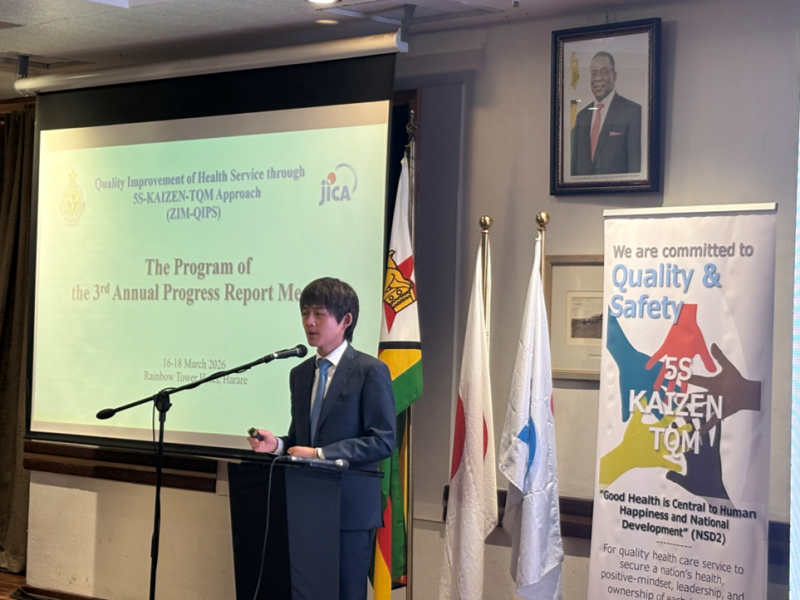
A Japanese expert explaining the purpose and overall program of the Annual Progress Report Meeting
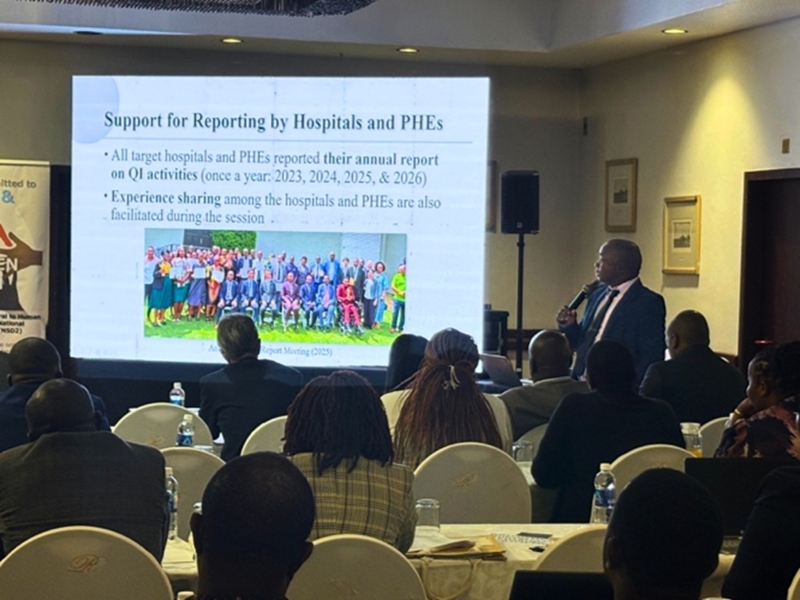
A staff member of Quality Assurance and Patient Safety (QAPS) Directorate presenting the project's achievements
[Sharing Good Practices Focusing on Quality and Safety, and Expansion Beyond the Project Framework]
In the progress reports and presentations of good practices from each target hospital and PHE, an unprecedented number of excellent initiatives directly linked to healthcare quality and patient safety were shared. These included KAIZEN with QC story and "Quick KAIZEN" for developing safer hospital environments for staff and patients, illustrating how earnestly each hospital has addressed frontline challenges and accumulated practical experience, which prompted active exchanges of opinions among participants.
Furthermore, a notable highlight was the confirmed expansion of activities to the district level, transcending the framework of the initial target facilities: central and provincial hospitals. The Matabeleland South PHE reported on their initiatives to roll out the 5S-KAIZEN-TQM approach and support its implementation in some of the district hospitals within their jurisdiction. Moreover, Plumtree District Hospital, Chipinge District Medical Office, and Kadoma District Hospital presented their own unique good practices and practical lessons learned, suggesting the feasibility of realizing a nationwide rollout of this approach in the future.
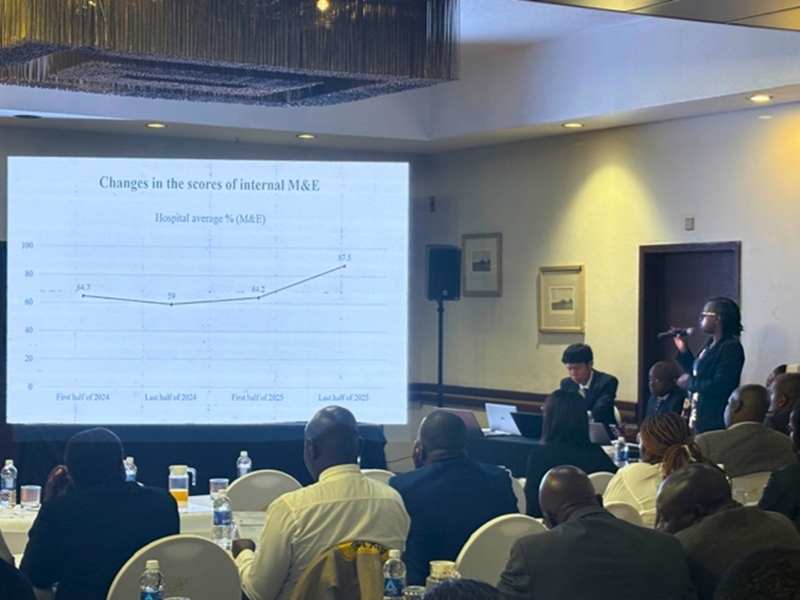
Annual report presentation by Chitungwiza Central Hospital
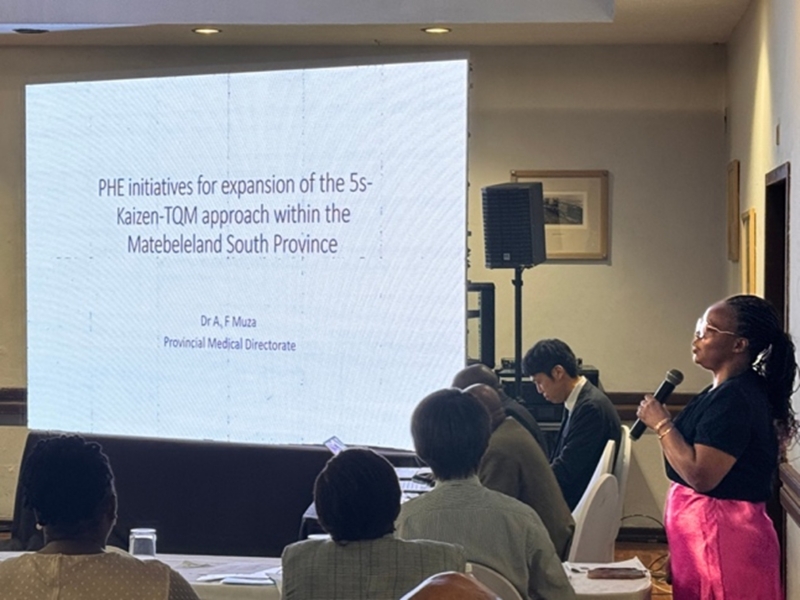
Presentation of initiatives by the Matabeleland South PHE to disseminate the 5S-KAIZEN-TQM Approach within the province
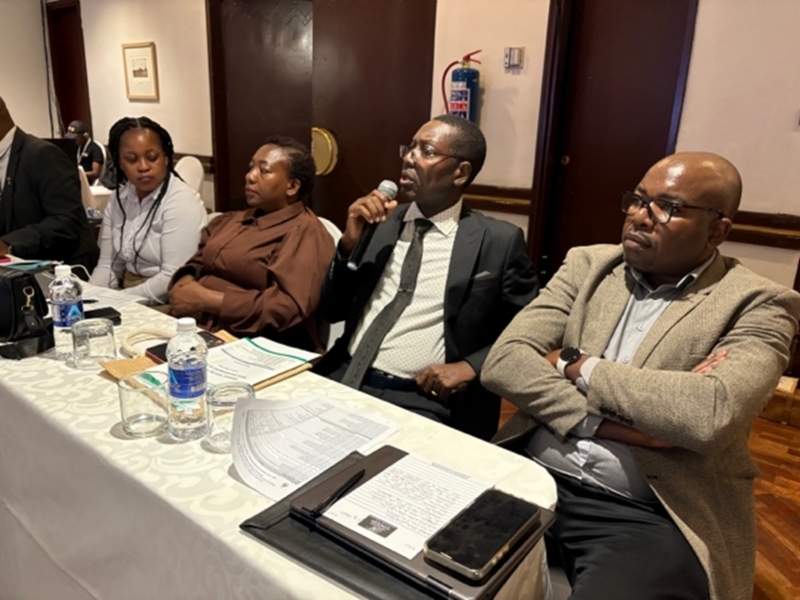
Active Q&A session during the meeting

Active Q&A session during the meeting
[Panel Discussion and Roadmap for Ensuring Sustainability Post-Project]
As one of the critical themes of this meeting, a panel discussion on the sustainability of activities post-project and nationwide rollout was held under the facilitation of the Director of QAPS Directorate. Six panelists from different positions and affiliated facilities emphasized the importance of the roles of the hospital managers as a leader of QI initiatives, including Chief Medical Officer (CMO) or Medical Superintendent, and the establishment of institutional memory. It was particularly impressive when the CMO of Ingutsheni Central Hospital made a remark deeply aligned with the core philosophy of the KAIZEN approach: stating that it is crucial to assess the current situation based on "what we have rather than what we don't have" and to continue feasible initiatives.
Additionally, the QAPS Directorate announced the "Roadmap for Strategic and Sustainable Implementation of Quality and Patient Safety Initiatives" for 2026 to 2030. This roadmap outlined the policy to embed quality improvement activities into the national health system, highlighting the following as major pillars:
- Strengthening governance and systems for quality improvement
- Human resource development for quality improvement
- Monitoring and technical support for health facilities
- Fostering a culture of mutual learning for reinforcement
- Introduction of recognition and evaluation mechanisms
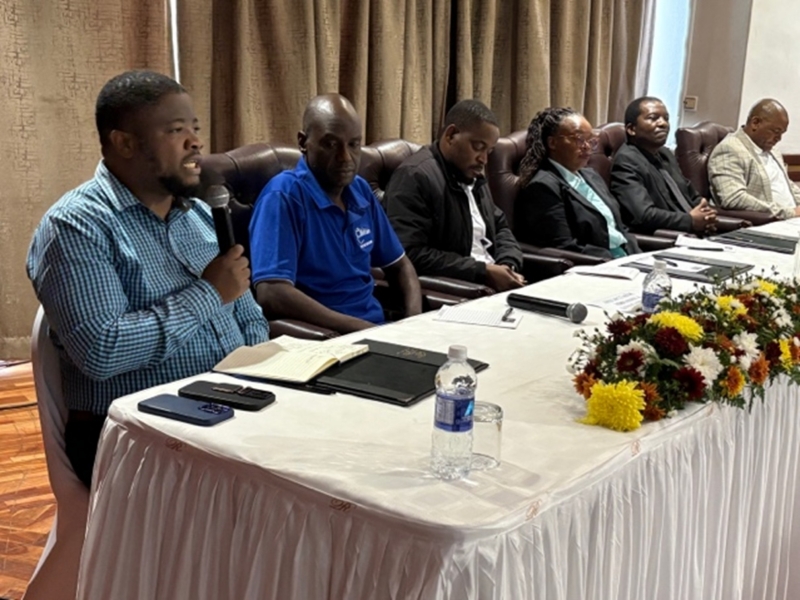
Panel discussion
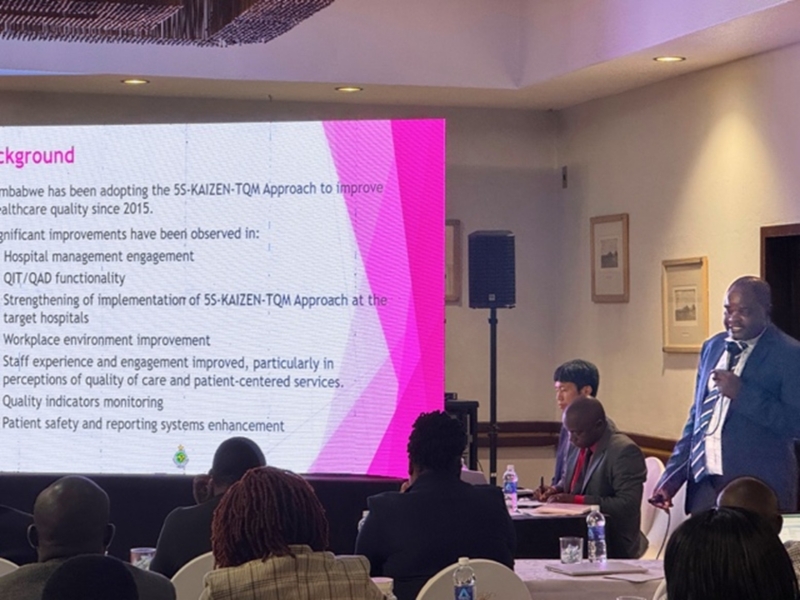
QAPS Director announcing the outline of the roadmap
[Awards related to 5S-KAIZEN Activities]
Similar to last year, good practices of 5S/Quick KAIZEN activities were presented by the target facilities at this meeting, and outstanding activities were awarded based on the results of a participant vote. Furthermore, excellent hospitals and PHEs were recognized based on factors such as the results of last year's external monitoring and supervision and client satisfaction surveys.
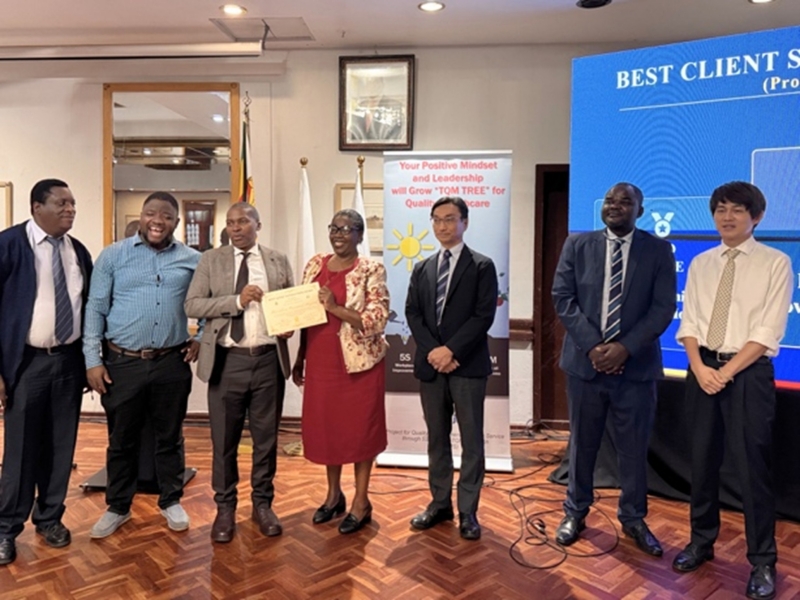
Marondera Provincial Hospital awarded as the provincial hospital achieving the highest client satisfaction
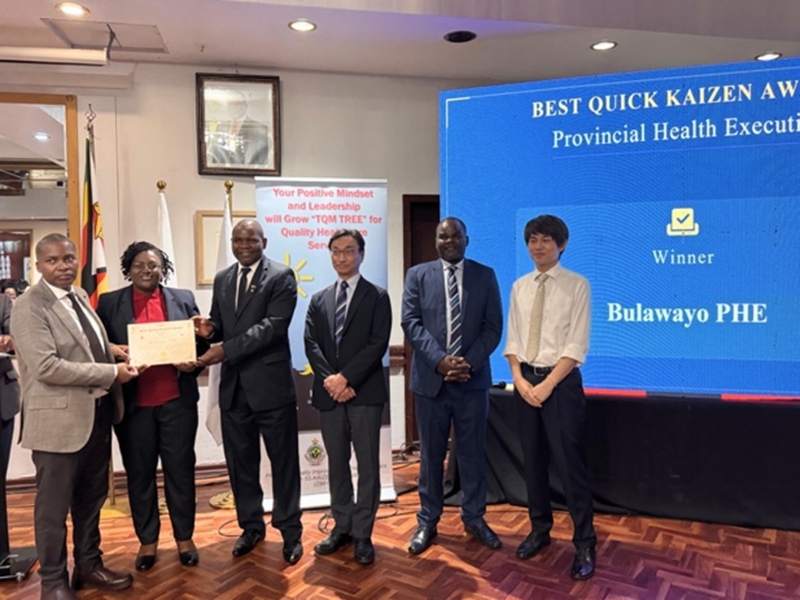
Bulawayo PHE awarded for practicing excellent "5S/Quick KAIZEN"
Through this four-year project, the 5S-KAIZEN-TQM Approach has been steadily put into practice in healthcare settings across Zimbabwe, and achievements regarding the establishment and strengthening of implementation structures among the MoHCC, PHEs, and the 14 target hospitals for sustainability have been confirmed. Moving forward, it is highly expected that the MoHCC will take the lead, in collaboration with the PHEs and the target hospitals, to sustain and develop quality improvement initiatives based on the newly announced roadmap, and to expand these efforts to the district and primary health care levels.
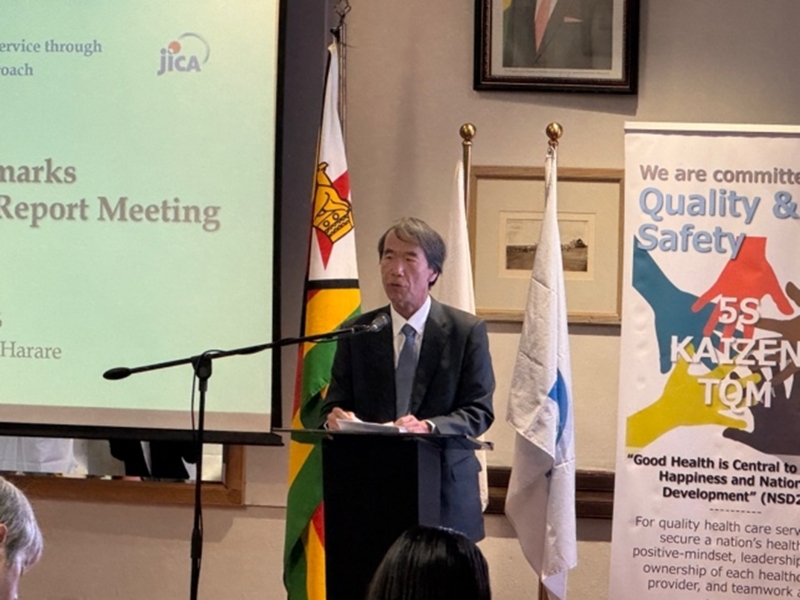
Speech by the Ambassador of Japan to Zimbabw
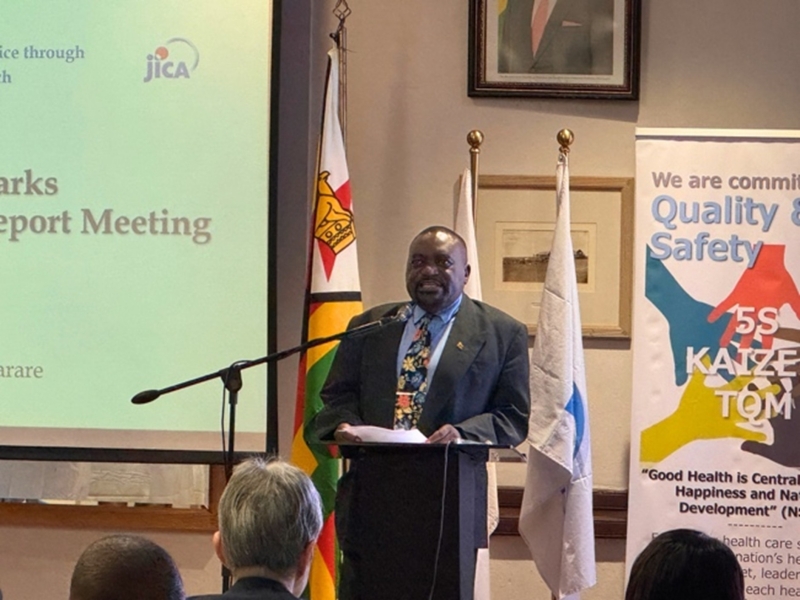
Opening remarks by the Harare Provincial Medical Director, MoHCC
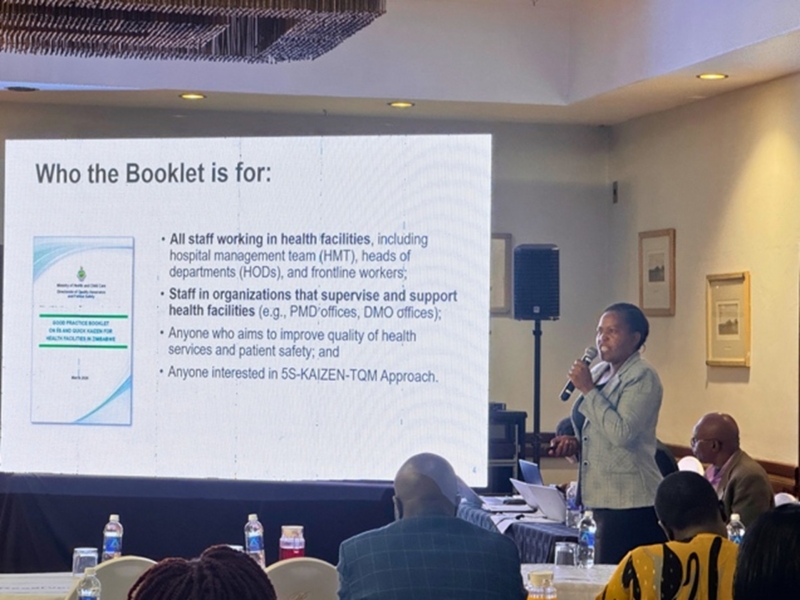
A staff of QAPS Directorate explaining the purpose and usage of the good practice booklet to participants during the meeting
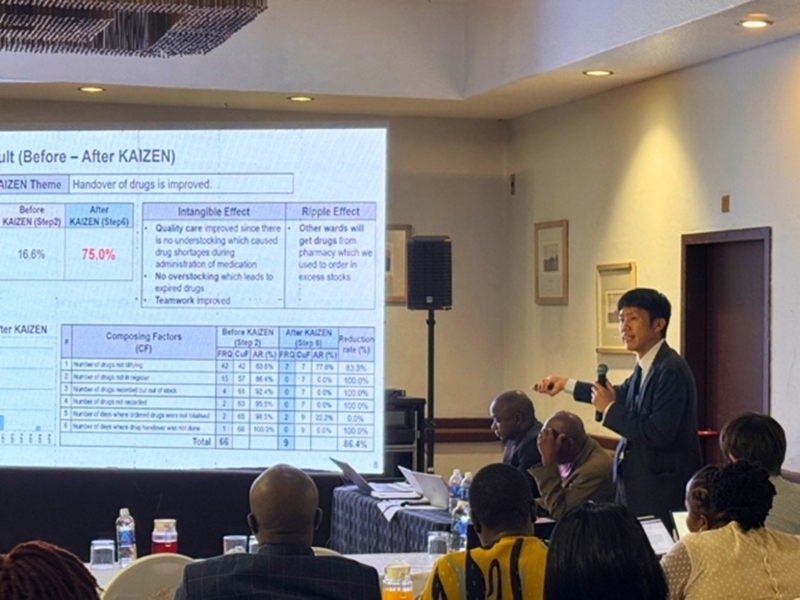
Japanese expert introducing good practices of KAIZEN with QC story