

The 4th Joint Coordinating Committee (JCC) Meeting was held to confirm the project achievements and the future roadmap for quality improvement
On March 19, 2026, the 4th Joint Coordinating Committee (JCC) meeting was held at the Ministry of Health and Child Care (MoHCC) in Zimbabwe. A total of 38 participants attended the meeting, including representatives from MoHCC, target hospitals, Provincial Health Executives (PHEs), the Embassy of Japan in Zimbabwe, and the JICA Zimbabwe Office. As this was the final JCC meeting for the project, the achievements to date and remaining challenges were reported, followed by an active exchange of views among the participants. Furthermore, regarding the continuous Quality Improvement (QI) activities of health services after the project's completion, the Quality Assurance and Patient Safety (QAPS) Directorate of MoHCC, the counterpart of this project, presented a proposed roadmap outlining the way forward and concrete steps, which sparked lively discussions.
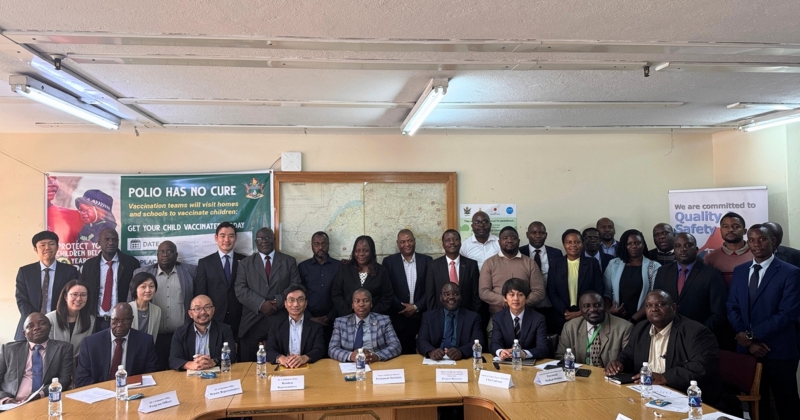
Group photo of participants at the 4th JCC meeting
[Sharing Project Achievements and Endline Survey Results]
First, the project team reported that all planned activities had been completed, and the project's key indicators had been achieved. In particular, the major accomplishment were shared as follows:
- The establishment and strengthening of a nationwide QI implementation system through MoHCC-approved guidelines and training modules
- The enhancement in practice of 5S-KAIZEN-TQM activities in the target hospitals
- The improvement of quality and patient-centered awareness of hospital and PHE staff
- The improvement of patient satisfaction
On the other hand, future challenges were also presented, such as disparities in the level of activity implementation among target hospitals, gaps in the supervisory capacity of PHEs, and financial and human resource constraints at healthcare facilities. Participants discussed how to overcome these issues.
[Discussions on Problem-Solving to Strengthen Sustainability]
Participants exchanged views on the presented challenges from various perspectives. For instance, they pointed out the importance of "appointing dedicated, full-time QI focal persons" to implement QI activities with a more sufficient structure, as well as the necessity of scaling up good practices implemented by hospitals and PHEs, and facilitating mutual learning among facilities. Regarding financial constraints, it was emphasized that rather than relying solely on external support, it is crucial to secure internal funding through operational improvements to eliminate missed billing for patient consultations and through measures to ensure appropriate revenue generation in each department, such as laboratories and pharmacies.
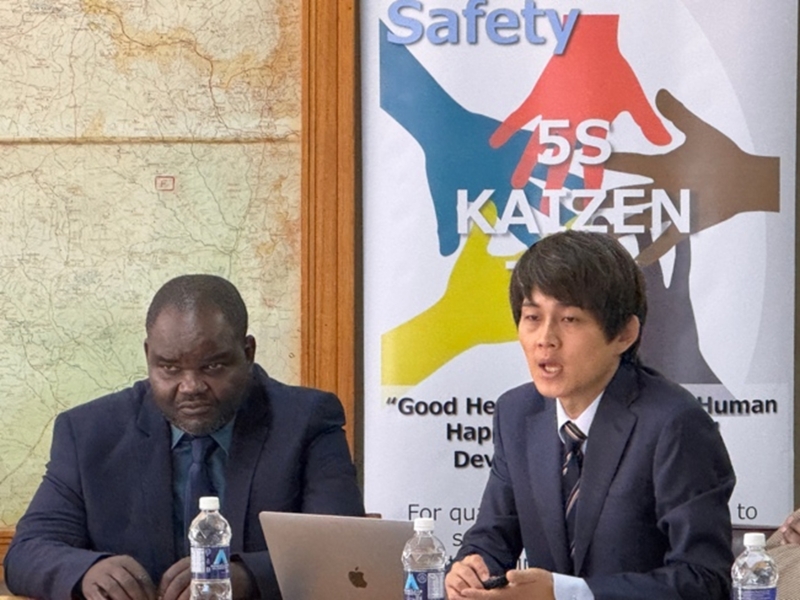
A Japanese Expert presenting the project's achievements and challenges
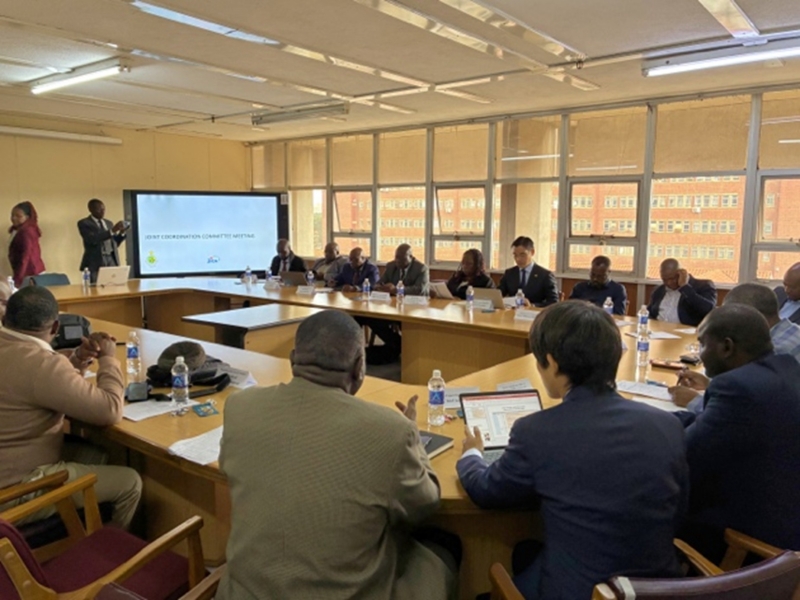
An overview of the JCC meeting
[Proposed Roadmap for Quality of Health Services and Patient Safety Towards 2030]
As a key agenda item of the meeting, the QAPS Directorate presented the "Draft Roadmap for Sustainable and Strategic Interventions on Quality and Patient Safety," outlining the activity policy from 2026 to 2030. This roadmap consists of five pillars, including strengthening governance and system, human resource development, monitoring and technical support for healthcare facilities, shared-learning culture among healthcare facilities, and recognition and appreciation mechanisms.
During the discussion, the feasibility of the plan for PHEs to roll out 5S-KAIZEN-TQM training to at least two district hospitals within their jurisdiction in every year, was confirmed. Furthermore, to embed the QI mindset among healthcare providers, opinions were raised on the need to incorporate it into the educational curricula of health workforce training programs, such as medical schools, and to conduct introductory training for newly appointed healthcare providers.
[Future Prospects and Closing Remarks]
Towards the end of the meeting, the Director of the QAPS Directorate emphasized that MoHCC will continue to take the lead in conducting external Monitoring and Supervision (M&S) even after the project ends. He also stressed the attitude that the target facilities should take the initiative, demonstrate leadership, and work on improving the quality of health services and patient waiting times.
Finally, the Resident Representative of the JICA Zimbabwe Office expressed continued support for strengthening Zimbabwe's health system, and the meeting was officially closed.
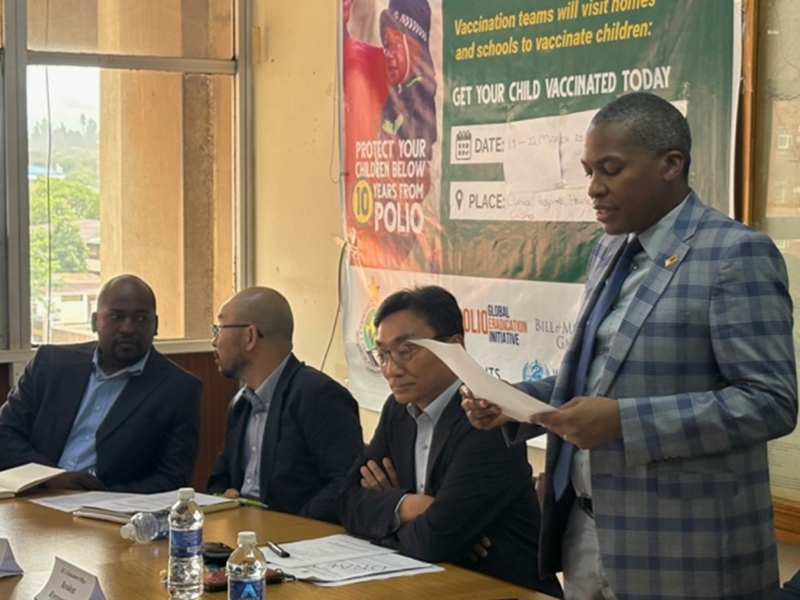
Chief Medical Officer of Chitungwiza Central Hospital delivering the opening remarks on behalf of the Permanent Secretary of MoHCC
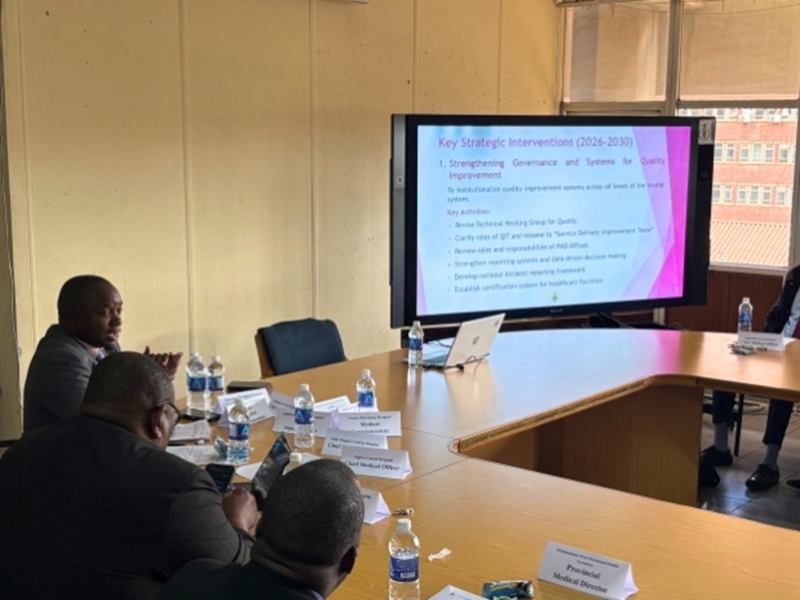
Quality Assurance Officer from the QAPS Directorate facilitating an exchange of participant’s opinions on the Road Map
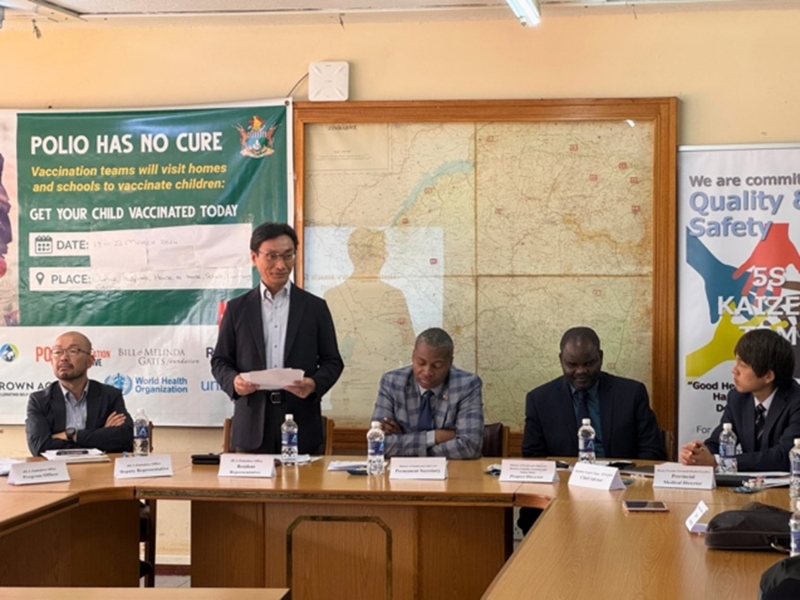
The Resident Representative of the JICA Zimbabwe Office delivering the closing remarks
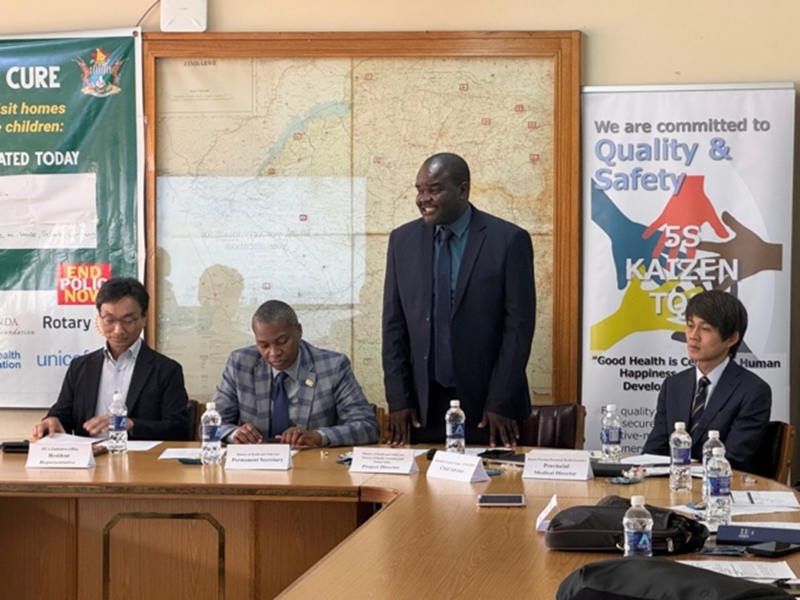
The Director of the QAPS Directorate delivering the closing remarks