Field Study in Selected ASEAN Member Countries to Evaluate the SPS Measures
Under Output 2 of the AJFVC Project, field surveys in the area of Sanitary and Phytosanitary (SPS) measures were conducted in ASEAN Member States (AMSs) through a consultant team, Construction Project Consultants, Inc. (CTII). The primary objective of these surveys was to strengthen the capacity for pesticide residue analysis in AMSs, thereby ensuring food safety in each country and promoting the safe distribution of agricultural products within the region.
Throughout the overall period from February to May 2024, CTII visited relevant ministries and agencies responsible for SPS, as well as pesticide residue analysis laboratories, in Cambodia, Lao PDR, Thailand, Viet Nam, Indonesia, Malaysia, and Brunei.
Field surveys were conducted in Viet Nam and the Lao PDR in February to March, with the objective of assessing the capacity of pesticide residue analysis laboratories. Improving the capacity for conducting pesticide residue analysis to strengthen the sanitary and phytosanitary (SPS) measures in ASEAN Member States (AMS) is one of the main objectives of the ASEAN-JICA Food Value Chain Development (AJFVC) Project.
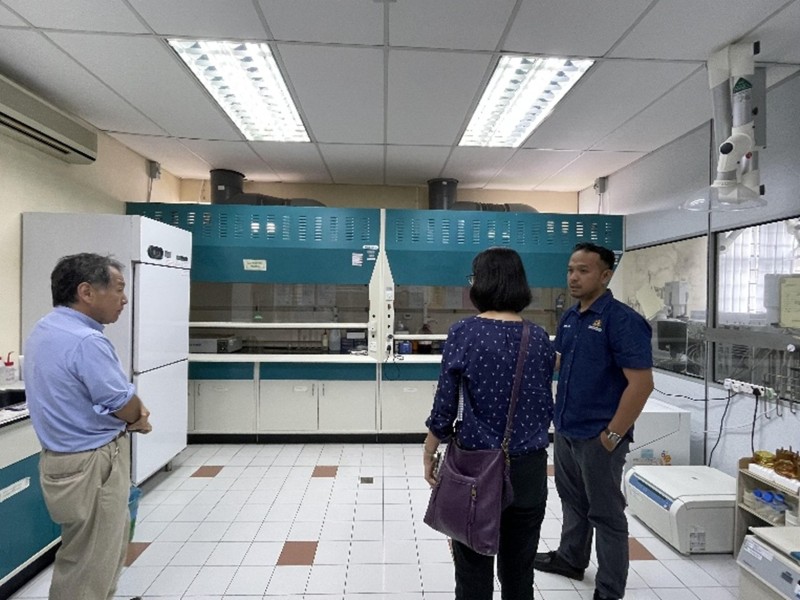
During the visit, the team assessed the laboratories’ capabilities and equipment for testing pesticide residues and evaluated their compliance with regulatory standards. The team visited the Clean Agriculture Standard Center (CASC) and the Plant Protection Center (PPC) under the Department of Agriculture in Lao PDR. In Vietnam, they visited three different institutions, namely the Northern Pesticide Control and Testing Center (NPTC), Reference Testing & Agrifood Quality Consultancy Center (RETAQ), and National Authority for Agro-Forestry-Fishery Quality Processing and Market Development Branch 1 (NAFIQPM1).
Subsequently, field surveys were conducted in Thailand and Indonesia from March to April 2024.During their visit to Thailand, the team had discussions with key stakeholders in the country, such as the National Bureau of Agricultural Commodity and Food Standards, the Department of Agriculture (DOA), the Department of Medical Sciences, and Central Lab Thai to discuss the implementation of Strengthen Sanitary and Phytosanitary (SPS) measures and pesticide residue control.
Similarly, in Indonesia, the team engaged with the Directorate of Food Crop Protection, the Plant Product Quality Testing Center, the Agricultural Instruments Standardization Agency under the Ministry of Agriculture, and the Directorate of Standardization and Quality Control under the Ministry of Trade. The team also visited the pesticide laboratories of both institutions to further their research.
The AJFVC Project Team continued field study in Cambodia and Singapore from April to May to strengthen sanitary and phytosanitary (SPS) measures as one of the key objectives of the project.
The team visited Cambodia to identify key technical challenges in operating the pesticide analysis laboratory and to determine training needs. They visited the pesticide section of the National Agriculture Laboratory under the General Directorate of Agriculture to discuss these issues further and to develop a customized training program for pesticide residue laboratory personnel in Cambodia.
In Singapore, the team focused identifying external service providers and speakers to contribute to the training and designing the training program for pesticide residue analysis. The team visited three private firms with international and regional operations to discuss various training arrangements related to the operation and maintenance of instruments. Additionally, the team sought feedback from the Singapore Food Agency’s laboratory, recognized as the ASEAN Reference Laboratory for pesticide residue analysis under the EC-ASEAN Economic Cooperation Programme, to leverage their regional expertise.
Additionally, field surveys were conducted in Malaysia, Thailand, and Brunei Darussalam in May.
In Malaysia, they met with the Department of Agriculture (DOA) and the Ministry of Health (MOH) to learn about SPS measures, discuss the AJFVC project, and visit national reference laboratories. They also visited the DOA’s Pesticide Residue Laboratory in Cameron Highlands and MOH’s Food Safety and Quality Laboratory in Penang. The team observed that the DOA and MOH collaborate closely to ensure food safety in the country and for exported products.
The team continued to visit Bangkok to have a meeting with the National Bureau of Agricultural Commodities and Food Standards (ACFS) under the Department of Agriculture to discuss potential collaboration as a training provider for laboratory personnel. The team also visited two accredited laboratories and met with private manufacturers and distributors of chromatography equipment to discuss the challenges faced by AMSs in operating and maintaining such equipment.
Finally, the project team member visited Brunei Darussalam to meet with the Department of Agriculture and Agrifood (DoAA), the Biosecurity and Market Access Division (BIOSMA) under the Ministry of Primary Resources and Tourism, and the Brunei Darussalam Food Authority (BDFA) to discuss SPS measures and pesticide residue analysis. The team member also visited the Department of Scientific Services (DSS) under the Ministry of Health as the only national reference laboratory for pesticide residue in food in Brunei.
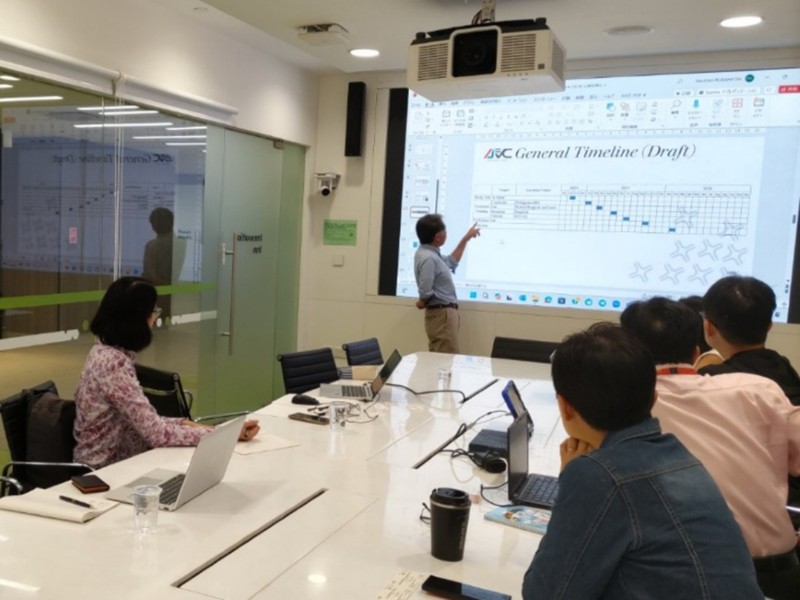
Through this series of field surveys, the AJFVC Project has gained an understanding of the current status of pesticide residue analysis capacity in each country, clarified technical challenges, and facilitated the sharing of best practices. Building on the technical expertise provided by the consultant team, the Project will continue to promote collaboration among ASEAN Member States and support efforts to enhance the effectiveness of SPS measures and strengthen food safety systems, as outlined under Output 2.