Evaluating GAP Certification and Market Opportunities in Thailand, Cambodia, Singapore and Malaysia
From October to November 2024, the GAP Promotion Team of the AJFVC Project conducted field surveys in four countries: Thailand, Cambodia, Singapore, and Malaysia. In this survey, efforts were made to assess the status of food value chains and the adoption of Good Agricultural Practices (GAP) certification in each country, as well as to examine marketing strategies for the further promotion of ASEAN GAP and national GAP schemes.
From October 1 to 12, the AJFVC Project Team conducted a survey in Thailand and Cambodia to evaluate the food value chain and create marketing strategies for ASEAN GAP and National GAPs.
In Thailand and Cambodia, the landscape of food distribution is as diverse as their cultures, with supermarkets, bustling markets, and production sites all showcasing GAP products. In Thailand, QGAP-certified items are on the shelves of high-end supermarkets, regular grocery stores, and wholesale markets. In contrast, only high-end supermarkets in Cambodia sell CamGAP products, all marked with the CamGAP seal.
Thailand’s aspiration to become “the kitchen of the world” has resulted in a significant number of certifications, as QGAP is essential for exports and Thai producers are committed to ensuring safe food through GAP. However, it seems that many Cambodian farmers encounter difficulties in meeting GAP standards and prioritize the economic advantages of contract farming over certification.
Both countries have limited direct consumer outreach, but the ASEAN framework has received positive feedback. There is a clear opportunity for further development and collaboration to enhance consumer engagement and strengthen the region’s overall food value chain.
In mid-November, the AJFVC Project GAP team conducted a survey in Malaysia and Singapore to assess the GAP (Good Agricultural Practice) certified logo and develop marketing strategies for ASEAN GAP and National GAPs.
Both Singapore and Malaysia are actively promoting GAP products through various approaches. In Singapore, the number of local producers is limited, and to enhance food self-sufficiency, the government encourages the purchase of locally produced goods identified by the “SG” logo. Within this initiative, GAP products are classified as two-star items. To promote these products, marketing strategies in Singapore use different channels, such as TV ads, social media campaigns, and branding characters to connect with consumers.
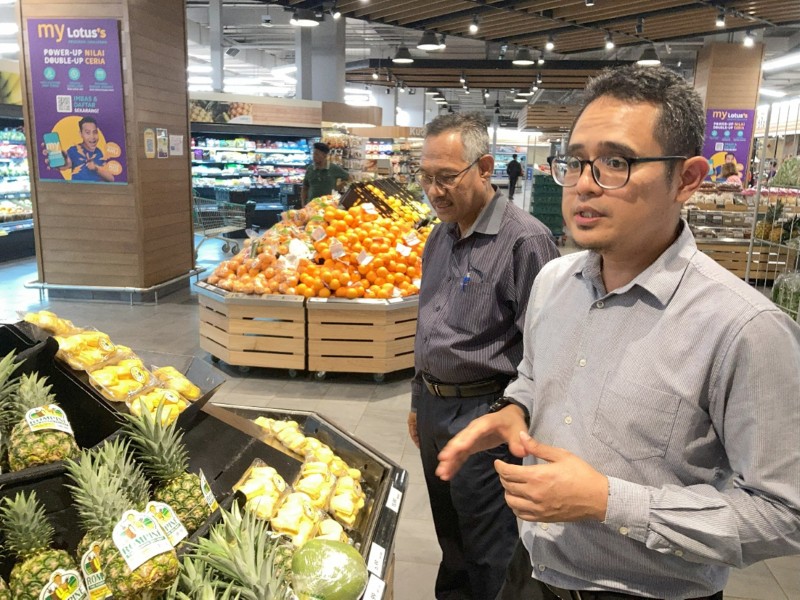
In Malaysia, both governmental entities and producers are actively working to promote GAP products. These items are available in major retail stores as well as in smaller supermarkets. Producers take great pride in offering these certified products and often provide agricultural and eco-tours to educate consumers about their practices.
A notable challenge in the retail environment might be that some consumers struggle to identify GAP-certified products while shopping. This can lead to purchases made without awareness of a product’s GAP certification status. To address this issue, it should be essential to highlight GAP certification prominently at the point of sale. By improving product visibility, retailers can help consumers easily recognize and select GAP-certified items, ultimately enhancing their shopping experience.