

Gender Workshop Held with NGO Partners
In July 2026, the Project organized a workshop for staff members of its NGO partners with the aim of strengthening gender-related activities. The workshop provided an opportunity to review the progress of the Project’s Gender Action Plan (GAP) within the framework of Community-based Sustainable Natural Resource Management (CBNRM) and to discuss future collaboration to support local communities.
Under the GAP, the Project has promoted a more inclusive environment by setting a target of at least 40% female participation in livelihood improvement activities and assigning Gender Focal Points (GFPs) in each village. These efforts are intended to encourage more balanced participation of women and men in project activities.
During the workshop, participants shared the achievements of these initiatives. They reported that women’s voices are increasingly reflected in meetings and decision-making processes, and that women are actively participating in livelihood improvement activities supported by the Project, including tree planting and agricultural activities. Participants also highlighted that, from the second year of the Project onward, some women have begun voluntarily running for leadership positions, demonstrating growing confidence and active engagement within their communities. Many participants noted that increased participation by women has contributed to stronger cooperation within communities, confirming that the positive impacts of gender-focused activities are steadily emerging.
At the same time, participants discussed challenges related to the role of the GFPs. While GFPs play an important role in identifying local gender issues and sharing information through monthly reports, it was pointed out that their role has not yet been fully recognized within some communities. Participants agreed that further capacity building will be necessary to enable GFPs to take on a more active role in promoting gender equality at the local level.
In the afternoon session, participants discussed challenges and preparations for strengthening gender activities in the coming year. During the discussion, the importance of nutrition improvement as a key factor in enhancing health and quality of life was highlighted. To support this discussion, Ms. Yuka Shudo, a Japan Overseas Cooperation Volunteer specializing in nutrition improvement, was invited to introduce nutrition improvement activities being implemented in Timor-Leste, as well as illustrated educational materials developed for community outreach. Participants expressed positive interest in incorporating these materials into their own community activities, noting that the session provided valuable knowledge and practical ideas for promoting better nutrition.
The workshop served as an important opportunity to reflect on the achievements and challenges of the Project’s gender activities to date and to further strengthen collaboration with NGO partners. The Project will continue working closely with its NGO partners to promote gender-responsive approaches and contribute to the equitable and sustainable development of local communities.
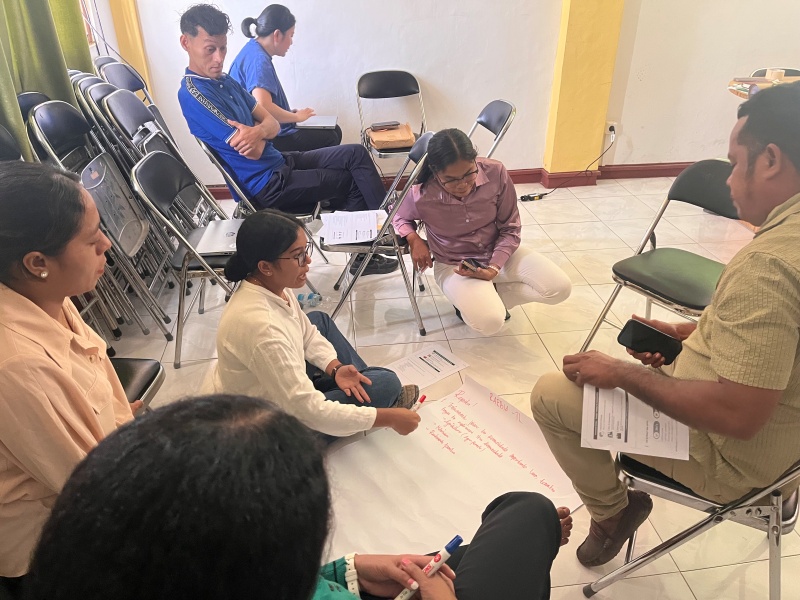
NGO partner staff discussing the achievements and challenges related to gender activities during a group work session
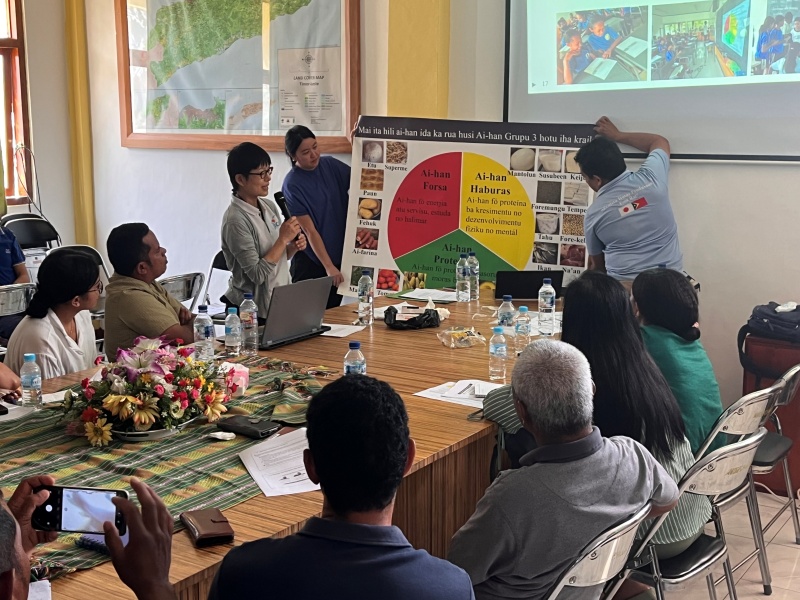
Nutrition improvement session delivered by Ms. Yuka Shudo, Japan Overseas Cooperation Volunteer