Holding of the 3rd JCC
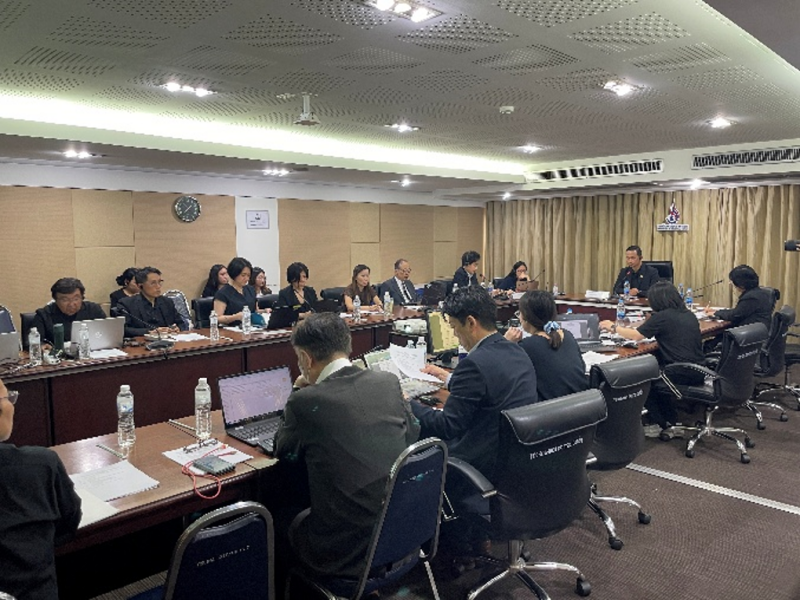
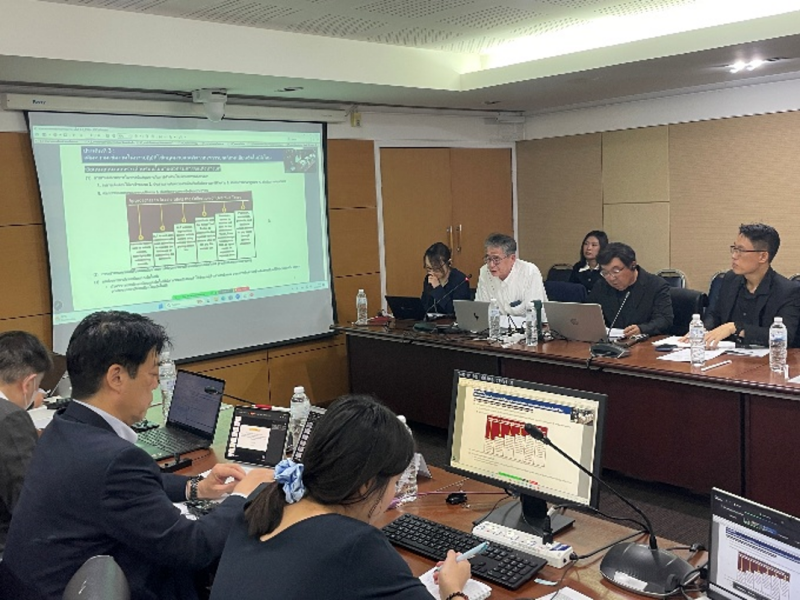
On 16 June 2026, the 3rd Joint Coordinating Committee (JCC) meeting was held at the Department of Industrial Works (DIW), Ministry of Industry. The meeting was chaired by Mr. Teeratas Israngkul Na Ayudhya, Deputy Director General of DIW. Participants from the Embassy of Japan in Thailand, the Global Environment Department of JICA HQ, the JICA Thailand Office, and the JICA Expert Team and representatives of relevant Thai government agencies attended the meeting to review the progress of the project and exchange views on future directions.
During the meeting, the overall progress of the project was presented, and the results of various studies and ongoing discussions on system design were shared among the participants. In particular, extensive discussions focused on improving vehicle registration and deregistration procedures, vehicle inspection systems, the introduction of an ELV tracking mechanism, and the developing dismantling guidelines for recycling operators.
Thailand is expected to experience a significant increase in the number of vehicles reaching the end of their service life as vehicles that have been in use for more than 20 years continue to increase. It is estimated that between 200,000 and 400,000 ELVs will be generated annually in the coming years. In light of this trend, participants reaffirmed the importance of establishing an effective management framework that ensures proper treatment of ELVs while promoting resource recycling and a circular economy. The committee also approved the continued development of dismantling guidelines aimed at strengthening environmental protection and ensuring worker safety.
Another key topic of discussion was the financial mechanism required to secure funding for ELV recycling and treatment. Participants exchanged views on the allocation of responsibilities among vehicle owners and related stakeholders, as well as possible options for collecting recycling fees. The growing importance of managing electric vehicle (EV) batteries was also highlighted, and the committee confirmed the need for further discussions and studies on this issue.
The project is now entering a critical phase, transitioning from system design to verification and implementation. Pilot projects are scheduled to commence in early 2027, and the lessons learned from these activities will be incorporated into the development of a sustainable ELV management system tailored to Thailand’s specific needs and circumstances.