

Mr. Kawada Visits Mongolia and Delivers Public Seminar
Date: March 2 to 6, 2026
From March 2 to 6, 2026, Mr. Kawada of NTT Security Japan visited Mongolia and carried out a series of activities as part of the project. During his stay, in addition to delivering a public seminar, he conducted site visits and held discussions with CSIRT organizations, related institutions, and private companies in Mongolia.
On March 3, a public seminar titled “Toward the Realization of a Secure Cyberspace – From SOC and CSIRT to ISAC” was held. The seminar was co-organized by the Cybersecurity Committee Working Group and the JICA Project. Approximately 80 participants attended in person and around 60 joined online, resulting in a total of about 140 participants.
In recent years, cyberattacks targeting government agencies and private companies have increased globally, and strengthening the protection of information assets—particularly among critical information infrastructure operators—has become an urgent priority. The seminar introduced Japan’s Financial ISAC initiatives and Indonesia’s experience in establishing and developing CSIRTs, while discussing possible roadmaps for achieving a secure cyberspace and clarifying the roles that governments and critical infrastructure operators should play.
Mr. Kawada delivered presentations on the functions and roles of a Security Operation Center (SOC) and on the roles of industry associations and related frameworks, highlighting practical perspectives on SOC operations and the importance of information sharing through ISACs (Information Sharing and Analysis Centers). He also participated in a panel discussion, where active exchanges took place regarding the development of SOC and CSIRT structures in Mongolia, as well as challenges and future directions toward the establishment of ISACs.
Although sector-specific ISACs have not yet been established in Mongolia, there is growing recognition—particularly in the financial and critical infrastructure sectors—of the need for structured information-sharing mechanisms. The seminar provided a valuable opportunity to share concrete images of how such frameworks could function. In particular, explanations of Japan’s industry-led information-sharing models and mechanisms for rapid threat information exchange through public–private collaboration offered practical and insightful guidance to participants.
Following the seminar, Mr. Kawada visited a data center and held meetings with Public CSIRT, National CSIRT, and MN CERT. At the operational level, discussions covered specific challenges, including the establishment of 24/7 SOC operations, shortages of skilled personnel, enhancement of log management systems, standardization of initial incident response procedures, and clarification of inter-organizational information-sharing flows. Discussions also addressed frameworks for strengthening public–private cooperation, with particular emphasis on building trust with private-sector entities and establishing clear rules for information sharing.
This support activity by Mr. Kawada is positioned not merely as a transfer of technical knowledge, but as an initiative that embodies the Japanese government’s growth strategy in the fields of digitalization and cybersecurity.
By sharing Japan’s expertise in SOC operations and public–private partnership models (ISACs) with Mongolia, this project enhances the reliability of the country’s digital infrastructure and strengthens overall cybersecurity resilience across the Asian region.
Furthermore, these initiatives facilitate the international expansion of Japan’s digital technologies and services, while contributing to the reinforcement of economic security like . This project is a key initiative toward realizing “secure and reliable digital transformation,” a central objective of Japan’s growth strategy.
Through this visit, the current status and challenges of Mongolia’s cybersecurity framework were further clarified, and concrete directions for strengthening public–private cooperation and information-sharing mechanisms were shared. The project will continue its efforts to support the realization of a secure cyberspace in Mongolia.
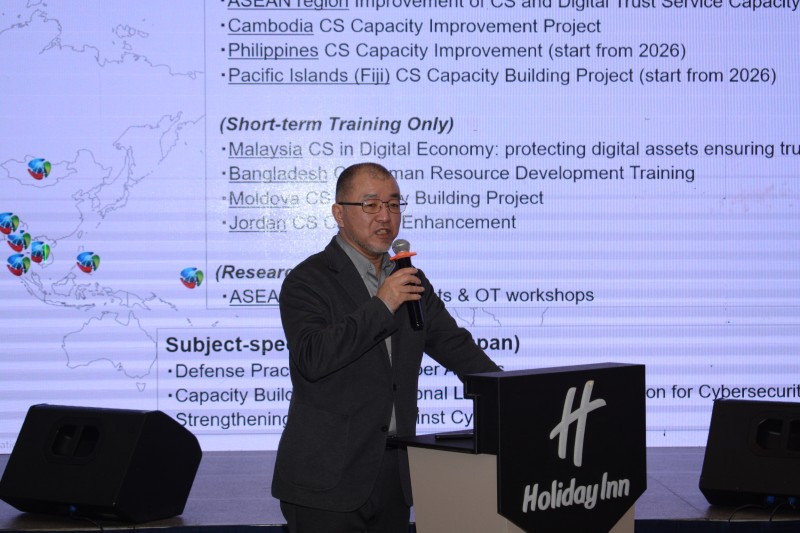
Chief Advisor Mr. Ide speaking at the seminar
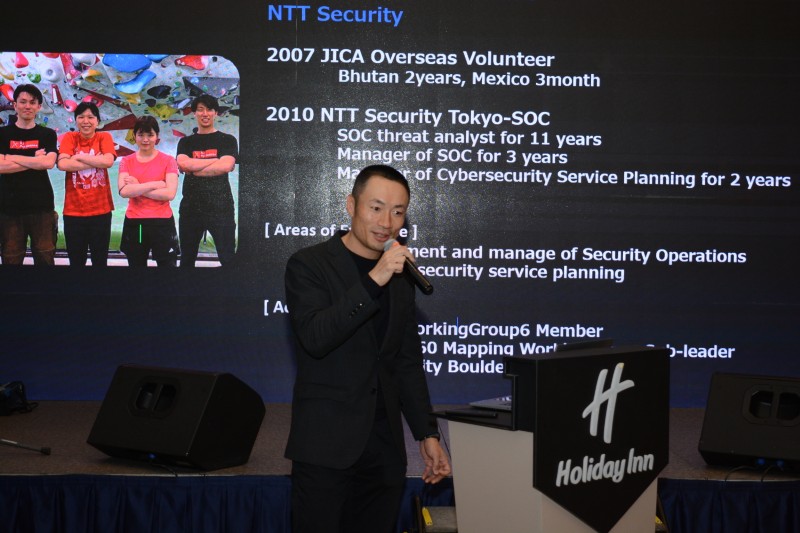
Mr. Kawada speaking at the seminar
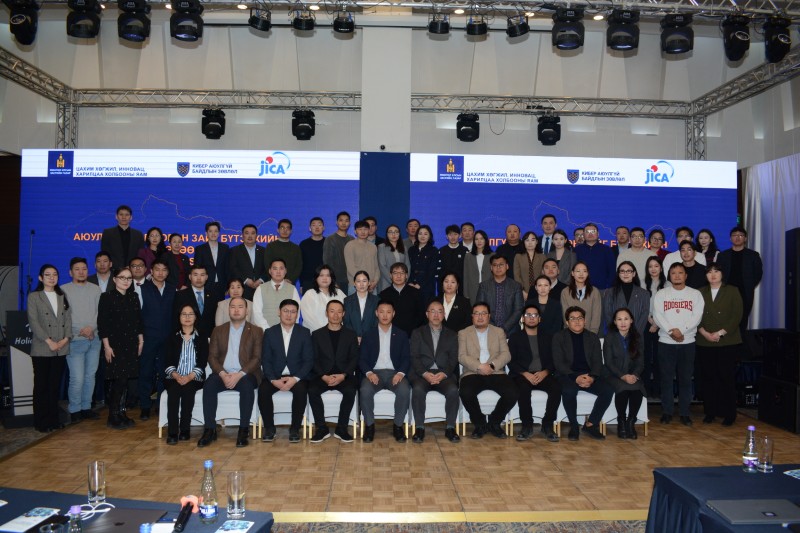
Group photo of the seminar participants