

The 5th Training in Japan for National Leaders
From April 5 to April 16, 2026, a total of 14 government and party leaders, including 6 Vice Ministers and 7 Director-Generals, participated in a 12-day training program held in Tokyo, Toyama Prefecture, and Ishikawa Prefecture).
In Viet Nam, following the 14th National Congress of the Communist Party held in January 2026 and the National Assembly and local council elections held in March, a new national leadership for the next five-year term was established. The training participants, who play important leadership roles at both central and local levels, are currently taking the lead in promoting major organizational restructuring, the transition from the three-level local administration system to the two-level system, and broader administrative reforms under the new government structure. In this process, they are facing numerous challenges on a daily basis.
To support efforts to address these challenges, the training program introduced a wide range of practical case studies based on Japan’s experiences in overcoming similar issues. The program covered topics such as “Administrative Reform and Good Governance,” “Local Governance Systems and Central–Local Relations,” “Leadership and Crisis Management,” and “Theory and Practice of Knowledge-Creating Leadership.”
In addition, the promotion of DX (Digital Transformation) has been positioned as one of the most important policy priorities in advancing reforms in Viet Nam. Accordingly, participants visited the Digital Agency of Japan to learn about the promotion of DX in Japanese public administration. Participants actively raised questions regarding cybersecurity measures, a common challenge shared by both Japan and Viet Nam.
Furthermore, Viet Nam is aging at a faster pace than Japan. During the lecture on “Declining Birthrate, Aging Society, and Universal Health Coverage,” participants showed strong interest in Japan’s policy responses and in systems such as long-term care insurance, which has not yet introduced in Viet Nam. In the post-training questionnaire, some participants commented on the need to strengthen specialized committees addressing population issues in Viet Nam.
During the three-day field study visit, participants paid a courtesy call on the Governor of Toyama Prefecture and learned about initiatives related to “Well-being,” which aims to ensure that all residents can live fulfilling and satisfying lives, as well as local transportation policies. The concept of “Well-being” was new to many participants from provincial cities in Viet Nam, who commented that the lectures were highly informative and valuable. In Kanazawa city in Toyama, participants also had opportunities to visit and exchange views with three companies operating in Viet Nam that possess world-leading advanced technologies.
In the questionnaire conducted at the end of the training, participants provided many concrete comments such as: “The lectures on Japan’s administrative systems and operations were highly relevant to the areas we currently need to study,” “We reaffirmed the importance of decentralization and delegation of local authority,” and “We would like to further study improvements to fiscal models at the commune-level administrative unit in order to better support for small businesses and individual households.” These comments
demonstrate strong expectations for the future application of the knowledge and experiences gained through the training program.
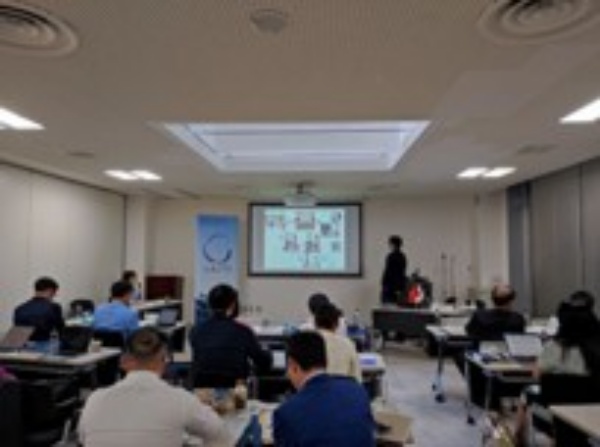
Program Director Professor Ono’s lecture
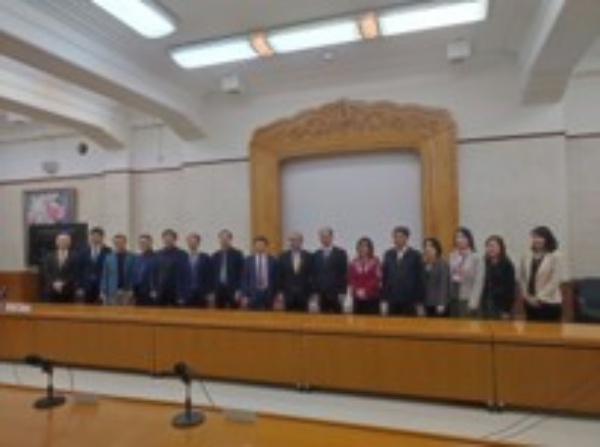
Courtesy call to Governor of Toyama
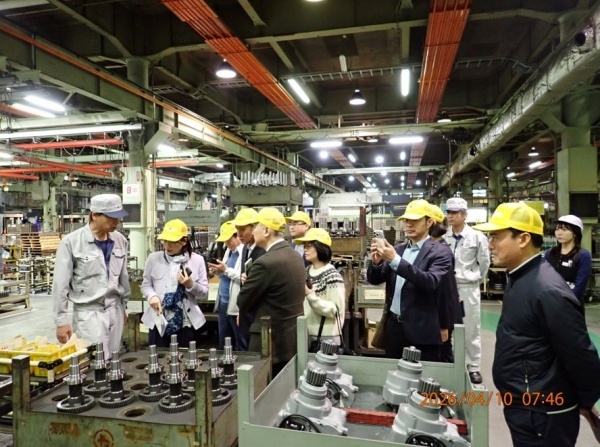
Visiting Tsuda Koma Company
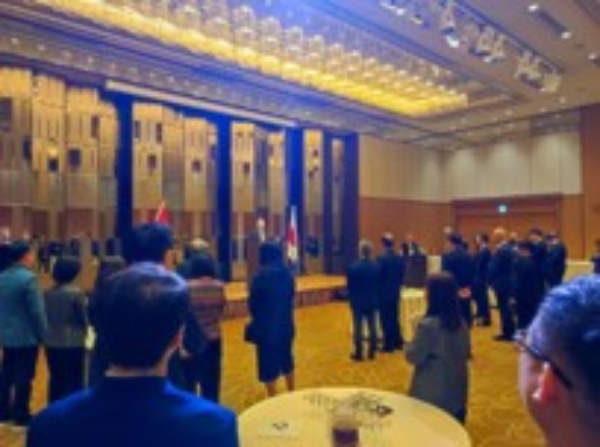
Exchange at Hokuriku Economic Federation
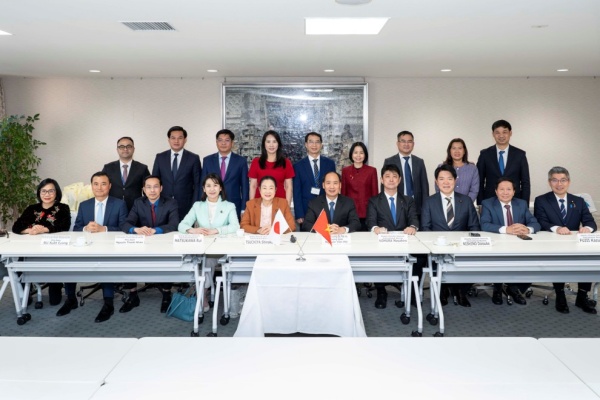
Courtesy call to LDP
Commemorative photo after closing