
【Activity Report】 Hiroshima Study Tour.
[Goal 4] Quality Education
[Goal 17] Partnerships for the Goals
2026.03.12





2026.03.12
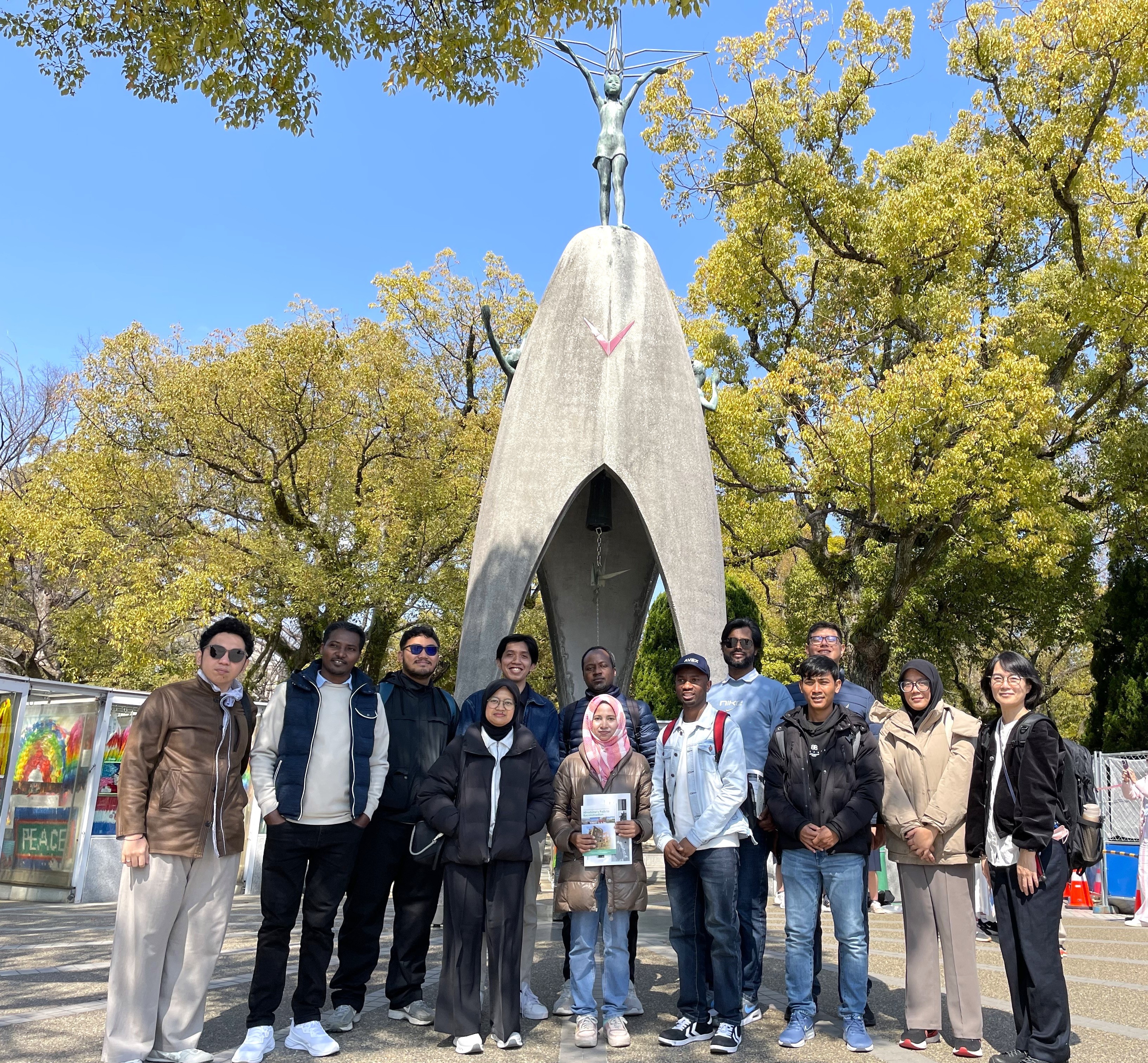
Group photo after the program
The Hiroshima Study Tour was conducted on March 12, 2026. Twelve JICA foreign students with strong interest in local history and technology participated in the program. The following section presents reports and comments from the participants.
A Reflection by a JICA Participant from Bangladesh
As part of the Hiroshima Study Tour 2026 organized by the JICA Chugoku Center (Hiroshima), I had the privilege of joining fellow JICA scholars from various countries in exploring the city’s remarkable transformation from a tragic past to a global symbol of peace and sustainability. The program offered invaluable insights into Hiroshima’s commitment to peace education and environmental innovation.
The tour began with visits to the Hiroshima Peace Memorial Museum, the Peace Memorial Park, and the Atomic Bomb Dome, where we received a detailed lecture by an expert guide on the history of the atomic bombing and the city’s subsequent redevelopment. Through this session, we gained a deeper understanding of the origins and significance of the Peace Memorial Park and its symbolic structures dedicated to peace and remembrance. A particularly touching moment was learning about the story of Sadako Sasaki and Sadako and the Thousand Paper Cranes, an inspiring tale that represents hope and resilience. We also received the translated version of the book, a thoughtful gift , which carried a universal message of peace in our native languages.
In the second part of the study tour, we visited the Hiroshima Chuo Ecopark, a state-of-the-art waste management and recycling facility. The visit began with an informative lecture explaining the center’s comprehensive waste management system, followed by a guided observation of its automated operations. We had the opportunity to explore each stage of the waste recycling process, including sludge water treatment, and experienced an interactive 3D virtual reality demonstration showcasing microorganisms involved in the treatment process. It was fascinating to learn how this fully automated facility operates 24 hours a day, 7 days a week, exemplifying Japan’s technological advancement and environmental commitment.
This study tour offered a profound educational experience—connecting the themes of peace, resilience, and sustainability. Hiroshima’s story serves as both a lesson and an inspiration, showing how a city can rise from devastation to become a beacon of hope and innovation. As a participant from Bangladesh, I am deeply inspired to apply the lessons learned from Hiroshima’s journey toward building a more peaceful and sustainable society.
Md Abdul Khalek from Bangladesh
Doctoral Student of Hiroshima University
"Visiting Hiroshima Peace Memorial Park was a deeply reflective experience that reshaped my understanding of peace education. Seeing the remnants of the Atomic Bombing of Hiroshima made history feel immediate and human, rather than distant facts in a textbook. It emphasized the devastating consequences of war, not only physically but across generations.
This tour also made me think about current global tensions, including conflicts in the Middle East. The lessons from Hiroshima highlight the urgent need for dialogue, restraint, and empathy in resolving disputes. Peace education, therefore, is not just about remembering the past but applying those lessons to prevent future suffering.
Overall, the visit reinforced that peace is a shared responsibility. It requires awareness, critical thinking, and a commitment to humanity, especially in a world where conflict still persists".
— Omary from Tanzania
The Hiroshima Tour on 12 March 2026 was one of the most memorable and meaningful experiences during my time in Japan. We started by visiting the Hiroshima Peace Memorial Museum, where I saw touching displays showing the human suffering caused by the atomic bombing. About 140,000 people lost their lives, and many others are still affected today.
After that, we walked around the museum and visited the monuments, statues, the Atomic Bomb Dome, and the hypocenter, which helped me connect more deeply with what I saw in the museum, history, and really the evidence. It also reminded me of my visit to the Tuol Sleng Genocide Museum in Cambodia a few years ago. Although the events are different, they share the same root—WAR—and resulted in the same tragic memory, showing how deeply it affects human lives.
This experience helped me reflect on how war leaves lasting pain, loss, and separation. I always feel deeply moved when I see or hear about something bad happening to children; that is why the story of Shinichi Tetsutani
’
s tricycle especially touched me. As a father of a three-year-old son, I found myself imagining how painful it would be to lose a child, even though I have not experienced such a loss. At the same time, the story of Sadako Sasaki gave me a sense of hope and strength. It also made me think about how I can include peace education in the English programs I design in Cambodia.
—
Vida from Cambodia
"I remembered when I was in high school, I watched news about the biggest landfill in my country called “Bantar Gebang”. A very huge mountain of trash landfill, around 40 meters in height, equal with 16-story building. I don’t know much about waste management in my own country but perhaps there wasn’t enough effort to manage the trash and the government seems to choose just to dump them somewhere. I used to wonder how Japan manages their waste. That question was answered when I visited Hiroshima Eco Park on March 12th. The place was located very far from residences and surrounded by forest. It was huge area with little people to manage it, yet very very clean and no smell. Considering it manages the burnable garbage from two cities, I was very impressed. I learned a lot about the waste management process through the explanation from the staff. I felt like it was very high tech and very efficient, considering they only have less than 100 people to operate the facilities. I hope one day my country can learn how to make a waste management system as good as this."
—
Lucky from Indonesia
" I was honored to visit the HIROSHIMA CHUO ECOPARK last week.
As an engineer, I want to highlight the hard work of Japanese engineers. The facilities look sharp, and the way the process is developed is more advanced than many around the world. It's clear that Japan's commitment to the SDGs, especially climate actions, is at a high point.
Thanks again to JICA Chugoku Center and Hiroshima International Plaza for letting me be part of this experience."
—
Mat from Ecuador
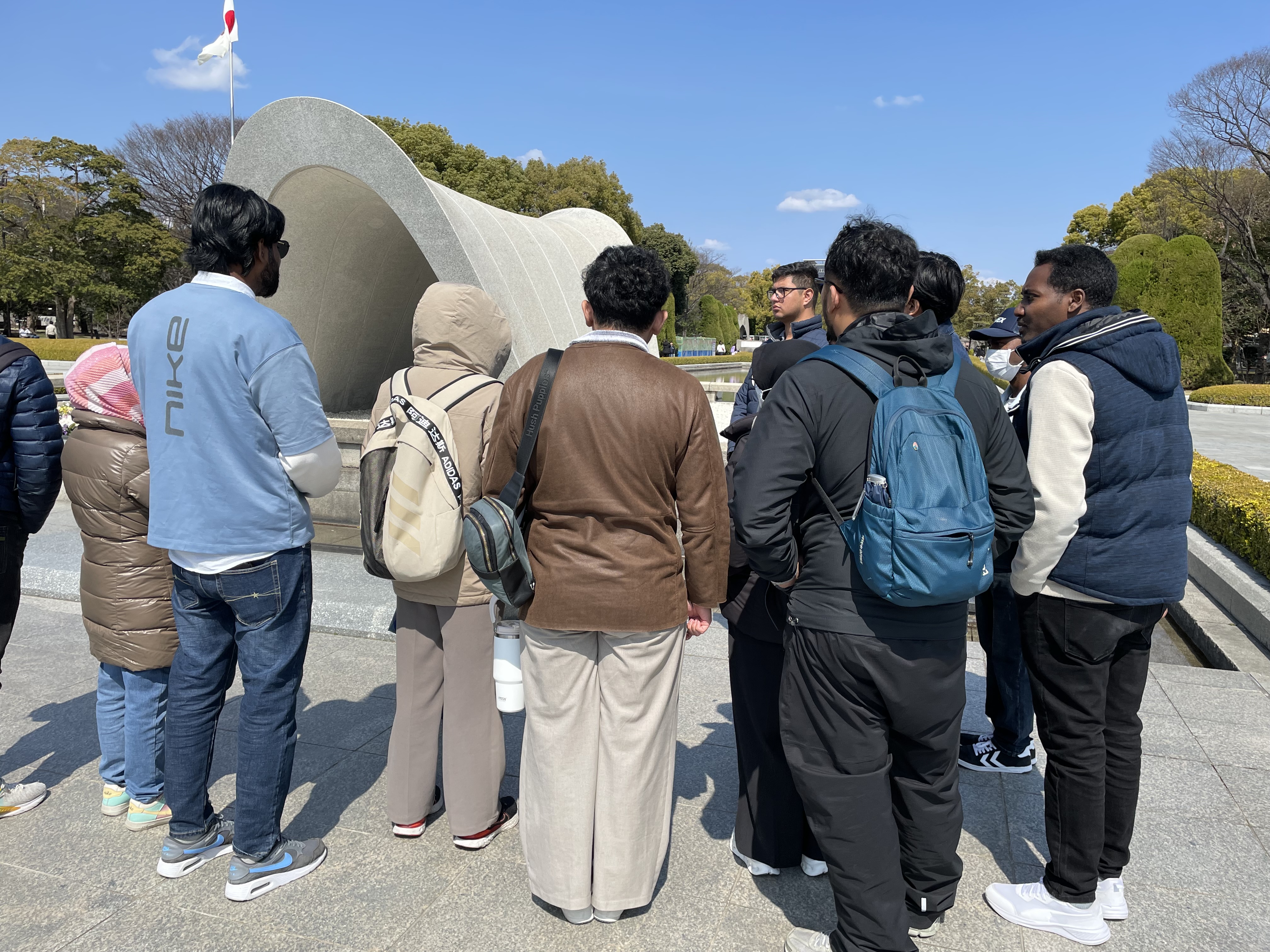
Receiving an explanation about the memorial monument
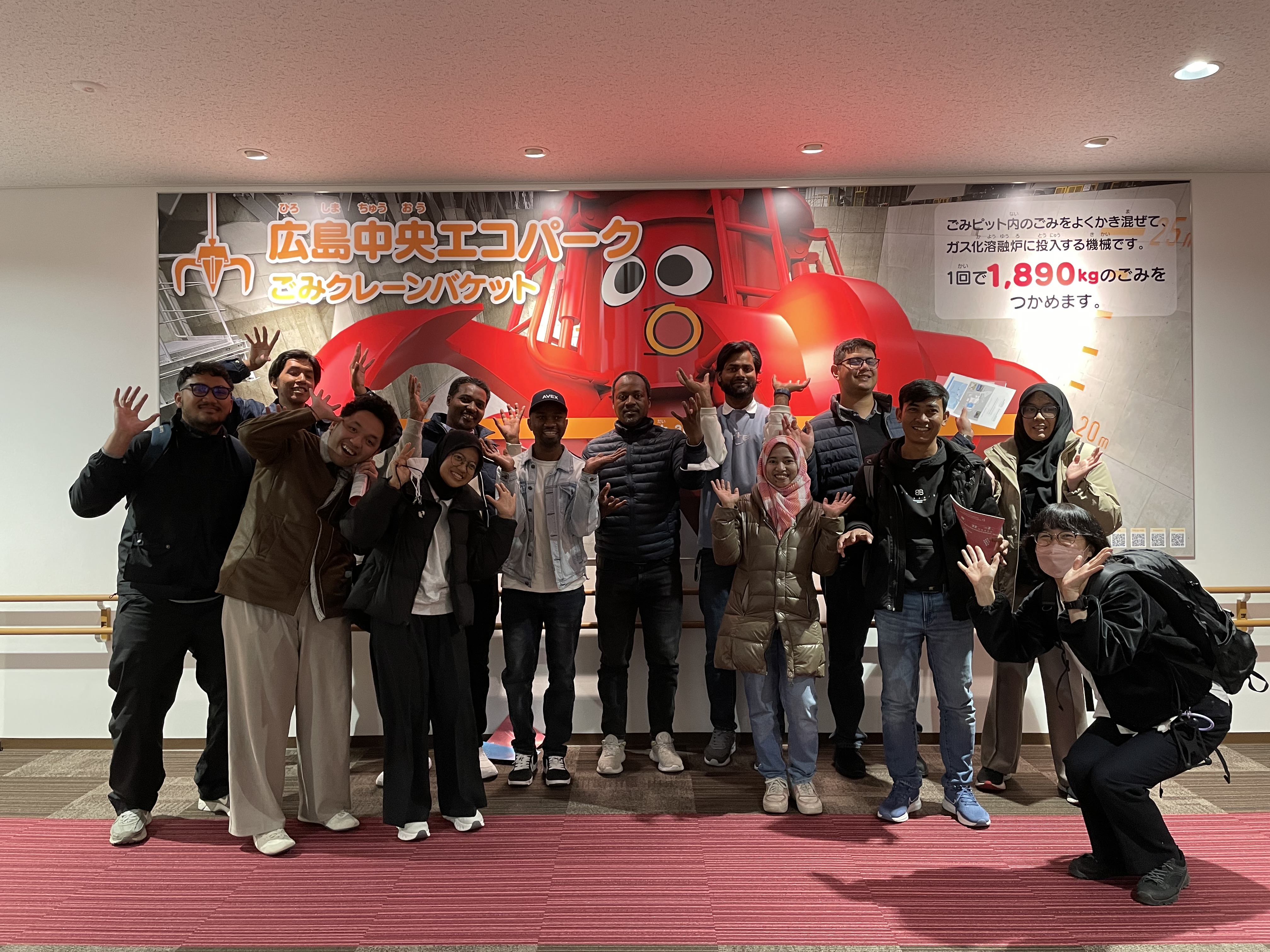
Group photo at Hiroshima Chuou Eco Park
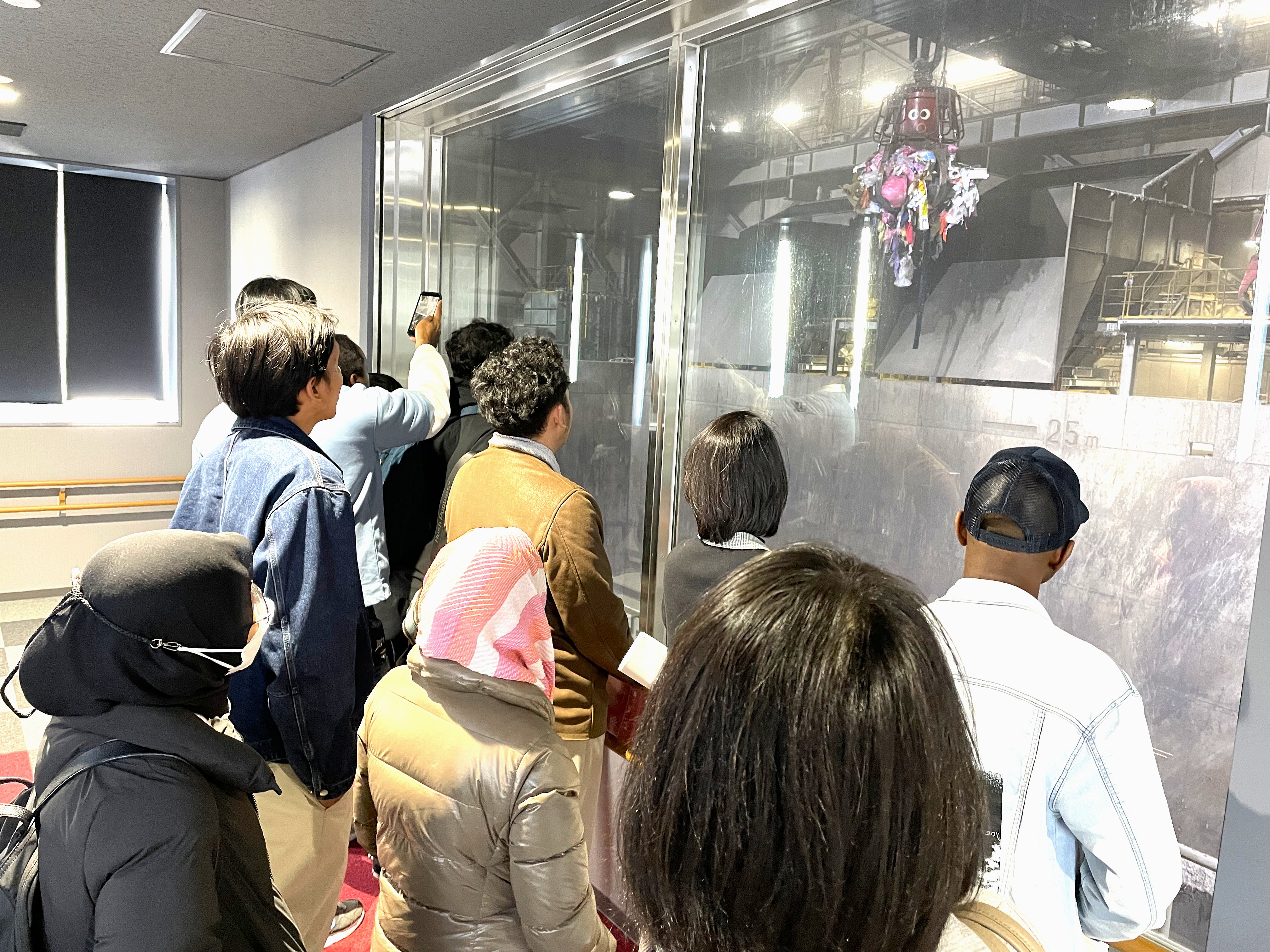
Watching the waste management process
Sns share!


