
【Activity Report】 Visiting Kamo High School for a Global Culture Exchange through Integrated Inquiry Studies.
[Goal 4] Quality Education
[Goal 17] Partnerships for the Goals
2026.03.23






2026.03.23
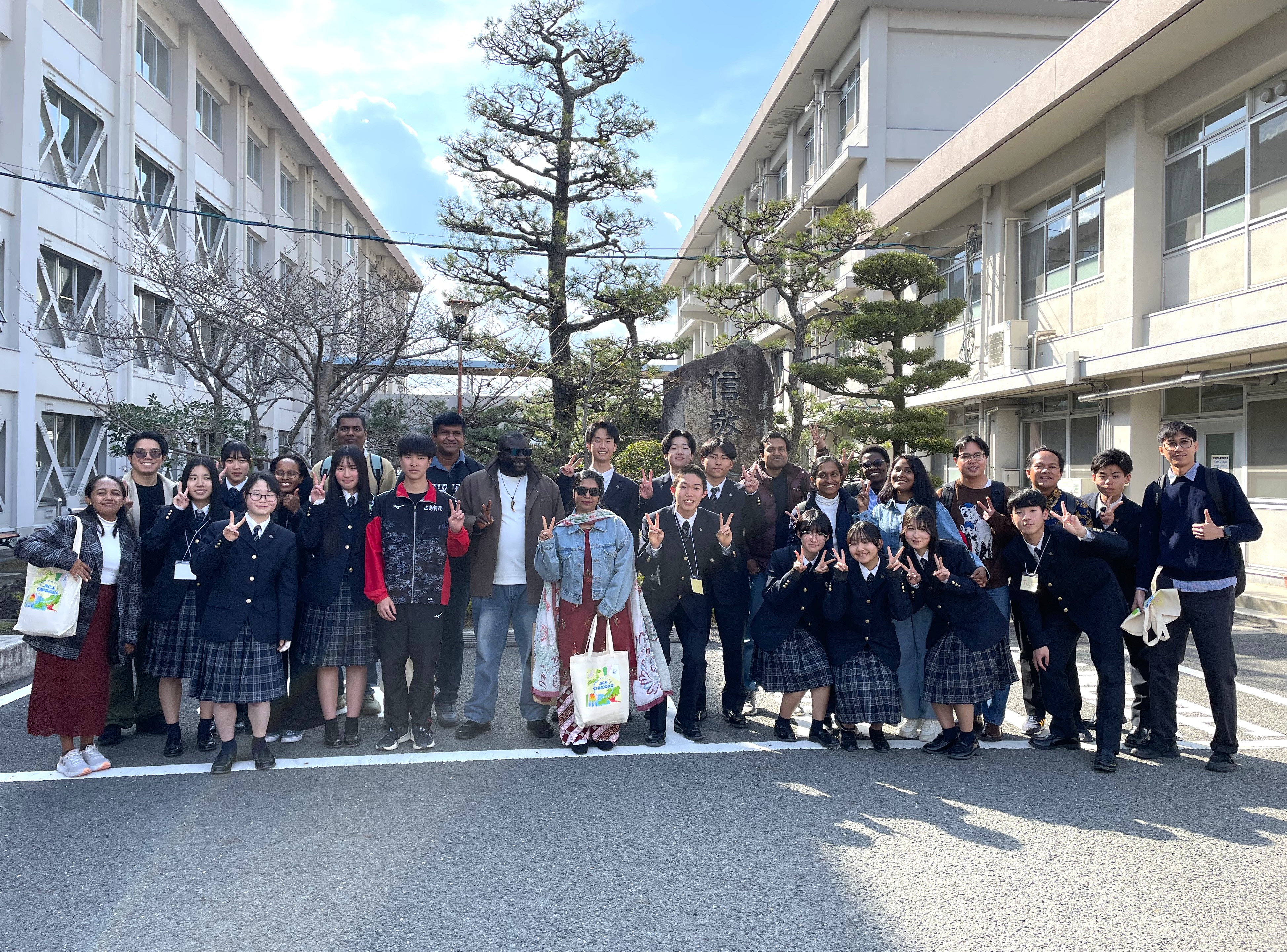
Group photo after the program
As a part of the individual activities under Integrated Inquiry Studies of Kamo High School, a student-organized cultural exchange event was held on March 23, 2026. 14 foreign students from 9 countries under JICA Program (JICA foreign students) and 14 Kamo High School students with an interest in international exchange and English participated in this event even though the school is on spring break. All participants enjoyed every activities without interpreters.
Mr. Hendra Melanton from Indonesia wrote a report describing what the event was like. So, what did he experience?
I visited Kamo High School as part of a cultural exchange session. It involved JICA participants from different countries currently studying at Hiroshima University and high school students. Upon arrival, the students welcomed us warmly at the school gate and guided us to the classroom. We then sat at desks like regular high school students. The atmosphere was friendly, and the students communicated with us in English with confidence. The session then began with an icebreaking activity. It was led by one of the students, who acted as the facilitator and explained the rundown, while the teacher observed from the classroom. We introduced ourselves and talked about simple topics such as hobbies, future goals, and how we usually spend our free time. This activity involved everyone in the class and helped create a relaxed atmosphere. The students were active and confident in speaking, and they also showed interest in our answers. After that, we were divided into small groups for further discussion.
I was in Group 6 with two Japanese students and one participant from Nigeria. We had around 50 minutes to talk in more depth about our daily lives. I brought Indonesian snacks and showed photos of Indonesian food, fruits, and tourist destinations. The students were interested in the photos, as many of the fruits such as rambutan, jackfruit, papaya, and dragon fruit were unfamiliar to them. The Nigerian participant also shared his culture and brought traditional clothing, which we tried on and took photos together, making the discussion more interactive. The students were curious and asked practical questions, especially about our backgrounds and cultures. In return, they explained their school life, including their schedules, club activities, and daily routines. Compared to high school life in Indonesia, I found it interesting that the school system here does not include promotion exams, which is different from both Indonesia and Nigeria. I was particularly interested to learn that their club activities often continue after school and even on weekends.
After the discussion, we joined a school tour led by the students, with each group guided separately. They showed us several facilities such as the sports fields, gym, and computer room. The school was large and well-equipped, with several multi-story buildings and a wide range of sports facilities. During the tour, we continued asking questions, and I was particularly interested in how the school is maintained. It was interesting to learn that both students and teachers are responsible for keeping the school clean, including classrooms, corridors, and outdoor areas. Throughout the tour, the students explained things clearly and responded to our questions. They were friendly and enthusiastic, which made the experience comfortable. Overall, the program gave me a better understanding of school life in Japan and provided a good opportunity to share about Indonesia in a simple and direct way.
As he described in his report, the program was facilitated and led by the student who organized this program. The teacher respected the students’ autonomy and warmly watched over them. When the students tried to make small groups, they seemed unsure about how to divide into groups. Then a JICA foreign student gave an idea how to form groups easily. It was heartwarming to see them cooperating with each other.
Each group engaged in different activities—some introduced karuta, some taught how to fold origami, and another group shared how to write names in their own languages.
Although the visit lasted only two hours, JICA foreign students and the high school students became very close. At the end, it was touching to see JICA students telling the high school students, “Good luck!”
I believe this exchange was a very meaningful opportunity for both groups who normally have little chance to interact in their daily lives.
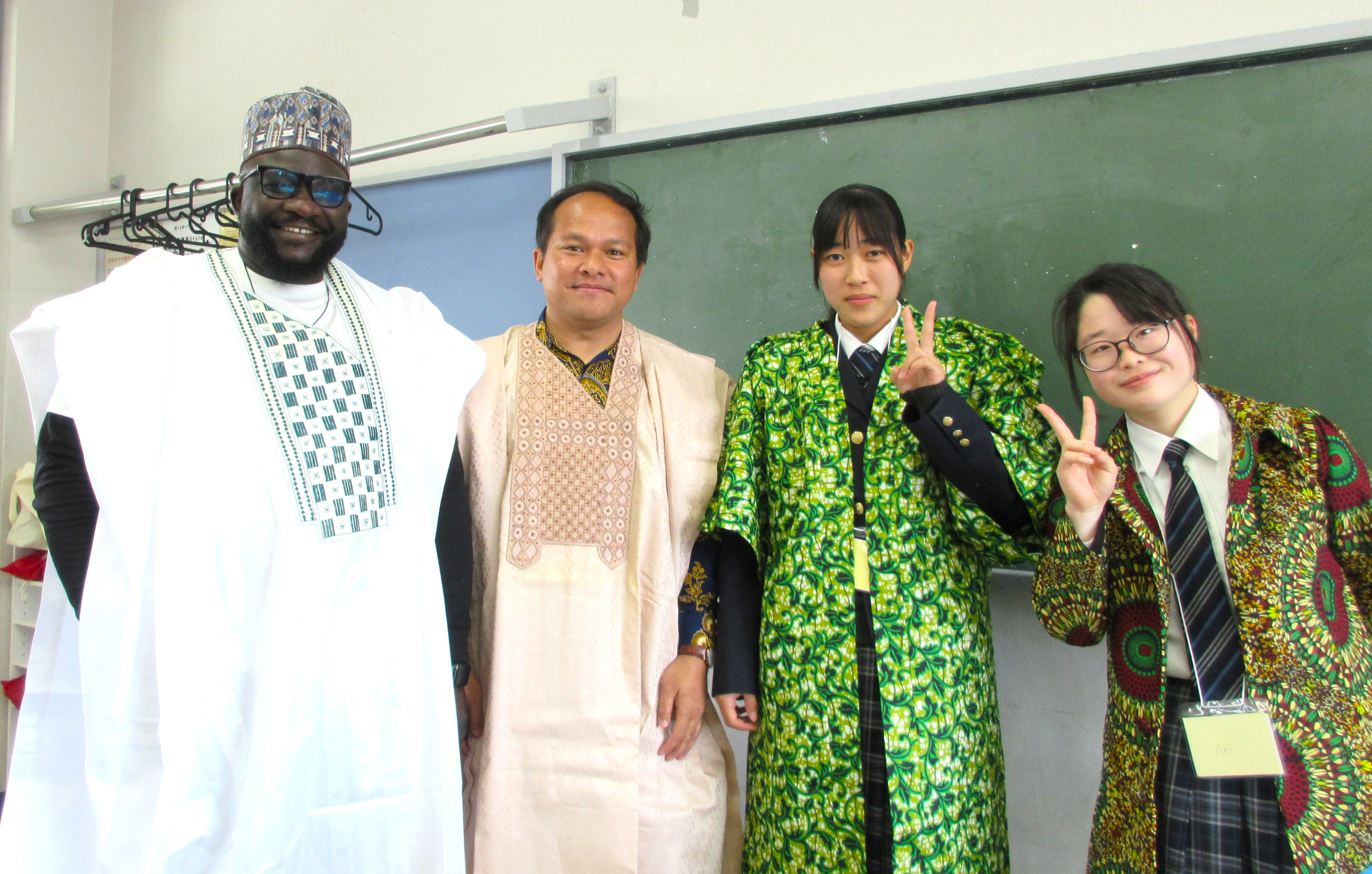
Costume in Nigeria
(Mr. Melanton Hendra Siregar is in beige costume)
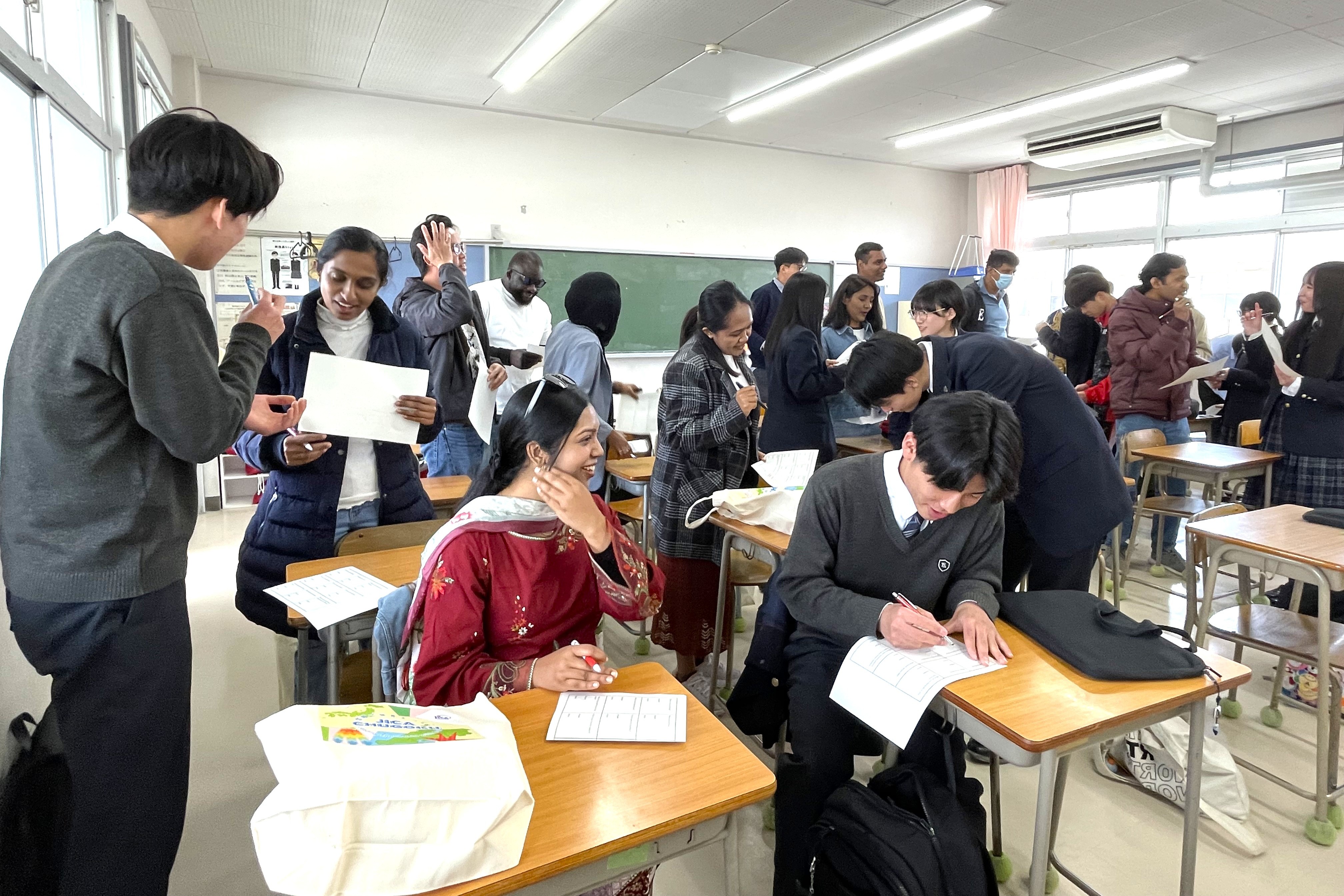
Icebreaker Activity
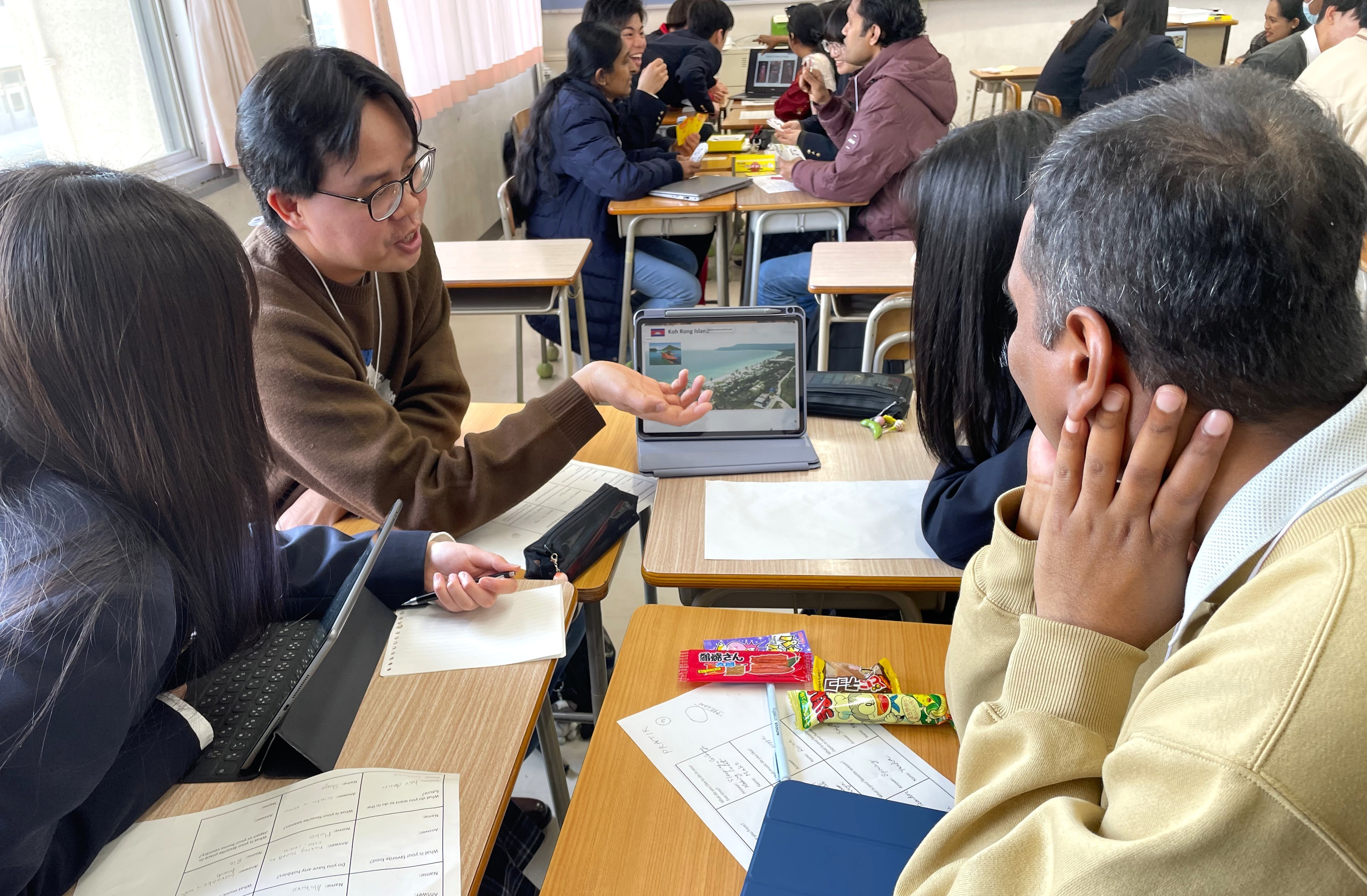
Small-Group Cultural Introductions
Sns share!


