Introduction
What would come to your mind when hearing “international cooperation in the disability sector”?
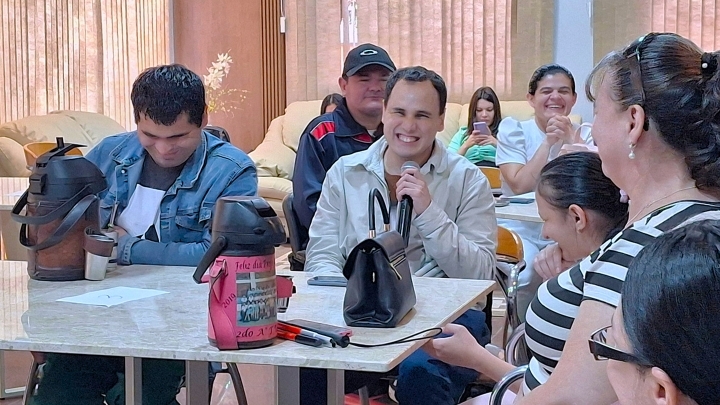
You might think of efforts to support people in developing countries who already face difficult living conditions with weak welfare systems, living in “unfortunate” circumstances. However, JICA sees persons with disabilities not merely as beneficiaries of support, but also as partners in creating social change. I would like to share what I have learned through my life and work in Paraguay as a JICA staff member with a visual impairment.
The Social Model of Disability and JICA’s Approach
To contextualize my experience, I would like to introduce the “social model of disability.” Traditionally, disability has often been understood through what is known as the “individual” model. Under this way of thinking, people are excluded from education, employment, or social participation because of individual impairments such as not being able to see or walk.
In contrast, the social model views disability as the restriction of social participation that results from the interaction between individuals and environments that do not take human diversity into account. In other words, it is not the impairment itself, but social barriers that restrict participation. These barriers include not only physical obstacles such as steps and uneven roads, but also information barriers, institutional systems, and social attitudes.
For instance, in education, whether children with disabilities can attend school depends largely on whether schools are designed with wheelchair users in mind, or whether learning materials are accessible to students with visual impairments.
This perspective forms the foundation of JICA’s work on disability and development. JICA not only works in the disability sector but also promotes the inclusion of people with disabilities across all sectors, including education, health, and infrastructure, ensuring that no one is left behind.
Living in Paraguay
When I was assigned to Paraguay, I noticed how difficult it was to cross the street on my own. In Japan, even when there are no audible signals, I can usually rely on traffic rules being followed and judge when it is safe to cross by listening carefully. In Paraguay, however, traffic rules are not always respected, and I often need assistance from others.
In addition, sidewalks frequently have holes, and electrical wires sometimes hang at head level. For someone accustomed to Japan’s relatively accessible environment, walking alone was initially very challenging. Public transportation was also not accessible to me, so I rely on ride-hailing apps for daily transportation. From this perspective, Paraguay might seem full of barriers. Yet at the same time, I was repeatedly surprised by the flexibility and kindness of the people. At a language school, although I was the first student with visual impairment, the staff readily accepted my explanation that I could study using screen-reading software. Later, the teachers even encouraged me to take an international Spanish examination in Braille.
On another occasion, when I explained that I could not complete image-based authentication on an online banking website, the issue was addressed promptly. And on the street, strangers often naturally offered their help when they saw me struggling. While physical barriers remain numerous, the warmth and adaptability of people in Paraguay are remarkable strengths.
The Power of Peer and Sport
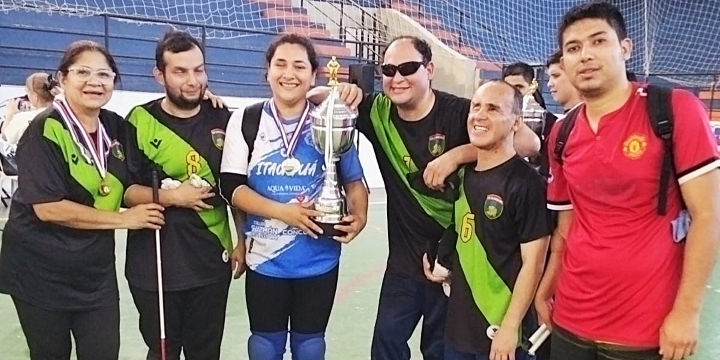
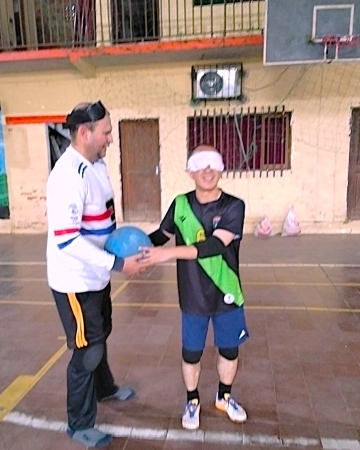
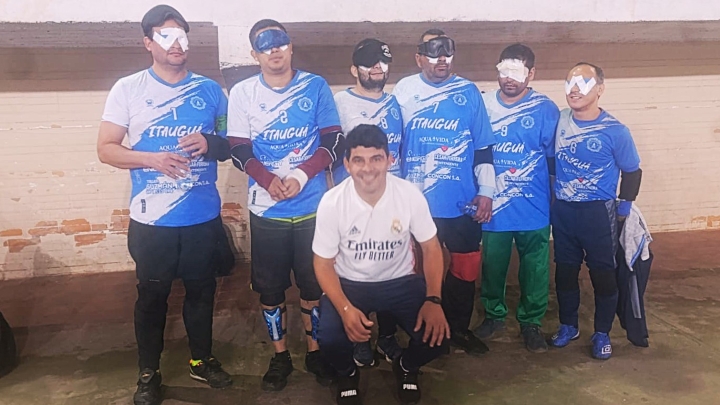
One of the most meaningful aspects of my life in Paraguay has been connecting with other people with visual impairments through sports such as goalball and blind football.
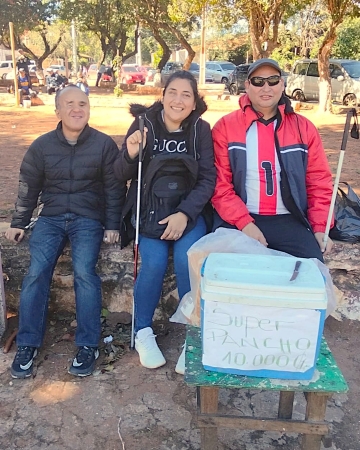
What impressed me most was how sports helped people build confidence and take action. One friend told me that she had never gone out alone for two years after losing sight. After discovering goalball, however, she began commuting one to two hours by bus— despite the lack of accessibility—to attend practice. Eventually, she became someone who encouraged teammates who were still hesitant to go out independently. Teams also worked together to change their environment. To raise funds, we sold hot dogs. To secure venues for games, we visited city offices to request support. Through these experiences, members learned together how to advocate for themselves and take concrete action to improve their circumstances.
Moreover, we often encounter people who approach us to learn about our sports activities and daily lives when we walk on the streets with the balls. These interactions demonstrate the power of sport to raise awareness and gradually change social attitudes.
Experiencing JICA’s Work on the Ground
Living in Paraguay as a JICA staff member with a visual impairment allowed me to experience firsthand the significance of JICA’s work on disability and development, as well as its sport and development initiatives. JICA places strong emphasis on empowerment—supporting persons with disabilities to gain confidence and to become agents of change. Currently in Paraguay, JICA is implementing a project that creates spaces for dialogue between government institutions and organizations of persons with disabilities, enabling them to work together to address challenges. Within this effort, the development of leaders with disabilities is a particularly important component. Likewise, JICA’s sports initiatives aim to contribute to an inclusive society through the power of sports—an impact I have personally witnessed.
Another important dimension of this work is mutual learning. In many projects, representatives from Japanese disability organizations and local governments share their experiences with Paraguayan counterparts. Interestingly, Japanese participants often comment that engaging internationally helps them realize that systems they take for granted were built through long processes of trial and error, and that sharing these experiences reignites their own motivation and leadership.
Having lived in both Japan and Paraguay, I have come to believe that international cooperation is not about one side teaching the other, but about learning together. Through mutual exchange, both sides gain new perspectives and growth. I am deeply grateful to be involved in this process and to learn alongside my colleagues and friends in Paraguay. I will go on strengthening these mutual learning relationships with partners around the world, working toward a society in which everyone can participate, regardless of disability.