
JICA and IOM Bring Maternal and Child Health Care Closer to Island Communities in BARMM
2026.01.26





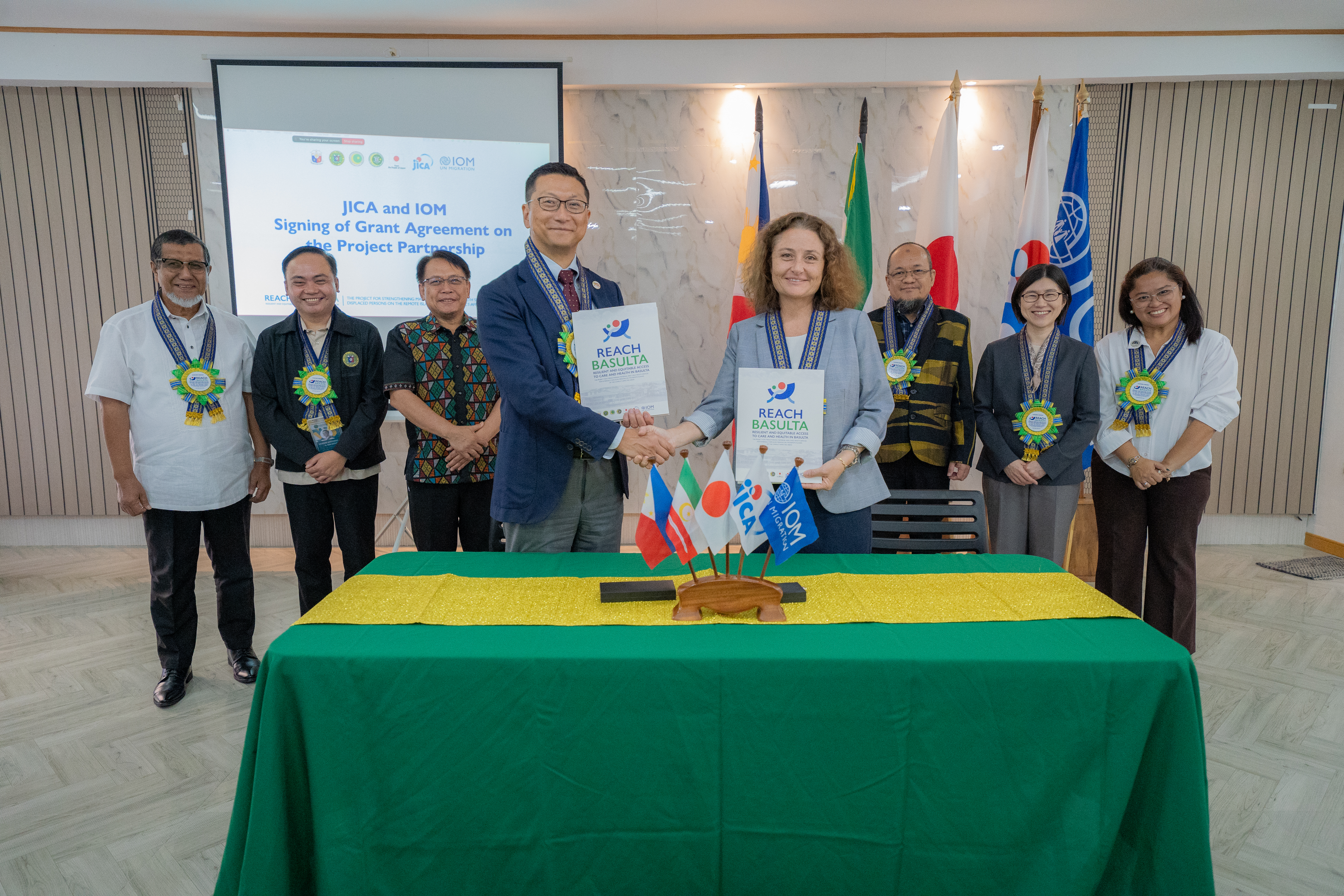
Japan International Cooperation Agency (JICA) and the International Organization for Migration (IOM) officially launched the Resilient and Equitable Access to Care and Health in Basilan, Sulu and Tawi-Tawi (REACH-BASULTA) project in a signing ceremony held in Cotabato City on January 26.
This three-year JICA Grant aims to improve Maternal, Neonatal and Child Health (MNCH) outcomes among vulnerable and underserved populations in mobile communities in Basilan, Sulu, and Tawi-Tawi (BaSulTa) by advancing inclusive, and resilient health systems. This is a welcome development in BaSulTa area where geographic isolation continues to limit timely and quality health care.
For many families in Basilan, Sulu, and Tawi-Tawi, accessing routine healthcare often requires boat travel, while remote health centers lack resources. Conflict-related displacement and mobility further hinder care, leading to delayed medical consultations, unsafe deliveries and early interventions for mothers and their children.
This JICA Grant Project will address these issues by strengthening health systems at the facility, workforce, and community levels. REACH-BASULTA will support better-equipped health facilities, build the capacity of frontline health workers, and promote culturally sensitive community outreach to encourage timely care-seeking and enrollment in PhilHealth, the country’s national health insurance program.
JICA and IOM collaborate for the first time in the Philippines to benefit more than 410,000 individuals across the three island provinces. For the next three years, both agencies will work closely with the Department of Health (DOH), Ministry of Health of the Bangsamoro Autonomous Region in Muslim Mindanao (MOH-BARMM), and six rural health units in BaSulTa.
BARMM Minister of Health Dr. Kadil M. Sinolinding in his speech explained that “[T]here was a common belief that tomorrow was uncertain—whether one would live or die. But now, we are placing greater importance on life, cherishing it, especially the lives of our children and mothers. With this partnership, we see a better BARMM in the near future, particularly in difficult and isolated areas”.
This was seconded by JICA Chief Representative BABA Takashi in his keynote speech, that with the commitment to ensure no one is left behind, “Mothers and children in BARMM are further enabled to participate healthily in their respective communities, empowering them to be a confident force for co-creating a stable and prosperous communities with unity”.
Meanwhile, Tristan A. Burnett, IOM Chief of Mission in the Philippines, highlighted that the strength of REACH-BASULTA lies, not only on the technical expertise of JICA and IOM but also being “shaped by community leadership, grounded in local realities, and driven by shared goals”.
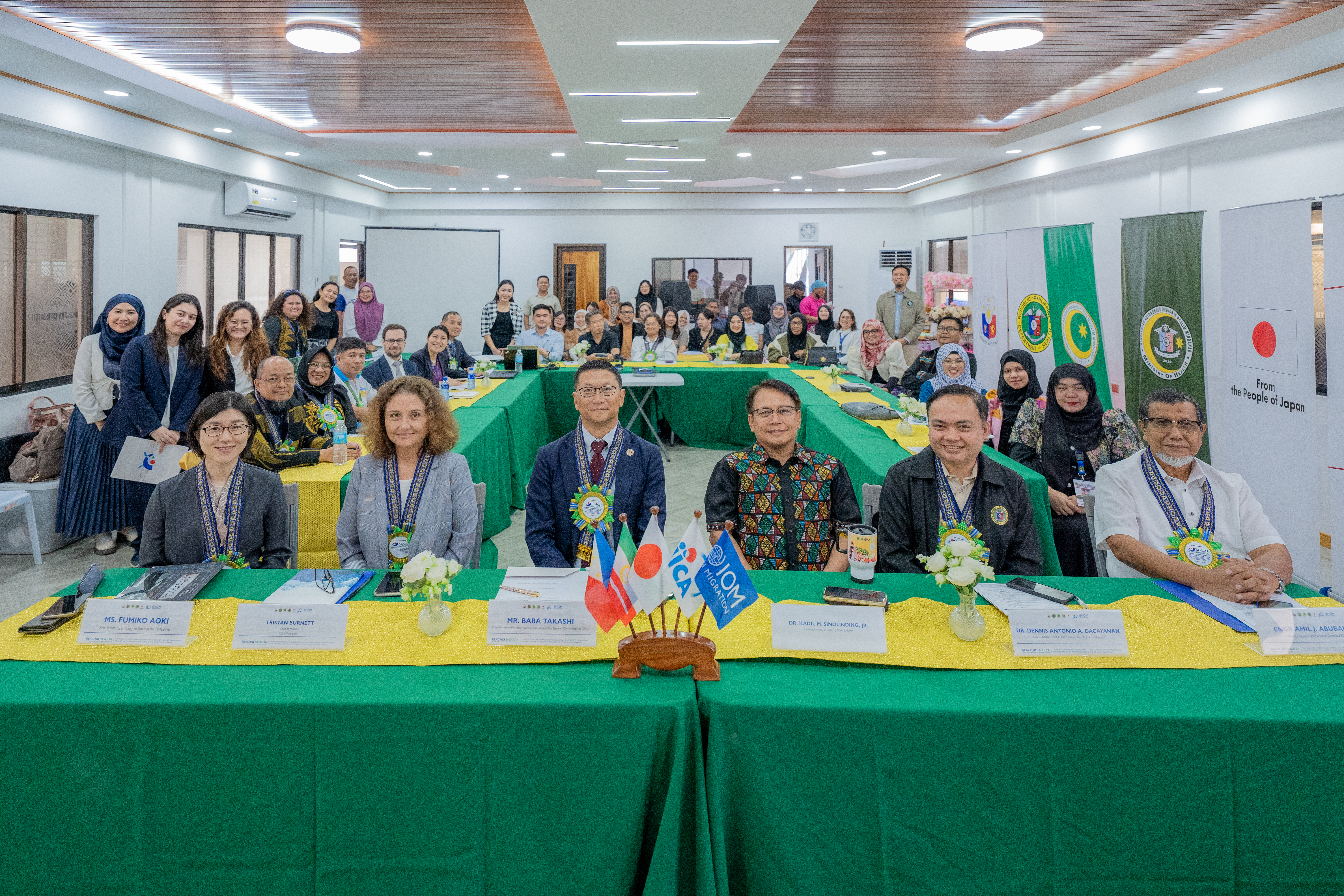
Witnesses in the signing of the Grant Agreement in Cotabato were First Secretary of the Embassy of Japan to the Philippines Dr. Aoki Fumiko, Bangsamoro Planning and Development Authority (BPDA) Deputy Director General Engr. Amil J. Abubakar, Office of the Presidential Adviser on Peace, Reconciliation and Unity (OPAPRU) Director Anna Farina F. Pacete, and Department of Health (DOH) Region 9 OIC Division Chief Dr. Dennis Antonio A. Dacayanan.
The Exchange of Notes last January 22 between the Government of Japan and IOM was attended by the Secretary Carlito Galvez, Jr. of the Office of the Presidential Adviser on Peace, Reconciliation and Unity, BARMM Health Minister Kadil M. Sinolinding, among others.
Aside from this Grant Aid, JICA has also recently began its technical cooperation project on health called the “Project for Strengthening Services in Maternal and Child Health and Nutrition Improvement in the BARMM” or Ina-Wata Nu BARMM Project, which aims to strengthen the health administrative framework and capacity of primary health facilities in mainland provinces of BARMM.
JICA expects that by implementing these projects in synergy, the dividends of peace are received on the ground, especially for expecting mothers, newborns, and children in these vulnerable and mobile communities.
Sns share!


