
JICA and Yamaha Expands Music Education Initiative in Philippine Public Schools
2026.02.20






Japan International Cooperation Agency (JICA) and Yamaha Corporation, in close collaboration with the Department of Education (DepEd) and Yamaha Music Philippines, are advancing efforts to strengthen instrumental music education and non-cognitive skills development in public schools across the Philippines.
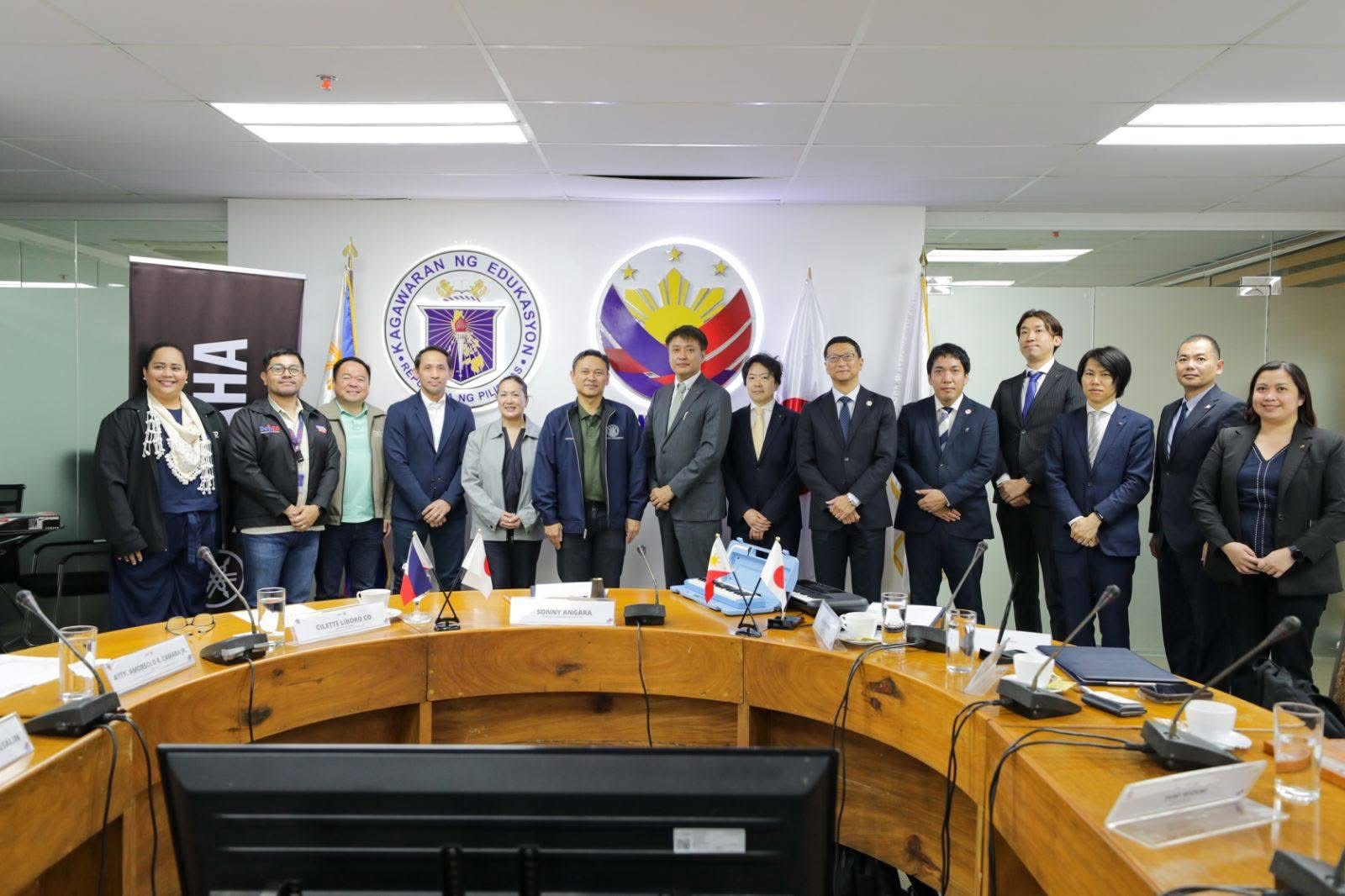
As part of these efforts, on February 20, 2026, DepEd and Yamaha Music Philippines signed a Memorandum of Agreement (MOA) in Makati City marking the project’s expansion of pilot classes that have introduced recorder-based music classes in three public elementary schools in Davao City since 2024. The MOA was signed by DepEd Secretary Juan Edgardo “Sonny” Angara and Yamaha Music Philippines President ONOE Koichiro, in the presence of JICA Philippines Chief Representative BABA Takashi and First Secretary SUZUKI Yuki of the Embassy of Japan in the Philippines.
The newly signed MOA formalizes the program’s inclusion of ten (10) Philippine public schools, wherein provision of instruments and instructional materials, and teacher training support will be provided.
This partnership aligns with Yamaha Corporation’s work with education authorities to introduce classroom-based instrumental learning that fosters learners’ non-cognitive skills, such as creativity, collaboration, and communication through their global “School Project” active in ten countries since 2015.
In July 2025, JICA and Yamaha signed Memorandum of Understanding in Tokyo to further enhance non-cognitive skills through music education. Under this framework, DepEd officials were invited to Japan and Indonesia for school visits, classroom observations, and discussions with authorities and music expert, so that lessons from these systems can help improve in instrumental and other non-cognitive education in Philippine public schools.
Building on these learning visits, JICA Philippines together with Associate Professor Mori Kaoru of Saitama University, DepEd officials, and Yamaha representatives, engaged with Davao schools from February 18 to 20, 2026 to observe pilot music classes under the program. Classroom observations showed strong student engagement and highlighted how recorder lessons build confidence, teamwork, and communication. Practical classroom challenges such as instrument quality, continuity of lessons from Grade 5 to 6, and the need for more gradual support in note reading under the MATATAG curriculum were also discussed.
Associate Professor Mori also conducted seminars on February 19 (Davao) and February 20 (Manila) attended by around 100 music and generalist teachers and DepEd personnel. Drawing from Japan’s national music curriculum, Professor Mori introduced the overarching goals of elementary music and highlighted simple, classroom-ready approaches and use of basic technologies that can be adapted with limited time, instruments or formal music specialization. DepEd Senior Education Program Specialist Ms. Glenne Basio, who have participated in the invitation program in Japan and Indonesia, shares that the session is insightful and further enriches contributing to efforts in strengthening music education and teacher development in the Philippines.
In parallel with these school and seminar activities, at the sidelines of the National Day Reception to celebrate the birthday of His Majesty the Emperor of Japan hosted by the Consulate – General of Japan in Davao City on February 19, DepEd officials who joined the invitation program in Japan and Indonesia, formally donated a set of traditional Filipino musical instruments to Hamamatsu City for inclusion in the Hamamatsu Museum of Musical Instruments with coordination support from JICA and Yamaha. The donation broadens the museum’s collection by adding Filipino instruments and highlights the growing strength of Japan-Philippines cultural exchange through music.
The classroom experiences in Davao now serve as a working model on how instrumental music education can contribute to academic and personal growth among young learners.
This initiative amplifies JICA’s decades of support for Philippine basic education, which includes construction and rehabilitation of more than 20,000 school buildings, technical assistance on science and mathematics curriculum improvement, provision of learning equipment, and extensive training and scholarship programs. Today, JICA is advancing initiatives that enhance classroom instruction and equips learners with 21st century skills —such as communication, creative and critical thinking, responsible use of information and technology, and life and career skills—so they can thrive in a rapidly changing world.
Through its long-standing support for basic education, JICA’s programs continue to contribute to more inclusive, resilient, and future-ready learning for Filipino children.
Sns share!


