
JICA-supported Project Highlights Science-Based Policy Insights on Climate and Water-Related Disaster Risks
2025.11.12





Researchers and policymakers from Japan and the Philippines gathered for the 9th and Final Joint Coordinating Committee (JCC) Meeting and National Workshop of the Hybrid Water-Related Disaster Risk Assessment and Policy Development Project (HyDEPP), held in Quezon City on November 12, 2025. The event showcased the project’s major achievements and latest findings on how climate change affects floods, droughts, and local economies in two of the country’s most critical river basins – the Pampanga River Basin and the Pasig-Marikina River and Laguna Lake Basin.
Supported by the Japan International Cooperation Agency (JICA) and the Japan Science and Technology Agency (JST) under the Science and Technology Research Partnership for Sustainable Development (SATREPS) program, the project is led by the University of the Philippines Los Baños (UPLB) in collaboration with the University of Tokyo and the International Centre for Water Hazard and Risk Management (ICHARM), and key Philippine partner agencies including the Department of Science and Technology (DOST), Department of Public Works and Highways (DPWH), Metropolitan Manila Development Authority (MMDA), Laguna Lake Development Authority (LLDA), The Department of Economy, Planning, and Development (DEPDev), Department of Agriculture (DA), Department of Human Settlements and Urban Development (DHSUD), and the Philippine Atmospheric, Geophysical and Astronomical Services Administration (PAGASA).
The project has successfully met its primary objective of developing collaborative, science-based tools to support climate and disaster policy planning.
Over more than four years of implementation, HyDEPP’s research activities included data collection, development of a Hybrid Risk Assessment Model that combines climate, hydrological, agricultural, and socio-economic model, and formulation of policy recommendations.
Through this project, JICA continues to promote a more inclusive, safer, and more resilient Philippines by linking scientific research to policymaking and strengthening local institutions’ capacity to apply data-driven approaches to disaster and climate management.
During the final JCC meeting, the project team shared policy recommendations and synthesis reports drawn from various studies. The discussions centered on modeling results, data analyses, and next steps toward integrating the findings into local and national climate and disaster resilience planning.
Based on the Pampanga River Basin synthesis report, simulations show that extreme rainfall and prolonged dry spells are projected to become more frequent, increasing both flood and drought risks. The report recommends updating land-use and infrastructure plans based on future climate projections to reduce the risks associated with future flood and drought events, and promoting climate-responsive watershed planning and management
Meanwhile, results from Pasig-Marikina River and Laguna Lake Basin report indicate deeper flooding and higher sediment inflow into the lake, which may worsen inundation in lakeshore communities and affect water quality. The report calls for strengthened rainwater drainage systems, upland community development and mixed livelihoods, and integrated understanding of sediment production and runoff processes from rainfall and their impacts on the lake.
The accompanying national workshop featured the project’s extensive research outputs, including climate change projections, flood and drought assessments, disaster resilience and socio-economic analyses, and the use of big data to support government decision-making. The workshop also incorporated feedback from local-level consultations in Pampanga and Laguna, reflecting community experiences and insights that can inform national policy and adaptation planning.
In addition to its research outputs, the HyDEPP-SATREPS implemented a series of training programs in both Japan and the Philippines to build the technical expertise of Filipino researchers and partner institutions in climate and hydrological data analysis using Japan-developed models and technologies. The project also provided equipment support, including laptops, data servers, and lake and river flow monitoring tools for UPLB, enhancing its capability for continuous monitoring, analysis, and data-driven policy support.
As the Philippines continues to experience severe flooding and other climate-induced disasters, the HyDEPP-SATREPS stands as a testament to how science, technology, and international cooperation can provide concrete solutions to climate-related challenges and build a more resilient future.
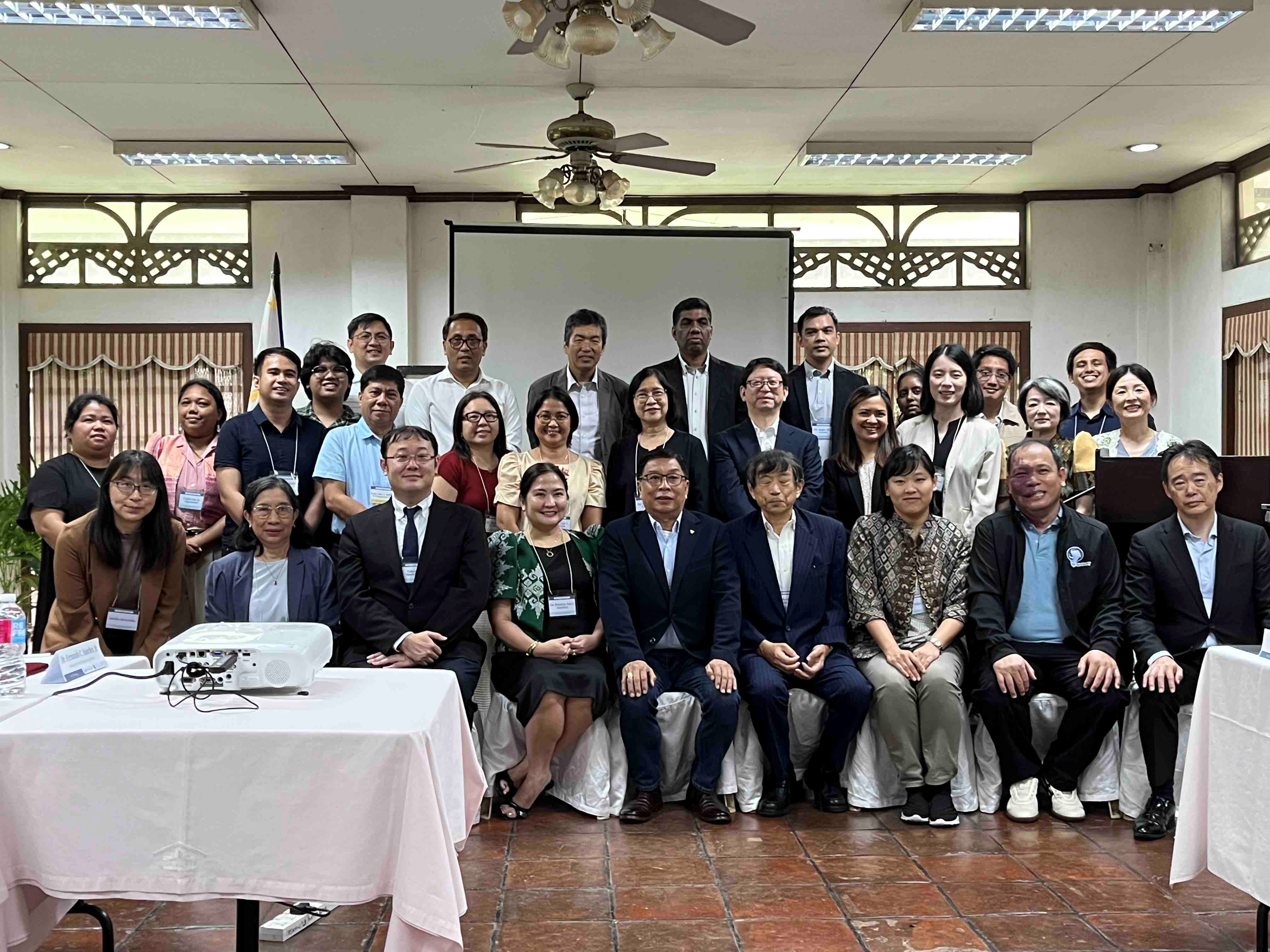
JICA Representatives, partners, and participants at the 9th JCC and National Workshop
Sns share!


