





scroll


Fujimoto Masaru
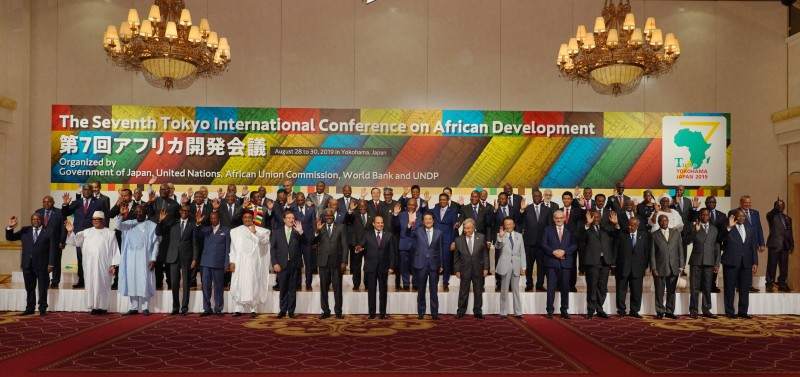
(Leaders gather for a group photo at the TICAD7 in Yokohama in 2019)
Series : Africa in Focus
In the lead-up to the 9th Tokyo International Conference on African Development (TICAD9) in August 2025, JICA is sharing a series of stories that explore Africa’s challenges and promise. While showcasing JICA’s contributions, the series also brings attention to the broader efforts, ideas and potential across the continent. This instalment focuses on how TICAD came about, its significance and achievements to date, and a few projects on the road ahead
With just weeks to go before Japan hosts the ninth Tokyo International Conference on African Development (TICAD), officials from the Japan International Cooperation Agency (JICA) are reflecting on the conference’s past achievements through significant shifts in global aid dynamics, to growing calls, even within Africa, to move away from aid in favour of direct investment.
Set under the theme, "Co-creating innovative solutions with Africa,” TICAD9 will take place this August in Yokohama. This Japanese initiative is co-hosted by the United Nations, the United Nations Development Program (UNDP), the World Bank, and the African Union Commission (AUC).
The ninth conference aims to reshape the conversation around development assistance, focusing on three key goals: fostering the next generation, promoting inclusive growth, and strengthening international cooperation.
The Japan International Cooperation Agency (JICA) takes a people-centred approach to development in Africa, guided by the principle of human security. The agency emphasises African ownership of development efforts and seeks equal partnerships rather than one-sided aid. Its strategy includes sharing lessons from Japan and other parts of Asia in areas such as industrial development, disaster resilience and public health, while working closely with African partners to co-create tailored, sustainable solutions.
But the road to this year’s conference has not always been easy. Since it began in 1993 to address the decline in African development assistance following the end of the Cold War, TICAD has navigated numerous challenges over its 32-year history.
Yoshizawa Kei, 64, a senior adviser in JICA’s Africa Department and a veteran involved in nearly every TICAD, has witnessed these shifts firsthand.
“Looking back, the world was entering a new phase after the Soviet Union collapsed. Japan rushed to define a new foreign policy,” he said. This policy would be deeply centred on the United Nations.
In Japan, the political landscape was also shifting. Two months before the first TICAD in October 1993, the decades-long rule of the Liberal Democratic Party ended, ushering in a coalition government under Prime Minister Morihiro Hosokawa.
Back then, he was one of few government officials responsible for Africa, tasked with organising the inaugural TICAD and seconded to what is now the Ministry of Economy, Trade and Industry.
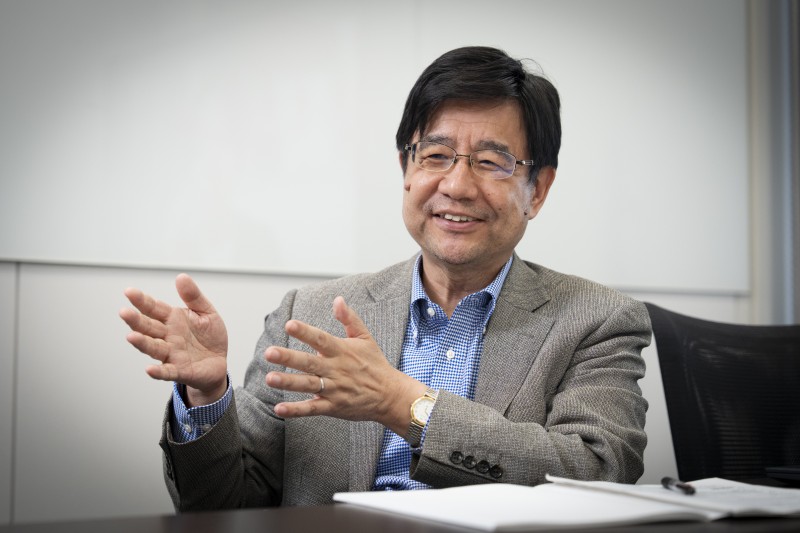
(Yoshizawa Kei, JICA senior adviser talking during an interview in May 2025, has been involved in TICAD since its inception in 1993/ Photo: Moritz Brinkhoff)
While the first TICAD received less public attention than other major foreign policy moves by Japan at the time - such as sending the Self-Defense Forces on peacekeeping missions to Cambodia or appointing Sadako Ogata, an academic researcher on international politics, as head of the UN High Commissioner for Refugees (UNHCR) - it represented a strong diplomatic commitment, Yoshizawa explained. The conference ended with the “Tokyo Declaration,” which pledged support for Africa’s development.
Why TICAD?
Japan’s decision to launch TICAD I, co-hosted with the United Nations, came from the recognition that it had limited diplomatic ties with Africa. Before the 1990s, “Japan’s diplomatic focus was on the US, Europe, and Asia, and Africa was nearly absent,” Yoshizawa explained. TICAD I was created as part of Japan’s United Nations-centred diplomacy, aiming to build influence by gaining the support of Africa’s 54 nations within the UN system.
Africa itself was undergoing major change. South Africa had just ended apartheid and rejoined the international community. Japan restored diplomatic relations with South Africa in 1992, but was careful not to appear overly aligned with one powerful country. Instead, it chose to engage broadly through economic cooperation across the continent.
"Japan leaving other African countries behind and cherry picking, was likely to cause a backlash,” Yoshizawa said.
Building Momentum
TICAD II in 1998 introduced the “Tokyo Plan of Action,” a detailed economic aid strategy, and welcomed UNDP as a co-organiser. The conference gradually gained traction and reached a turning point with TICAD IV in 2008 in Yokohama, boosted by Sadako Ogata’s leadership as JICA president, according to Yoshizawa. Over 40 African heads of state participated, and the agenda, at the time, focused on rising food prices. JICA’s rice cultivation programmes and technical co-operation in parts of Africa were prominently featured in side events and launched as an initiative to double rice production in Sub-Sahara Africa over the following 10 years.
TICAD V in 2013 marked another milestone. Representatives from all but three of the 54 officially internationally recognized African countries attended, including 39 leaders. Prime Minister Shinzo Abe chaired the meeting and met with nearly every country present. JICA hosted around 20 side events, showcasing initiatives including education, infrastructure, agriculture, health, and water supply. The conference affirmed TICAD’s growing role on the global stage.
Meanwhile, China was expanding its influence in Africa through the “One Belt, One Road” initiative, funding large-scale infrastructure across the continent. In response, TICAD moved from being held every five years to every three years, reflecting requests from African partners for more frequent engagement and deeper cooperation.
This deeper cooperation was also reflected in the next conference, TICAD VI in 2016, the first time the conference was held in Africa. The venue was Nairobi, Kenya, and about 11,000 people from 53 African countries, international agencies and businesses participated. More than 3,000 people from Japan, including the business community, also took part.
JICA’s Expanding Role
While the Ministry of Foreign Affairs continues to lead TICAD, JICA has become increasingly central to its implementation. Yamae Mikuni, a 33-year-old JICA official who volunteered at TICAD V as a university student, has worked for the JICA TICAD team at both TICAD VI in Nairobi and TICAD 8 in Tunis. He highlighted the importance of side events such as seminars and symposiums.
"A side event offers a rare space where people from all walks of life can exchange ideas,” he said. “That kind of open dialogue is difficult during TICAD’s formal plenary sessions."
These sessions are especially important for the exchange of ideas among governments, private sector actors, youth, and civil society.

(JICA’s Yamae Mikuni, pictured here in a recent online interview, talking about the importance of field activities and JICA country offices in Africa/ Photo: Moritz Brinkhoff)
JICA’s strength comes from its long-standing presence in the field and its understanding of African contexts, built through programs such as technical cooperation projects and the Japan Overseas Cooperation Volunteers. These experiences, along with the daily work of JICA’s country offices, help the agency remain attuned to on-the-ground needs.
The ABE Initiative
Another key outcome of TICAD V was the African Business Education Initiative for Youth (ABE Initiative), announced by Prime Minister Abe. It aimed to bring 1,000 young Africans to study in Japan over five years, preparing them to lead in business and development fields. At the same time, it aimed to foster people to serve as a bridge between Japanese and African businesses by providing them with various opportunities.
Since its launch in 2014, the programme has continued to grow from the initial 156 students that arrived in the first year, expanding into broader human resource development efforts. Now JICA and the Association for Overseas Technical Cooperation and Sustainable Partnerships have accepted more than 9000 students from Africa as of the end of 2024.
Looking Ahead to TICAD 9
One of TICAD 9 major pillars is its focus on co-creation with youth and strengthening cooperation in both Japan and Africa.
Kasahara Hiroaki, a 26-year-old JICA official, was recently in charge of an online exchange between students at Yokohama Commercial High School and Rwanda’s Muhanga Teacher Training Institute. The event, organised by the City of Yokohama and Forum2050, a nonprofit organization
focused on sustainable development and regional cooperation, aimed to strengthen future ties between Japan and African countries.

(JICA’s Kasahara Hiroaki at a recent interview talking about youth engagement/ Photo: Moritz Brinkhoff)
Beyond youth initiatives, Kasahara hopes to see deeper involvement from local Japanese communities. Towns such as Nagai in Yamagata and Marumori in Miyagi have already formed ties with African partners through cultural and agricultural exchange. He believes that these local connections can strengthen TICAD’s long-term impact and be mutually beneficial.
Kasahara also said that JICA organised a youth camp in May, bringing together nearly 300 students from Sapporo Kaisei Secondary School, JICA participants from Africa, and Africans living in Hokkaido. The event gave participants the chance to interact and learn more about Africa, while for the Africa participants it was an opportunity to better understand Japanese schools and the thoughts and perspectives of Japanese students.
Beyond youth initiatives, Kasahara hopes to see deeper involvement from local Japanese communities. Towns such as Nagai in Yamagata and Marumori in Miyagi have already formed ties with Tanzania and Zambia respectively, having hosted their national teams during the Tokyo 2020 Olympics. He believes that these local connections can strengthen TICAD’s long-term impact and be mutually beneficial.
Kasahara studied TICAD during his university and graduate school years and has now become one of the youngest JICA officials involved in TICAD. “I’m happy to be on the hosting side this time,” he said, expressing his hopes that “TICAD will be an opportunity that leads to the future.”
He added, “My involvement with TICAD has shifted from an academic perspective during my student days to a practical, professional one now. Through this change, I see things differently, and I want to use TICAD 9 as a chance to put forward ideas about how things could be improved.”