





scroll


Olivier Fabre
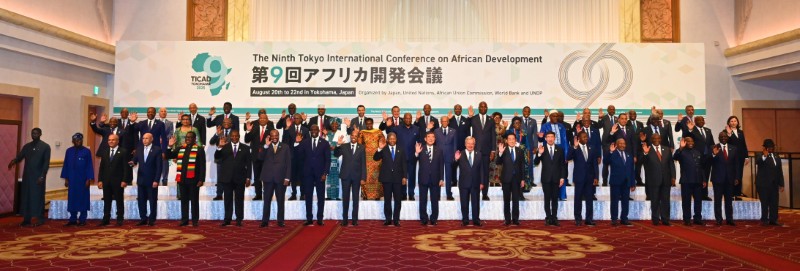
(Leaders of African nations, Japan, the United Nations, the United Nations Development Programme, the African Union, and other attendees at TICAD 9 in Yokohama pose for the official photo on Aug. 20, 2025)
Series: Africa in Focus
To mark the ninth Tokyo International Conference on African Development (TICAD 9) in August 2025, JICA is sharing a series of stories that explore Africa’s challenges and promise. This episode wraps up the final three days of TICAD 9 in Yokohama, where the focus shifted from grand statements in the plenary hall to the voices of organizers and everyday participants.
Yokohama was alive with energy at the end of August as TICAD 9 unfolded across the city’s waterfront halls and conference centers. For three days, the port city became a stage where presidents and prime ministers mingled with entrepreneurs, students, and civil society activists. Tens of thousands of people moved between panel discussions, business pitches, and cultural performances, with over 10,000 people attending the JETRO-organized TICAD Business Expo and Conference, while JICA’s Thematic Events drew 3,000 in person and another 6,000 online. The mood was buoyant, not least because this was the first time since 2019 that TICAD had returned to Japan. Forty-nine of Africa’s 54 countries participated, with 33 heads of state making the journey, underscoring the enduring importance of the partnership with Japan but also signaling something larger: a shift in tone and intent.
The TICAD framework, launched in 1993, has long been anchored on African ownership, partnership, and openness. In earlier years the conversation often revolved around aid and assistance. But this time, the message was clear: TICAD 9 was not about aid; it was about agency.
Africa’s leaders insisted that the time when the international community dictated what was best for their continent was over.
“Africa is committed to taking the lead in its own development,” declared João Lourenço, Angola’s president and chair of the African Union. António Guterres, the U.N. secretary-general, added that Africa must have “a stronger voice in shaping the decisions that affect its future,” insisting that the continent was “poised for progress.”
Beyond the bilateral relationships between Japan and individual African nations, TICAD has also become a platform for multilateralism. The framework draws in a wide range of international partners, from the United Nations and the United Nations Development Programme to the African Union and other regional bodies. At the opening ceremony, Lourenço underlined this point, saying: “We are living in a world of interdependence; we have no option but multilateralism. If we acknowledge that fact, the probability of success will be elevated.”
His remarks captured the essence of TICAD’s inclusive design: By bringing together governments, international organizations, and civil society, the conference aspires to generate solutions that no actor could achieve alone.
Japan’s prime minister, Ishiba Shigeru, seemed to embrace those ideas. At the closing ceremony, he spoke with conviction about co-creation and mutual prosperity.
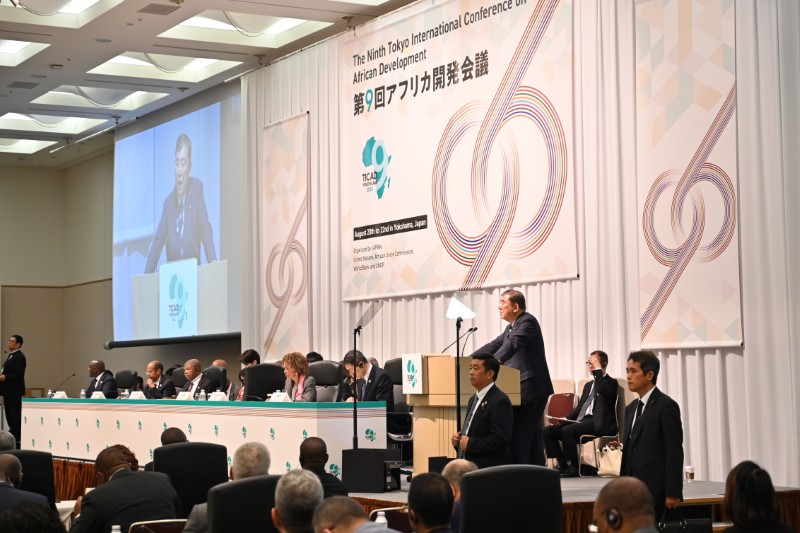
(Japanese Prime Minister Ishiba Shigeru speaks to gathered leaders at the closing session of TICAD 9 in Yokohama on Aug. 22, 2025)
“Japan and Africa will cooperate to solve issues for greater prosperity, bringing together their abundant human resources, technologies and wisdom,” he said. To emphasize that this was not a one-sided pledge, he invoked the South African philosophy of Ubuntu, often translated as “I am because we are.” The symbolism was deliberate: This was about respect, equality, and shared humanity.
That spirit of co-creation crystallized in the Yokohama Declaration, unveiled on Aug. 22 with the theme “Co-create innovative solutions with Africa.” Framed as a roadmap for Africa’s Agenda 2063 and the U.N. Sustainable Development Goals, the declaration acknowledged the continent's headwinds — from sluggish global growth and heavy debt to conflict and humanitarian crises — while insisting that Africa’s future depends on turning its own potential into action. It stressed that growth alone cannot resolve poverty or unemployment and that peace, stability, and governance are just as vital as investment and trade.
The document mapped out cooperation in three spheres: the economy, society, and peace. On the economic side, leaders strongly backed the African Continental Free Trade Area to build one single market of 1.5 billion people, as well as the new African Credit Rating Agency as a way to challenge unfair borrowing costs, called for more sustainable finance and emphasized the role of private investment alongside aid. There was also a strong push for regional integration as well as digital transformation, green technology, and renewable energy.
Socially, the focus was on human capital: rebuilding health and education systems, empowering women and youth, and fostering exchange between African and Japanese innovators. And when it came to stability, the declaration pressed for African-led answers to conflict, a stronger rule of law, and long-overdue Security Council reform to give the continent its rightful voice.
Perhaps the most compelling stories at TICAD 9, however, came not from presidents or international organizations but from young entrepreneurs and innovators. One of them was Pelonomi Moiloa, a South African AI specialist who studied at Tohoku University and was later recognized by Time magazine as one of the 100 most influential people in AI. Prime Minister Ishiba mentioned her by name in his opening speech, citing her as an example of the kind of talent Japan wanted to support. Moiloa herself laughed later when she recalled bumping into an acquaintance outside the conference hall who told her the Japanese prime minister had singled her out. “It was cool,” she said, admitting, however, she was disappointed to have missed the speech.

(Pelonomi Moiloa, CEO of Lelapa AI and a Tohoku University alumna named one of Time magazine's 100 most influential people in AI, attends a JICA Thematic Event on startups during the TICAD 9 conference in Yokohama on Aug. 21, 2025/ Photo: Pelonomi Moiloa)
Moiloa’s company, Lelapa AI, is dedicated to building small language models that can operate across Africa’s diverse linguistic landscape. The idea, she explained, was born both from her time in Japan, which made her reflect on the importance of understanding languages deeply, and from South Africa’s daily multilingualism.
“Our genuine philosophy is that if you're building technology that works in Africa, you're building technology for the entire world,” she said.
To make her point, she referenced the way mobile money has flourished on the continent. She said, “One of the guys on a panel was like, ‘I’m from Burkina Faso, and I haven’t used cash in three years because everything is cashless.’”
While she is wary of the “savior complex” that sometimes shadows development initiatives, she felt that TICAD offered Africans genuine space to shape their own narrative.
And that narrative is increasingly about business.
Yoshizawa Kei, a senior adviser to JICA, noted that the number of memorandums of understanding and cooperation signed between Japanese and African companies had risen sharply, from 73 during TICAD 6 in Nairobi to some 324 this time. The entrance to the TICAD Business Expo and Conference was also packed every day, as business leaders lined up to get in. Inside, they mingled with representatives from 300 companies and organizations driving business in Africa and joined a busy program of forums spread across the three days.
“The reaction from companies was particularly strong this time,” he said. “Although JICA's mission is mainly aid, it’s crucial for private funds, technology, and people to go to Africa. This time we finally feel we are getting some traction.”
For years, Japanese companies were reluctant to see Africa as a serious market. Now, said Yoshizawa, there is a sense that Africa is not only viable but also the emerging frontier, especially with the African Continental Free Trade Area gaining momentum. Even the Japanese Ministry of Economy, Trade, and Industry has started speaking of an “Indo-Pacific Africa,” a new strategic concept tying the two regions more closely together.
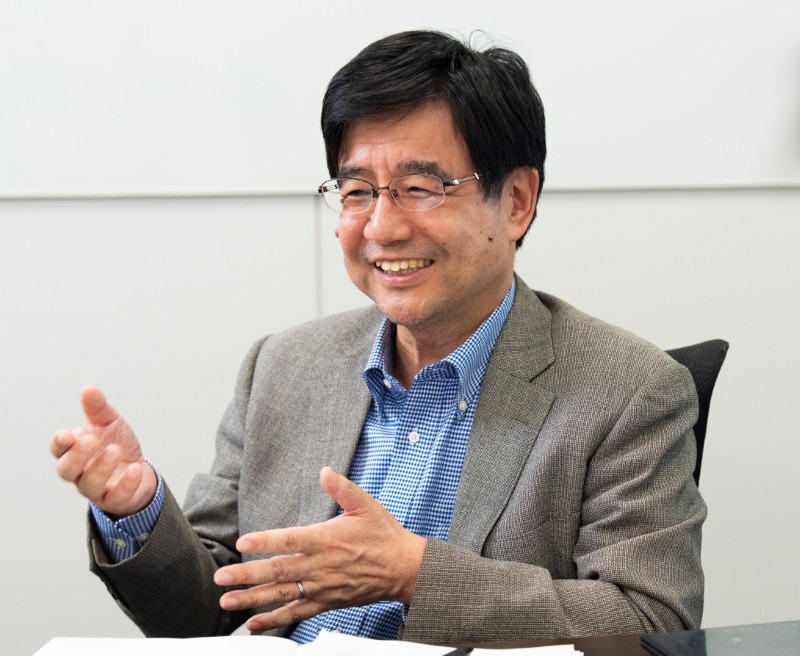
(Yoshizawa Kei, a senior adviser to JICA, discusses how TICAD has changed over the years/ Photo: Moritz Brinkhoff)
One of the quieter but most consequential shifts announced in Yokohama came not from the main stage but from the financing side. JICA’s Yoshizawa explained that after years of debate, Japan has finally changed its rules to allow the agency to channel new money from the private sector into venture capital funds that invest in African start-ups. It marks a departure from the more cautious approach that had limited JICA to the traditional ODA business model. “We pushed for this for about six years,” Yoshizawa said. “We even had to change a law to make it possible. Now we can provide money to African start-ups and venture businesses, and in return, the private sector is expected to co-invest in and partner with them.” For a country often seen as risk-averse, the move signals a willingness to share the risks and rewards of Africa’s new generation of entrepreneurs.
For founders like Moiloa, whose AI start-up is part of a wave of African companies tackling problems from multilingual computing to fintech, the shift could prove transformative. Too often, she noted, development money is steered toward safe bets like agriculture, manufacturing, or public works — sectors with established blueprints and predictable returns.
“Of course, those things matter,” she said. “But it would be nice if we could move a bit from the traditional ideas of what business might look like in Africa to some of the stuff where we’re doing exciting things.” In a space where innovation is often born of necessity, she argued, backing high-risk ventures can unlock solutions that travel far beyond the continent.
Meanwhile, Yoshizawa reflected on his own career to illustrate the change TICAD has gone through over the years.
In the past, he said, development projects were often about digging wells or building schools — valuable, but small in scale. “These projects only help a few hundred people at most. I wanted to help a country embark on a path to growth.”
Today, he sees an opportunity not only for Africa but for Japan as well.
“For Japan, Africa is an opportunity that we must seize," he said. "If we miss it, the next generations will suffer.”