
Inside the World of JICA Students (Part ⑪)
2026.02.06






The JICA Graduate Course Program Division is currently hosting Japanese university and graduate students participating in the 2025 JICA Internship Program. In this article, we introduce interviews conducted by interns with international students from developing countries.
Interviewer: GOMI Soma (Tokyo University of Foreign Studies)

This time, we interviewed Mr. NAMAYI Felex Osmond (hereafter “Namayi-san”), who is from Kenya and currently studying at the International University of Japan. In Kenya, Namayi-san worked at Strathmore University, where he supported university operations, handled administrative duties, and worked closely with students—playing an essential role on the front lines of higher education. We asked him about his life and studies in Japan, as well as his future aspirations.
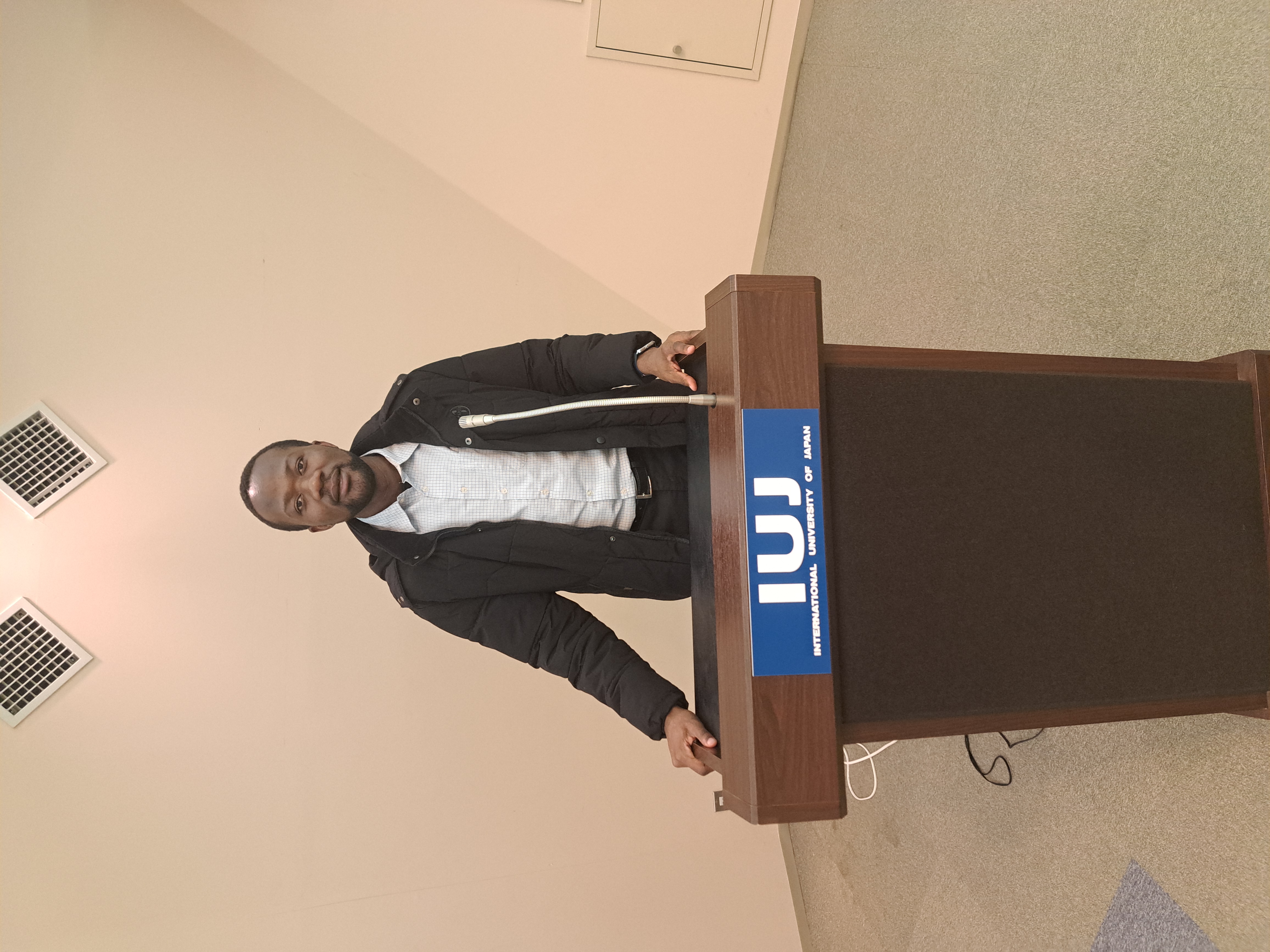
Namayi-san shared that he applied for the JICA Scholarship driven by his sincere desire to “contribute to the development of my country.”
Through the program, he hopes to gain insights into sustainable development challenges by learning Japan’s advanced education and practical development knowledge. He also mentioned that by studying Japan’s history of development and its social systems, he hopes to apply those lessons to policymaking in his own country.
In the interview, he also mentioned that he respects Japan as a “country of learning,” and that by experiencing Japan’s education system firsthand, he hopes to gain perspectives that will be useful for his home country.
Namayi-san’s research focuses on Kenya, where the sustainable use of water resources is a major challenge. He aims to experimentally examine whether “the behavior of others in society” can influence people’s water usage.
He believes that when people know others are saving water, they are more likely to do so themselves. Such the power of “social norms” may encourage behavioral change without requiring financial cost.
“With many African regions lacking sufficient initiatives for water and environmental management, I want to explore new approaches to change people’s behaviors,” he said with enthusiasm.
When he first arrived in Japan, he struggled with the many differences in culture, climate, and language.
He said that winters in Niigata—with their heavy snowfall—were especially challenging, as even stepping outside was difficult. He also explained that compared to Kenyans, who tend to speak with anyone easily, he was surprised at how quiet and individualistic Japanese people seemed at first. However, now that a year and a half has passed since his arrival, he has expanded his activities—challenging himself with cooking, participating in study tours and exchange events that through JICA provides, and more.
During the interview, he also spoke warmly about his love for Japanese food, including ramen, curry, and bento. He began learning Japanese through JICA’s online classes and continues studying proactively through daily practice at shopping malls and restaurants.
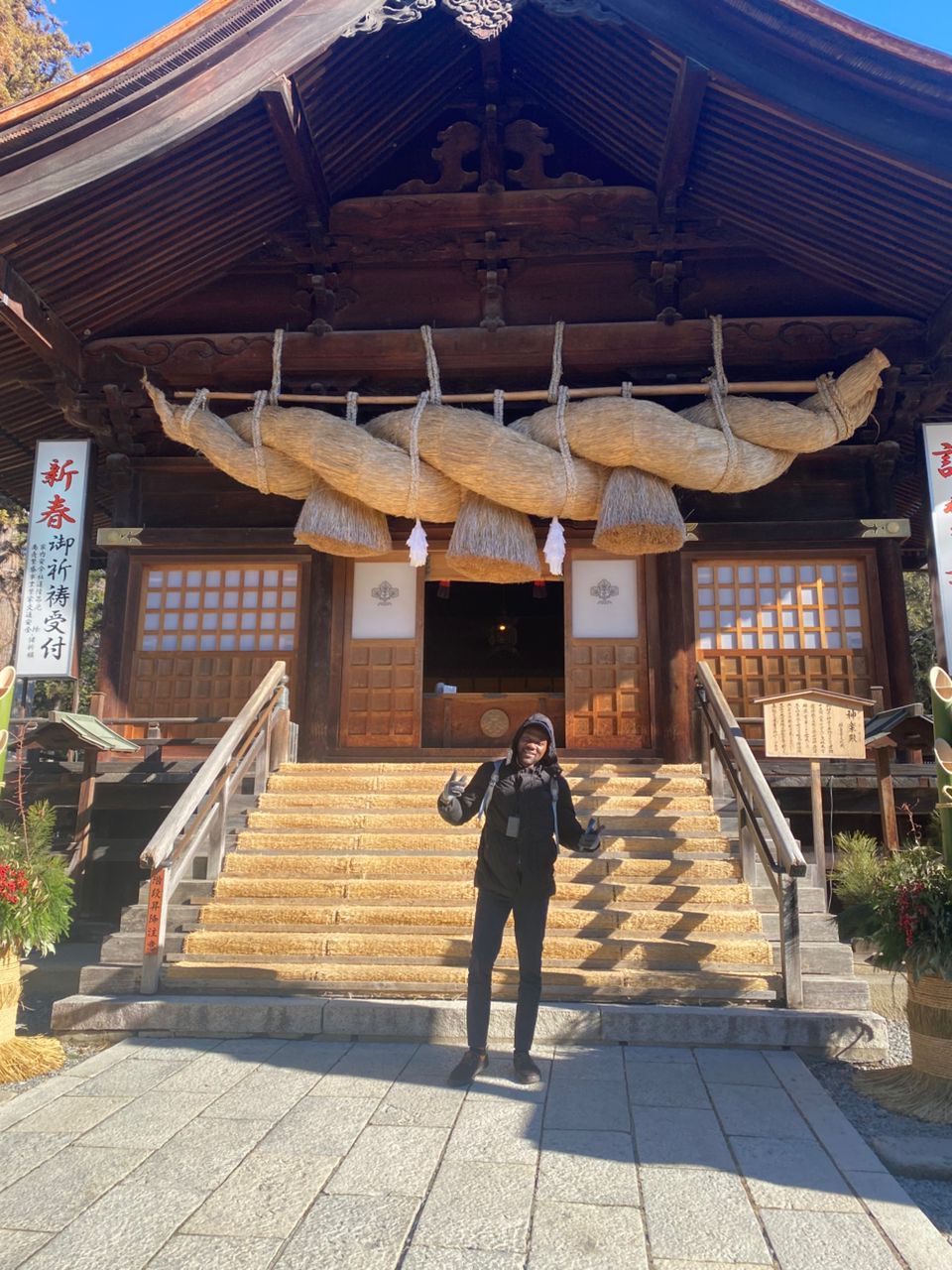
Namayi-san visiting a shrine for Hatsumōde

Namayi-san visiting Lake Suwa
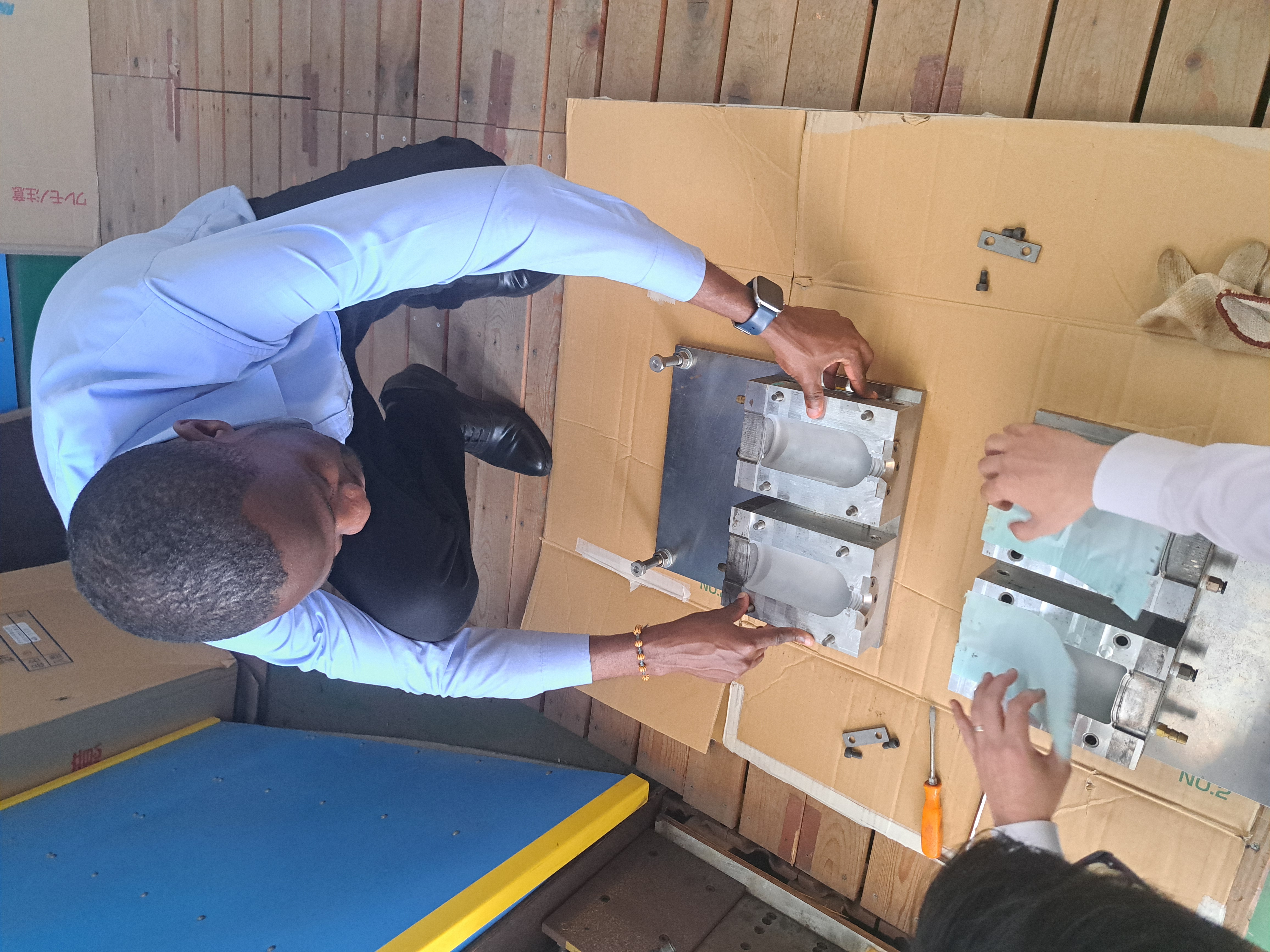
In addition to his studies at the university, Namayi-san participated in an internship at a company in Chiba Prefecture. There, he worked on practical tasks such as researching plastic regulations in Kenya and other African countries, analyzing legal systems related to trade and marketing, and observing manufacturing processes on-site for a company seeking to expand into African markets.
He shared that learning firsthand what companies need to expand overseas was a very valuable experience.
After returning to Kenya, he hopes to work as a university teacher and contribute to nurturing young generations. At the same time, he aims to contribute to the field of public policy and environmental studies as a researcher, and he expressed his desire to pursue a doctoral program in the future.
“Young people’s education shapes the future of a nation. Through both research and education, I want to contribute to Kenya’s development,” he said with conviction.
What left a strong impression through the interview was Namayi-san’s gentle and approachable personality. He spoke with an easygoing smile, sometimes mixing in humor, while sincerely answering each question. He also mentioned that before returning home, he is planning a trip to Hakata to enjoy his favorite ramen.
We hope that the remaining months of his life in Japan will be filled with learning and experiences, and that he will be able to give back to the development of education and research in his home country of Kenya.
Sns share!


