
Inside the World of JICA Students (Part ⑬)
2026.03.03






The Graduate Course Program Division in JICA Tokyo is currently hosting Japanese university and graduate students participating in the 2025 JICA Internship Program. This article features an interview conducted by one of the interns with an international student from a developing country.
Interviewer: GOMI Soma (Tokyo University of Foreign Studies)
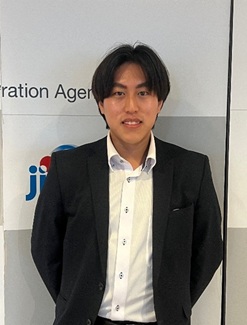
Gomi-san during his internship program in JICA Tokyo
This time, I interviewed Ms. Bwalya Malama (here after Bee-san)from Zambia, who is currently studying at Rikkyo University. Before coming to Japan, Bee-san worked as a Program Officer at the Economics Association of Zambia, where she conducted research and analysis on economic and development policies. We spoke with her about her life in Japan, her academic journey, and her aspirations for the future.
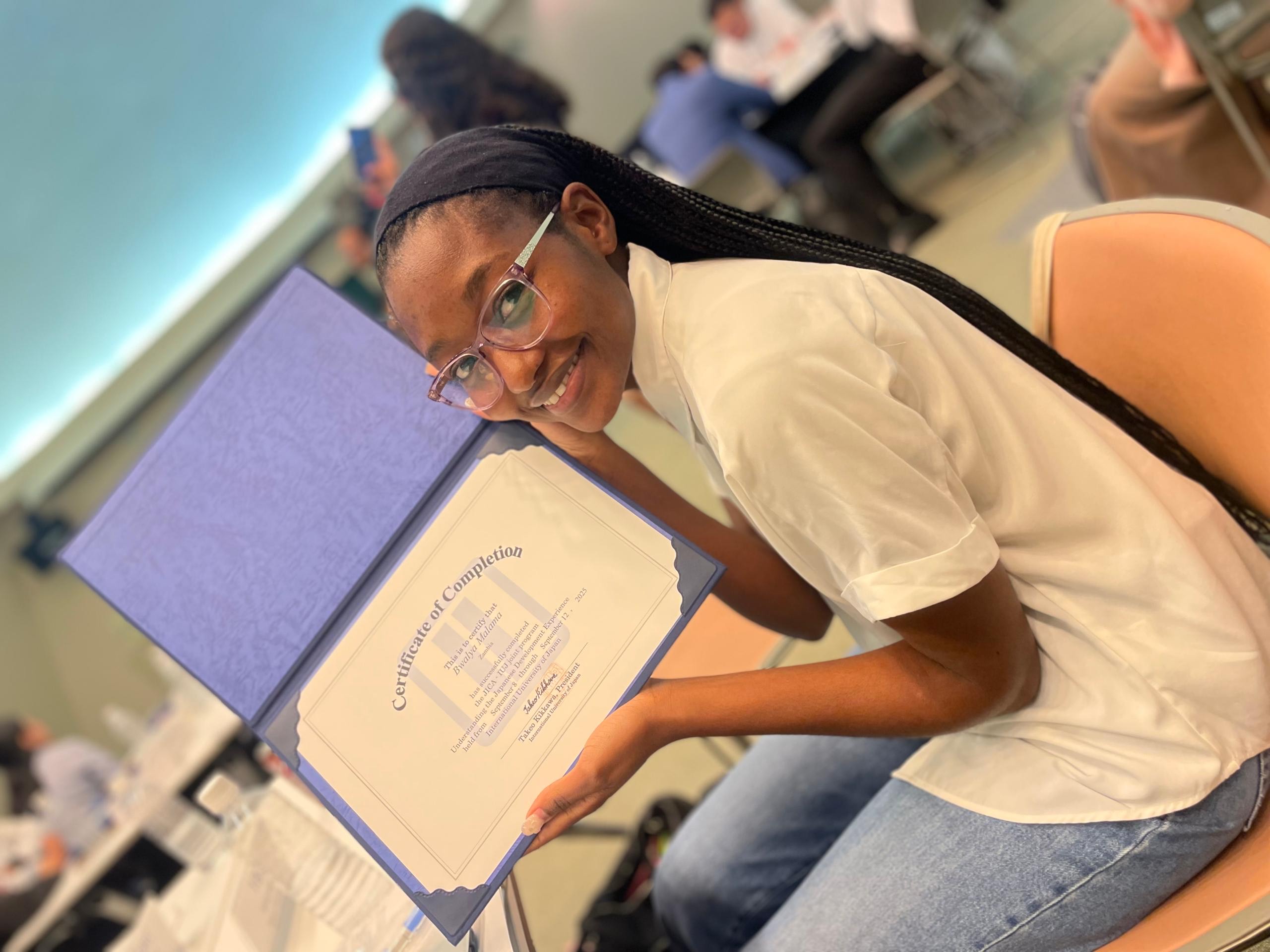
Bee-san explained that she applied for the JICA Scholarship because she had long been interested in Japanese management practices and organizational culture, and wanted to gain new perspectives. She received information about the program from the JICA Zambia Office through her workplace, which opened the door for her to apply.
Bee-san’s research theme is “Youth Employment in Zambia.”
The Zambian government operates a program called the Skills Bursary, which supports vocational training opportunities for young people. Bee-san is studying whether this support truly helps youth secure jobs or empowers them to start their own businesses.
When asked about her life in Japan, she laughed and said, “The language was the biggest challenge at first.”
Right after arriving, she had no SIM card—no Google Maps, no translation apps—and often struggled when she got lost, unable to ask for help.
After joining JICA’s Japanese language classes, she gradually learned to read hiragana and katakana, which helped her settle into daily life.
She quickly embraced Japanese food culture, becoming a big fan of ramen, gyoza, katsudon, and oyakodon. During the interview, when she learned that oyakodon literally means “parent (chicken) and child (egg),” she was quite surprised!
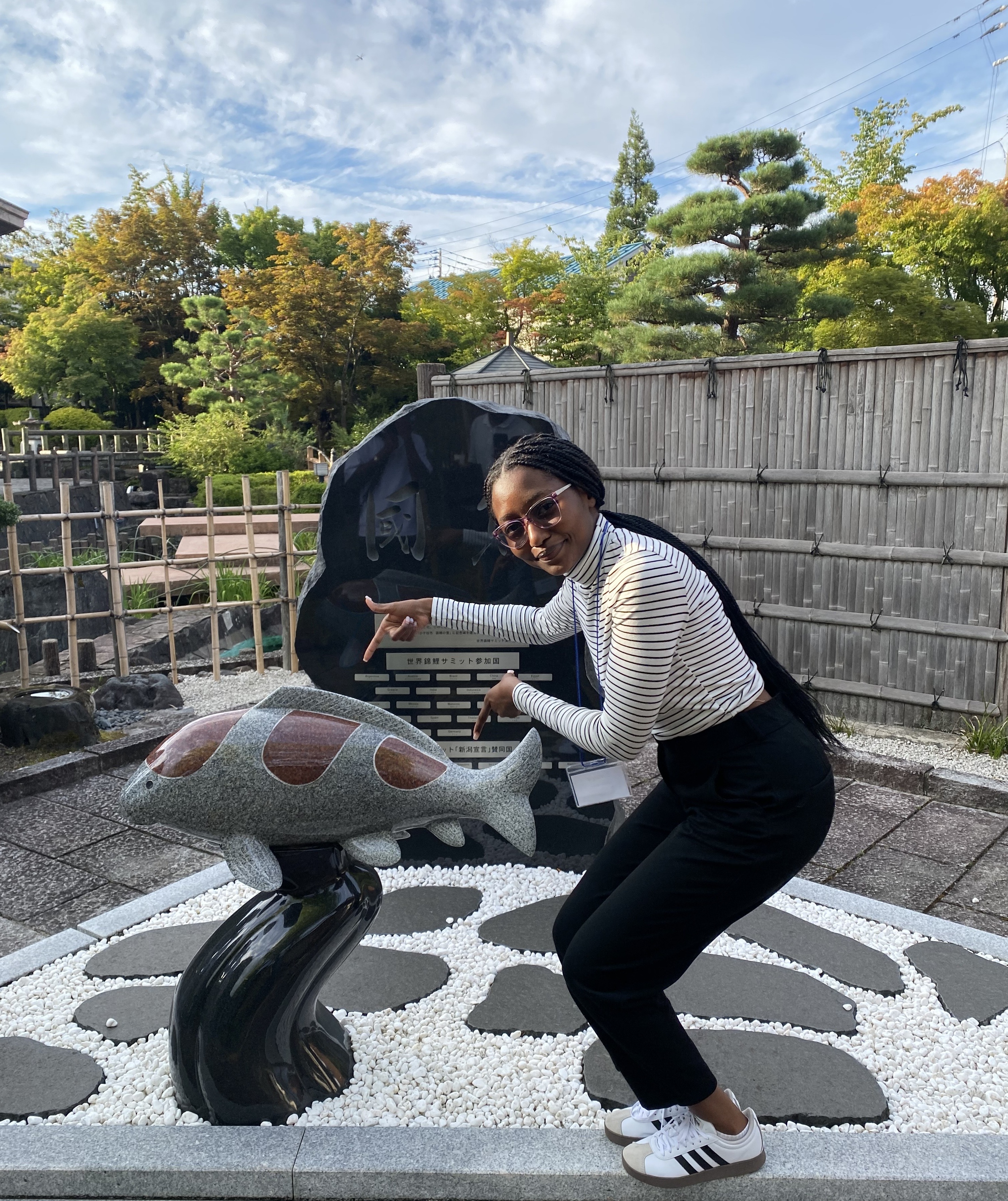
Traveling around Japan is one of her joys. She fondly recalled trips to Osaka, Nagoya, Suzuka Circuit, and Niigata. As an avid Formula 1 fan, attending the race in Suzuka was an unforgettable experience. In Niigata, she visited the Nishikigoi no Sato koi museum and the SUWADA factory, which sparked her interest in how local industries and culture are interconnected in Japan.
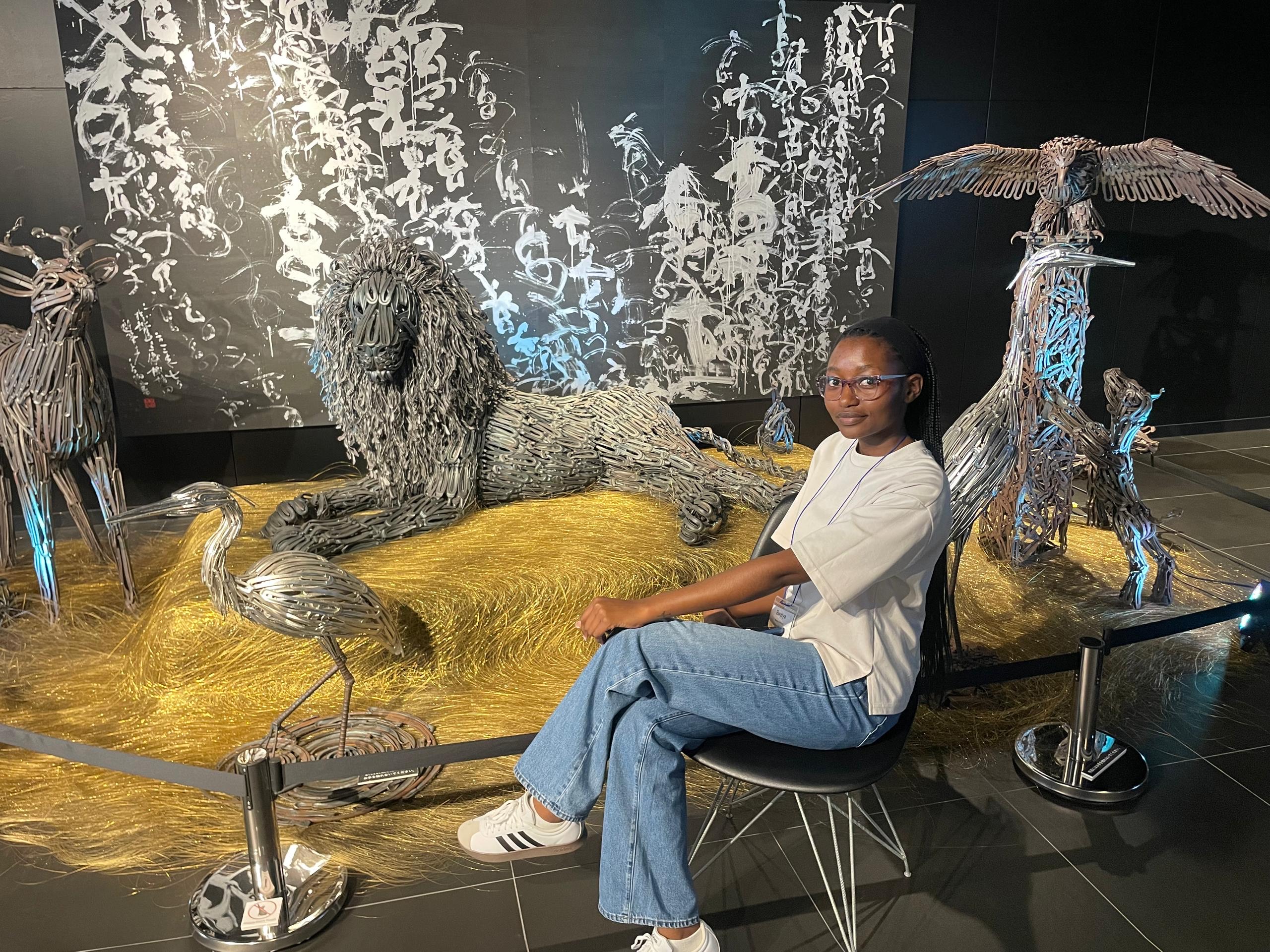
Bee-san has also been active in JICA’s cultural exchange programs. Among them, a tea ceremony experience in Niigata left a strong impression on her. She spoke about the depth of Japanese culture—the relationship between host and guest, how to enjoy wagashi, and the art of preparing matcha.
At university, she takes classes not only from Japanese professors but also from American, Australian, and other international faculty members. She shared that being exposed to such diverse perspectives makes her academic environment very stimulating.
Looking ahead, Bee-san hopes to work in the field of sustainable business development.
Youth employment is a major challenge in Zambia, and she aims to apply what she has learned in Japan—management concepts, efficient work styles, and organizational practices—to future business and policy initiatives in her home country.
She is also interested in teaching at the university level one day. To pass on her knowledge and experience to younger generations, she hopes to pursue a Ph.D. in the future.
Throughout the interview, what stood out most was her strong enthusiasm for turning every experience into an opportunity for growth. Even when faced with cultural differences or language challenges, Bee-san embraced each experience— such as learning Japanese, practicing tea ceremony, traveling and attending university lectures—as part of her personal development.
Her time in Japan will undoubtedly become a powerful foundation for her future efforts in youth empowerment and business development in Zambia.
Sns share!


