
Inside the World of JICA Students (Part ⑲)
2026.04.16





The Graduate Course Program Division in JICA Tokyo hosted Japanese undergraduates and graduate students participating in the 2025 JICA Internship Program. This article features an interview conducted by one of the interns with an international student from a developing country.
Interviewer: GOMI Soma (Tokyo University of Foreign Studies)
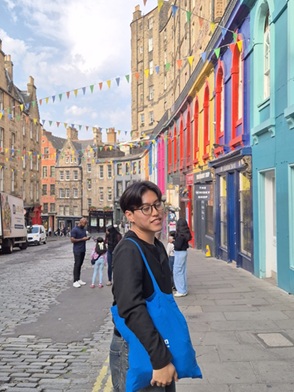
Gomi-san during his trip
This time, I interviewed Mr. ODHIAMBO Ezra Aballa (hereafter, Ezra-san), a master’s student from Kenya at St. Luke’s International University.
While working on the front lines as a nurse, Ezra-san came to strongly recognize the importance of “preventive care”—protecting people before illness occurs. Motivated by the desire to study public health more deeply and to support the well‑being of people in his country from the ground up, he came to Japan and is currently conducting research on early childhood cognitive development.
I spoke with him about his studies in Japan, his daily life, and his aspirations for the future.

Through his experience as a nurse, Ezra-san deeply felt that treating people after they arrive at the hospital is often too late. In Kenya, many people suffer from diseases caused by lifestyle and environmental factors, and he realized the need to strengthen his knowledge of preventive public health.
He was drawn to Japan’s healthcare system, its policies for an aging society, and its high standards of sanitation, which ultimately led him to decide that Japan was the ideal place to study.
Drawing on his experience as a nurse in his home country, Ezra-san is conducting research in preventive medicine with a focus on building the foundations for healthy child development. Ezra-san’s research focuses on understanding “how cognitively prepared children aged 36–59 months are for entering school.”
Using UNICEF’s Early Childhood Development indicators, he assesses whether a child can count numbers, write their name, understand words, and recognize objects—quantifying their cognitive readiness.
Additionally, he analyzes how differences between urban and rural environments, household economic conditions, and nutritional status affect children’s development.
By integrating these factors, he aims to create indicators that can contribute to education and health policymaking.
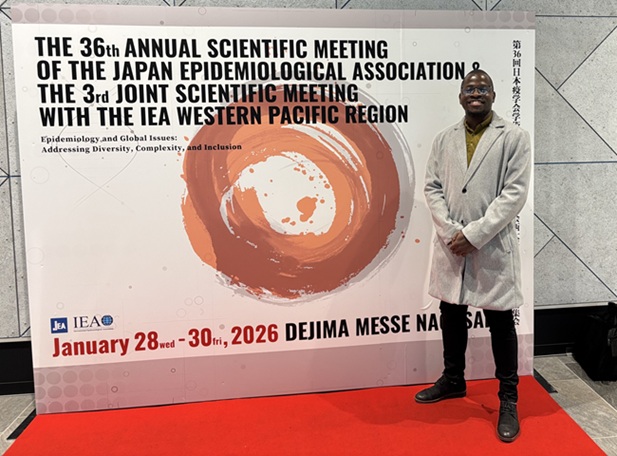
When asked about daily life in Japan, Ezra-san shared that Japan is very quiet, and he sometimes feels lonely. In particular, he mentioned that, unlike in Kenya, he rarely has opportunities to meet his neighbors.
On the other hand, his studies in Japan are very fulfilling—classes, research, and interactions with other international students provide daily stimulation. He also joins Japanese language classes online and actively seeks new learning opportunities.
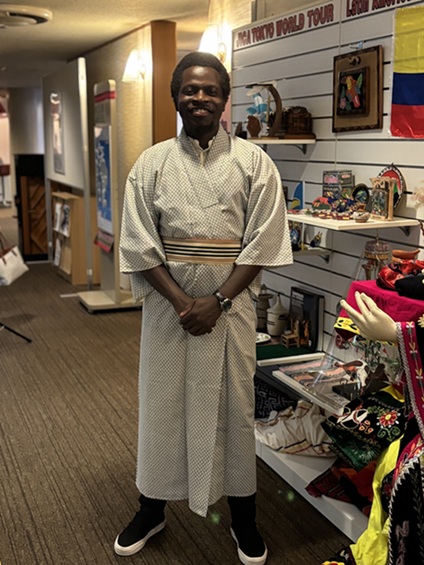
He participates enthusiastically in JICA’s cultural events as well. At the summer festival, he enjoyed watermelon splitting, fireworks, kimono, and ikebana, and he has also taken part in various cultural experiences such as exploring caves in Enoshima and visiting Shinto shrines.
He shared that these events are valuable opportunities to connect with Japanese culture while interacting with participants from other countries.
After completing his program, Ezra-san hopes to return to Kenya and work in the field of public health, contributing to policy development and improving national health outcomes.
He is also eager to obtain certifications in data analysis and project management, and he is open to the possibility of working with international organizations or NGOs. He expressed his hope that his research will help shape policies that protect children’s education and health.
Throughout the interview, I was impressed by Ezra-san’s passion for learning and his deep sense of responsibility toward the future of his country. His vision of expanding preventive healthcare and supporting talent development from early childhood has the potential to bring new hope to Kenya’s public health landscape.
I sincerely hope that his experiences in Japan continue to brighten his future—and the future of children in Kenya.
Sns share!


