
Inside the World of JICA Students (Part ⑳)
2026.05.13






The Graduate Course Program Division in JICA Tokyo hosted Japanese university and graduate students participating in the 2025 JICA Internship Program. This article features an interview conducted by one of the interns with an international student from a developing country.
Interviewer: GOMI Soma (Tokyo University of Foreign Studies)
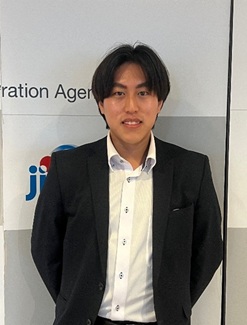
Gomi-san during his internship
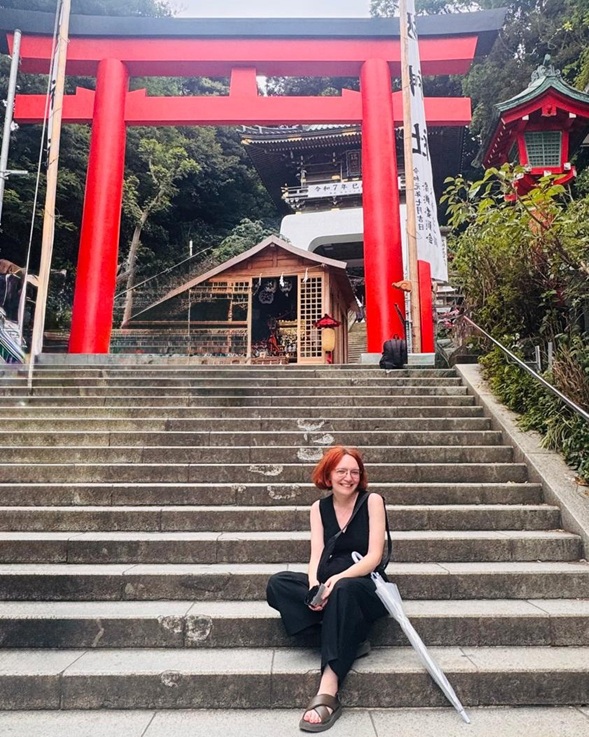
This time, I interviewed Ms. Maya Talakhadze (hereafter, Maya-san), a doctoral student at the Tokyo University of Foreign Studies from Georgia.
With deep sincerity, she confronts the issue of conflict-related crimes and seeks shed light—through academic research—on the silent pain of those affected. I asked her about her life in Japan, her research, and her aspirations for the future.

Maya-san’s interest in JICA began in 2021 when she participated in a one-week online JICA short-term program, "Water Supply Administration for Better Management of Water Supply Service".
Through that experience, she learned about Japan’s systems and its approach to development cooperation, which sparked a growing desire to study more deeply in Japan.
She had already been interested in Japan’s governance and development model, and this naturally led her to decide to pursue the path of becoming a JICA scholar.
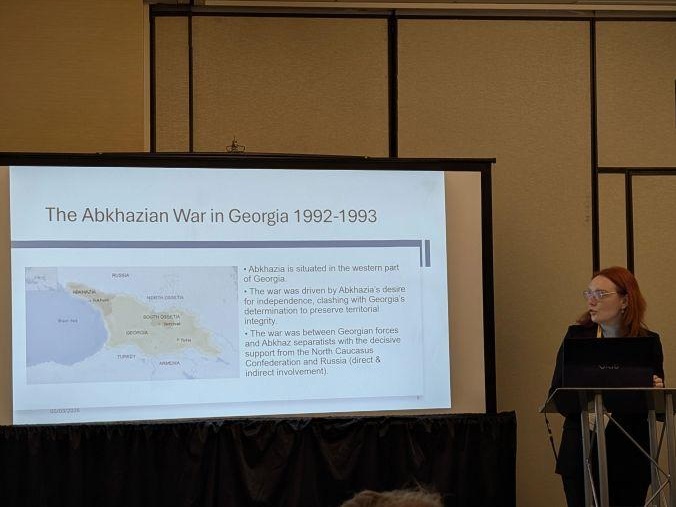
Maya-san’s research focuses on “conflict-related crimes that remain unaddressed from the Abkhazian war in Georgia.”
Since the conflict occurred more than 30 years ago, she initially wondered whether the academic community would still consider the topic relevant.
However, through repeated conversations with her supervisor and fellow researchers, she realized that the topic is not merely historical—it concerns the ongoing pain of people still affected today. This made her aware that the research carries important meaning that transcends time.
At the same time, she acknowledged the challenges of conflict studies, particularly the severe difficulty of data collection due to the lack of surviving academic literature.
One of the first things that surprised her in Japan was how quiet trains were despite the large crowds.
Even compared to Georgia, the sheer number of people was overwhelming, yet everything remained orderly—something she found highly impressive.
Even when she feels uncertain about her Japanese, she said that support from people around JICA ensures that she rarely encounters difficulties. The kindness and assistance she receives make her feel safe and supported in Japan.
Outside her academic work, she has participated in a wide range of JICA activities, including a hike on Mt. Takao, a tour of Yokohama, and classical music and musical theater performances.
In 2025, Maya-san began teaching as a part-time lecturer at a Japanese university, and she shared that standing in front of students brought her great joy.
She hopes to become someone who can apply academic expertise to real-world contexts in the fields of conflict studies, human rights, and international cooperation.
Maya-san’s commitment to honoring the memories of people harmed by conflict and to passing those stories on to future generations left a strong impression on me.
Her passion for addressing the various issues facing Georgia was also remarkable.
Her life in Japan has provided not only opportunities to advance her research but also meaningful encounters with Japanese culture.
I sincerely look forward to Maya-san’s continued growth as a researcher who will contribute to Georgia and to the international community.
Sns share!


