
Inside the World of JICA Students (Part ㉔)
2026.09.15







The Graduate Course Program Division in JICA Tokyo hosted Japanese undergraduates and graduate students participating in the 2025 JICA Internship Program. This article features an interview conducted by one of the interns with an international student from a developing country.
Interviewer: GOMI Soma (Tokyo University of Foreign Studies)
This time, I interviewed Mr. TALAVERA Mel Anthony (hereafter, Anthony-san), a doctoral student at the University of Tokyo from the Philippines.
Before coming to Japan, Anthony-san worked as a researcher in the Philippines, dedicating his efforts to supporting the future of rice production in his home country.
In this interview, he spoke about his studies and daily life in Japan, as well as his hopes for improving agriculture in the Philippines.
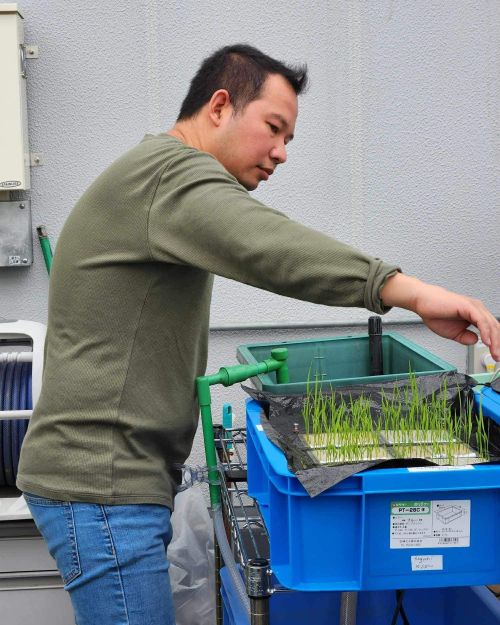
When Anthony-san first began considering pursuing a doctoral degree, the United States and Canada were among his options.
However, he ultimately chose Japan because he learned that Japan is a global leader in agricultural research and that Japan and the Philippines have a long history of collaboration in this field. For these reasons, he felt Japan would be the ideal place for him to maximize his potential.
In addition, Japan's geographical proximity to the Philippines, which makes it easier to stay in touch with family back home, was another important factor for him, who places great value on family ties.
Anthony-san’s research aims to identify the factors that influence rice tolerance to high-temperature stress by comparing Japanese rice varieties that are resistant to heat stress with those that are more susceptible.
Using state-of-the-art biotechnology, he investigates which genes are involved in temperature stress, how rice plants respond to high temperatures, and how future rice breeding strategies can be developed to enhance resilience.
Because the knowledge and techniques he acquires in Japan can also contribute to improving rice cultivation in the Philippines, Anthony-san is highly motivated to ensure that the outcomes of his research benefit both countries.
When he first arrived in Japan, Anthony-san felt the difficulty in the language barrier.
Many essential tasks—such as city hall procedures, opening a bank account, and signing mobile phone contracts—required Japanese, making the first few months particularly challenging.
However, thanks to his university’s tutor system, he received steady support and gradually became comfortable with daily life in Japan.
When there is an opportunity, he enjoys traveling to various parts of Japan, including Osaka, Kyoto, and local festivals in Gunma in his spare time between research activities. He also enjoys the change of four seasons in Japan. For example, the snow was for the first time in his life and it was a memorable experience. He actively participates in cultural programs organized by JICA Tokyo, including visits to regional communities—opportunities he finds highly stimulating as they allow cultural exchange with participants from other countries.
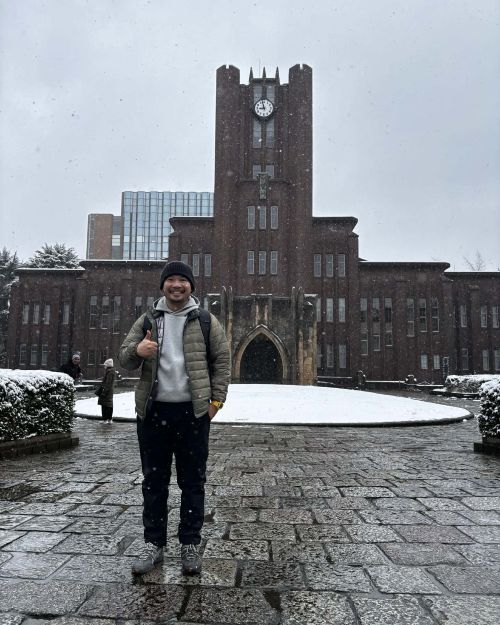
At the university, Anthony-san deepens his knowledge through laboratory discussions, experiments, and interactions with fellow international students.
He also takes part in the university’s Conversation Table, where he talks with Japanese students in English and practices Japanese. He utilizes the international environment of his university and further expands his language learning opportunities.
After completing his program, he is planning to return to the Philippines and aims to share the specialized knowledge and research methodologies he acquired in Japan with his colleagues at his affiliated institution, the Philippine Rice Research Institute.
In particular, he hopes to apply the knowledge he gained in Japan, including various molecular biology techniques, to his current research on heat stress tolerance in rice and contribute to the development of heat-tolerant hybrid rice varieties.
What he gained through his research in Japan extends beyond specialized academic knowledge.
His ability to formulate research plans and his understanding of how to design and conduct experiments have improved significantly.
He also learned important considerations and principles that must be observed when conducting research, including research ethics.
Therefore, in addition to sharing the technical knowledge he acquired, he would also like to share these experiences and insights with his colleagues at the Philippine Rice Research Institute.
He would like to share what he acquired in Japan with young researchers in his country and help them grow as dependable researchers in the future.
In this way, he aims to strengthen collaboration between Japanese and Philippine agricultural researchers so that both countries can work together to develop rice varieties capable of withstanding climate change.
Throughout the interview, Anthony-san spoke gently yet with strong conviction—revealing his deep love for his family and his determination to improve his home country.
The research he has steadily pursued in Japan, while overcoming various challenges, will undoubtedly contribute to the advancement of agriculture in the Philippines.
I wholeheartedly support Anthony-san as he continues to move forward, step by step, as a researcher connecting Japan and the Philippines.
Sns share!


