
Inside the World of JICA Students (Part ㉕)
2026.09.18




We interviewed JICA scholars managed by JICA Tokyo. Through this series, we introduce the backgrounds, experiences, and aspirations of international students who have come to Japan from developing countries to pursue their studies.
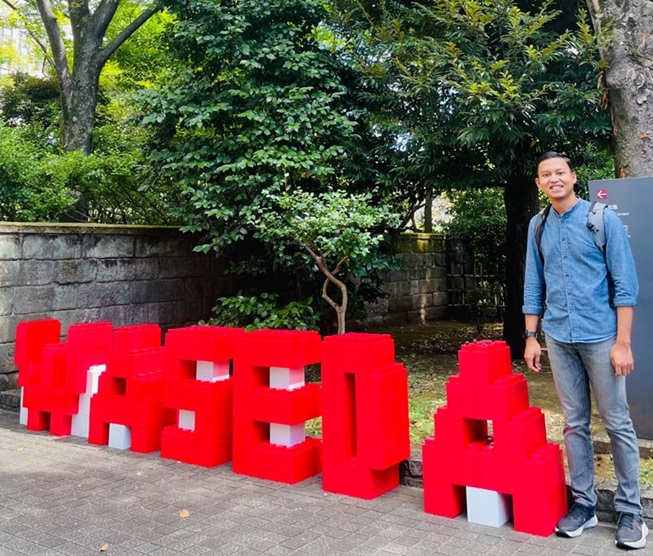
Kamis-san from Malaysia studied Psychology and Human Resource Development at university and graduate school in his home country. Motivated by concerns that both employees and employers lacked sufficient knowledge of labor laws and mechanisms for resolving labor disputes, he joined Malaysia's Ministry of Human Resources. After serving four years in Johor State, he was assigned to the Labor Court in Kuala Lumpur, where he worked to resolve labor disputes brought before the court on a daily basis.
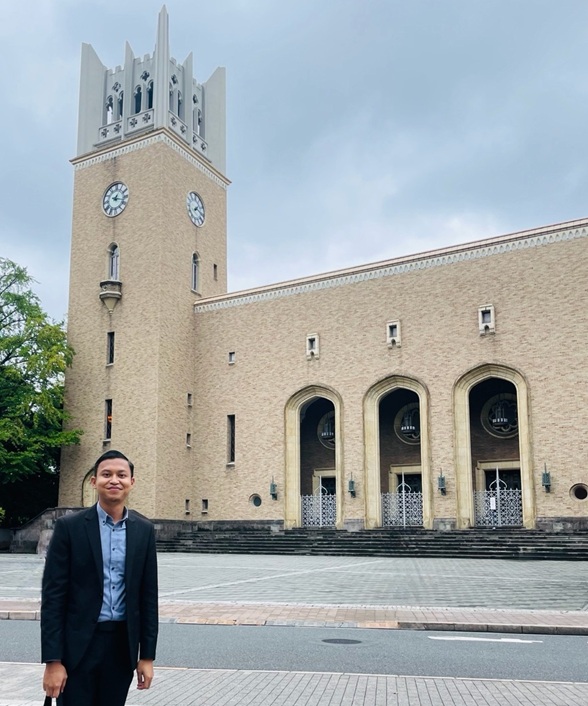
During his seven years as a civil servant, a supervisor who had participated in a JICA short-term training program※1 encouraged him to apply for JICA Scholarship※2.
Although scholarship opportunities from other donor countries were available and studying outside Japan was also an option, Kamis-san chose Japan.
One reason was the strong reputation of Japanese higher education among Malaysian government officials, many of whom had studied in Japan.
Another factor was the lasting influence of Malaysia's “Look East Policy,” launched by former Prime Minister Mahathir Mohamad, which encourages learning from the development experiences of Japan and other East Asian countries.
Kamis-san was also interested in Japan's Civil Service and legal systems, which share certain similarities with those of Malaysia. This interest led him to pursue a doctoral degree at the Graduate School of Waseda University.
※1 JICA's short-term training programs provide government officials and technical professionals from developing countries with opportunities to acquire knowledge and skills through training in Japan for around several weeks to several months. It is classified as a type of JICA Knowledge Co-Creation Program.
※2 JICA Scholarship is a human resource development program through which promising professionals from developing countries pursue master's or doctoral degrees at Japanese universities to enhance their expertise and contribute to the development of their home countries over one year. It’s also classified as a type of JICA Knowledge Co-Creation Program.
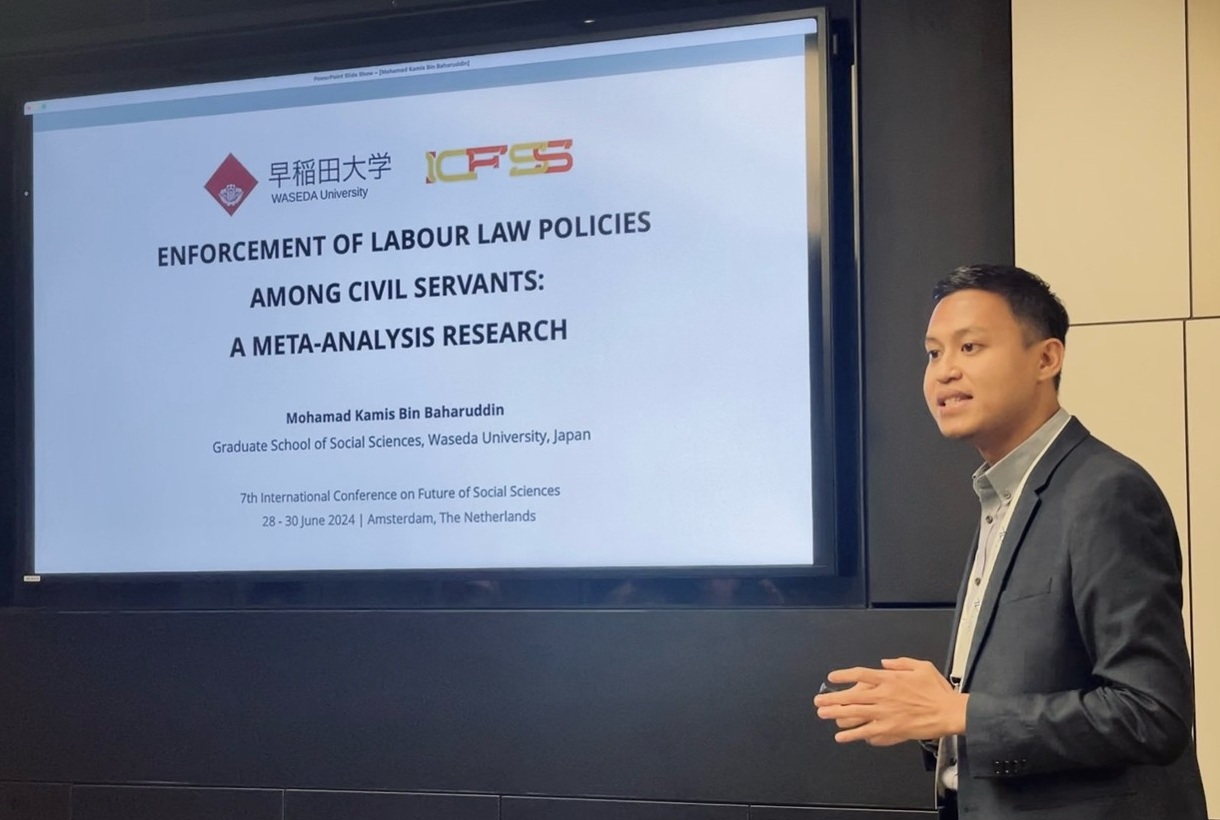
Currently, Kamis-san is conducting research at Waseda University on topics such as the factors that motivate civil servants to work proactively and the impact of supervisor-subordinate relationships on organizational performance.
He also actively presents his research at international conferences and submits papers to academic journals, steadily disseminating the outcomes of his research.
After returning to Malaysia, he hopes to contribute to improving working conditions for civil servants while also serving as a bridge for academic and policy cooperation between Malaysia and Japan.
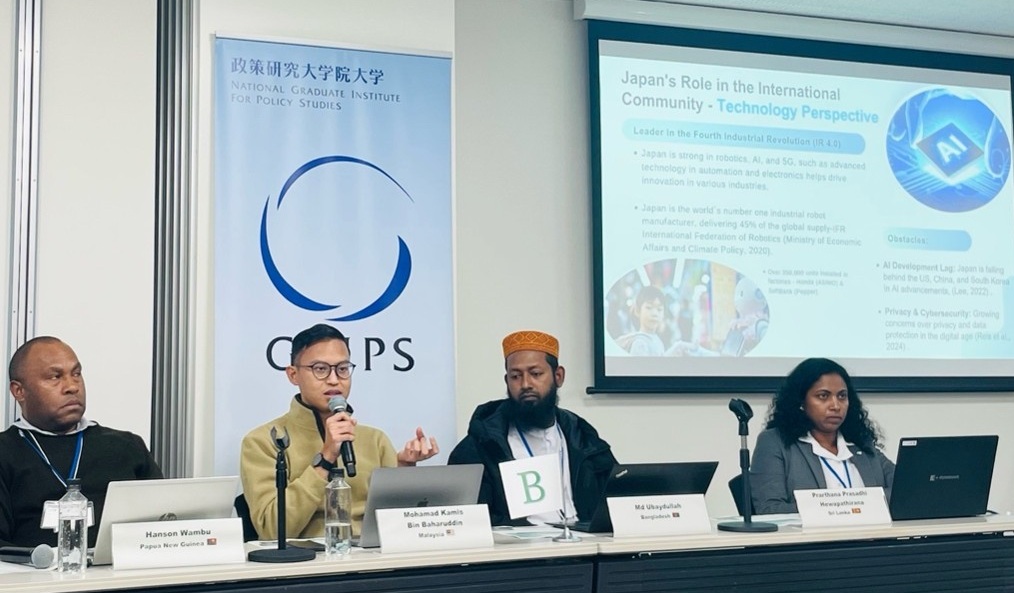
Looking back on his three years in the doctoral program, Kamis-san describes the experience as "a journey that gave me plenty of time to reflect on myself." Unlike undergraduate students, doctoral candidates have relatively few opportunities to attend classes and spend most of their time immersed in independent research.
Even in such an environment, Kamis-san was determined to make the most of the opportunity to study in Japan, which he had earned through a highly competitive selection process. In addition to focusing on his research, he actively expanded his network, particularly in Tokyo, building connections with people from diverse backgrounds.
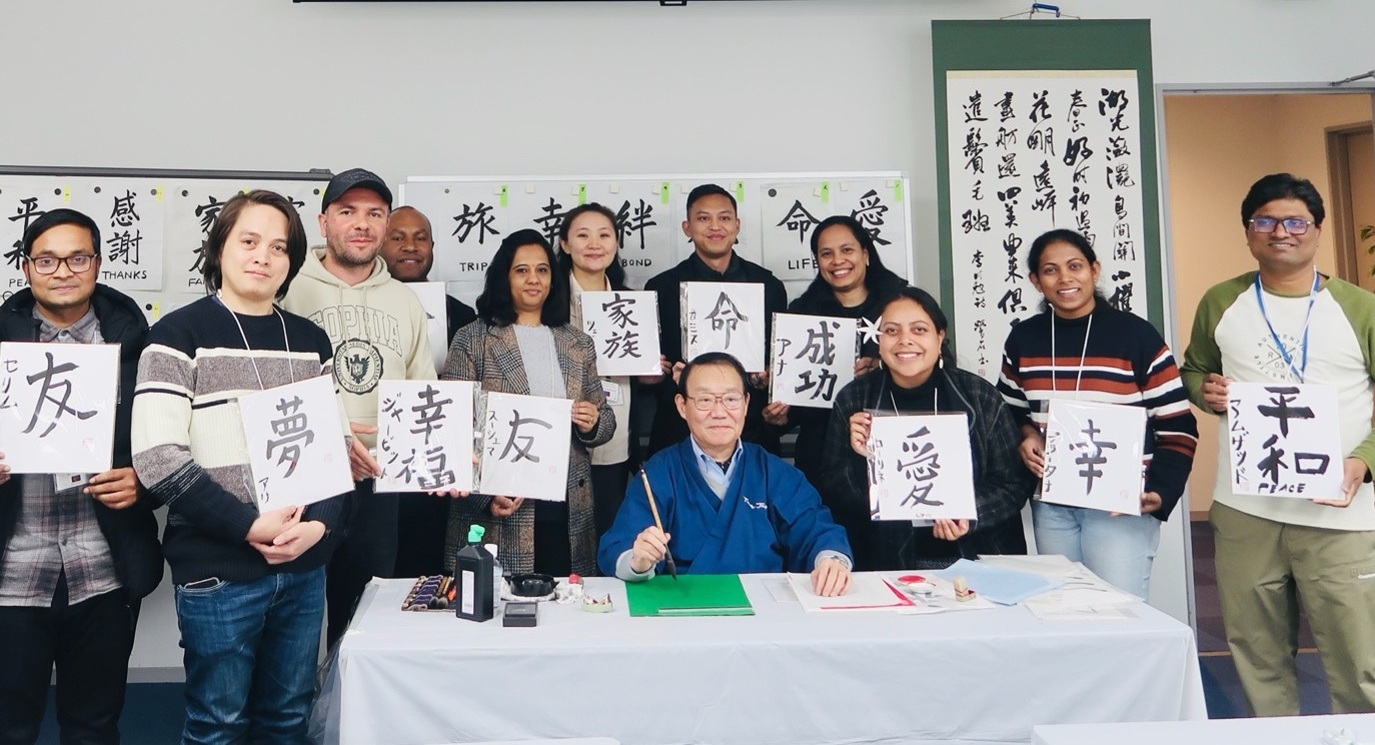
Among the many experiences he had during his stay, what remains most memorable is his exposure to Japanese culture. Reflecting on those experiences, he describes them as "life-changing."
He enjoyed uniquely Japanese cultural activities, including sightseeing in Kamakura and participating in a traditional mochi-pounding event on Mt. Takao. Through JICA Study Tour organized by JICA Tokyo, he also visited Saitama and Gunma Prefectures together with fellow JICA Scholars from around the world, where he learned about community-based development initiatives. In addition, he visited a junior high schools and took part in discussions with government institutions, broadening his perspectives and deepening his connections through JICA's extensive network.
Malaysia has continued to achieve steady economic growth and is expected to transition into the World Bank's high-income country category, alongside countries such as Japan, between 2028 and 2030.
However, Kamis-san believes that there will always be valuable lessons to learn from Japan.
"Even after Malaysia becomes a developed nation, there will still be much that we can learn from Japan," he says.
He notes that study opportunities in Japan have helped develop generations of Malaysian professionals and have significantly strengthened ties between the two countries. Looking ahead, he hopes to see new forms of collaboration emerge, including joint research projects involving Japanese and Malaysian researchers. He believes that sharing knowledge and experiences while drawing on each country's strengths will create significant value for both nations.
When speaking about his future, Kamis-san repeatedly emphasizes the importance of maintaining his connection with Japan. During his time at Waseda University, he not only pursued his own academic research but also supported Japanese students studying in Malaysia and assisted Malaysian students coming to Japan, contributing to the university's internationalization efforts.
He also actively participated in networking events and economic forums organized by the Embassy of Malaysia, building relationships with people from a wide range of professional fields.
After returning to Malaysia, Kamis-san hopes to continue his career as both a researcher and a public servant while serving as a bridge between Japan and Malaysia.
With great enthusiasm, he expressed his desire to contribute to the continued development of both countries by strengthening the ties he has built through his experience in Japan.
Sns share!


