
JICA Long-term Participants Learn about Agriculture and Community Development Fostered by a World Heritage Site in Sado City, Niigata Prefecture!
2026.10.06






JICA conducts Study Tour for its long-term participants, who are expected to become future leaders in their home countries. These programs provide opportunities not only to study specialized fields at Japanese universities, but also to learn about Japan’s development history, culture, and approaches to addressing regional challenges through visits to communities across the country.
From May 29 to 31, 2026, eighteen JICA long-term participants from nine countries visited Sado City, Niigata Prefecture, to take part in a regional understanding program themed “World Heritage Cultivated Farming and Welcomes New Islanders”
Sado City, blessed with a rich natural environment and a long history and cultural heritage, is home to the Sado Gold Mines, a UNESCO World Cultural Heritage site. The city has been actively promoting environmentally friendly agriculture and sustainable community development that makes full use of its local resources. Through this program, participants explored these distinctive features and initiatives while engaging with local residents who support the vitality of the region. The program aimed to deepen participants’ understanding of sustainable development and the role that local communities play in achieving it.
The program focused on two key themes: agriculture and efforts to attract new residents from urban areas in Japan. The program offered participants opportunities to learn about Sado’s history and regional characteristics. Activities included site visits to the Sado Gold Mines, terraced rice fields, farm-stay accommodations, and oyster farming operations. They also experienced the traditional performing art Ondeko (demon drum dance) and interacted with local residents. Through these activities, participants had the opportunity to reflect on challenges faced by Sado, including population decline, shortages of agricultural successors, and coexistence with the natural environment, while drawing parallels with issues in their own countries.
On the first day, participants attended lectures on migration promotion and agricultural policies delivered by Sado City at Ryotsu Community Center.
During the session on Urban-to-rural migration initiatives, participants learned about population changes from the prosperous era of the gold and silver mines to the present day, as well as challenges such as population aging, declining birthrates, and the maintenance of local infrastructure. The lecture also introduced various initiatives to encourage settlement in Sado, including business contests, dual-location living arrangements, and support programs for U-turn and I-turn migrants*.
The lecture on agricultural policy highlighted farming practices closely linked to Sado’s history and culture, the Globally Important Agricultural Heritage Systems (GIAHS), and environmentally friendly agricultural methods that help sustain biodiversity, including habitats for the Japanese crested ibis (Toki). Participants actively engaged in discussions, asking questions and offering suggestions based on comparisons with their home countries, particularly regarding agricultural technologies, human resource development, and water management for terraced rice fields.
*U-turn migration refers to people who return to their hometowns after a period of living in other cities or regions. I-turn migration refers to people who move from urban areas to rural communities where they have no previous ties, often seeking a different lifestyle or new opportunities.
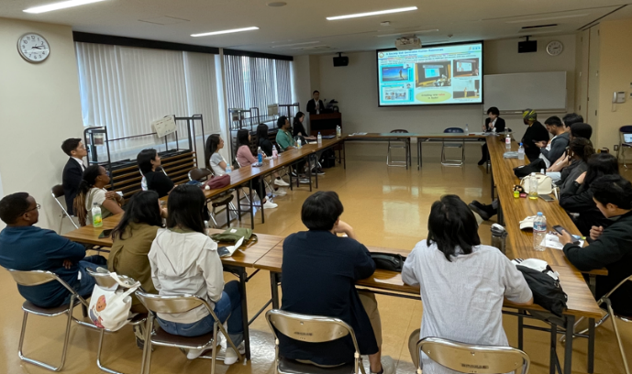
Lecture by Sado City officials
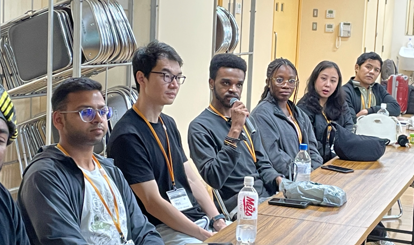
Participants actively engaged in the session with many questions and comments.
On the second day, participants visited Kirarium Sado and the Sado Gold Mines to deepen their understanding of the island’s history and the impact that the development of the gold and silver mines had on local livelihoods and industries.
At the Sado Gold Mines, participants toured both the hand-dug tunnels dating back to the Edo period and the mechanized mining tunnels that supported Japan’s modernization. Many expressed admirations for the hard work and dedication of the Japanese people, as well as the advanced mining technologies developed over the centuries.
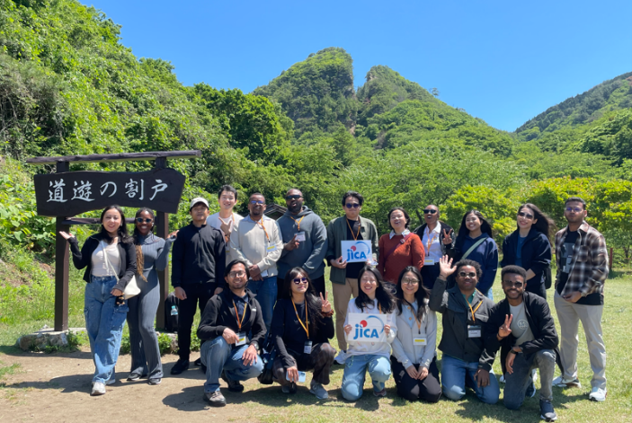
Doyu-no-Warito at the Sado Gold Mines
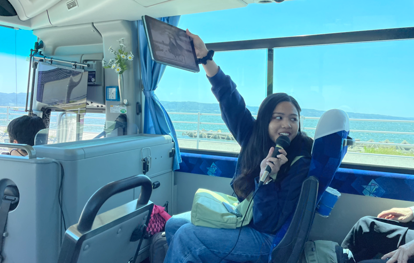
Participants explained Sado’s natural environment and the Japanese crested ibis (Toki) during the journey between sites.
At the Utami Terraced Rice Fields, participants learned about efforts to conserve and revitalize the terraces with support from the Sado Island Center for Ecological Sustainability, Niigata University, and the local community organization UKUU.
As an example of initiatives to restore abandoned rice fields, participants observed an ultra-micro hydropower system using a jet turbine that generates electricity from irrigation channels running through the terraced fields. Learning that an increasing number of terraces have been abandoned due to labor shortages, participants also gained insight into the commitment of local residents who continue working to preserve this unique agricultural landscape. The visit encouraged participants to reflect on sustainable agriculture and the role of local communities in maintaining it.
During an exchange gathering, participants were served rice grown in the terraced fields and cooked in a traditional nukagama rice cooker. Lively discussions took place on topics such as young people moving away from agriculture, the restoration of abandoned farmland, and the factors that enable older residents to remain active and engaged in their communities.
One message shared by a local resident left a particularly strong impression on the participants:
“When you share money or material possessions, you have less of them. But when you share happiness, it grows.”
This simple yet powerful message resonated deeply with the participants and highlighted the importance of community bonds in creating sustainable and vibrant rural societies.
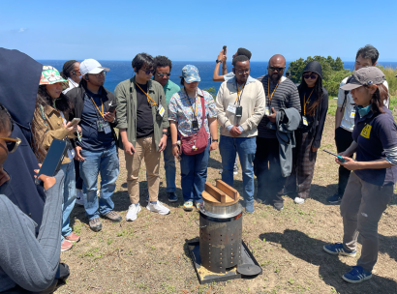
Participants learn about terraced rice field conservation activities in Utami
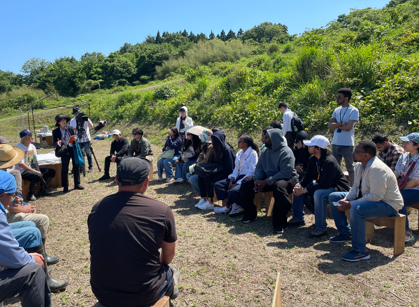
Exchange with UKUU, a Local Organization Dedicated to Rice Terrace Conservation
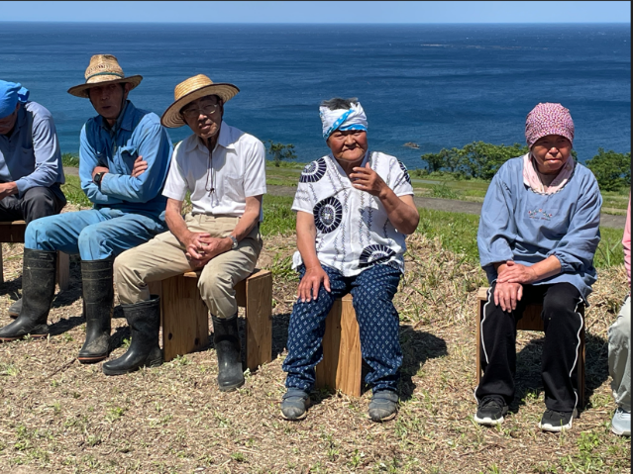
Discussion with local residents
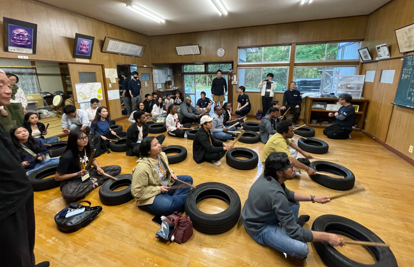
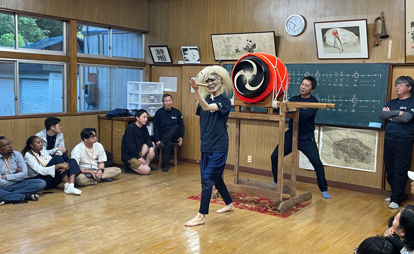
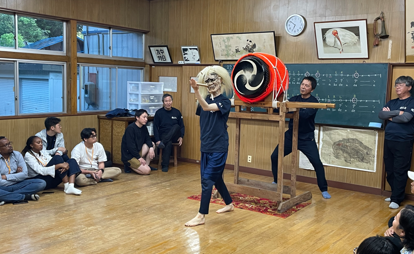
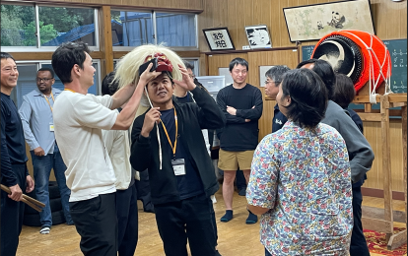
In the Katakami community, participants experienced Ondeko, Sado’s traditional performing art, with the support and cooperation of local residents.
The participants first learned the basic drumming techniques and then had the opportunity to witness the dynamic demon dance performances and powerful taiko drumming at close range. During the subsequent exchange gathering, local children and their families also joined the event. The participants communicated in Japanese, while local residents used both Japanese and English, creating a lively and welcoming atmosphere for interaction. The gathering provided a valuable opportunity for participants to share their cultures and connect with one another beyond language barriers.
Many participants later cited the Ondeko experience and interactions with local residents as one of the most memorable highlights of the program.
A dynamic and powerful Ondeko performance
A dynamic and powerful Ondeko performance
Participants try on a traditional demon mask
A participant delivers a thank-you speech in Japanese during the exchange gathering
On the final day, participants visited Miraisato, which operates farm stay accommodations, and Sadokatsu, a local company engaged in oyster farming and landscaping.
At Miraisato, participants attended a lecture by the company’s representative, who shared the story of relocating to Sado, utilizing vacant houses, and the challenges of sustaining a business in a rural community. Through the session, participants gained a deeper understanding of how traditional houses can be repurposed and explored the potential for entrepreneurship in rural areas.
At Sadokatsu, participants visited an oyster farming site as an example of a business that leverages local resources following a U-turn migration back to Sado. They also experienced attaching oyster spat to cultivation equipment, gaining first-hand insight into the oyster farming process. Through this visit, participants learned how local businesses can contribute to addressing regional challenges while creating new economic opportunities based on the island’s natural resources.
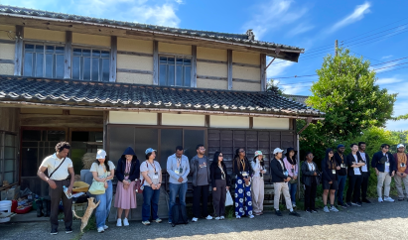
Farm stay accommodation “Miraisato”
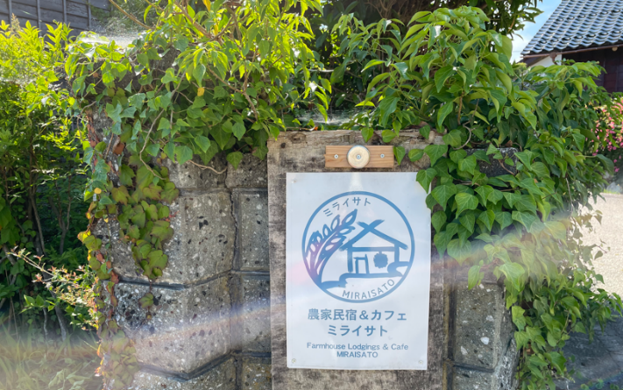
Participants also visited the attached café
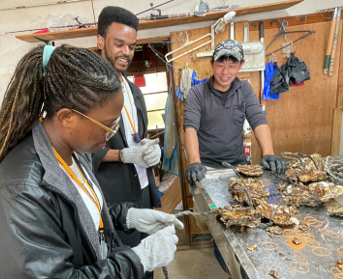
Experience attaching oyster spat
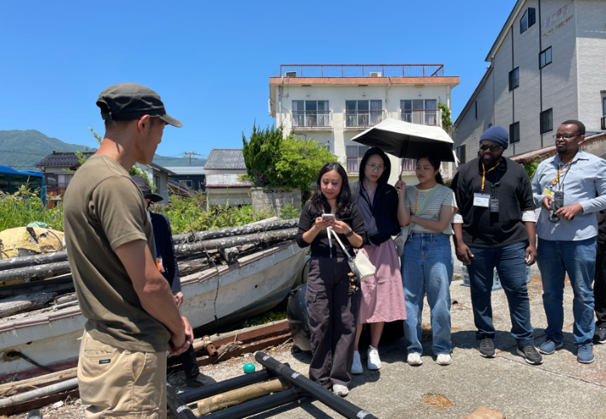
Site visit and discussion session at Sadokatsu
At the conclusion of the program, participants reflected on their experiences and key takeaways from the three-day study tour and shared their insights with one another through presentations.
During the presentations, participants commented, “I gained a deeper understanding of how each region in Japan has its own unique culture. I was also able to appreciate the values and spirit of the Japanese people.” Another participant noted, “The program highlighted how the effective use of local natural resources, support for entrepreneurship, and the preservation of cultural heritage can contribute to sustainable regional development.” Participants also remarked, “I learned that close collaboration among local communities, universities, private companies, and government institutions can help address regional challenges such as depopulation and the lack of economic opportunities.”
The presentations reflected a wide range of learning experiences and perspectives, covering topics such as the differences between urban and rural lifestyles in Japan, the unique cultures of different regions, livelihood opportunities through agriculture and fisheries, and sustainable community development driven by collaboration among local communities, universities, private sector, and local government.
Through this Study Tour, the participants learned about Sado’s history, which has been shaped by its World Heritage, as well as its environmentally sustainable agriculture, initiatives to attract and retain new residents, local culture, and the diverse efforts of community members to pass on the region’s unique attractions to future generations. These insights were gained through site visits and exchanges with local stakeholders.
Through these experiences, participants were exposed to the knowledge, ingenuity, and values deeply rooted in Japan’s regional communities, as well as the dedication of the people who sustain their vitality. The program provided an opportunity for participants to reflect on community development and sustainable growth in their own countries.
In particular, Sado City’s efforts to address population decline, promote regional revitalization, and advance environmentally sustainable agriculture resonated strongly with many participants, as these challenges are shared by their home countries. It is expected that the knowledge, perspectives, and experiences gained through this program will be applied by the participants in addressing development challenges and promoting sustainable growth in their own countries and communities.
Finally, we would like to express our sincere appreciation to all those who contributed to the success of this program, including Sado City, Niigata University, UKUU, Makotogokoro-kai of the Katakami Community, Miraisato General Incorporated Association, Sadokatsu Co., Ltd., and many others for their generous cooperation and support.
Sns share!


