




scroll


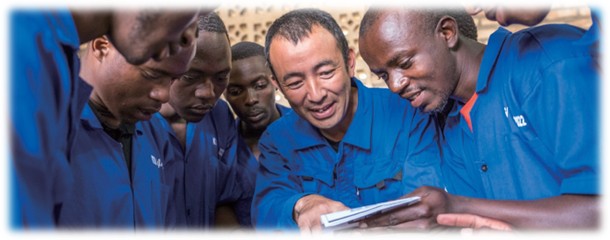
Experience in developing countries is needed for the diversification of Japan
The JICA volunteer program recruits people (20 to 69 years old) who wish to utilize their skills, knowledge, and experience for the benefit of people in developing countries and dispatches them to those countries as JICA Overseas Cooperation Volunteers (JOCVs). As a general rule, JOCVs stay and work with local people for two years, speak the local language, and work to solve problems while fostering mutual understanding.
Since its first dispatch to Laos in 1965, more than 55,000 JICA volunteers have worked alongside local communities in developing countries. About 1,200 people from Ibaraki and 780 people from Tochigi have participated in the program (as of the end of January 2024) and have been actively contributing to international cooperation. In recent years, it has been noted that the JICA volunteers' experience in building trust across differences in language, culture, and values have been increasingly recognized for their potential contribution to Japan's local communities. In Ibaraki and Tochigi, many former JICA volunteers have actively worked on revitalization of communities and multicultural coexistence in Japan.
“Costa Rica is now my second home”
Although I sometimes struggled with cultural differences and languages during the mission, thanks to the support of the locals, I was able to complete two years of my volunteer work. After returning to Japan, I continued working as an occupational therapist and launched NatuRica, a program to support groups of disabled persons in Costa Rica. I hope to continue import and sales of coffee and chocolate from Costa Rica that make myself and others happy.
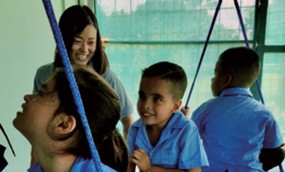
Ai Oshima from Moriya City, Ibaraki Prefecture worked as an occupational therapist at a special needs school in Costa Rica.
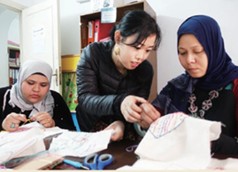
Junko Asakawa from Utsunomiya City, Tochigi, taught dressmaking to women in Egypt, including embroidery and cloth accessory making
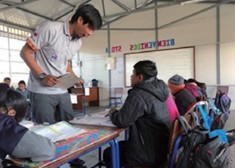
So Nagakura from Sano City, Tochigi taught math class at an elementary school in Nicaragua.
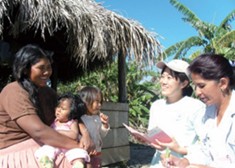
Miyuki Nakayama worked as a public health nurse in Bolivia and now works on multicultural coexistence efforts in Shimotsuma City, Ibaraki.