1. Connection between Overseas Emigration and Fukuoka Prefecture
Since Japan's opening in the Meiji era, many Japanese people have moved abroad. They traveled to places such as the United States, Canada, and Latin America as contract laborers on plantations or as colonizers. Currently, approximately 4.8 million Japanese immigrants and their descendants (Nikkei) live around the world. The Japan Emigration Service, the predecessor of JICA, supported the dispatch and settlement of emigrants from Japan as part of the government programs.
Fukuoka Prefecture, where JICA Kyushu is located, sent approximately 58,000 emigrants, the fifth-largest number among all Japanese prefectures, to North and Central/South America. In this context, the Prefectural Government previously offered scholarships and invitations to visit Japan for the children and grandchildren of emigrants with Fukuoka roots. Currently, it operates various unique support programs, such as assistance for Emigrant Family Associations and anniversary exchange programs.
In this November, the "12th Worldwide Fukuoka Kenjinkai Convention" (Overseas Fukuoka Prefectural Association) will be held mainly in Fukuoka City and other locations within the prefecture. Representatives from 39 Fukuoka Kenjinkai (Prefectural Associations) worldwide will get together, providing a valuable opportunity to reaffirm their connection and identity with Fukuoka Prefecture. In preparation for this Convention, JICA Kyushu is participating in exchange activities through young people residing in Fukuoka Prefecture.
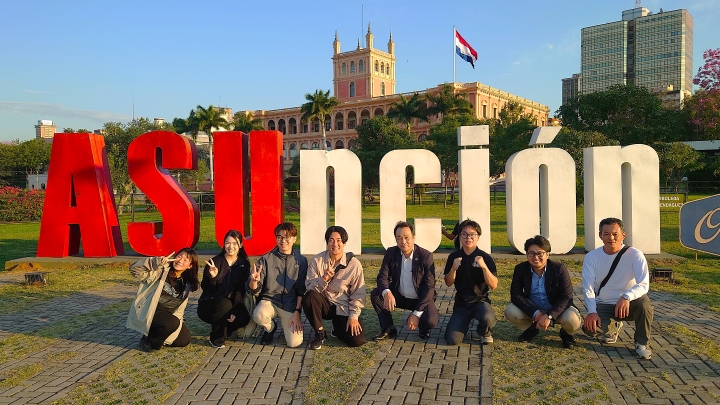
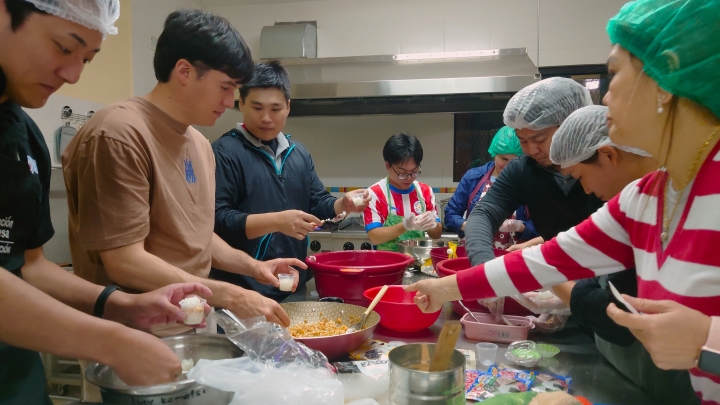
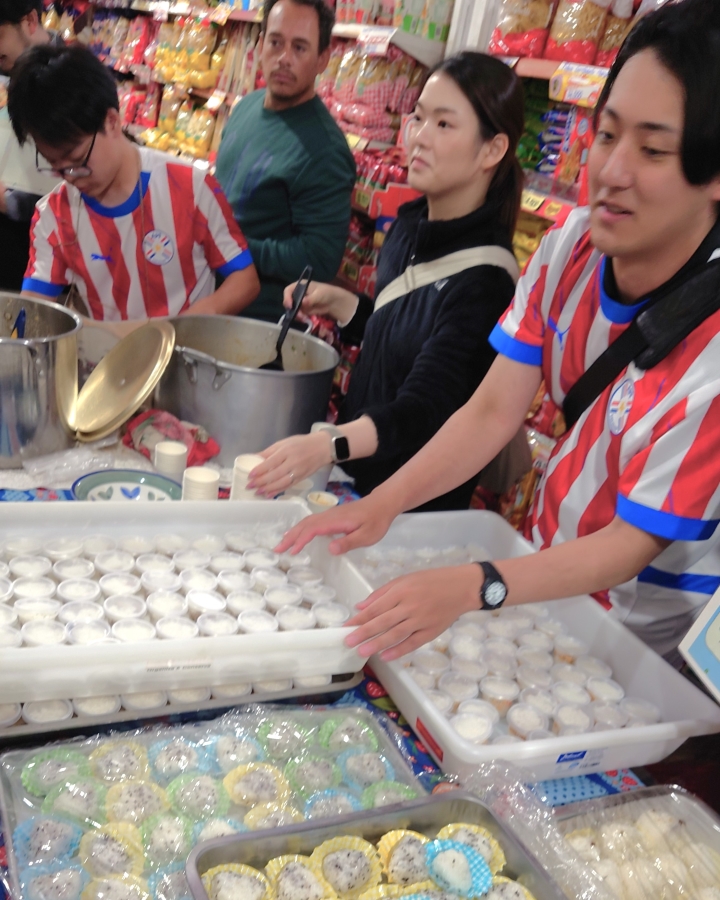
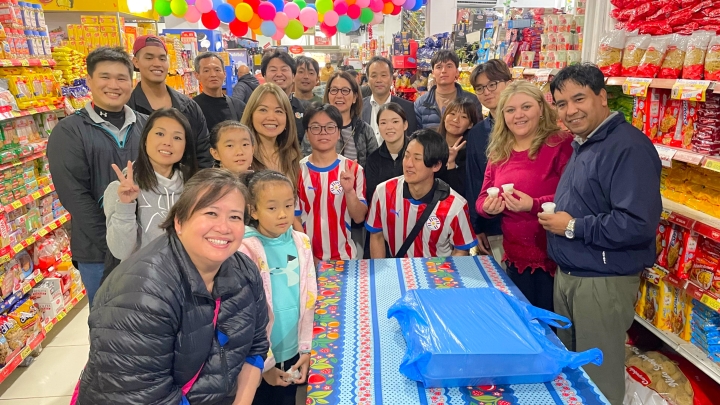
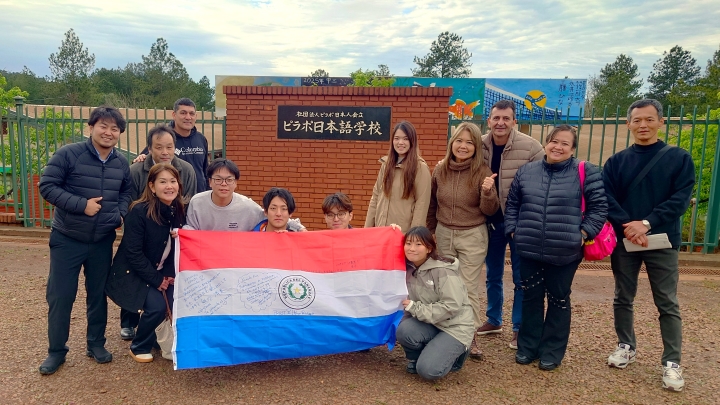
In this August, university students residing in Fukuoka Prefecture who are volunteering for the Worldwide Convention's preparation andrepresentatives from Nikkei Emigrant Family Associations (Kazokukai) made three teams and visited the Fukuoka Kenjinkai Prefectural Associations in Brazil, Peru, and Paraguay. In each country, they interacted with young generations of the Japanese Associations and Fukuoka Kenjinkai Associations. They gained an understanding of the current relationship of Japan/Fukuoka Prefecture and the Nikkei emigrants, Nikkei people, and Fukuoka Prefectural Associations in each country, and engaged in active discussions about the future of the Nikkei society.
2. Nikkei Community in Paraguay, South America
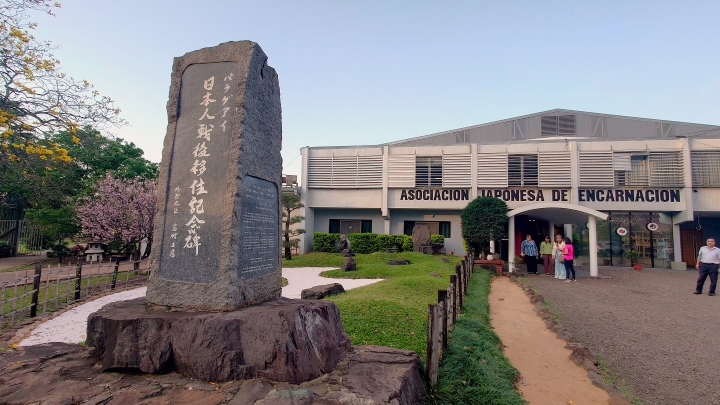
I accompanied the team to Paraguay, one of the three countries mentioned above. In Paraguay, which has a population of about 7 million, approximately 10,000 Nikkei people live there. Although they constitute only 0.14% of the population, the Nikkei community significantly contributes to the country's economy through agricultural production of soybeans, chicken eggs, sesame, and other products. Furthermore, they are highly regarded for their sincerity and diligence and enjoy deep trust from the local society. A distinctive feature compared to Nikkei communities in other countries is their preservation of Japanese culture, including language, food, and traditional events. Even among the second and third generations of Nikkei born in Paraguay, where Spanish and Guarani are the official languages, it is common for them to speak fluent Japanese.
3. Concerns and Hopes of Young Nikkei
Japanese language schools exist in the main Japanese immigrant settlements in Paraguay, and the Nikkei community focuses on maintaining and passing down the Japanese language to the next generation. However, Nikkei children sometimes question and feel burdened by the need to learn Japanese, which they see as difficult and not essential for their lives in the country of their birth. I have heard that this can occasionally lead to rebelling against their grandparents or parents.
In contrast, Nikkei people in Brazil and Peru, where assimilation into the host society is more advanced, often see Japan as merely the "ancestors' place of origin." In these Nikkei communities, not learning Japanese at all has become common.
Amidst this, some young Nikkei people have stated that being exposed to Japan and Fukuoka through JICA or prefecture-sponsored invitations or study programs helped them reaffirm their roots and increase their interest in the Japanese language and culture. When asked if they want to stay connected with Japan and Fukuoka Prefecture in the future, they responded, "There is much to learn from Japan, and we believe it is important to learn Japanese and know the country; we also see business opportunities connecting Paraguay and Japan. Fukuoka, beyond its family connection, is attractive compared to places like Tokyo; we are drawn to its functionality, safety, culture, food, and the warmth of its people".
However, it was impressive to learn that most young Nikkei wish to live in Paraguay while maintaining a connection with Japan. The appeal of Paraguay, where they can live a free and stress-free life, seems like a significant factor for them.
I have been involved with Nikkei communities in Bolivia and the Dominican Republic over years, but this was my first experience having a candid conversation with second and third generations. It was a fresh experience to hear their firm resolve to "live in Paraguay while being connected to Japan and Fukuoka, the roots of our ancestors".
The students who participated in this trip will report on their local experiences and learning, disseminating the information via social media. This is expected to be an opportunity to connect Kenjinkai (Prefectural Associations) and Kazokukai (Nikkei Emigrant Family Associations) to the younger generation.
The Japanese settlements on the opposite side of the globe continue to develop while maintaining connections with Japan and also contributing to the socio-economy of their countries. Nikkei emigrants are truly the bridges connecting Japan with the rest of the world.