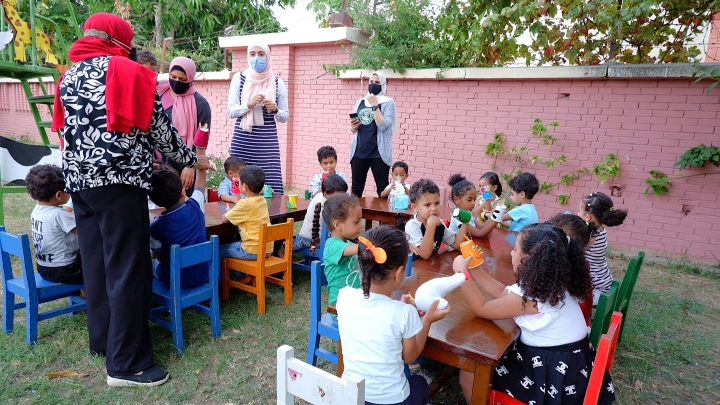
In Egypt, we are trying to improve the quality of early childhood development by nurturing children’s creativity and autonomy. Continuous innovations on the ground and daily efforts are sparking positive changes that help build the foundation for the future of Egypt.
A New Challenge in Early Childhood Development
I am currently in charge of a technical cooperation project in Egypt aimed at improving the quality of early childhood development. The project covers 500 nurseries across nine governorates nationwide. Together with our counterpart, the Ministry of Social Solidarity, we are working to strengthen the capacity of nursery facilitators, establish monitoring and support systems for nurseries, and conduct awareness-raising activities to establish the foundation for children’s learning.
In Egypt, the enrollment rate for nurseries serving children aged 0–4 is only 10% as of 2024, which is much lower than the average of 27% in the Middle East and North Africa region. There is also no national qualification system for nursery facilitators. About 70% of licensed nurseries are operated by small NGOs, many of which rely on low-paid staff with no formal training in childcare. As a result, turnover rates of the staffs are high, and the quality of childcare is often unstable. Furthermore, there is a strong preference for academic skills such as reading, writing, and arithmetic, and less emphasis on nurturing children’s creativity and other non-cognitive skills.
On the other hand, as the phrase “the first 1,000 days” suggests, the period from pregnancy through early childhood until the child gets 2 years old is recognized as a golden period for physical, cognitive, and emotional development. Some research show that investment in early childhood period has significant returns in later education, employment, and health. Given Egypt’s annual population growth rate of about 1.57%, expanding access to quality childcare services is an urgent issue for the country’s future development.
The Historical Ties Between Egypt and Japan in Education
In fact, this is the first time JICA has implemented a technical cooperation project in the field of early childhood development anywhere in the world.
One major reason for this is the announcement of the Egypt-Japan Education Partnership (EJEP). Inspired by President El-Sisi’s admiration for Japanese education by describing Japanese as "a walking Quran", both countries agreed to provide comprehensive support for Egypt’s entire education system, leveraging Japanese expertise through both technical and financial cooperation. In addition to early childhood education, several other projects in education sector are being implemented in parallel, reflecting the deep relationship between the two countries.
Moreover, since the 1990s, more than 80 JICA volunteers specializing in early childhood education have been dispatched to Egypt. The success of their activities has depended greatly on the understanding of local nursery teachers and parents. It has not been easy to let Egyptians who have grown up valuing academic achievement above all else understand the importance of childcare, but the steady efforts of past volunteers have gradually changed attitudes of those who are around them toward childcare. The seeds of change cultivated together with local people have now blossomed into the realization of this new project, and the synergy between past and present efforts continues to grow.
Small Changes Observed on the ground
Four years ago, as a new employee at JICA, I learned about this project through on-the-job training and accompanied experts on several awareness-raising activities.
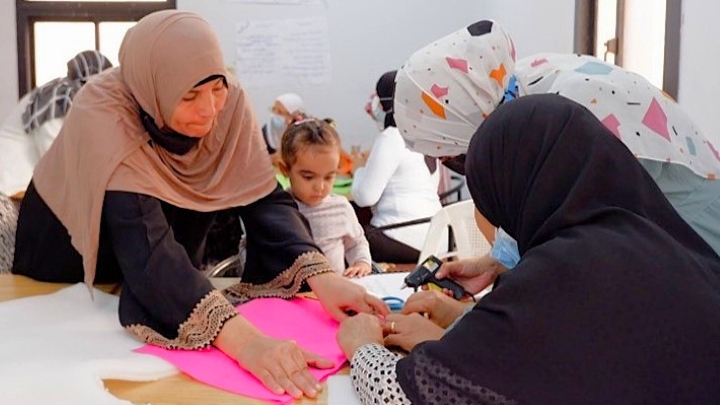
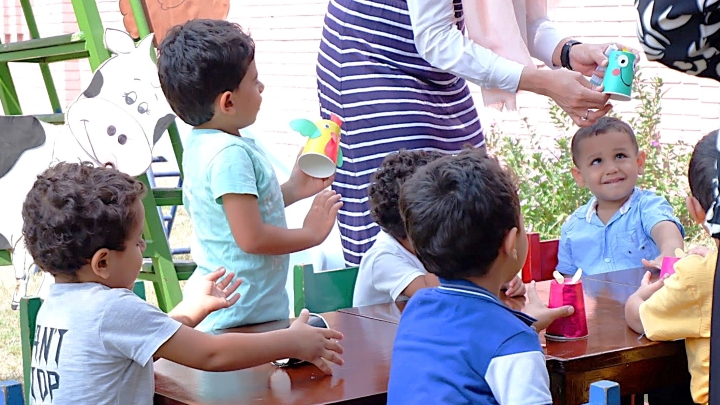
One memorable experience was participating in a workshop on making handmade toys. When one nursery facilitator asked, “Why do we need to make toys instead of buying them?” the instructor explained the importance of providing individualized care and learning, as well as expanding the repertoire of play for nursery facilitators.
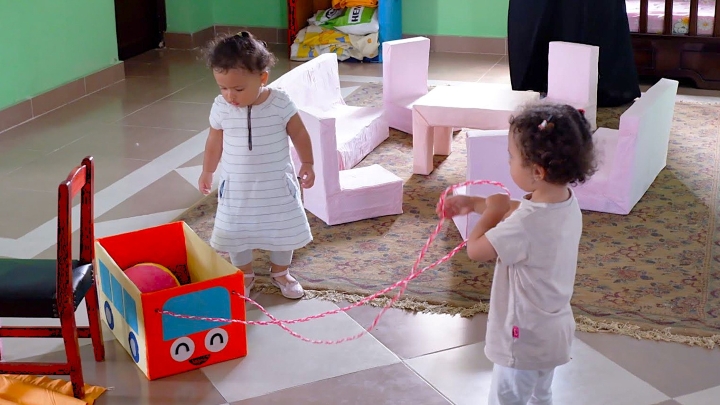
For example, toys made from empty boxes or scraps of cloth have no set way to play, so children can invent their own games and collaborate with friends, fostering creativity and autonomy. Such toys can also be tailored to each child’s developmental stage and interests. In addition to promoting individual growth, observing children’s reactions and making improvements helps nursery facilitators develop their own creativity and expertise. In the training I observed, participants designed play activities using familiar materials, and it was impressive to see how their “toolbox of play” expanded and how many realized, “this is easier than I thought!”
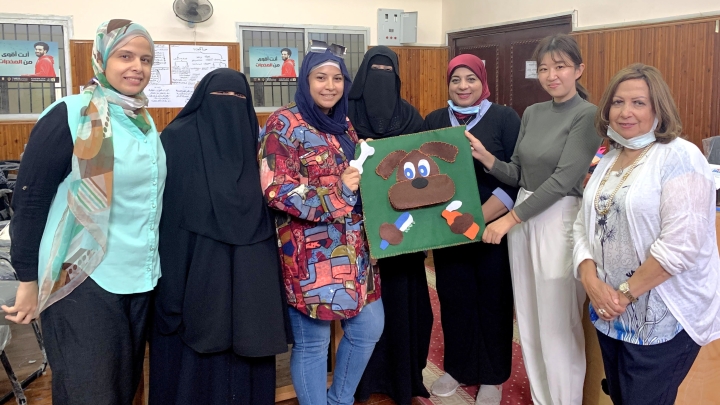
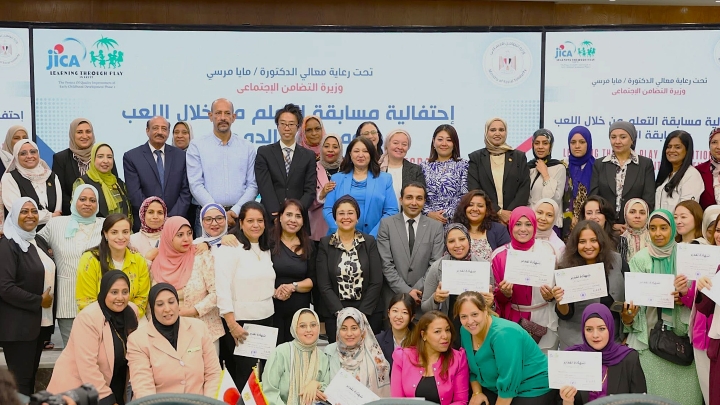
Just the other day, an award ceremony was held for a contest on learning through play and inclusion. The winners proudly presented their handmade toys and creative awareness-raising ideas. Seeing these achievements years after the project began, I was deeply moved by the changes that have taken root.
Nurturing People as the Foundation of Nation-Building
Ultimately, I believe there is no single “right answer” in education. That is why it is essential to value the small changes nurtured together with local people through long-term, locally rooted cooperation. I hope that the small changes generated by this project will lead to broader changes in Egyptian society and help create a better future. JICA will continue to contribute to human resource development in Egypt.