
Africa/Mozambique: The Journey of Introducing the Maternal and Child Health Handbook and Future Prospects
[Goal 3] Good Health and Well-Being
2026.04.02
-

- Tsuji Takayuki, JICA Mozambique Office





2026.04.02
Mozambique, located in southeastern Africa along the Indian Ocean, is a country blessed with rich natural beauty and cultural diversity. The nation experiences both rainy and dry seasons, spans an area roughly twice the size of Japan, and is home to about 36 million people. While agriculture and fisheries are long-standing mainstays of daily life, recent natural gas development has brought growing expectations for new industries.
Mozambique Island, a UNESCO World Heritage Site, retains historic forts and churches from the colonial era. The Bazaruto Archipelago and Tofo Beach are world-renowned diving destinations, where visitors can encounter whale sharks, dugongs, and sea turtles. Inland, elephants, lions, and hippos can also be spotted in their natural habitat.
In the capital city of Maputo, daily life is enriched by easy access to South African goods and abundant seafood. As a result, Portuguese and Italian restaurants are particularly vibrant. Prices tend to be higher than in Japan, but the warm climate throughout the year makes for a comfortable living environment.
Mozambique’s ties with Japan date back to the 16th century—Yasuke, the famed African retainer of feudal lord Toyotomi Hideyoshi, is said to have originated from this region. Today, Mozambique drives on the left-hand side of the road like Japan, and many Japanese used cars run through the streets thanks to their trusted quality.
At the same time, Mozambique remains one of the poorest countries in Africa, with a significant gap between rich and poor. In many rural areas, only about 40% of the population has access to basic services such as water, food, healthcare, and education. The country has a very young demographic structure, with a pyramid-shaped population and an average age of just 17—one of the youngest in the world (compared to Japan’s average age of 49, the oldest globally).
The leading causes of death include infectious diseases such as malaria, AIDS, and tuberculosis, creating conditions comparable to those in Japan during the 1950s. When I first saw a tuberculosis ward that I had never seen in Japan , I was reminded of the severe challenges faced by least developed countries.
Health indicators for mothers and children are particularly alarming. For every 100,000 live births, 289 women die from pregnancy-related causes—55 times higher than in Japan. Under-five mortality is also extremely high, with 67 deaths per 1,000 children, which is 33 times Japan’s rate.
Furthermore:
• 38% of children experience stunted growth, far exceeding global and African averages.
• 36% of births take place without a skilled health professional present (compared to 0% in Japan).
• 11% of adult women are living with HIV—110 times the rate in Japan.
Across nearly all indicators, Mozambique’s outcomes remain below both global and continental standards, highlighting the urgent need for continued support.
Since 1993, Japan has been supporting Africa through TICAD, focusing on areas such as AIDS, infectious and non- communicable diseases, health workforce development, universal health coverage (ensuring equal access to quality healthcare without financial hardship), and improvements in maternal and child health, nutrition, and sanitation.
At TICAD9, held in Yokohama in August 2025, Japan continued to outline cooperation tailored to the needs of each African country. This includes revising and promoting the digitalization of Maternal and Child Health Handbooks to better support mothers and children across the continent.
Since 2003, the JICA Mozambique Office has been supporting the country’s health sector, focusing particularly on maternal and child health, infectious disease control, and the training of healthcare workers. Building on these efforts, the “Maternal and Child Health (MCH) Handbook Introduction Project” was launched in 2021.
Japan’s Maternal and Child Health Handbook originated during World War II, at a time when food and medical supplies were scarce. It was created to help safeguard the population and ensure the country’s future. Supported by legal reforms and strong societal backing, the handbook contributed to a dramatic reduction in maternal and under-five mortality in the 1970s. Today, the handbook has been adapted to respect each country’s cultural and religious contexts, and has been introduced in more than 40 countries worldwide, beginning with Indonesia.
In Mozambique, the MCH Handbook project includes information on signs of labor, hygiene practices, malaria prevention, and nutrition. To make the content accessible even to those who cannot read Portuguese—the official language—the handbook incorporates many illustrations and easy-to-understand visuals. This helps pregnant women and caregivers make informed decisions and improve nutrition for both mothers and young children.
In rural areas where access to healthcare is limited, the project works with community health workers to promote the use of the handbook. In regions facing severe water shortages, the initiative collaborates with JICA’s water supply projects to reinforce essential hygiene practices such as handwashing. Through these combined efforts, the project aims to strengthen maternal and child health and improve daily health behaviors across communities.
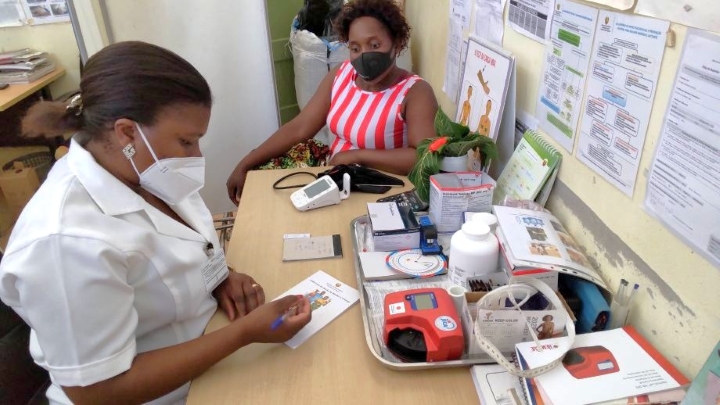
Interviewing a Pregnant Woman Using the Handbook
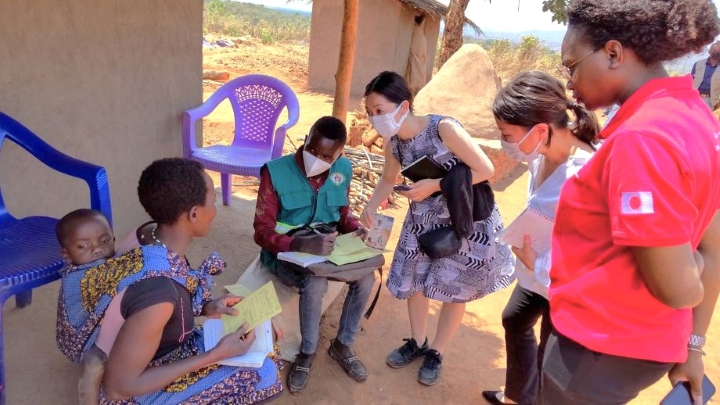
Project specialists speaking gently with a participant
During my field visits, I heard encouraging comments from many people. Healthcare workers told me, “All the information is consolidated in one place, so as long as we record everything in this handbook, we can feel confident.” Both community health workers and pregnant women shared that the illustrations make the handbook easy for anyone to understand.
I often meet mothers who carefully keep their handbooks in protective covers or sturdy plastic bags. Each time I see this, I feel a deep sense of joy—knowing that the Maternal and Child Health Handbook, born in Japan, is valued in Mozambique and is truly making a difference.
Whenever I travel, I bring my own MCH handbook from childhood and show it to others, saying, “This was the very first gift I received in life—almost 50 years ago.” People are always surprised that I have kept it for so long, and the moment becomes warm and heart-touching .
Even when medical facilities are far away, the handbook helps provide essential information to mothers and families, while healthcare workers rely on it to support safe childbirth. I truly believe the Maternal and Child Health Handbook is a remarkable system that Japan created and nurtured.
One day, I hope to see Mozambique’s version of the handbook grow through multiple editions, spread to rural communities across the country, and contribute to real improvements in maternal and child health. To help make that vision a reality, we will continue working closely with the Ministry of Health and many partners toward nationwide dissemination of the handbook.
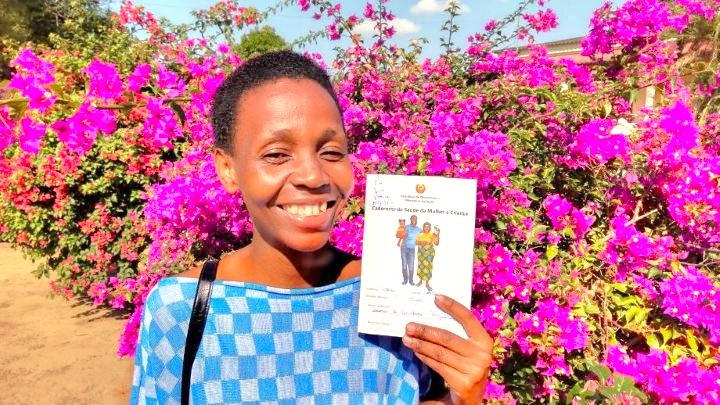
Holding her first Maternal and Child Health Handbook
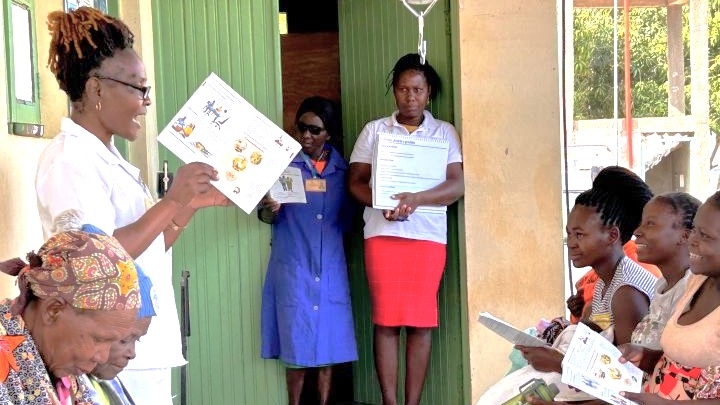
Reading the MCH handbook together
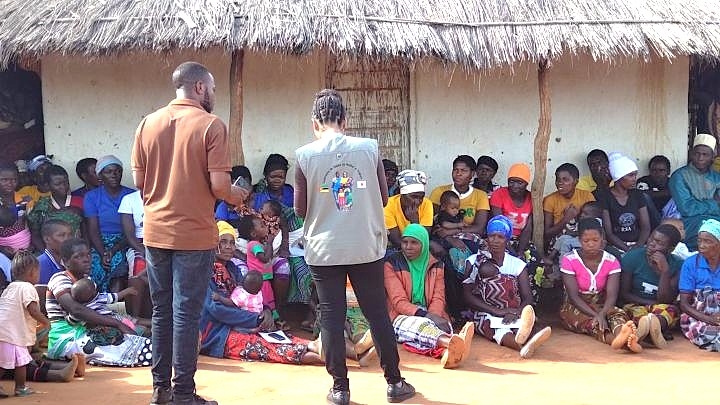
Health Ministry staff from Maputo engaging with community members
Sns share!


