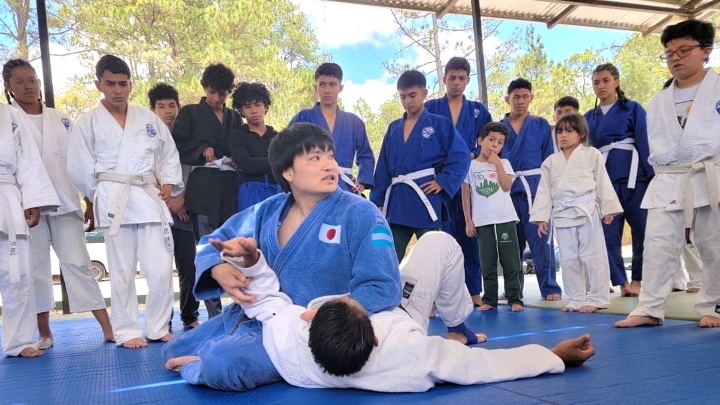
In Honduras, a country facing public security challenges, judo is bringing hope to children and police cadets alike. Sparked by visits from world-class judoka, seeds of courtesy and confidence are beginning to take root, signaling positive change in local communities.
The Current State of Security in Honduras
Honduras is blessed with the Caribbean Sea and lush tropical rainforests, and its people are warm and welcoming—a country I truly love. Yet, the lingering effects of past security crises remain in certain areas, requiring caution.
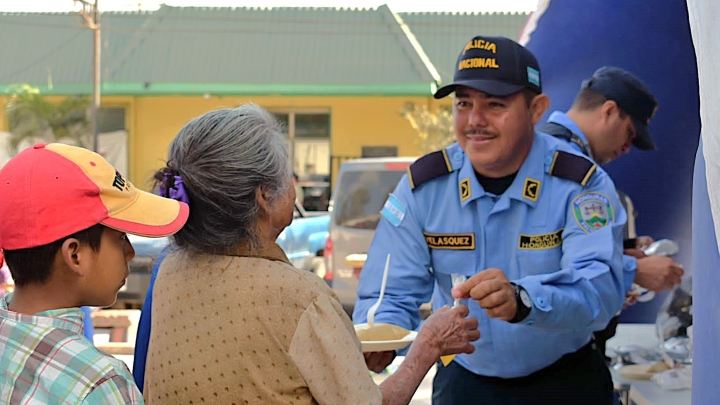
Since 2009, JICA has partnered with the National Police to strengthen community policing efforts. These include building reporting systems, conducting crime-prevention workshops in schools, and visiting households. These initiatives have led to a reduction in crime and an increase in consultations from residents, fostering trust between communities and law enforcement.
Tackling Security Issues Through Judo
At the root of worsening security lies a harsh reality: many youths from impoverished families have nothing constructive to engage in after school, making them vulnerable to drugs and crime.
The Honduran police turned their attention to the Japanese martial art of judo. Officers with judo experience explained, “Judo teaches courtesy, emotional control, and respect for others—guiding children toward the right path.” For police officers, judo is also practical, as it enables them to restrain suspects without causing harm.
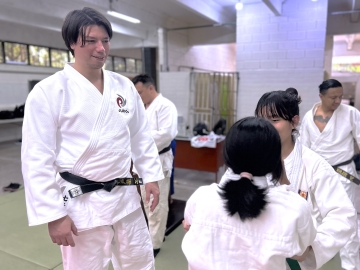
Having practiced judo for 16 years myself, I shared: “The principles of Seiryoku Zenyo (maximum efficient use of energy) and Jita Kyoei (mutual prosperity) nurture humanity. In Japan, police academies also incorporate judo training.”
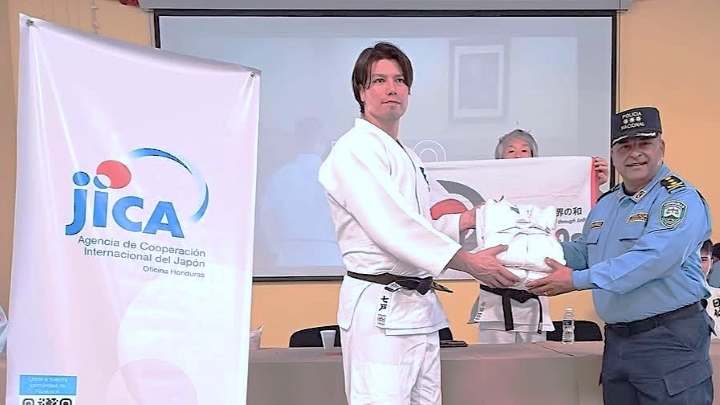
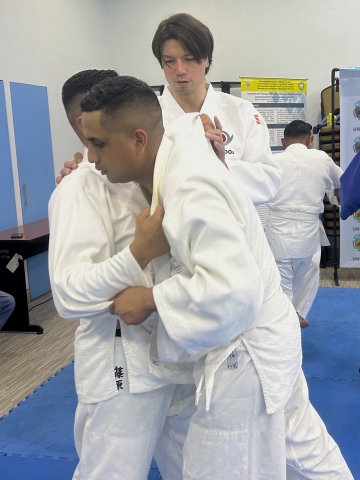
Based on this philosophy, the Honduran Judo Federation began dispatching instructors to the police academy. Japan supported the effort by donating judogi and sending experienced judoka. I, too, have had the privilege of teaching at the police academy.
Two World-Class Judoka Arrive in Honduras
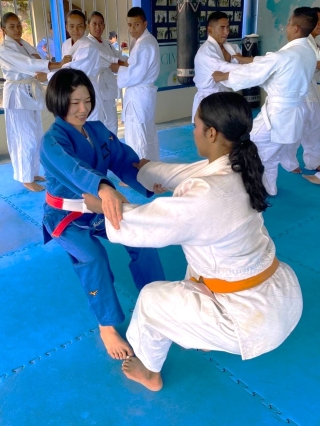
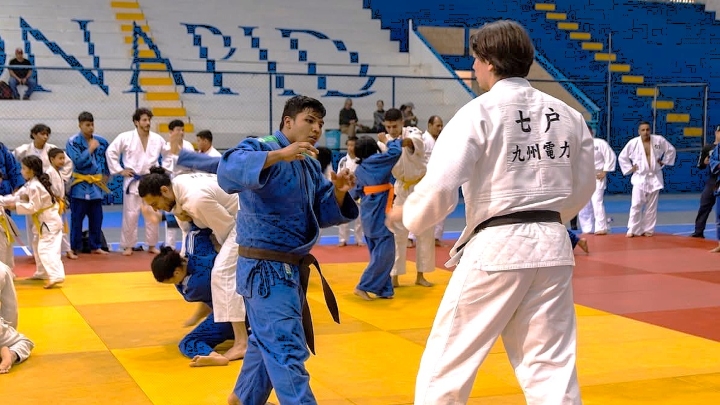
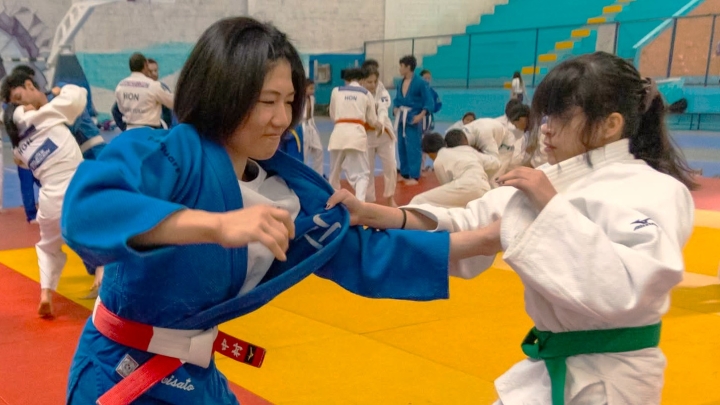
A major milestone in promoting judo within the police force was the visit of two world-renowned judoka: Ryu Shichinohe, silver medalist in the men’s +100 kg category at the World Judo Championships (2014, 2015), and Misato Nakamura, bronze medalist in the women’s 52 kg category at the Beijing and Rio Olympics.
Responding to the mission of the NPO JUDOs—“improving public safety through judo”—both athletes visited Honduras in 2024 and 2025, respectively, conducting training sessions at the police academy, elementary schools, and with the national team.
Shichinohe’s visit marked the start of judogi donations and the introduction of judo classes in three schools.
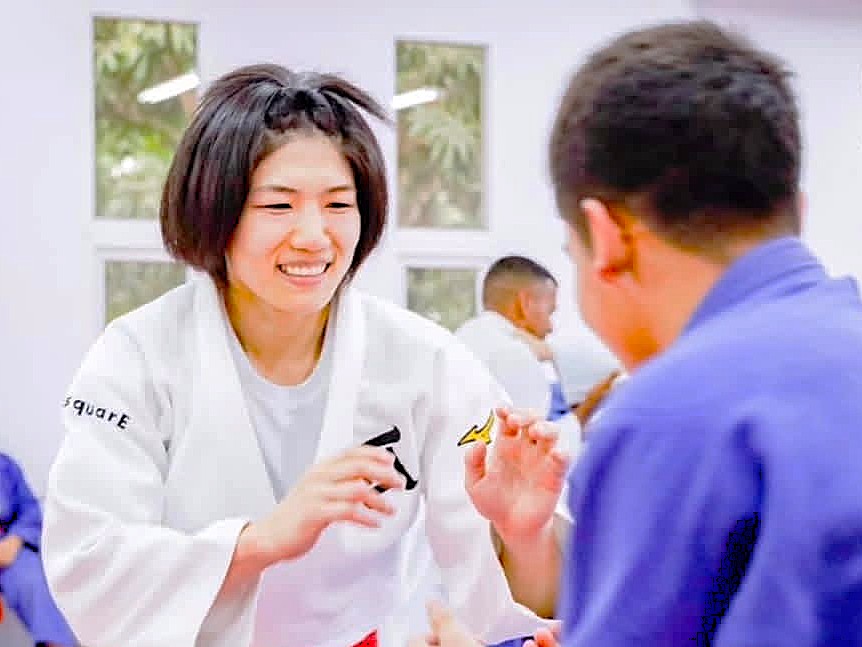
The following year, Nakamura visited to teach students who had missed the previous year’s sessions, sharing the joy of judo.
Students expressed their enthusiasm: “We want judo classes every week!” While the Honduran Judo Federation continues to send instructors and I provide training, fully integrating judo into police culture will take time. Currently, the police academy is working to include judo in its curriculum and strengthen ties with the Judo Federation.
The Role of the Honduran Judo Federation
The contributions of Shichinohe and Nakamura cannot be discussed without acknowledging the Honduran Judo Federation. Young, promising athletes and dedicated coaches supported instruction at the police academy.
One striking moment was when an 18-year-old female judoka led warm-up exercises for cadets. Nakamura praised her initiative: “I couldn’t have done that at 18.” This proactive spirit also shone during exhibition matches. In one bout, a Honduran 90 kg national representative boldly faced Shichinohe—only to be spectacularly thrown. He later remarked: “His grip, speed, power, and technique were on an unbelievable level.”
During practice sessions, young athletes eagerly challenged both visitors, testing their skills against world-class competitors. The judogi donated during these visits are now treasured at the police academy and local judo clubs.
Challenges Behind the Scenes
Some students commute from temporary housing in areas designated as high-risk by JICA, striving to continue judo despite difficult circumstances. Even top-level athletes face obstacles—parents who do not understand the sport or economic pressures forcing them to work at a young age.
Reflecting on these realities, the president of the Honduran Judo Federation stated:
“The visits of these two athletes, made possible through JICA, not only improved competitive ability but also reinforced values such as discipline, respect, and perseverance. This demonstrates that judo can be an effective tool for social transformation.”
I witnessed this truth firsthand.
Through this initiative, children and police cadets rediscovered their potential and their capacity to care for others. As a JICA staff member, collaborating with local partners to create such opportunities is an experience I will never forget.
Celebrating 90 Years of Diplomatic Relations
The year 2025 marked the 90th anniversary of diplomatic relations between Honduras and Japan. Seeing judo—a Japanese tradition—generate grassroots social impact reaffirmed the strength of ties between our nations. I hope the spirit of judo will continue to shape stronger, kinder police officers and contribute to building safer communities for years to come.