
Exploring the Potential of Botswana Tourism
[Goal 9] Industry, Innovation and Infrastructure

[Goal 15] Life On Land
2026.07.17
-

- Mikio Masaki, Botswana Office







2026.07.17
When you hear 'Botswana,' what kind of place comes to mind? Some may know it as a country that produces gold medals at the World Athletics Championship and diamonds, but few people can think of tourist destinations. Botswana's neighboring countries are home to tourist destinations well known to Japanese people, such as the Namib Desert in Namibia, Table Mountain in South Africa, and Victoria Falls spanning Zambia and Zimbabwe, Botswana, however, also has many lesser-known attractions worth discovering.
I was assigned to Botswana in April 2023 and have been in charge of a tourism project for three years, visiting various tourist destinations both within and outside Botswana. I would like to take a fresh look at the appeal and strategies of Botswana's tourism industry.
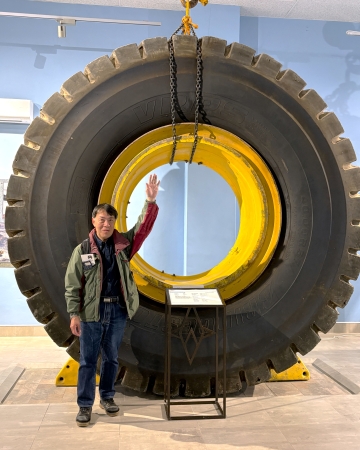
Author during a visit to the Diamond Museum
The Botswana government has promoted the creation of an economy that does not rely on natural diamonds, and tourism is positioned as one of its core sectors. The foundation of tourism is its rich natural environment and wildlife. Especially in the northern Chobe National Park, safari tours where you may encounter lions, elephants, leopards, and other animals are popular and are part of the tourist route connecting neighboring countries. Around the park, it's not uncommon to come across giraffes and zebras, and a big appeal is that you can easily enjoy both land and water safaris in a short time and at a low cost. However, such tourism focuses on "seeing," with limited opportunities to experience Botswana's unique communities and culture, leaving room for improvement.
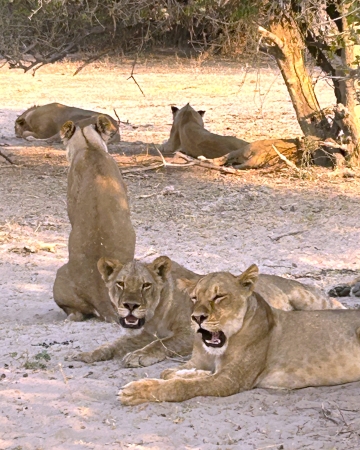
Lions seen in Chobe National Park
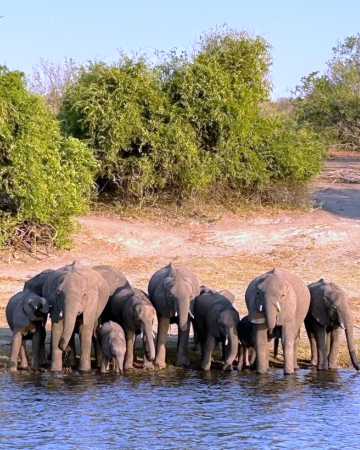
Elephants seen in Chobe National Park
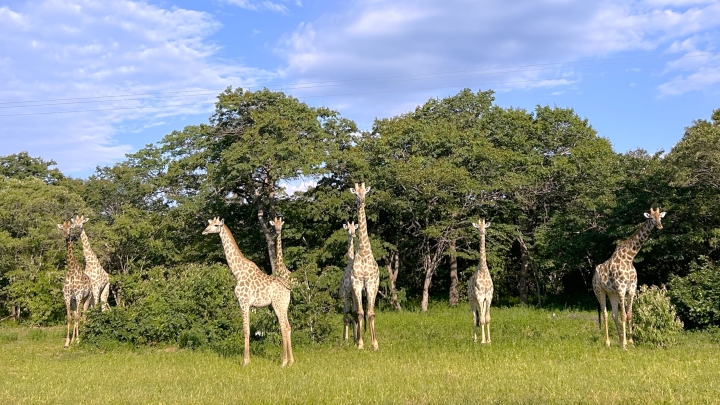
Giraffes seen in Chobe National Park
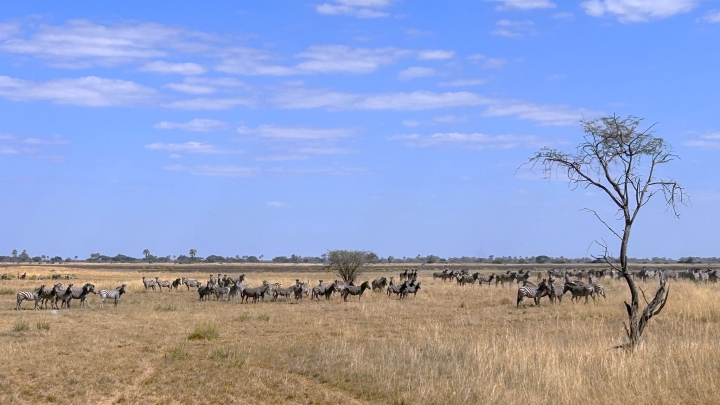
Zebras seen in Chobe National Park
Therefore, JICA has been working to develop experiential ecotourism, introducing visitors to the traditional food culture, basket making, folk dances, and other cultural practices of residents living around Chobe National Park, which is a tourist route. We worked on developing experiential ecotourism where people can experience culture, and together with local residents, we installed information boards and maintained photogenic landmarks. More than a year after the project was completed, visitors have gradually increased, and the potential of "experiential" tourism in Chobe beyond just safari experiences is beginning to emerge.
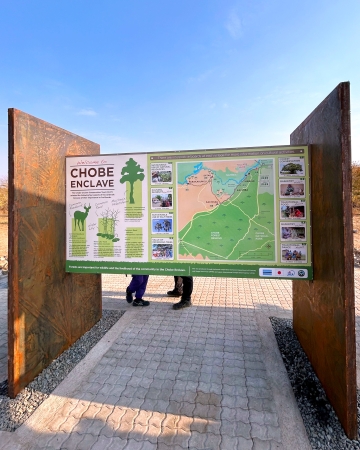
Signboard supported by the project
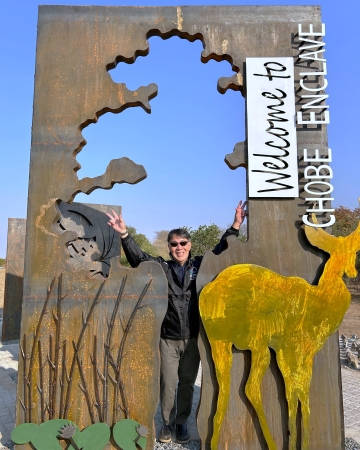
Landmarks supported by the project
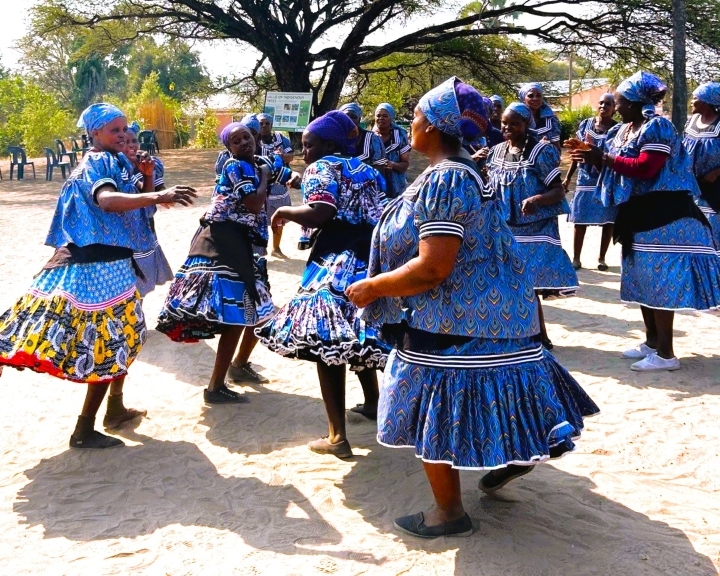
Traditional dances
As a new tourism resource beyond safari tours, the Kazungula Bridge was completed around Chobe National Park in 2021. This bridge was developed through cooperation between JICA and the African Development Bank and connects Botswana and Zambia. This surrounding area shares borders with Namibia and Zimbabwe in a unique geographical setting, making it a rare place where the two countries' borders come within just 150~300 meters of each other. Although the border is not visible, the bridge itself curves beautifully, making it a recommended photo spot.
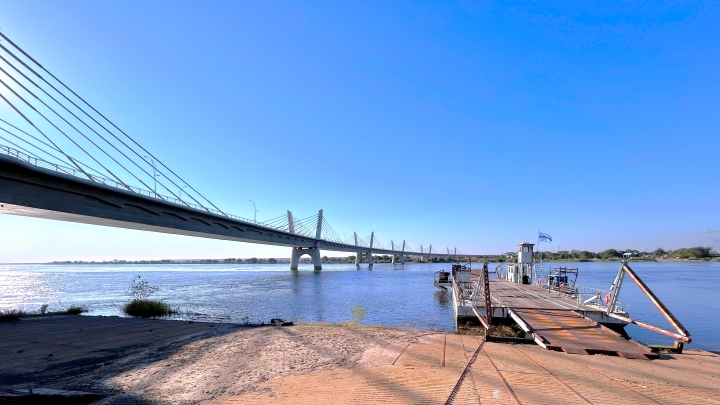
Kazungula Bridge spanning Botswana and Zambia
Every February, the Kazungula Bridge Marathon is held, offering a unique experience where you can "run across the border." These initiatives differ from traditional "seeing" tourism resources like safari tours, and if you promote the idea that Japan is also involved in the construction of the Kazungula Bridge, it can also serve as a tourism attraction that highlights international cooperation.
Since September 2024, JICA has been dispatching tourism advisors to Botswana, working on the improvement of tourism statistics and the development of tourism content. In developing tourism content, we are supporting the creation of new tourism attractions in the Makgadikgadi Pan and Nata area, which is not as well established as a tourist route as Chobe National Park. The Makgadikgadi Pan is known as the largest salt pan in the world, but currently visitor numbers remain relatively low. In this context, we are developing experience programs that leverage local characteristics, such as guided stargazing experiences on the Makgadikgadi pan, aiming to make it a more attractive tourist destination.
On the other hand, Botswana has a deeply rooted unique food culture. Seswa (a simple meat dish simmered with only salt), one of Botswana’s representative traditional dishes, is characterized by its rustic flavor that brings out the natural flavors of the ingredients and is cherished at home and at ceremonial occasions. Another attractive point is that local food stalls offer a chance to experience everyday food culture. Additionally, you can enjoy dishes made with local ingredients, such as Botswana beef steak and local beer.
As souvenirs, you can find processed products such as marula juice, jam, and oil, as well as beers and gin from the Okavango region, showcasing the unique character of the region.
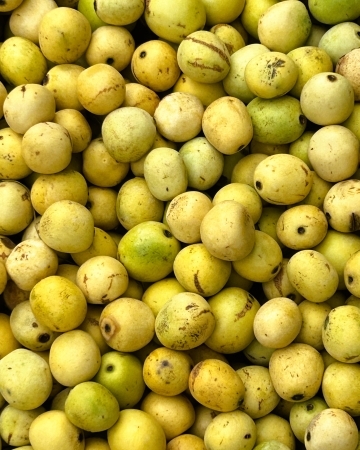
Marula fruit
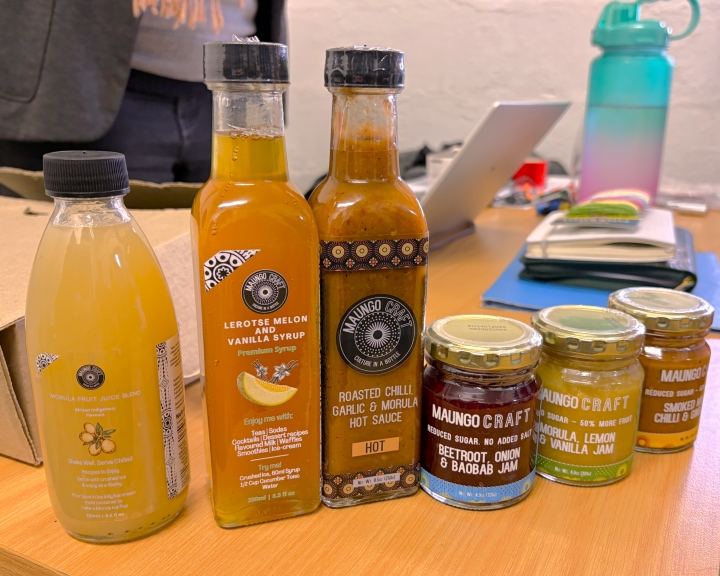
Marula jam ans sauce

Marula oil
Thus, while Botswana's tourism is strong in attractions that can be 'seen', such as wildlife, elements that can be 'experienced' or 'eaten' have not been fully promoted. How to refine and promote Botswana's unique tourism resources—such as ecotourism, the rare experience of walking across an international border, Botswana beef steaks, local beers, and local food culture—as tourism content will be an important challenge going forward.
Furthermore, to enhance the appeal of tourism, it is important not only to develop content but also to train human resources and strengthen the operational system to support it. In Botswana, ecotourism and community-led initiatives are progressing, and human resource development and capacity building in these fields have become important roles in international cooperation.
Although there are challenges such as access restrictions, there is room to consider ways to offer diverse experiences while utilizing existing tourism resources.
Sns share!


