Thailand’s Rapidly Ageing Society
The world is ageing at an unprecedented pace. Advances in healthcare have helped people live longer, while declining birth rates are changing the structure of societies around the globe. Thailand is no exception.
In Thailand, families and local communities have long played a central role in supporting older persons. This tradition has also shaped government policy. As residential and day-care facilities remain limited, many older people still depend on home-based support from family members and paid community care volunteers.
Against this backdrop, Thailand became an “aged society” in 2023, with people aged 65 and over accounting for around 15 percent of the population. The number of people aged 80 and above, many of whom may require long-term care, is expected to rise even further in the coming years.
In many rural areas, more older people are now living alone or with only their spouse, creating new challenges for daily support. Meanwhile, younger generations are leaving for urban areas, family structures are changing, and even the volunteers who have long supported older residents are themselves ageing.
The long-standing tradition of caring for older people through families and local communities remains important but sustaining that support system is becoming increasingly difficult.
Looking Ahead: What Mutual Learning Between Japan and Thailand Can Teach Us About Elderly Care
JICA has been working with Thailand since 2007 to address the shared challenge of population ageing. These efforts have included introducing care management approaches tailored to the needs of individual older persons, as well as supporting systems that provide seamless access to medical care, rehabilitation, and home-based care services.
Since 2022, these efforts have been further strengthened through a JICA Grassroots Technical Cooperation project involving Yugawara Town in Kanagawa Prefecture, Japan, and Bueng Yitho Municipality in Pathum Thani Province, Thailand. The initiative is supported by a diverse range of partners from both countries, including Thammasat University, the NGO Nogezaka-Glocal, other universities and NGOs, private-sector organizations, and local stakeholders. The project places local governments, the public institutions closest to older persons and their families, at the center of action.
One of the most distinctive features of this project is its emphasis on mutual learning. Rather than relying on a one-way transfer of knowledge or systems from Japan to Thailand, municipalities in both countries share their experiences, strengths, and challenges, learning from one another as equal partners.
This spirit of collaboration has inspired many local governments across Thailand. What started as a network of 9 municipalities expanded to 39 municipalities by 2025. Today, learning takes place not only between Japan and Thailand, but also among Thai municipalities themselves, as they exchange ideas and adapt successful practices to their own communities.
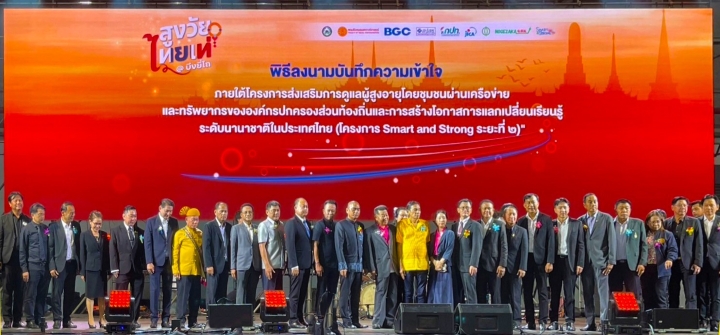
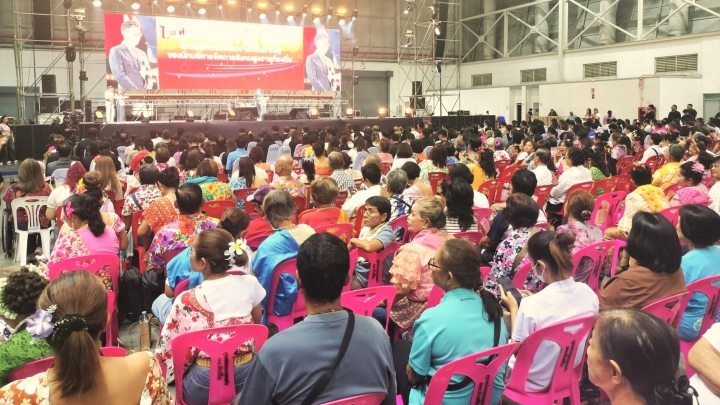
The scale of interest was evident at a project ceremony attended by more than 1,000 participants, including local government leaders, community members, and health volunteers. Their participation reflected a strong commitment to finding community-based solutions for an ageing society.
In this way, the project has evolved into more than a partnership between two countries. By connecting municipalities within Thailand and across national borders, it has created a platform for continuous learning and collaboration. In this sense, the project stands out as a particularly noteworthy example of co-creation in JICA's cooperation efforts.
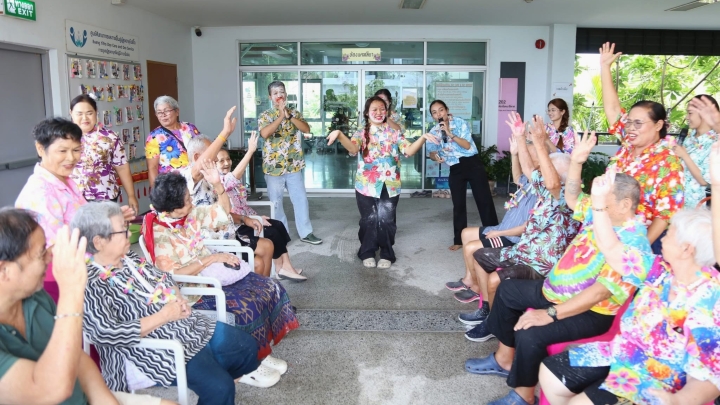
The project is gradually making a difference in communities across Thailand. Medical and rehabilitation centres, day-care centres, and dementia cafés are being established by making the most of local resources, even with limited budgets.
When I visited a day-care centre, one participant told me, “My family is away during the day, so I’m happy to come here and talk with other people.” Hearing this made me realize that the centre is not only providing services but also creating opportunities for connection and peace of mind.
At the same time, important questions remain. Some municipality members have pointed out that when facilities are located far from where older people live, it may become harder for them to stay connected to their local communities. Discussions about how best to address these concerns are still ongoing.
Insights from Thailand have also influenced activities in Japan. In Yugawara Town, for example, local initiatives inspired by Thailand’s paid volunteer model are encouraging trained senior residents to support one another within the community.
Volunteers from Yugawara Town who visited Thailand in 2025 also shared what they learned from the experience. Some reflected that it helped them better understand the importance of community-led activities, while others said it encouraged them to rethink the meaning of mutual support within their own communities. Listening to these reflections, I felt that the project is not only helping communities in Thailand, but is also encouraging us in Japan to rethink how we can build stronger and more supportive communities.
While systems and policies differ from country to country, we share a common goal: creating societies where people can age with dignity, security, and a sense of belonging.
Even in Japan, where social security and welfare systems are well developed, an important question remains: as public services become more comprehensive, how can we continue to make the most of the strengths that already exist within individuals, families, and communities?
By learning from one another and sharing our experiences, Japan and Thailand can continue exploring what community-based support should look like. Together with our partners in Thailand, I hope we can continue learning together and exploring how communities can support people as they age.