
The Young Men Who Crossed the Ocean 70 Years Ago
[Goal 17] Partnerships for the Goals

2026.09.28
-

- Kota Katsumata, JICA DOMINICAN REPUBLIC OFFICE







2026.09.28
Imagine this:It's July 1956. You're still a teenager, and your family is moving to the Dominican Republic. There were no televisions in most homes yet, and there was no way to search for information about the country on a smartphone. Since you are emigrating, this will not be a temporary stay. You will build a new life and make a living in the Dominican Republic. You wonder when you'll be able to return to Japan again, or perhaps whether you ever will.
This July marked the 70th anniversary of the arrival of the first Japanese immigrants in the Dominican Republic. Today, it takes about 30 hours to travel there by plane via the United States. Seventy years ago, however, it required a month-long voyage by ship. Entire families traveled together with a vast amount of luggage and belongings. They brought kimonos, traditional rice cookers, farming tools, and even a Goemon-style bath. After the long voyage, the immigrants arrived safely on “Isla Hispaniola”. Seventy years have passed since then, and much has happened on this island.
One of the passengers on that ship was Mr. Toru Takegama (88), who celebrated his 88th birthday this year and is now a proud great-grandfather. His face always lights up when he talks about his great-grandchildren. Although he sometimes can't remember what he had for dinner the night before, he talks about his childhood in Chiran Town, Kagoshima Prefecture (now Minamikyushu City) as if it were yesterday. One day, he showed me his elementary school report card, which his mother had carefully brought with her all the way from Japan. He gave a wry smile at the teacher's comment: "He's diligent, but his posture is poor."
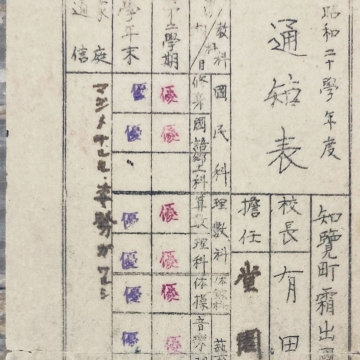
A report card full of grades "A" (1946). But his posture was poor.
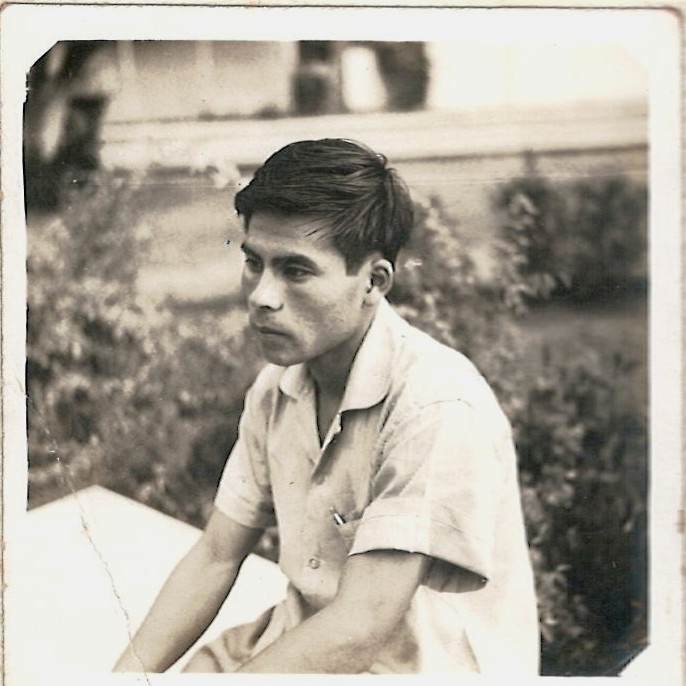
Mr. Takegama soon after moving here (about age 20)
Seventy years ago, Mr. Takegama was an 18-year-old young man. His taciturn father told him, "It's your decision whether to come with us or not," and after careful consideration, he gave up his dream of becoming a doctor and decided to emigrate to the Dominican Republic with his family.
"I probably would have ended up being a quack doctor anyway," he jokes. "I'm glad I came to the Dominican Republic. This is the life I was meant to live."
Yet behind his humor are deep feelings for his hometown and his parents.
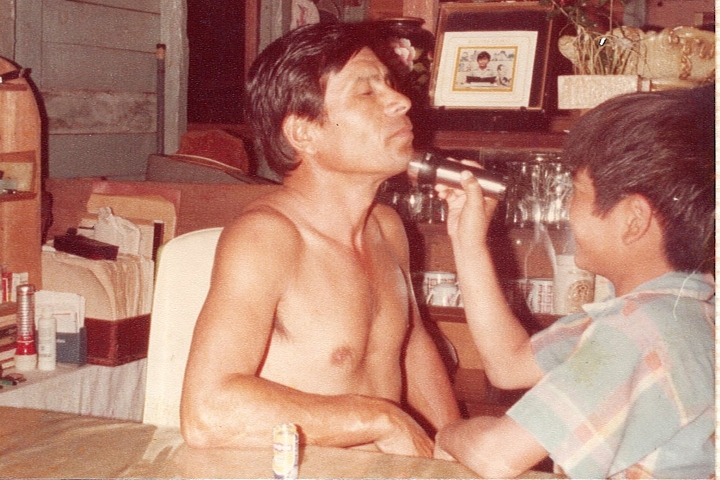
Mr. Takegama being shaved by his son (around age 30)
The last words his father left him were, "The rest is in your hands." Inspired by those words, Mr. Takegama began working seriously to address the many issues faced by the Japanese immigrant community in the Dominican Republic. His efforts ultimately led him to take part in a lawsuit against the Government of Japan. Six years after the case was filed in 2000, it was settled with a statement from the Prime Minister expressing sincere remorse and offering an apology.
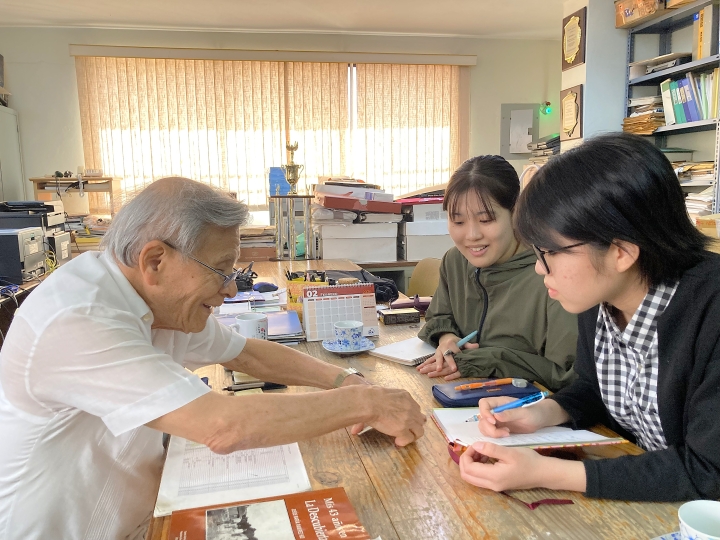
Chatting with internship students from Kyushu University (2026)
"I researched what kinds of vegetables were being grown and adjusted planting schedules so I could harvest when market prices were highest," says Mr. Takashi Nishio (84).
Life after immigration was filled with hardships. Nevertheless, the immigrants persevered. They worked tirelessly on farms despite poor soil conditions and water shortages. Japanese immigrants gained a reputation for their diligence. They taught Dominicans, whose vegetable consumption was very low at the time, how to prepare and eat vegetables such as tomatoes and cucumbers. As a result, vegetable consumption gradually increased, contributing significantly to the development of agriculture, the country's leading industry at the time.
When Mr. Nishio was about 15 years old, he saw a newspaper article reporting the departure of the first group of immigrants to the Dominican Republic. The moment he read it, he thought, "This is my chance!" and passionately appealed to his father to let him emigrate as well. Deeply inspired by the words of Dr. William S. Clark, "Boys, be ambitious," which he had learned as a child, young Nishio set sail for the Dominican Republic with his family only about two months later.
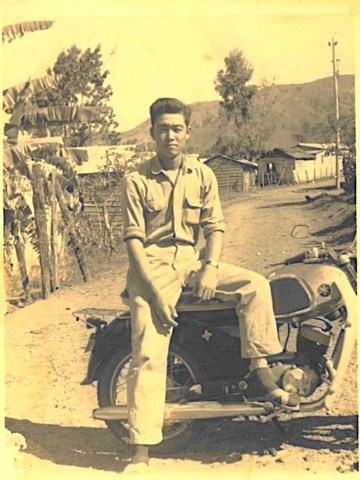
Mr. Nishio (21) traveled all over the island on his motorcycle
There is also a theory that Dr. Clark's original words were, "Boys, be ambitious like this old man." Looking back, Mr. Nishio recalls, "By the time I was 19, I had become independent and was running my own farm. I wanted to grow up quickly."
The boy who once dreamed big is now 84 years old. Reflecting on the many challenges he faced throughout seven decades in the Dominican Republic, Mr. Nishio seems to be passing on the same message to younger generations: "Be ambitious, like this old man."
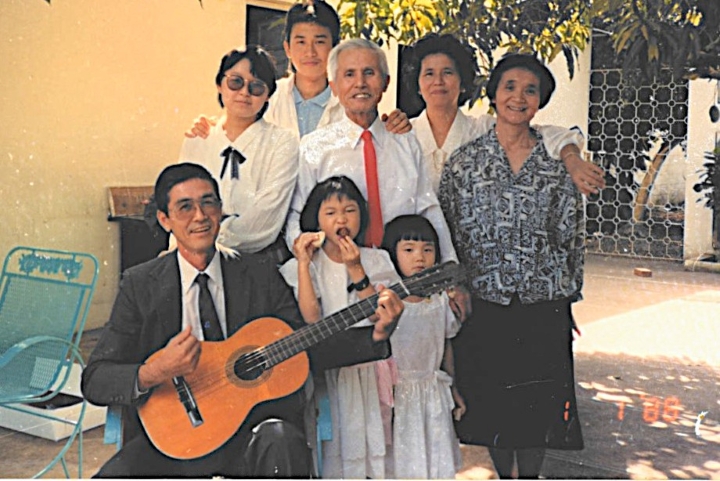
With his family, playing the guitar (in his 30s)
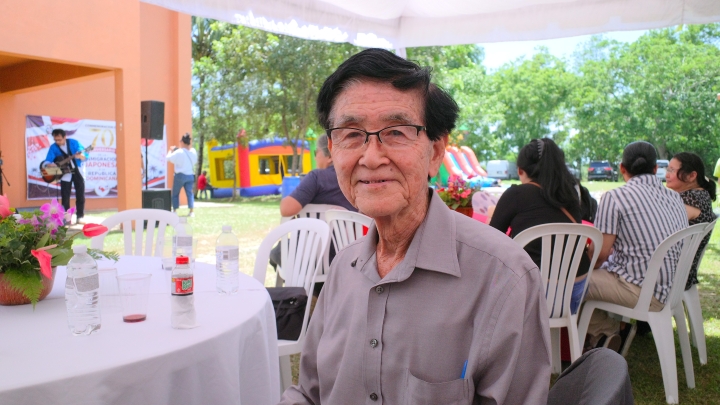
At an event celebrating the 70th anniversary, Mr. Nishio reflected on his life in the Dominican Republic: “Fall down seven times, get up eight.”
"Quisqueya, the land filled with light, the Caribbean Sea is our friend as well..."
Students at a Japanese language school for children of Japanese descent sing their school song with enthusiasm. "Quisqueya" means "Motherland" in the language of the indigenous Taíno people, and it is a cherished word that symbolizes a land of hope for immigrants as well.
"Thinking of the efforts and sweat our parents left upon this land..."
The immigrants built the foundation of today's Japanese-descendant community through years of hard work cultivating the land. The children continue to sing of that legacy.
The first-generation immigrants worked hard to learn Spanish. For the second generation and beyond, Spanish became their native language. Today, it is the children who are studying Japanese with great dedication.
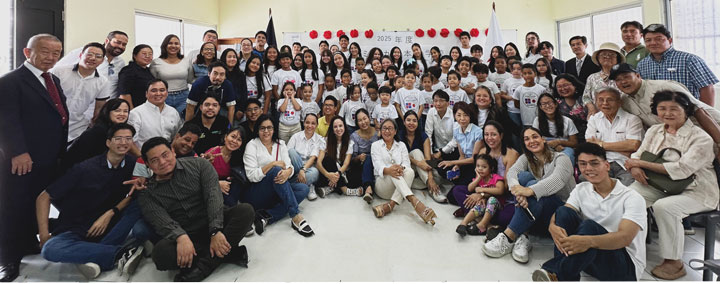
At the Japanese language school's entrance ceremony. The younger generation carries forward the spirit of the first-generation immigrants into the future. (The woman on the far right is Mr. Takegama's wife; Mr. Takegama is standing to her left.)
In July, several events were held to commemorate the 70th anniversary of Japanese immigration to the Dominican Republic. There were the cheerful faces of former youths like Mr. Takegama and Mr. Nishio. Surrounding them were Japanese descendants whose lineage has now advanced to the fourth generation, including their great-grandchildren. At the commemorative ceremony, Mr. Takegama stated, "I would like to once again express my gratitude to the people and government of the Dominican Republic, who warmly welcomed us 70 years ago."
Today, there is a Japanese-descendant community in the Dominican Republic that warmly welcomes us. When we visit their homes, they treat us to large servings of ohagi, and even when discussing difficult matters, they take the time to let us relax with a cup of Japanese green tea. When we start talking about the past 70 years, time always passes in the blink of an eye.
Each immigrant has their own story. Perhaps a day will come when we can no longer hear those stories directly from the people who lived them. That is why I want as many people as possible to know what those youths from 70 years ago were thinking and what experiences they went through. To that end, JICA will continue to share the stories of Japanese immigration to the Dominican Republic in various ways.
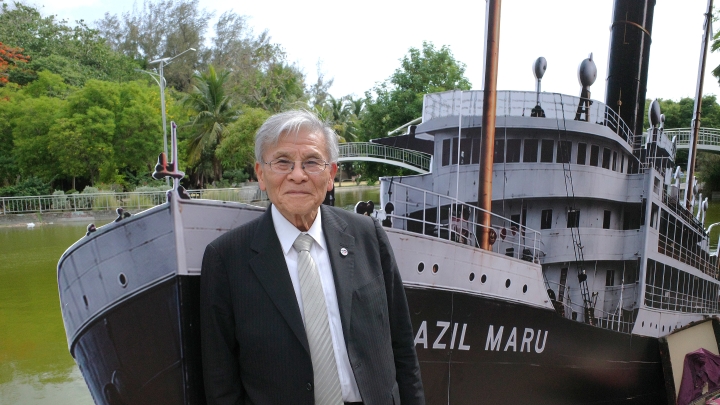
Mr. Takegama on the day of the 70th anniversary. It has been 70 years since he arrived on this “Brazil Maru” (panel).
Sns share!


