
A Lifesaving Health Handbook and Colorful Murals: Supporting Mothers and Children in Angola
2026.09.17
-

- By Ryotaro Yasuhara, JICA Angola Office





2026.09.17
Angola, located in Southern Africa, is a Portuguese-speaking country where greetings such as“Bom dia!” (“Good morning”) and “Obrigado” (“Thank you”) can be heard everywhere.
Since the end of its civil war in 2002, Angola has been rebuilding its future. Today, among these efforts, a simple and powerful handbook is playing an important role in protecting the lives of mothers and children across the country.
Have you ever taken a close look at your own Maternal and Child Health (MCH) Handbook?
In Japan, pregnant women receive one (MCH Handbook) from their local government office when their pregnancy is confirmed. But imagine if there were no records of your pregnancy, childbirth, or your child’s growth and vaccinations. It would be much harder to ensure continuous healthcare.
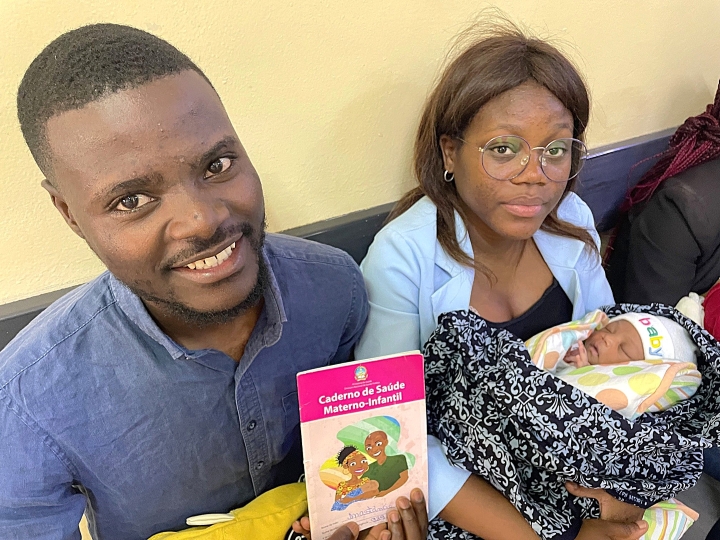
A couple attending a health checkup with their Maternal and Child Health Handbook
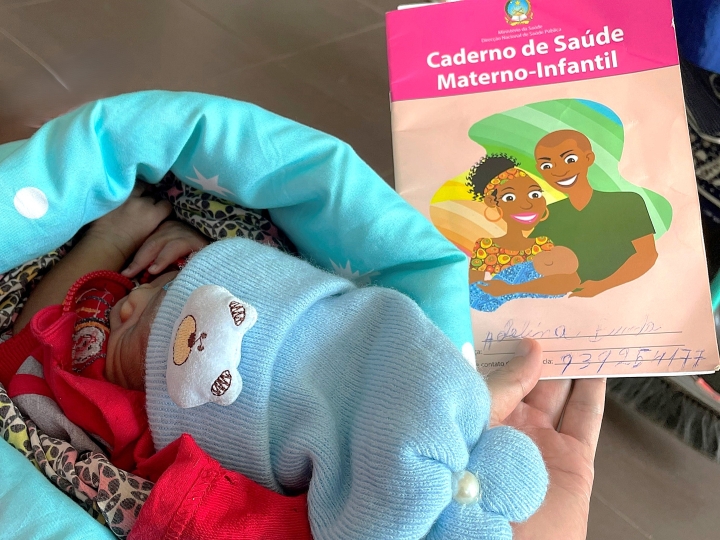
A Maternal and Child Health Handbook and a baby
In Angola, the Maternal and Child Health Handbook, known in Portuguese as Caderno de Saúde Materno Infantil, was introduced in 2012 after health officials learned about Japan’s system through support from JICA (Knowledge Co-Creation Program in Japan).
Previously, separate record books were used for mothers and children, making it difficult to track health information over time. In contrast, the new handbook allows healthcare workers and families to monitor the health of both mother and child continuously, from pregnancy onward.
The impact has been remarkable. As of June 2026, the handbook had been introduced in 20 of Angola’s 21 provinces. More than 4.71 million copies have been printed through JICA-supported projects and distributed through health facilities across the country.
A Braille version has also been developed under the leadership of Angola’s Ministry of Health so that people with visual impairments can use the handbook. In addition, private companies have helped fund additional printing, showing how different partners are working together to expand access to this important tool.
It is amazing to see how such a small handbook can reach and benefit so many people.
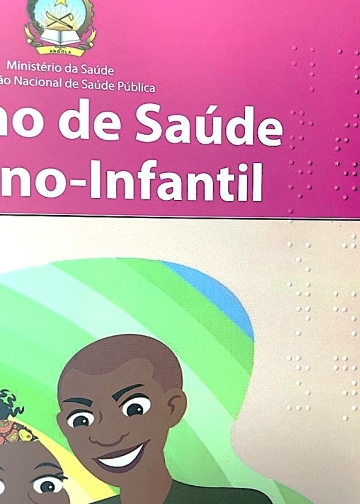
A Braille edition of the Maternal and Child Health Handbook
Alongside the handbook expansion, JICA is also working to improve the quality of maternal healthcare in Huambo and Huíla Provinces through a project known as PROSMATE.
Through training programs, nurses and other health professionals are strengthening their skills and applying new knowledge to their daily work. We often hear positive feedback from pregnant women and their families, who highlight the improvements they have experienced in the quality and responsiveness of care.
The handbook serves as a tool for recording and sharing information, while health professionals deliver the human support and guidance that mothers and newborns require. Together, these elements form a strong foundation for improved maternal and child healthcare services.
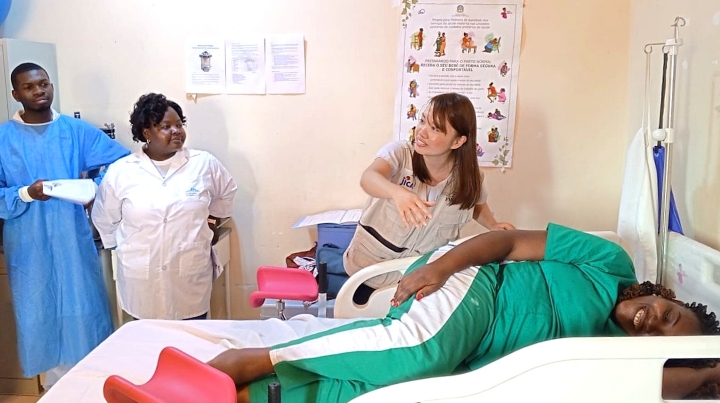
PROSMATE training session

PROSMATE training session
In March 2026, healthcare facilities in Huambo and Huíla Provinces experienced another positive transformation.
Japanese mural artist Lulu Kono worked with local communities to create colorful murals featuring flowers, birds, and local cultural themes. The artwork transformed waiting rooms into warmer and more welcoming spaces.
Pregnant women attending prenatal checkups and local children even joined the painting activities. According to Ms. Kono, some nurses were hesitant at first but soon said, “I want to join too.” As they participated, they developed a stronger sense of ownership and pride in their health facilities.
Many community members commented, “Muito bonito!” (“Very beautiful!”) when they saw the murals.
Beyond their visual appeal, the murals offer practical benefits. The paint used contains mosquito-repellent properties, helping reduce the risk of mosquito-borne diseases such as malaria. The murals therefore provide both beauty and practical health benefits.

Ms. Kono and a nurse working on mural art
When you think of a hospital waiting room, what comes to your mind? If the walls were filled with bright flowers and birds, wouldn't it make the space feel a little more comforting?
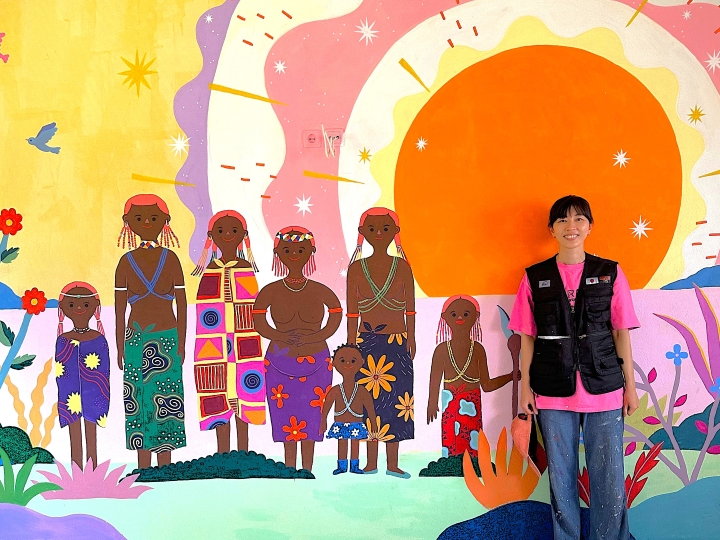
Ms. Kono and mural art
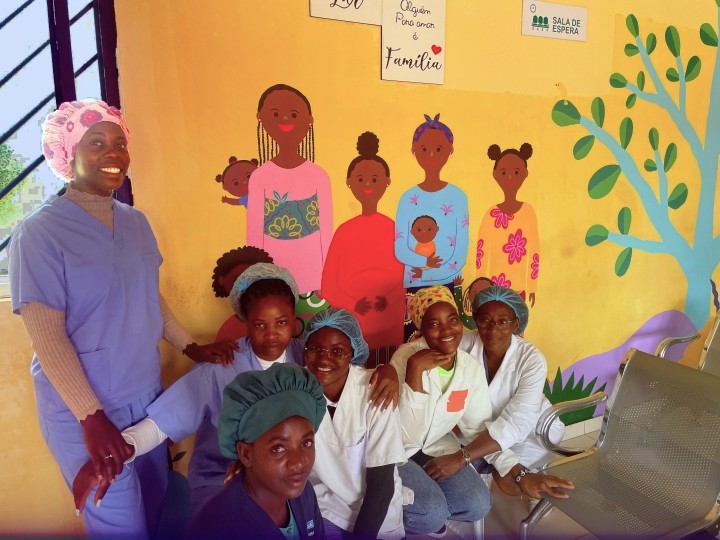
nurses and mural art
Neither a health handbook nor a mural can cure illness on its own. However, keeping accurate health records and creating welcoming healthcare environments are both essential for helping mothers and children to stay healthy.
A handbook that originated in Japan is now supporting countless mothers and children in Angola. We hope more people will learn about this important initiative and the meaningful difference it is making in people’s lives.
Do you still have your own Maternal and Child Health Handbook somewhere at home? If you find it, take a moment to look through it. Those small records tell a personal story, but they also represent an idea that continues to protect the health and lives of countless mothers and children around the world.
Até a próxima! (See you next time!)
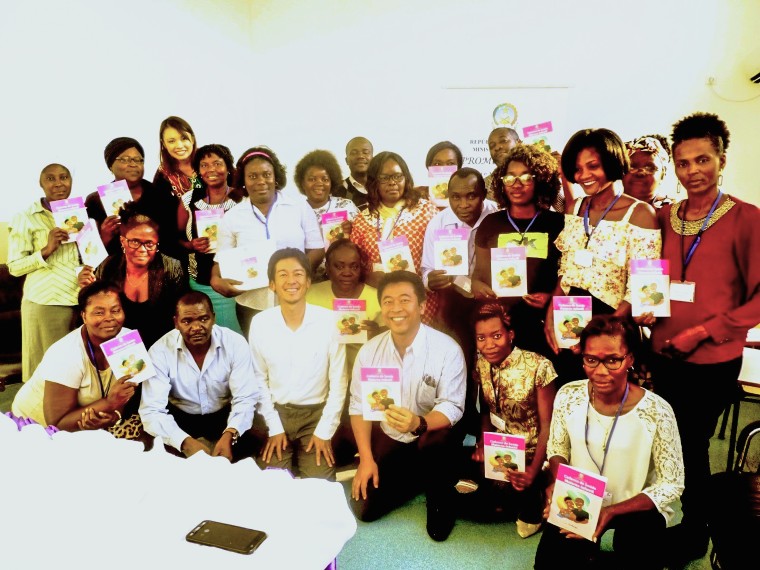
Healthcare workers who completed the training program
Sns share!


