
Confronting the Legacy of War in the Solomon Islands
2026.10.28
-

- Mitsuyoshi Kawasaki, Resident Representative, JICA Solomon Islands Office



2026.10.28
How did the Solomon Islands come to be what they are today?
The Solomon Islands, located in the Pacific region, have long been sustained by the ocean. Due to their geographical isolation, consisting of approximately 900 islands, diverse languages, customs, and cultures have developed across the islands. While the vast ocean has provided livelihood for generations, it has also brought threats such as cyclones. Communities strengthened their bonds through clan-based relationships, managing marine resources and supporting one another in times of disaster, thereby building their own unique way of life.
However, these traditional systems changed dramatically following the arrival of colonial powers, including the United Kingdom, in the nineteenth century. Christian missionary activities, labor recruitment for sugar plantations in Australia, and eventual British colonial administration beginning in 1893 significantly influenced local society. Religion, education, and other external influences transformed traditional values and lifestyles. While some changes contributed to improved living standards, they also created economic disparities and affected social cohesion. Later, during World War II, the Solomon Islands became deeply affected by the conflict. Due to historical circumstances, many Solomon Islanders supported the Allied forces, and civilians suffered from battles and air raids.
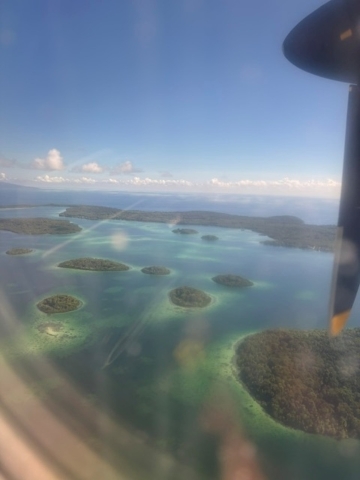
The islands of the Solomon Islands, known for their tourism potential
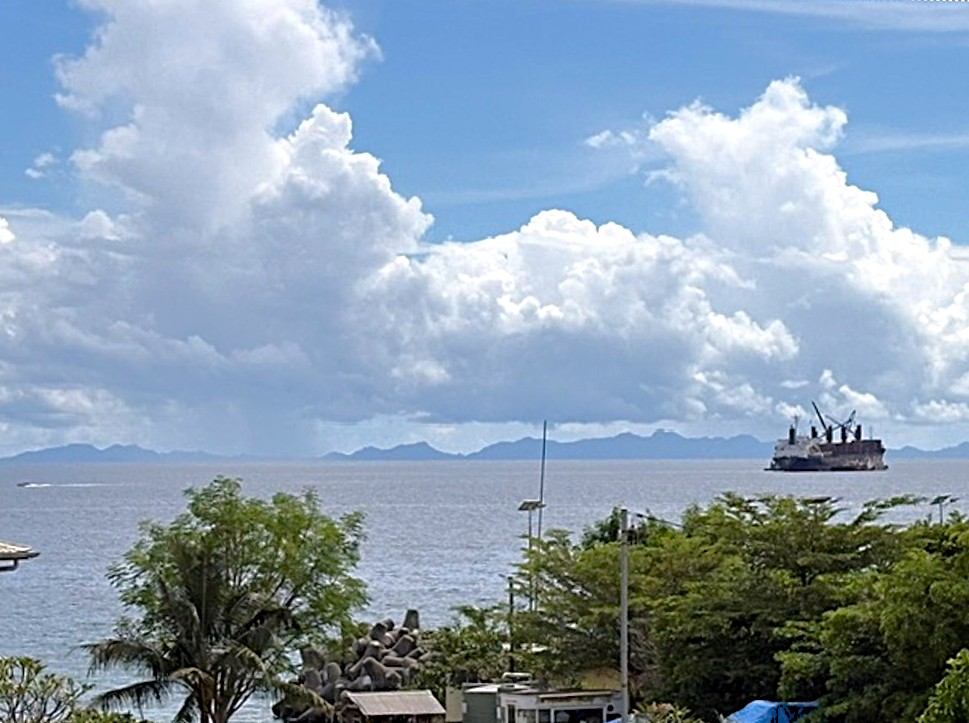
Tulagi viewed from Honiara
On August 7, 1942, fighting began between Japanese and Allied forces, mainly the United States military, on Guadalcanal Island, where the capital Honiara is located, and Tulagi in the neighboring Florida Islands. Fierce battles over control of the airfield in Honiara continued for approximately six months. During this campaign, around 20,000 Japanese military personnel and several thousand American personnel lost their lives. The number of Solomon Islanders who were killed or injured remains unknown.
To honor those who lost their lives, memorials were later established by both Japan and the United States on hills overlooking Honiara. For many Japanese visitors, these sites serve as important places to pay tribute to the victims of war and to reaffirm a commitment to peace.
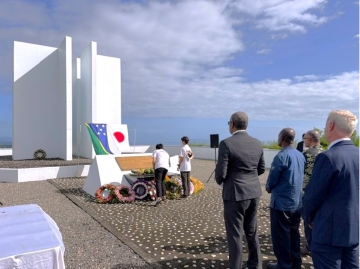
Memorial ceremony held at the Solomon Peace Memorial Park on the anniversary of the end of World War II
Many war dead still remain unaccounted for across Guadalcanal and other islands. Organizations such as All Japan Solomon Association and Japan Youth Memorial Association. At the same time, a large number of unexploded ordnance (UXO), estimated to exceed one million items, remain buried in and around Honiara as well as on outer islands. This legacy of war continues to affect daily life and urban development throughout the country.
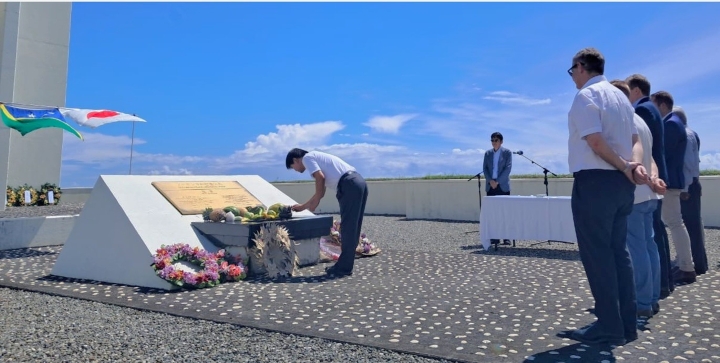
Memorial ceremony held at the Solomon Peace Memorial Park on the anniversary of the end of World War II
Following World War II, the Solomon Islands remained under British administration before gaining independence in 1978. Since then, Japan has provided various forms of cooperation to support the country's sustainable development. Cooperation in the fisheries sector has expanded significantly, beginning with the establishment of a joint tuna cannery venture between a Japanese fisheries company and the Solomon Islands Government in 1972. During the 1980s and early 1990s, public-private cooperation was further strengthened through ODA-funded fisheries infrastructure projects. Japan has also supported key infrastructure development, including Honiara International Airport, Honiara Port, and major roads.
In addition to rich forestry and fisheries resources, the Solomon Islands possess mineral resources such as gold and nickel. The country also has considerable potential for tourism, including diving and birdwatching, supported by its beautiful marine and natural environment. Expectations are growing for new investment from Japan in these sectors.
During my assignment in the Solomon Islands, I have often heard government officials speak highly of the contributions made by JICA Overseas Cooperation Volunteers. More than twenty volunteers are currently serving in the country, and further contributions are expected in areas such as industrial development, education, health care, environment, and disaster risk reduction.
Since shortly after independence, training programs in Japan have enabled approximately 1,500 government officials and technical personnel from the Solomon Islands to develop their expertise. Since 2016, more than thirty long-term trainees have earned master's or doctoral degrees at Japanese universities. Upon returning home, many have taken leadership roles in government and other sectors while also serving as bridges between Japan and the Solomon Islands.
The Solomon Islands face a wide range of development challenges, including disaster risk reduction, regional development, access to education, youth employment, health care, UXO clearance, and waste management. Among these issues, I believe it is particularly important to address the challenge posed by unexploded ordnance, which continues to affect people's safety and livelihoods and remains a source of vulnerability even today.
Strengthening UXO clearance efforts is essential not only for protecting lives and communities, but also for enabling the construction of roads, housing, and public facilities. I believe these efforts will contribute to building a stronger foundation for the country's development and represent a meaningful form of cooperation that reflects the historical ties between Japan and the Solomon Islands.
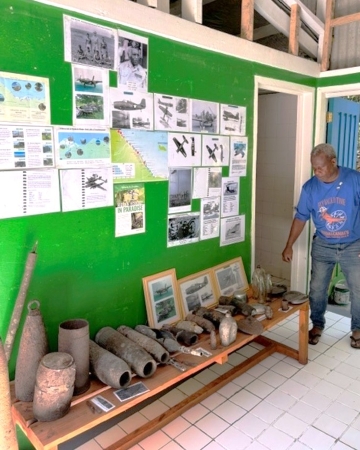
Wartime artifacts on display at the Vilu War Museum
Sns share!


