
Who Is Public Transportation Built For? An Indonesian Public Official's Journey Toward More Inclusive Mobility
2026.10.23




In Surakarta City, Central Java, the Batik Solo Trans (BST), which is a local bus system, plays an important role in connecting people to workplaces, schools, hospitals, and other essential services.
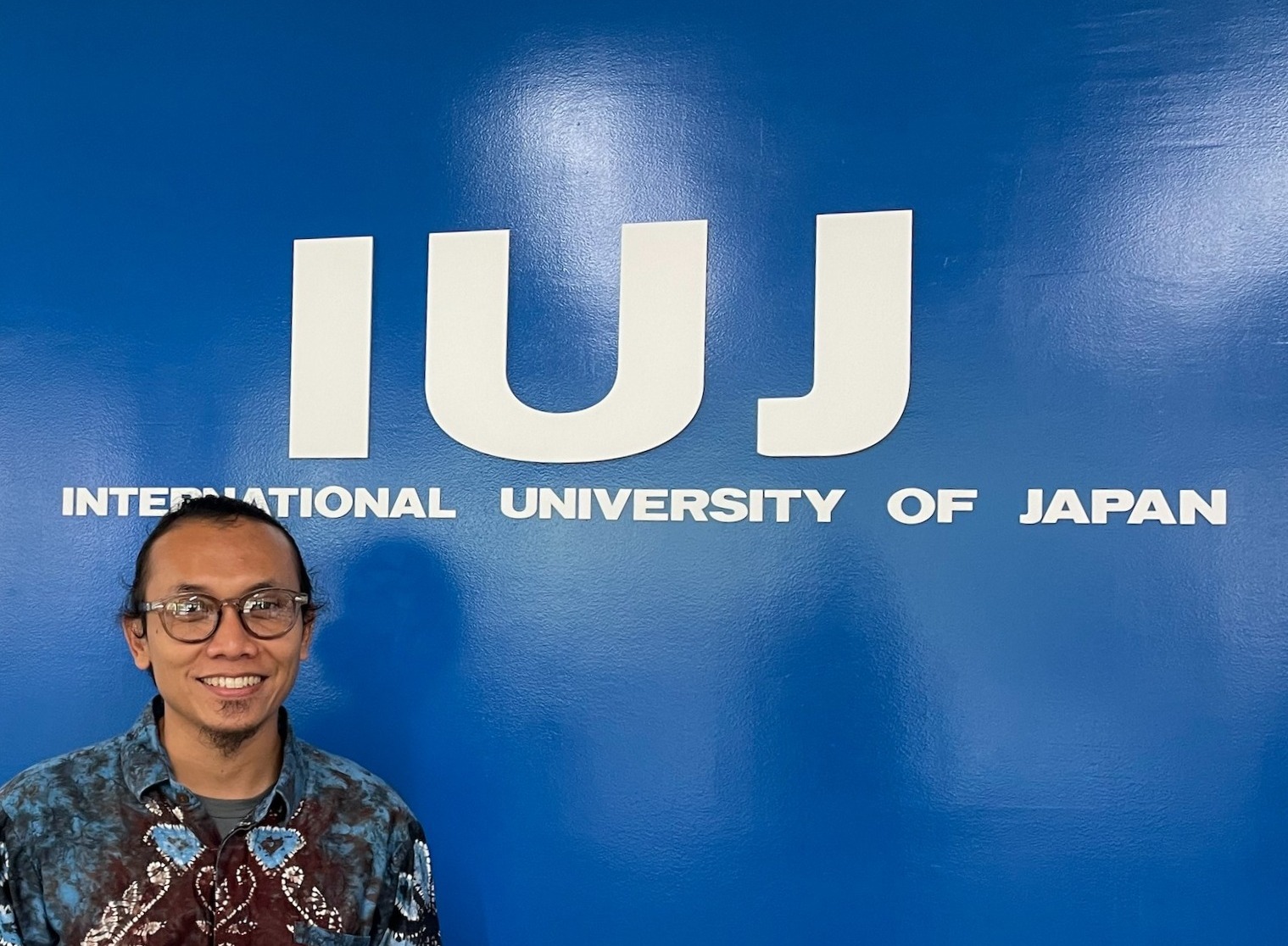
Mr. Faiz, JICA Scholar
For Mr. Faiz Ridho Darmawan, an official of Indonesia's Financial and Development Supervisory Board (BPKP), the BST is more than just a public transportation service. It became the starting point of a question that would later shape his graduate research in Japan.
Today, Mr. Faiz is pursuing his master's degree at the International University of Japan (IUJ) through the “Development of Exhaustive Human Resources (DXHR)” Program, a joint initiative supported by the Government of Indonesia and JICA. DXHR Program is one of JICA’s scholarship program and the scheme of the Master Linkage Program between Indonesian universities and Japanese universities. His research focuses on how public transportation can better serve vulnerable groups, particularly older people and people with disabilities.
The inspiration for Mr. Faiz's research came from an ordinary experience while using the BST.
One day, he encountered a passenger with disabilities who was struggling to find the correct transfer point. After helping the passenger reach the appropriate bus connection, Mr. Faiz began to reflect on something he had rarely considered before.
The transportation system that worked well for him was not necessarily working well for everyone.
He later noticed similar challenges faced by older passengers when using digital payment systems. As transportation services became increasingly digital, some users were finding it more difficult rather than more convenient.
These experiences led him to ask a simple but powerful question:
Over the past decade, Indonesia has invested significantly in transportation infrastructure and public services. For Mr. Faiz, however, the next challenge is no longer only about expanding services, but about ensuring that everyone can benefit from them.
"Infrastructure development is important. But now we also need to ask whether every member of society can actually access and use these services."
This question eventually became the foundation of his research.
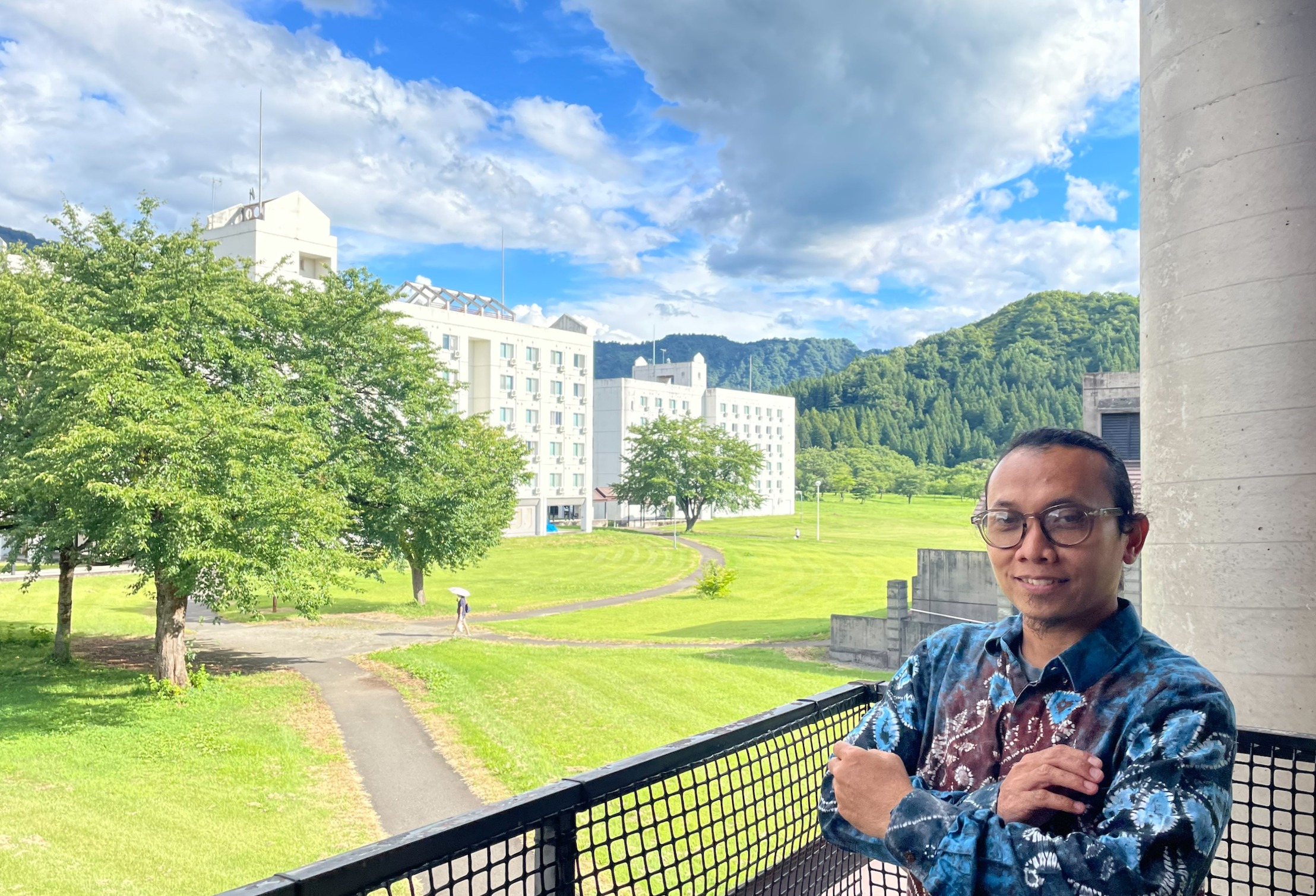
“It was an honor to study surrounded by breathtaking scenery,” said Mr. Faiz.
After arriving in Japan, Mr. Faiz expected to learn about technology, smart mobility, and transportation planning.
What surprised him most, however, was not the technology itself.
It was the people.
He recalls seeing station staff guide passengers, prepare boarding ramps, and provide personal assistance when needed. These actions left a strong impression on him.
One particularly memorable experience involved another DXHR scholar who uses a wheelchair. Watching station staff carefully support the scholar throughout the journey helped Mr. Faiz understand that accessibility is not achieved through infrastructure alone.
"Facilities are important, but they are not enough. Human support and daily operations matter just as much."
For him, this experience reinforced a lesson that was already beginning to emerge from his own research.
Mr. Faiz's research revealed an important insight.
Factors such as low fares and technological sophistication were not the strongest drivers of user satisfaction.
Instead, two factors were especially important:
Another lesson came from discussions with his academic supervisors in Japan.
Rather than focusing solely on infrastructure itself, his professors encouraged him to think about outcomes.
For example, instead of asking how many transportation facilities have been built, policymakers might ask:
Can residents reach a hospital within 30 minutes?
This shift in perspective was new to him. It encouraged him to think about public services from the user's point of view rather than from the provider's perspective.
His research supervisors also challenged him to revisit assumptions, conduct additional analyses, and strengthen the evidence supporting his conclusions.
Through that process, he became increasingly committed to evidence-based policymaking.
"Policies should not rely only on intuition or experience. They should also be supported by data and evidence."
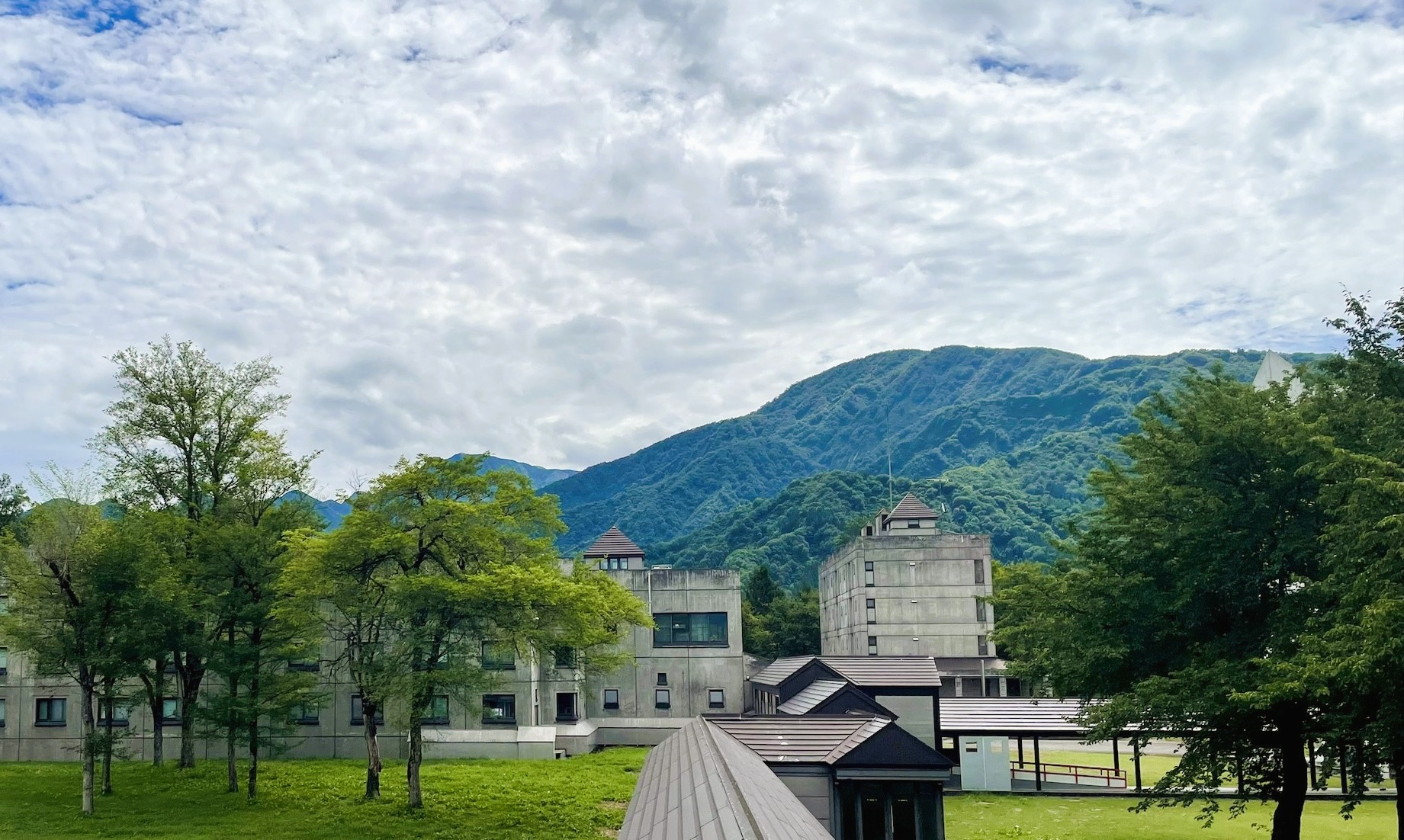
IUJ campus
For Mr. Faiz, studying in Japan has been much more than an academic experience.
At IUJ, students from around the world bring different professional experiences, cultural backgrounds, and perspectives into the classroom.
As a government official, Mr. Faiz regularly shared examples from Indonesia during class discussions and group projects.
In one course on data utilization at IUJ, a project presented by an Indonesian student group received particularly positive feedback. According to Mr. Faiz, the professor even suggested that the case could be used as teaching material for future classes.
The experience helped him realize that learning is not a one-way process.
"We learn from Japan, but we can also contribute our own experiences and perspectives."
Professor Zaw Zaw Aung, who supervises DXHR scholars at IUJ, echoed this view. He noted that Indonesian students bring practical experience, diverse perspectives, and real-world insights into the classroom, benefiting both fellow students and the university community.
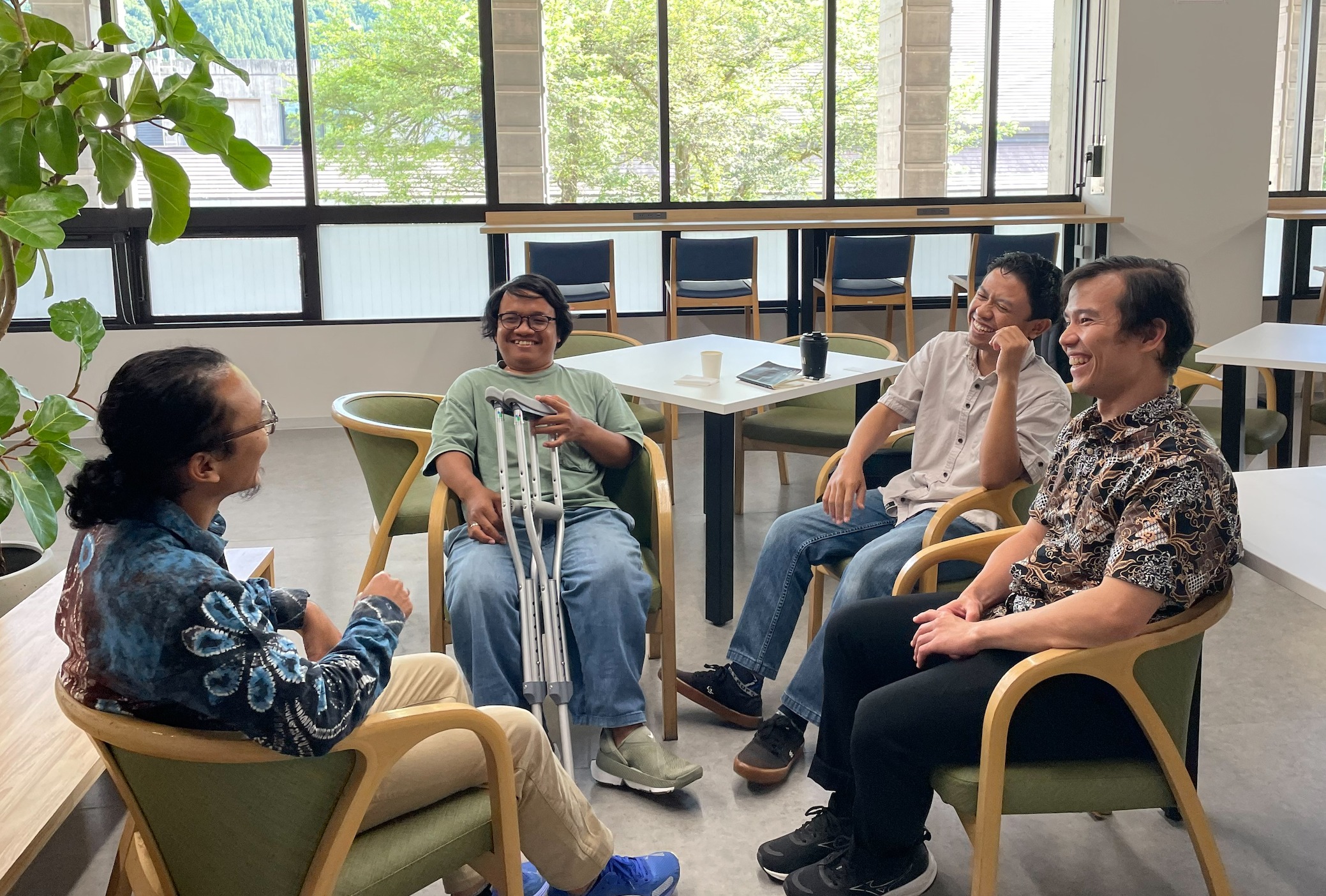
Government officials studying at IUJ
After completing his studies, Mr. Faiz plans to return to BPKP and share the knowledge he has gained at IUJ.
He hopes to publish and disseminate his research findings and believes they can contribute to future transportation and public service policies in Indonesia.
More importantly, he intends to apply the lessons he learned in Japan throughout his career.
His experience in the DXHR Program has strengthened not only his research skills, but also his perspective as a public servant. Drawing on what he learned in Japan, he aims to contribute to policymaking and public service in Indonesia.
The question that first emerged on a bus in Surakarta continues to guide him:
How can public services ensure that no one is left behind?
For Faiz, the answer lies in building services that work for everyone.
The search for answers, he believes, has only just begun.
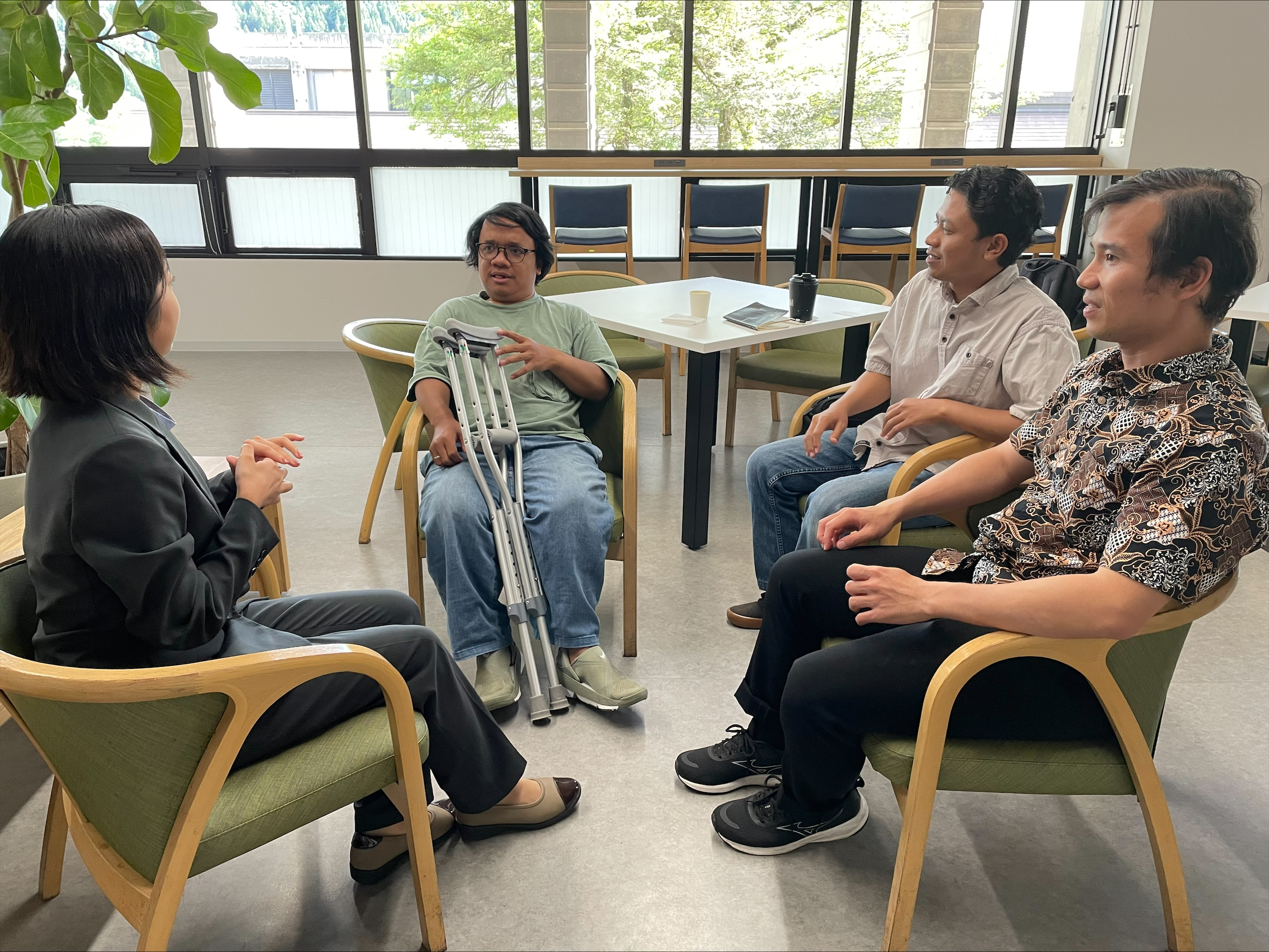
During the interview
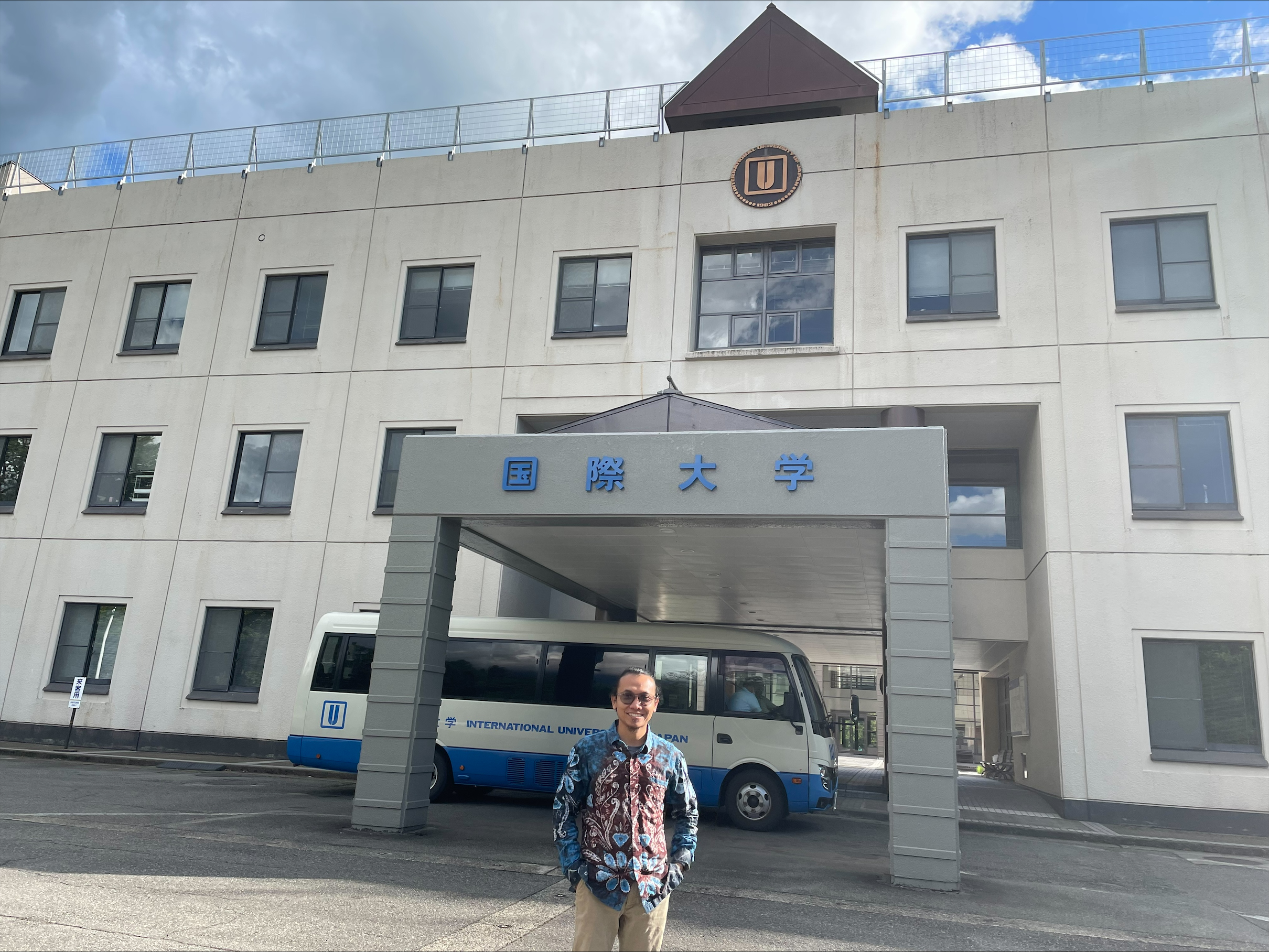
Mr. Faiz, in front of the entrance of IUJ
Sns share!


