
Strengthening Nepal’s Agricultural Heritage – Handover of Chandra Nahar Rehabilitation Project
[Goal 2] Zero Hunger
2026.01.28






2026.01.28
JICA Nepal proudly announces the successful handover of “The Project for the Rehabilitation of Irrigation System in Eastern Terai Area” at Bhagni Maleth, Saptari district. The rehabilitated irrigation system handover ceremony was conducted in honorable presence of Ms. Sarita Dawadi, the Secretary of Ministry of Energy, Water Resources and Irrigation (MoEWRI), Mr. Yasuharu Shinto, Deputy Chief of Mission, Embassy of Japan to Nepal, and Mr. Mizuki Matsuzaki, Chief Representative of JICA Nepal office.
The Chandra Nahar Irrigation System, completed in 1927, is not only Nepal’s first modern irrigation system but also a symbol of the country’s agricultural heritage and engineering excellence. For nearly a century, this system has supported thousands of farmers and contributed immensely to food security and rural livelihoods in the Terai region. However, after 95 years of operation, the system faced severe challenges due to aging infrastructure and lack of periodic maintenance.
Responding to the Government of Nepal’s request, JICA extended a Grant Aid of JPY 2.256 billion (approx. NPR 2.05 billion) to rehabilitate this historic system.
- 32 critical structures (8 canal underpass, 9 cross drainage work and 15 canals crossing bridges) have been rehabilitated
- Improved water distribution across 11,000 hectares
- Direct benefit to 35,000 farming households
This project is not only about infrastructure—it is about preserving Nepal’s engineering legacy and strengthening the bond between Japan and Nepal. This project carries deep historical significance which began more than a century ago when eight pioneering Nepali students traveled to Japan for higher education in 1902. Among them was Mr. Dilli Jung Thapa, Nepal’s first engineer, who studied engineering in Japan and later led the construction of the Chandra Nahar irrigation system. 120 years have passed since this historic educational exchange, and this project stands as a testament to shared history, cooperation, and enduring partnership between the two nations.
“I would like to extend my sincere gratitude to the Government of Japan and JICA for their invaluable support, which has not only contributed to preserve this important historical infrastructure but has also ensured the successful rehabilitation of the irrigation system in line with modern engineering standards. In addition to the physical infrastructures, the support provided for human resource development—through knowledge and technology transfer, skill enhancement, and the promotion of a culture of constructing quality infrastructure—has greatly benefited the officials, this project and the surrounding communities. These contributions have made a significant impact on Nepal’s agriculture and irrigation sector, strengthening both its productivity and sustainability”, stated Ms. Sarita Dawadi, Secretary, MoEWRI.
Mr. MATSUZAKI in his remarks appreciated for the cooperation and partnership of Government of Nepal, Ministry and other stakeholders to complete this historic project successfully and reaffirmed JICA’s commitment to working together with Nepal to support national priorities in agriculture, water resources that contributes to broader socio-economic development.
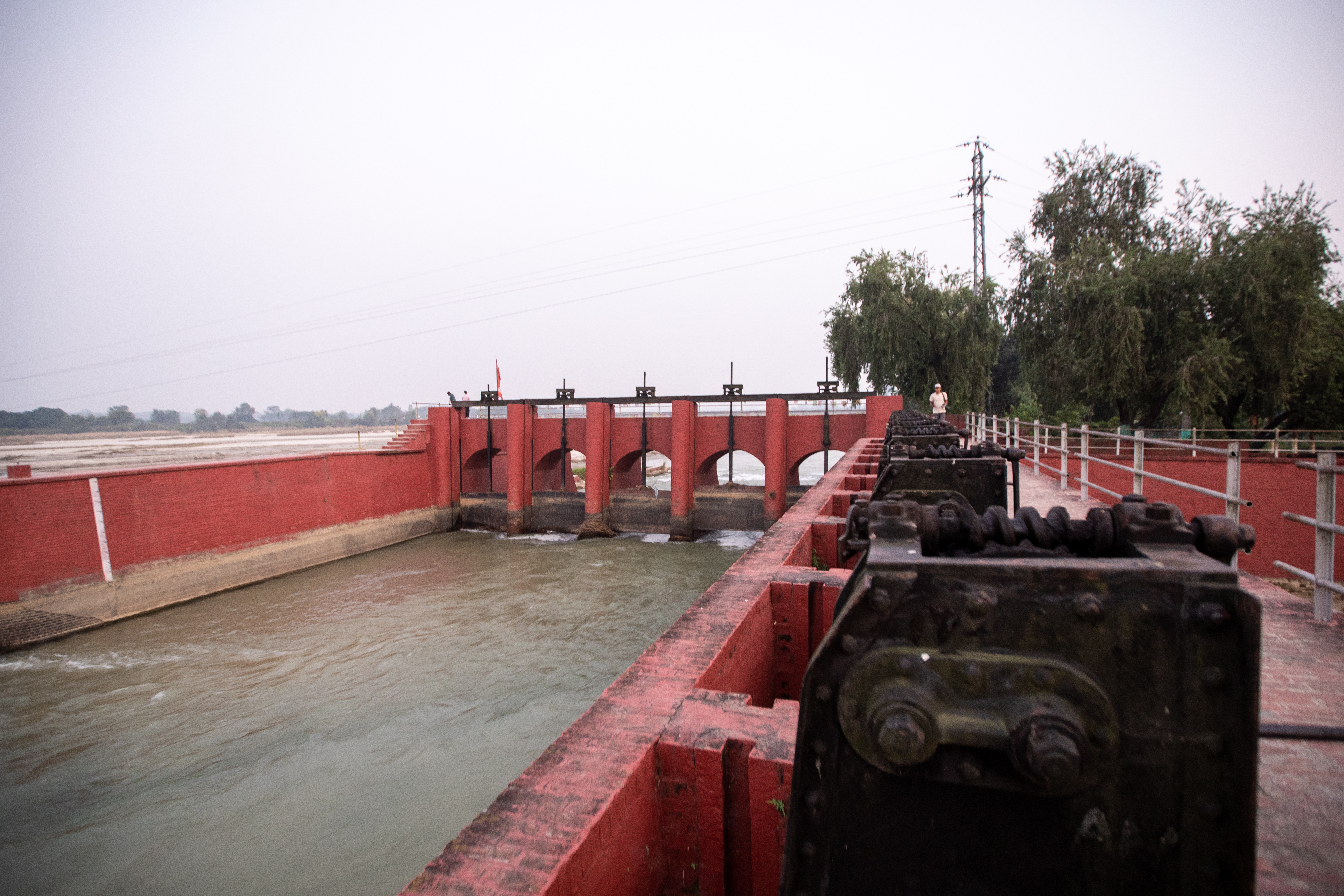
The well preserved old structure of the irrigation system.
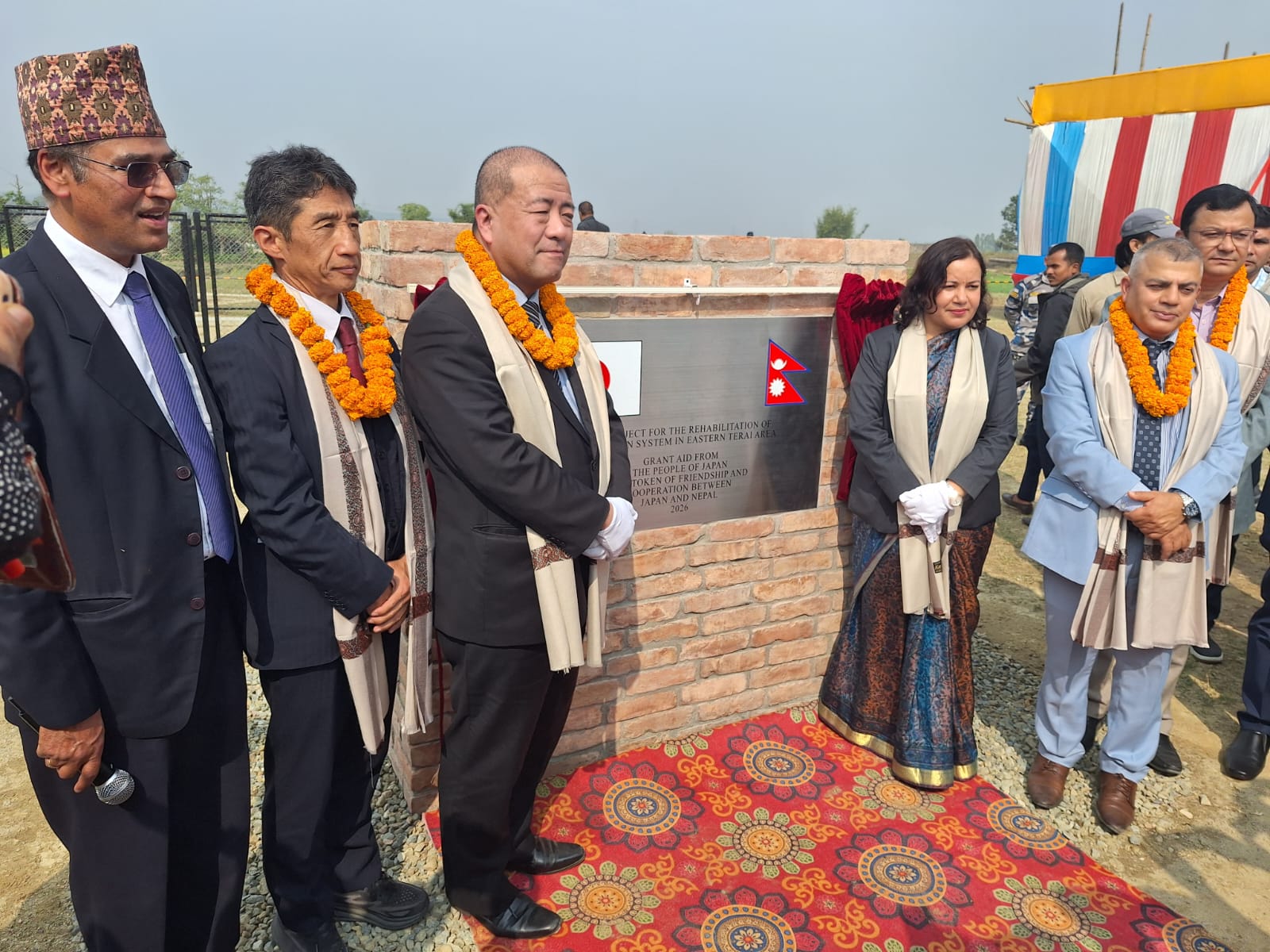
Officials at the handover ceremony.
Sns share!


