The JICA website uses cookies to improve the service provided. By closing or continuously browsing this banner, you agree to use the cookies listed in the privacy policy.
The Project for Innovative Solutions for the Pacific Climate change Resilience (ISPCCR) is jointly implemented by the SPREP/Pacific Climate Change Centre (PCCC), the Government of Samoa, and the Japan International Cooperation Agency (JICA) to strengthen the innovation function of the PCCC and promote innovative climate change solutions across the pacific region.
As part of the ISPCCR activities, the third regional training course entitled "Enhancing Access to Climate Finance through Public-Private Collaboration in Pacific Island Countries (PICs)" was conducted from 10 August to 25 September 2026. The training combined self-paced online learning, country-based project development, and an in-person component at the PCCC in Apia, Samoa. Each country group developed climate change project proposals aimed at accessing climate finance sources including the Green Climate Fund (GCF), Adaptation Fund (AF), Global Environment Facility (GEF) and other regional funding mechanisms.
Following the conclusion of the training, participating countries developed promising climate change related project concepts with strong potential for further development and submission to climate finance mechanisms. Based on the quality of proposals, commitment demonstrated by participants, and opportunities for climate finance mobilization, Papua New Guinea (PNG), Kiribati, and the Cook Islands were selected for follow-up support missions by the ISPCCR team.
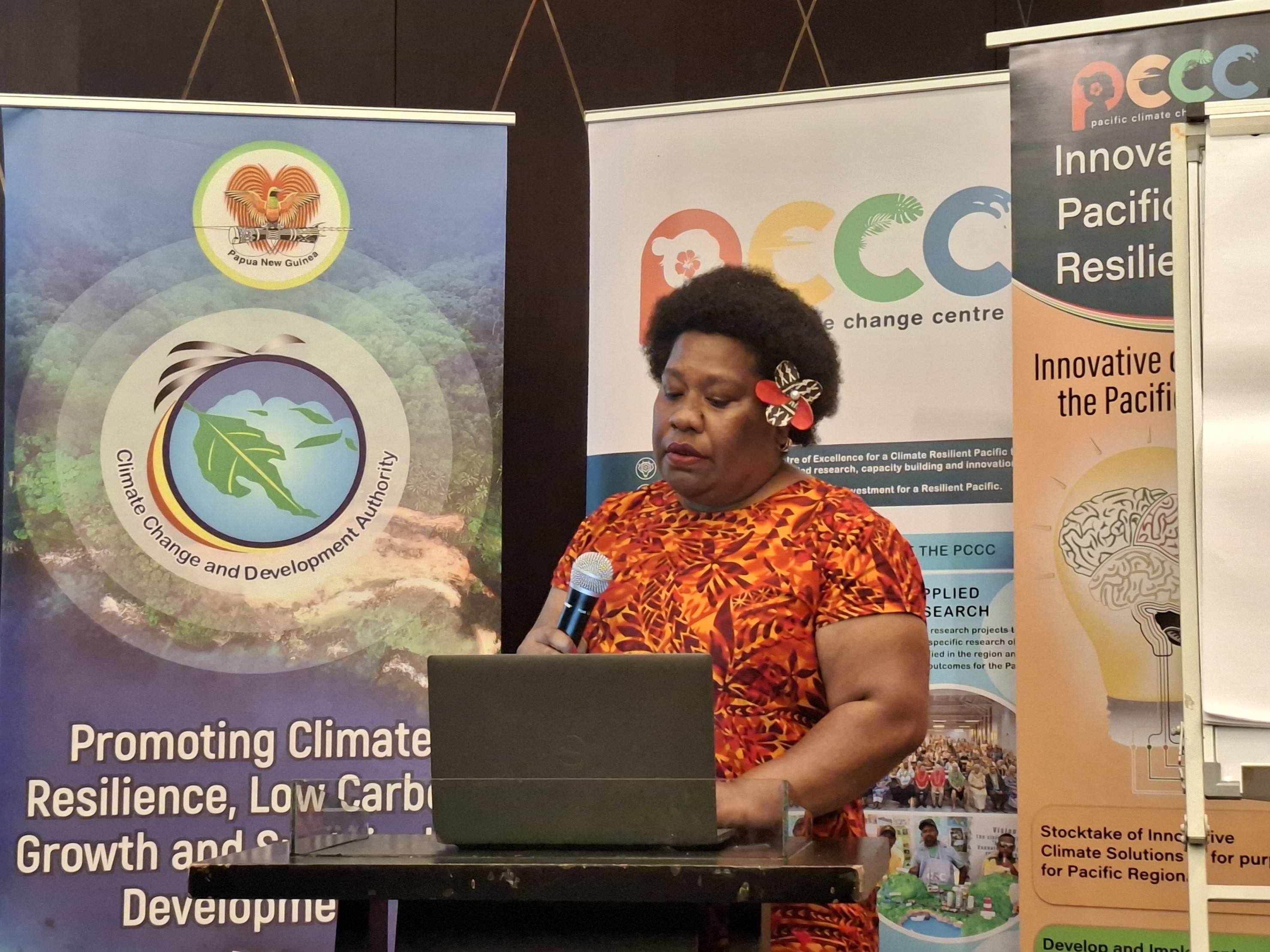
Ms. Dessie Mori presenting the climate rationale of the project
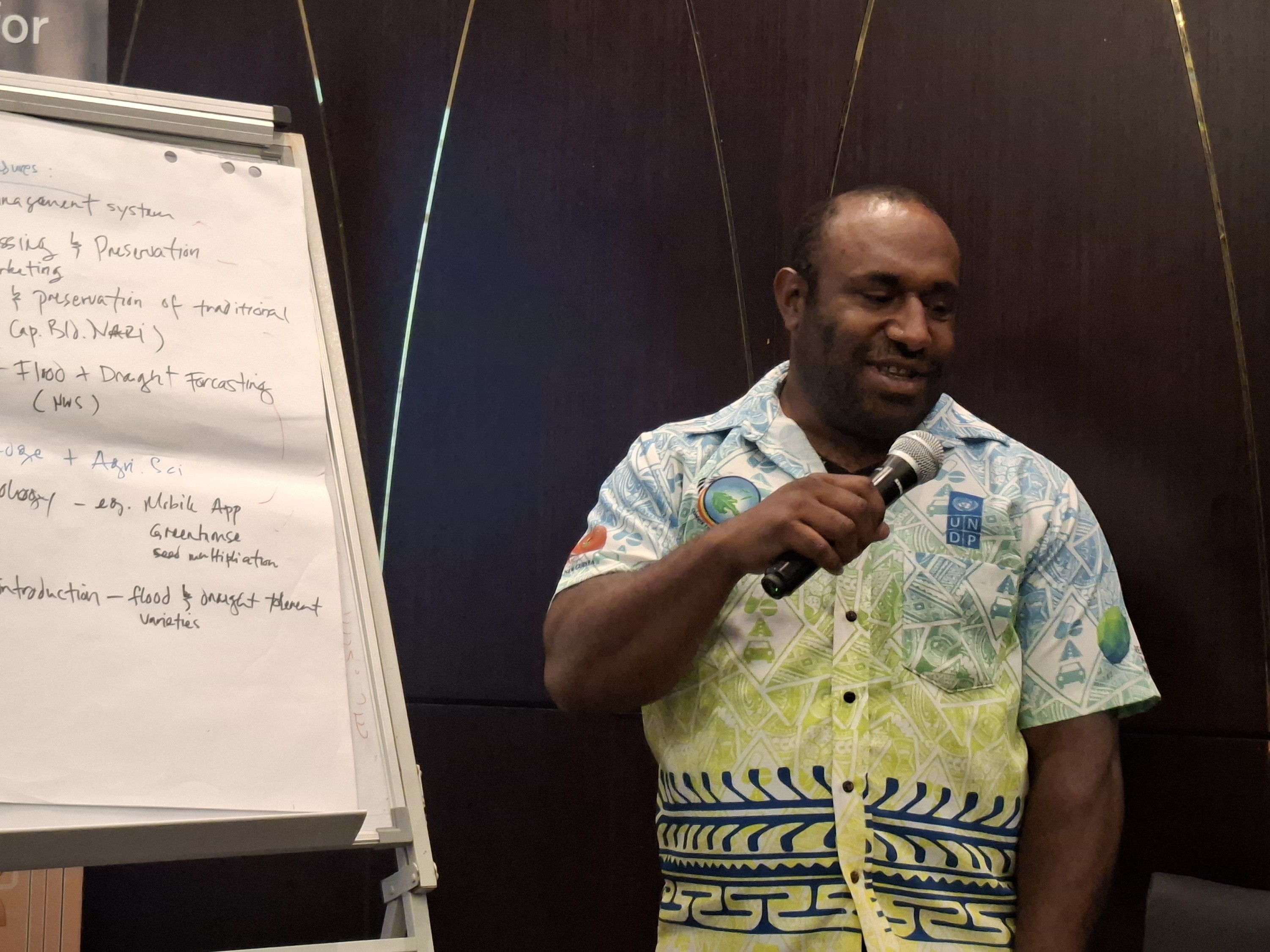
Presentation of group discussions by Mr. Benedict Goiye
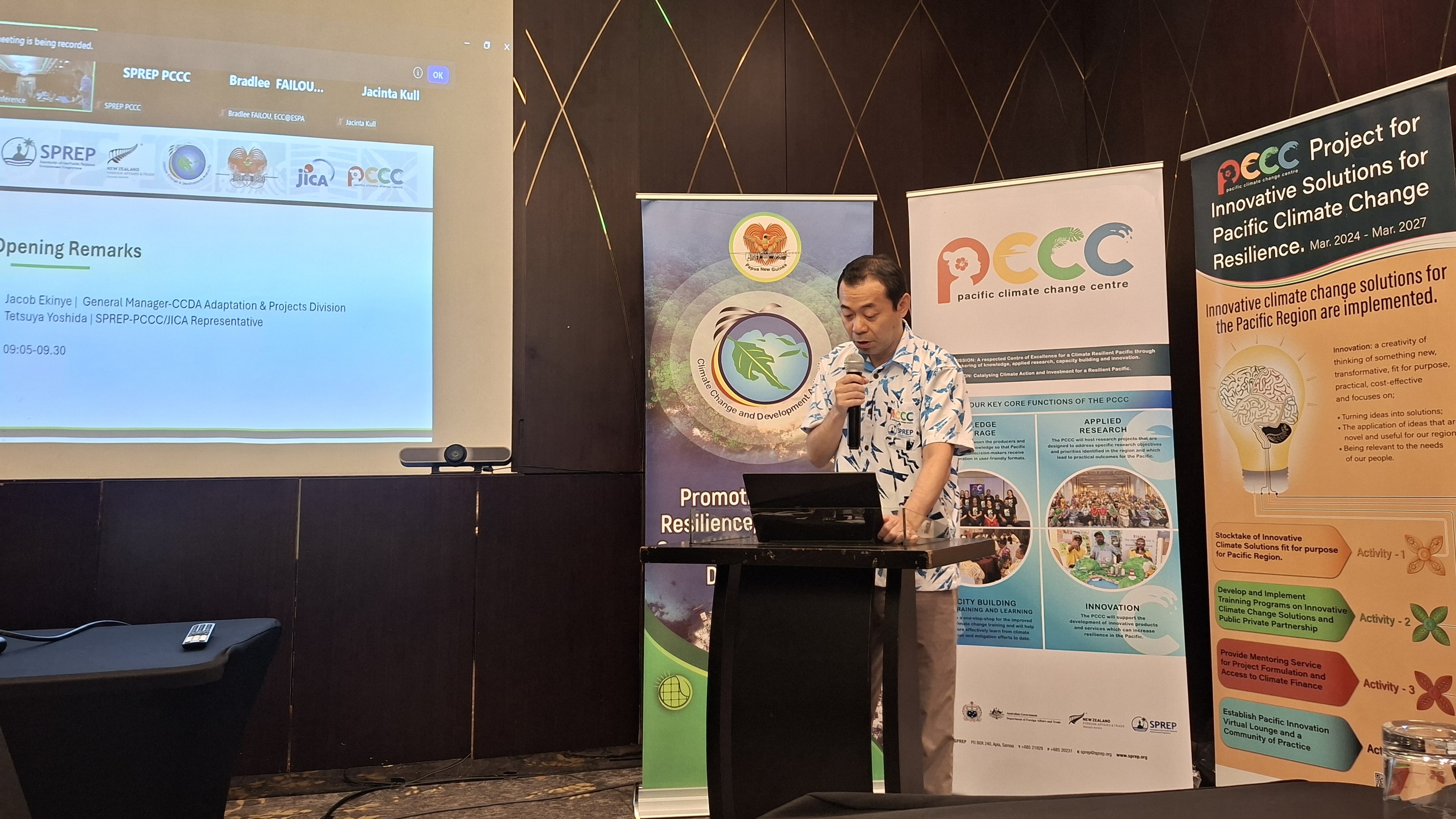
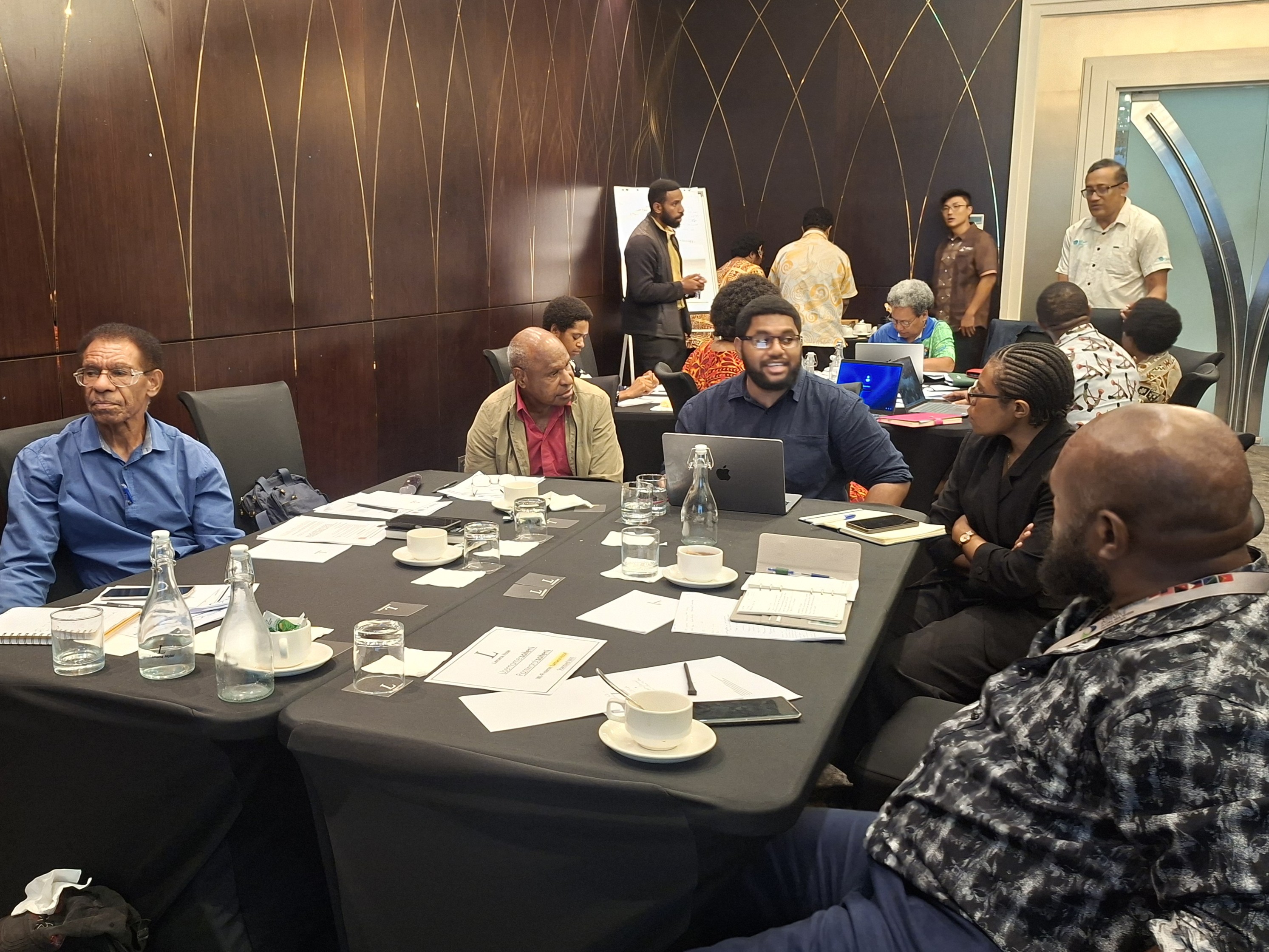
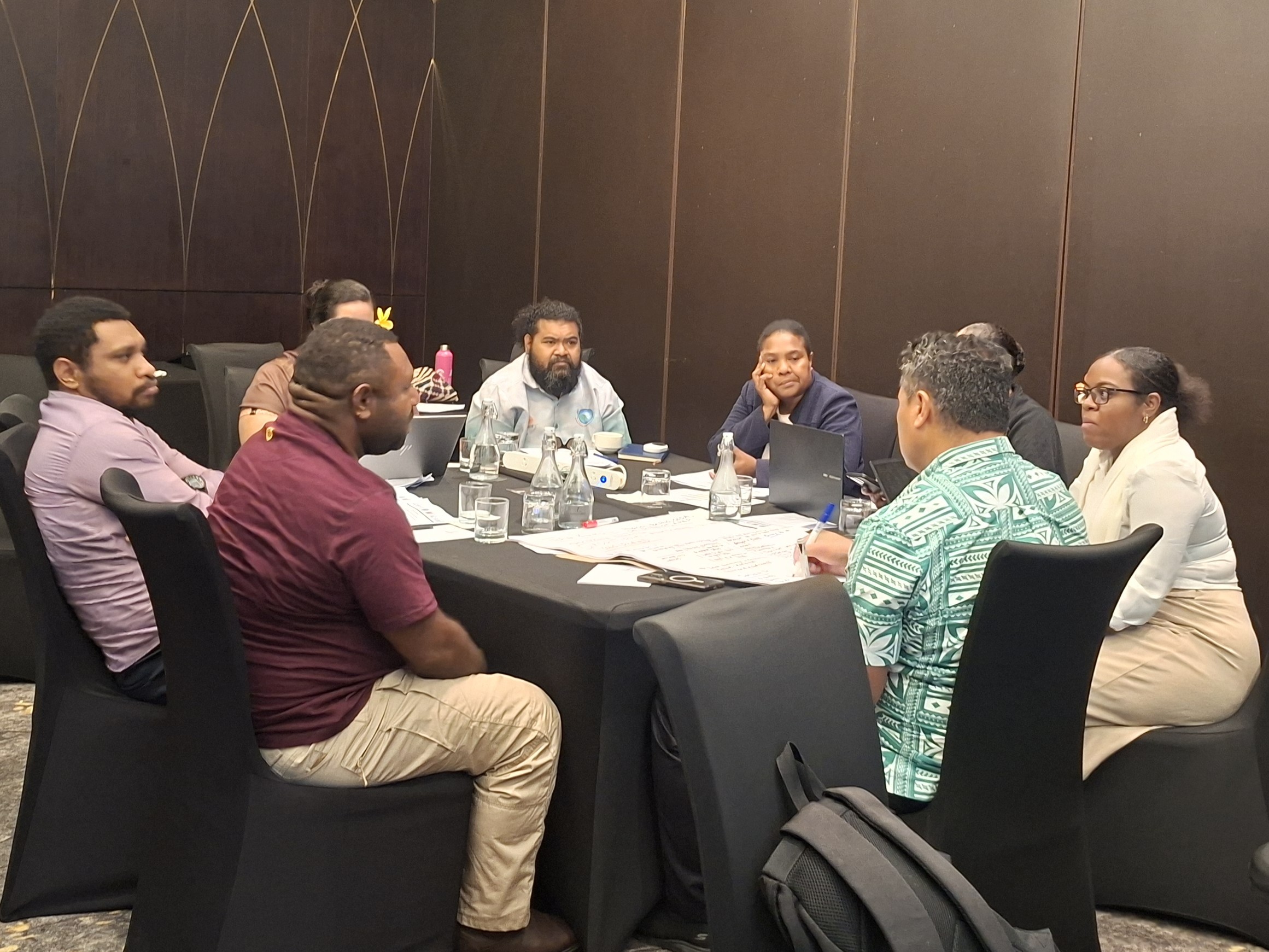
On 11 November 2026, stakeholders from government agencies, research institutions, development partners, and the private sector gathered in Port Moresby for a consultation workshop on the proposed project, "Strengthening Climate Resilience and Food Security Through Integrated Indigenous Knowledge and Agricultural Science." The workshop aimed to refine the project design and gather stakeholder input to ensure that the initiative responds effectively to local needs while promoting sustainable and climate-resilient agriculture.
Participants emphasized the importance of recognizing and safeguarding PNG's rich traditional agricultural knowledge while integrating appropriate technologies and scientific approaches. Discussions highlighted the need for water management systems, food processing and preservation, protection of traditional crop species, strengthened early warning systems, and sustainable financing mechanisms to ensure the project's long-term impact.
Through the integration of indigenous knowledge and agricultural science, the project aims to advance climate-resilient agriculture and strengthen food security. JICA will continue to support the sustainable development of Papua New Guinea and the Pacific region through close collaboration with its partners.