
Lighting Rwanda: Celebrating 20 Years of JICA’s Partnership in Powering Progress
2026.10.08





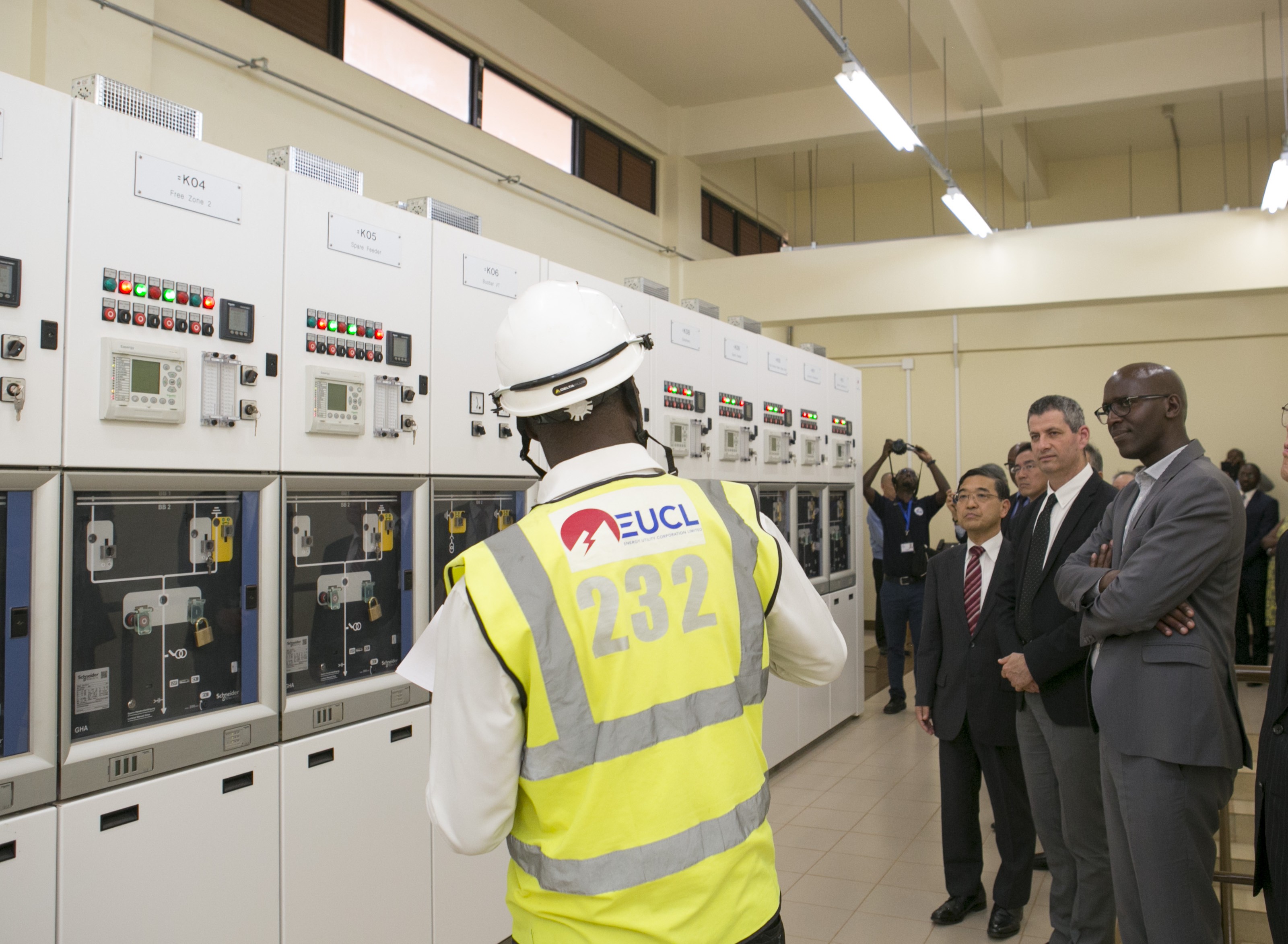
Guided Tour of Gasogi Substation Power Control Room At The Innauguration Day
As Rwanda marks its remarkable transformation in the energy sector, the year also offers an opportunity to reflect on another milestone: 20 years of partnership with the Japan International Cooperation Agency (JICA). Over these two decades, JICA has played a steady and strategic role in supporting Rwanda’s journey from limited electricity access to a rapidly expanding and increasingly reliable power system.
Three decades ago, electricity in Rwanda was scarce. In the mid-1990s, only about 1% of households were connected, and outages were frequent. Today, that picture has changed dramatically. By 2025, electricity access has surpassed 85% of households (almost 100% in urban area and 60~70% in rural area), supporting urban development, industrial growth, and improved living standards across the country.
This transformation has been driven first and foremost by Rwanda’s strong national vision and leadership, implemented through institutions such as the Ministry of Infrastructure (MININFRA), Rwanda Energy Group (REG), EDCL, and EUCL. Over the past 20 years, JICA has stood alongside these efforts—providing not only financing, but also technical expertise and long-term capacity development.
Two Decades of Partnership and Progress
Since the early 2000s, JICA’s cooperation with Rwanda has evolved alongside the country’s needs. Rather than focusing solely on short-term infrastructure delivery, JICA has taken a long-term approach—strengthening both infrastructure and human capacity to ensure sustainable power supply.
Between 2011 and 2020, JICA implemented a three-phase project to upgrade Rwanda’s substations and distribution infrastructure:
Reliability That Supports Growth
At the same time, JICA’s emphasis on “knowledge transfer” has ensured that these systems are effectively managed. Engineers trained through JICA’s technical assistance are now leading operations across Rwanda, maintaining infrastructure and responding to technical challenges with growing expertise.
Impact Beyond Infrastructure
While substations and transmission lines are often invisible to the public, their impact is deeply felt in daily life.
Reliable electricity has enabled:
Building for the Future
As Rwanda’s energy system becomes more complex, the importance of technical expertise continues to grow. Over the past 20 years, JICA has contributed not only infrastructure, but also systems for planning and management, including GIS-based tools and improved maintenance practices.
Crucially, these solutions have been adapted to Rwanda’s specific context.
“Japan’s approach is not to replicate, but to adapt,” JICA officials note. “By aligning with Rwanda’s priorities, we ensure long-term sustainability and relevance.”
A Ministry of Infrastructure official stated, highlighting the dual importance of investment and skills development:
“Rwanda’s progress has been driven by national leadership, but partnerships like this have strengthened the technical foundation needed to sustain that progress.”
A Milestone and a Continuing Journey
Over the past two decades, JICA has contributed to Rwanda's development in many ways, with its impact visible across the country—in upgraded substations, in trained engineers, and in the growing reliability of the electricity network.
But perhaps most importantly, they can be seen in everyday life:
in homes illuminated after sunset, in businesses operating without disruption, and in communities increasingly connected to opportunity.
Rwanda’s energy transformation is far from complete. Demand continues to rise, and new challenges lie ahead. Yet the past two decades have demonstrated the value of sustained, collaborative partnership.
As Rwanda advances and modernizes its energy sector, JICA’s two-decade partnership reflects a shared journey—supporting Rwanda’s efforts to strengthen infrastructure and drive long-term growth and resilience.
Sns share!


