




scroll


Sector Overview
Issues include insufficient access to electricity, and power transmission and distribution loss. Utilizing natural gas and renewable energy to meet future growth in demand for electricity due to population growth as well as developing power sources and improving connection rates through the establishment of power transmission and distribution networks are issues to be addressed. With the completion of the Julius Nyerere Hydropower station, the installed capacity has increased significantly to 3,400 MW, and energy access, which indicates the capacity to supply electricity to households, has improved to 85%.
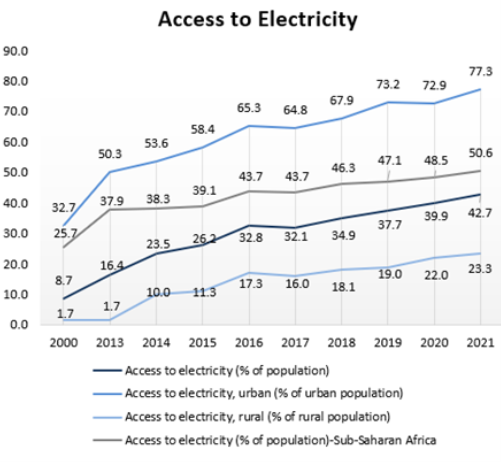
However, the electrification rate, which shows the proportion of the population with access to electricity, is 42.7% nationwide, which is lower than the SSA average (50.6%). The power loss due to transmission and distribution is still high, at 13.5%, and the establishment of transmission and distribution networks and the development of power sources for future demand expansion are issues to be addressed. Further connections to the power pools (Eastern Africa Power Pool and Southern African Power Pool) are also required.
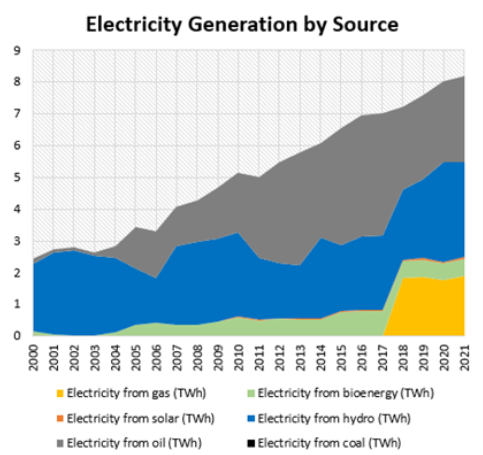
Power Generation by Source and Generation and Consumption
(Source: Energy Information Administration)
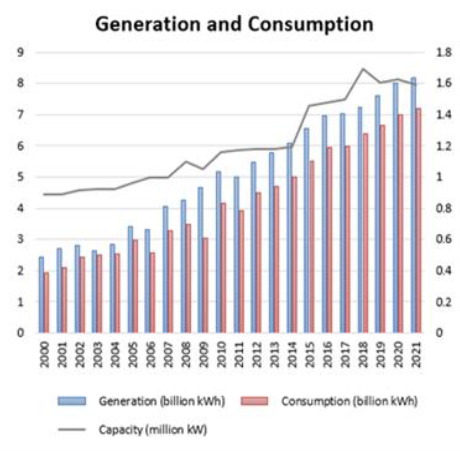
Although energy access increased from 78.4% to 85% during the FYDPIII period, it is important to promote an energy mix utilizing natural gas and renewable energy to compensate for the instability of hydropower generation. With 8.3 TCF of natural gas (8.3/57 TCF of total potential), plans are under way to generate approximately 7,000 MW of power, and expectations are growing for the possibility of developing geothermal resources and the introduction of wind and photovoltaic power generation by independent power producers.
In addition, the access rate for clean cooking, which uses environmentally conscious, clean, and safe fuel (such as electricity, liquefied petroleum gas, and biogas) instead of conventional fuel such as charcoal and firewood, remains at around 7%. Improvements are required to achieve the target of 75% by 2030.
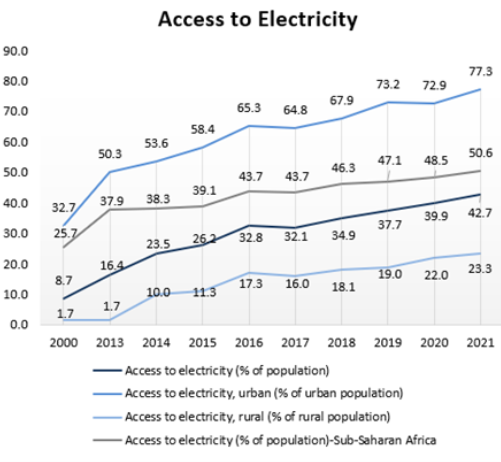
Changes in the Electrification Rate and power Losses
(Source: World Bank Group -International Development, Poverty and Sustainability)