






scroll


Sector Overview
The high poverty rate in rural areas and the disparity between rural and urban areas are issues to be addressed. In addition, it is essential to create jobs in rural areas as the population increases.
Since half of the population is under the age of 18 and 9.3% is disabled, building an inclusive society that includes youths, women, and persons with disabilities is an important issue to be addressed. The poverty rate is particularly high in rural areas compared to urban areas with 81% of the 14 million poor concentrated in these areas, and the prevalence of stunting is around 50% (national average 30%). FYDPIII has set a target of improving the proportion of the poor lacking basic needs in rural areas within five years, and it is essential to enhance the capabilities of local governments and communities to address regional disparities and create jobs in rural areas. Meanwhile, decentralization, which began in the latter half of the 1990s, has promoted the decentralization of administrative affairs and authority, while the decentralization of finance and personnel affairs for civil servants has not progressed substantially. There is an absolute shortage of staff, especially in local governments.
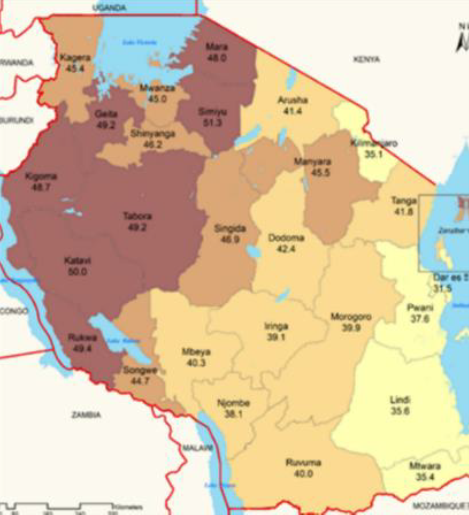
Proportion of Population Aged 15 or Younger by Region (2022)
(Source: volume2c)
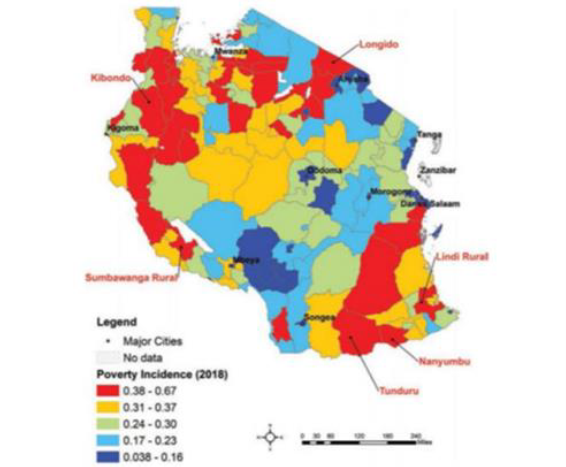
Incidence of Poverty by Region (2018)
(Sorce: Tanzania -Household Budget Survey 2017-2018)
The reform of the civil service system is about to be promoted. In particular, the points at issue in this process include human resources management, the relationship between the central and local governments (decentralization), community engagement, and the efficient provision of public services.