
Sharing Uganda’s Experience Across Africa: Regional Knowledge-Sharing Workshop on Refugee and Internally Displaced Person (IDP) Responses
2026.09.07





From August 13 to 21, 2026, the JICA Uganda Office, in collaboration with the Office of the Prime Minister (OPM) of Uganda, organized the “Knowledge-Sharing Workshop on Refugee and Internally Displaced Person (IDP) [1] Responses in the Horn of Africa and the Great Lakes Region.” Government officials and other representatives from Uganda, Kenya, Ethiopia, Rwanda, Burundi, Sudan, South Sudan, and Somalia participated in the workshop and shared their respective experiences, initiatives, and challenges.
In the Horn of Africa and the Great Lakes Region, conflicts, political instability, climate change, and other factors have resulted in large numbers of refugees and IDPs, while displacement situations have become increasingly protracted and complex. At the same time, humanitarian funding has been declining in recent years, further highlighting the importance of the Humanitarian-Development-Peace (HDP) Nexus, which combines immediate humanitarian assistance with medium- to long-term development and peacebuilding perspectives.
Against this backdrop, Uganda, which as of August 2026 hosts more than two million refugees — the largest refugee population in Africa —, has been promoting efforts to include refugees in national systems and development planning. In northern Uganda, where prolonged conflict previously resulted in the displacement of large numbers of people, initiatives have also been undertaken following improvements in security to support return and resettlement, the recovery of local communities, and capacity development of local government officials.
Building on Uganda’s experience, the workshop focused on two main themes: (1) “peaceful coexistence” in refugee-hosting areas and (2) “sustainable return” in post-conflict areas. Participants took part in lectures, field visits, and discussions with representatives from participating countries.
Regarding refugee-hosting areas, JICA and the Government of Uganda shared their efforts to formulate local development plans that reflect the needs of both refugees and host communities, promote livelihoods and refugee self-reliance, and sustainably manage limited natural resources. Participants also visited Kiryandongo Refugee Settlement, which hosts a large number of Sudanese refugees. With support from local government officials and UNHCR, participants observed the current situation in the settlement and learned about the support systems provided by government authorities and partner organizations. The visit also deepened their understanding of challenges facing refugees and host communities, including increasing pressure on public services such as education and healthcare.
In the Acholi sub-region of northern Uganda, JICA shared its experience of supporting post-conflict recovery since 2009. Participants learned about community development to facilitate the return and resettlement of IDPs, capacity development of local governments affected by conflict, livelihood improvement through agriculture and other activities, and support for vulnerable groups. Through exchanges with local government officials and community members, participants discussed the types of support needed to enable returnees to rebuild their lives in their communities and contribute to the stability of society as a whole.
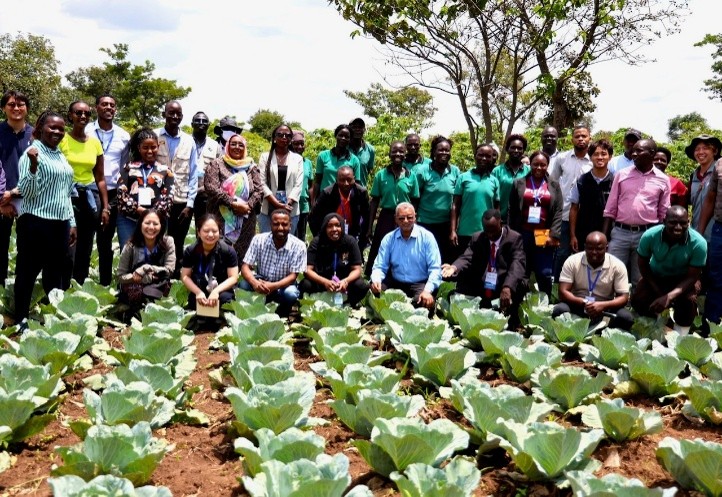
Field Visit of the Northern Uganda Farmers Livelihood Improvement Project (NUFLIP-2)
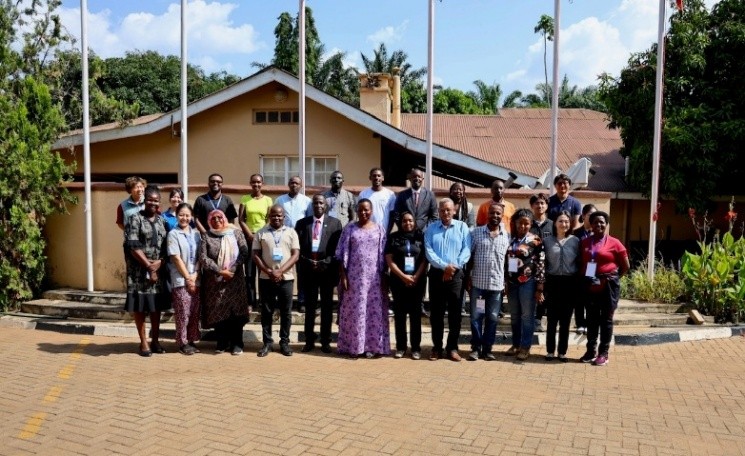
Group Photo with the Minister of State for Northern Uganda, Hon. Beatrice Akello
The workshop was not limited to sharing Uganda’s experience. Participating countries also presented their respective situations, initiatives, and challenges concerning refugees, IDPs, and returnees [2]. In a region where cross-border population movements continue, sharing the experiences and lessons learned by different countries is important for making more effective use of limited resources and identifying practical approaches suited to each country’s context.
On the final day, participants presented action plans for applying the lessons learned during the workshop in their respective countries and exchanged views on possible future initiatives.
JICA will continue to work with the Government of Uganda and other relevant partners to share with other countries the experience accumulated through its long-standing cooperation in refugee-hosting and conflict-affected areas in Uganda. Through these efforts, JICA aims to contribute to more sustainable responses to refugees and IDPs and to the realization of peaceful and inclusive societies across the Horn of Africa and the Great Lakes Region.
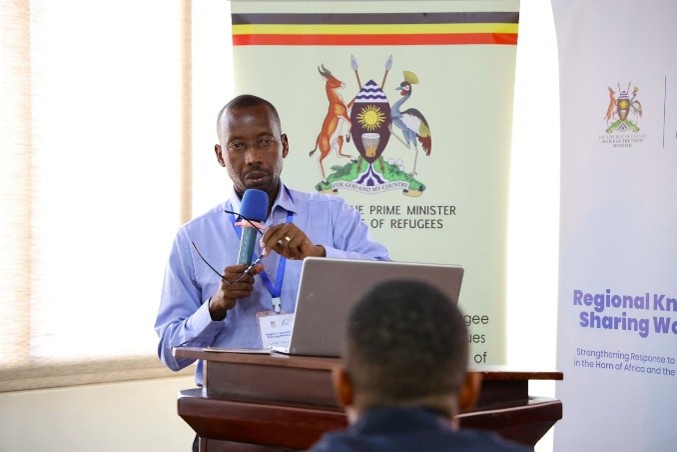
Presentation of Action Plan by the Participant from Burundi
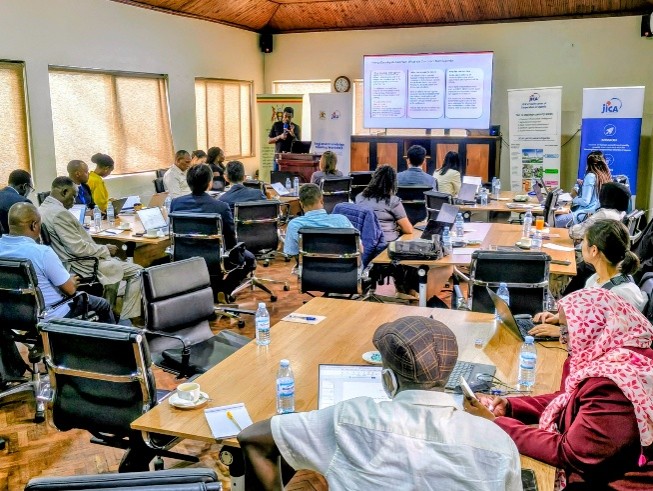
Presentation of Action Plan by the Participant from Kenya
[1] Internally Displaced Persons (IDPs): People who have been forced to flee their homes due to conflict, political circumstances, climate change, or other factors but remain within their own country and therefore are not protected as refugees under international refugee law. (Reference: Japan for UNHCR, “Refugees and Internally Displaced Persons”)
[2] Returnees: People who have returned to their places or countries of origin after having been displaced as refugees or IDPs due to conflict or other circumstances.
Sns share!


