




scroll


Aragaki Ken
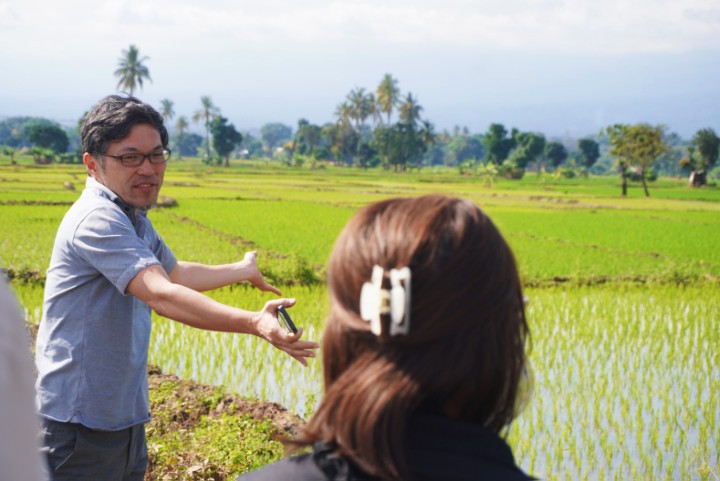
(Asai Makoto, a senior representative from JICA’s Tanzania office, shows a rice field at the foot of Kilimanjaro to a group of Japanese visitors/ Photo: Ogura Takeshi)
Series: Africa in Focus
In the lead up to the 9th Tokyo International Conference on African Development (TICAD9) in August 2025, JICA is sharing a series of stories that explore Africa’s challenges and promise. While showcasing JICA’s contributions, the series also brings attention to the broader efforts, ideas and potential across the continent.
As part of
TICAD9, JICA has launched sustainability bonds called “Africa-TICAD Bonds.” This instalment looks at how JICA’s Finance and Investment Cooperation, facilitated through such bonds, have promoted the mobilization of private finance and cooperated with Africa’s efforts towards self-reliance and sustainable growth.
Paul Wambugu, 45, recalls as a young boy visiting his grandparents and relatives just outside Nakuru, a city in Kenya’s Rift Valley region, where they lived without electricity.
Children played only during the daytime. Most of the shops in town closed before sunset. Wambugu’s grandparents would tell him stories by the fireplace before he fell asleep at night.
However, their lives changed after Kenya Electricity Generating Company, also known as KenGen, the leading public electric power generation company in Kenya, started building geothermal power stations in the region in the 1980s.
“Now, it’s different. Now everybody has a television. Everybody has power at home, power within the town center,” said Wambugu, who now works as KenGen’s investment manager.
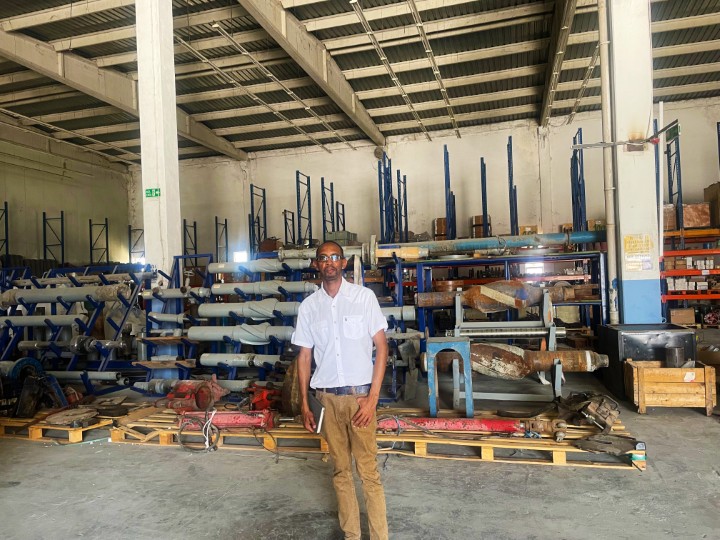
(Paul Wambugu, KenGen’s investment manager, visits a supplier’s equipment depot in Kenya in 2023/ Photo: Paul Wambugu)
Today, Kenya leads the way in Africa’s clean energy production. 90% of the country’s electricity comes from renewable energy, including geothermal, which accounts for roughly half of its total energy production.
Kenya’s Olkaria Geothermal Power Stations, located in the Rift Valley above an active continental rift, generate most of the country’s geothermal energy. Today, KenGen owns and operates four power stations along with 14 wellhead geothermal units in the area.
JICA, through its finance and investment cooperation, has played a vital role in the construction, maintenance and upgrading of these geothermal plants. Thanks to these investments, the agency has helped Kenya become the world’s sixth-largest producer of geothermal energy.
With loans from JICA, including those that had been raised through the first TICAD Bonds, KenGen have recently added four new plants to the Olkaria Power Stations, rehabilitated older units, and is constructing new transmission lines connecting Olkaria and other regions in Kenya.
Wambugu said as a result of these initiatives, the power stations now generate an additional 399 megawatts of capacity – enough to support two million more homes.
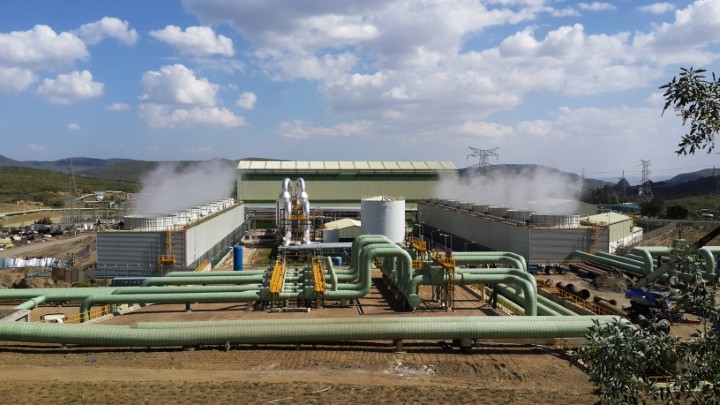
(Olkaria Geothermal Power Station I Unit 4 and 5/ Photo: JICA)
JICA’s operation, according to Koike Takahiro, deputy director at the JICA Finance Department, consists of three main arms: Finance and investment (including official development assistance, or ODA, loans and private-sector investment finance), grant aid, and technical cooperation.
With JICA-issued bonds, the agency raises funds from private as well as public investors, most of whom are based in Japan, and provide low-interest, long-term and concessional loans to developing nations.
The first TICAD Bonds were launched to coincide with TICAD7 in Yokohama, Japan, in 2019, issuing bonds worth 12 billion yen to strengthen cooperation with African nations. Since then, the agency has issued theme-based bonds each year to address pressing social and sustainability challenges. Past initiatives have included the COVID-19 Response Social Bonds (2020), Gender Bonds (2021), and Peacebuilding Bonds (2022).
For its second TICAD Bonds this year, JICA raised 23 billion yen from investors such as private banks, corporations, and educational institutions, helping them channel private finance and support Africa’s path to self-reliance and sustainable growth.
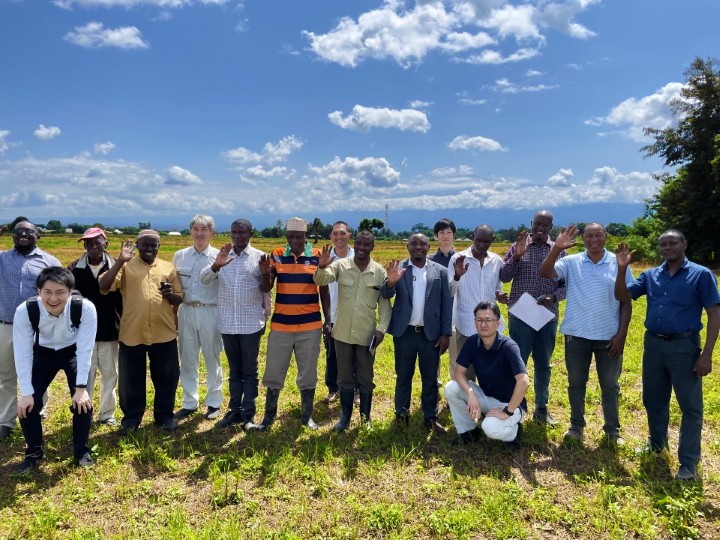
(Koike Takahiro, deputy director at the JICA Finance Department, pictured with a rucksack far left, visits the Kilimanjaro region in Tanzania to observe an agriculture project in 2025/ Photo: JICA)
Energy is not the only industry where JICA’s finance and investment cooperation has made a significant impact in Africa.
According to Koike, the first TICAD Bonds supported 26 projects across 16 African countries. Beyond Kenya’s geothermal power initiative, these projects included an irrigation development in Tanzania, the construction of a new bridge in Uganda, and the Egypt-Japan education partnership, where JICA has financed building Egypt-Japan Schools and rehabilitation of existing schools in Egypt.
In addition to the energy sector (excluding coal-fired thermal power), the “JICA Social/Sustainability Bond Framework” defines eligible projects in 14 other areas, including education, healthcare, and peacebuilding.
Under agriculture, forestry, and fisheries, JICA has supported agricultural production facilities and irrigation systems across various African countries.
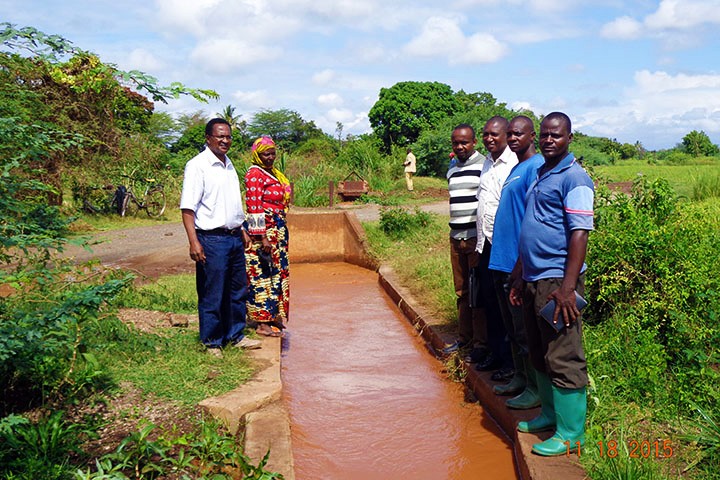
(Small Scale Irrigation Development Project in Tanzania, 2015/ Photo: JICA)
In Tanzania, JICA has a long history of backing agriculture and irrigation development.
According to Asai Makoto, a senior representative from JICA’s Tanzania office and author of “Kilimanjaro and the Waves of Rice Stalks: Half a Century of Rice Production in Tanzania,” Japan’s involvement in developing Tanzania’s rice farming dates back to the 1970s.
Its involvement accelerated after Japan committed to enhancing food production in Africa through rice farming at TICAD IV in 2008, also held in Yokohama.
Through its ODA loan programmes, JICA has implemented a variety of agricultural and infrastructure projects, including the Small Scale Irrigation Development Project, which began in 2013 and was financed through TICAD Bonds.
The total area of irrigated land for rice and other crops in Tanzania more than doubled between financial years 2007-2008 and 2020-2021, according to Asai.
Based on the latest data from the Food and Agriculture Organization of the United Nations’ “Food Outlook,” published in June 2025, Tanzania now ranks as Africa’s fourth-largest rice producer, exporting the crop to its neighbouring countries, including Burundi, Kenya, and Uganda.
During last year’s Norman E. Borlaug International Dialogue, organised by the World Food Prize Foundation in the U.S., Tanzania’s President Samia Suluhu Hassan outlined an ambitious agenda to achieve food self-sufficiency and transform the country into a “food basket for the region.”
Asai said he is confident the agency has contributed to the country’s achievement in rice self-sufficiency, though admits that it is difficult to measure the exact impact of JICA’s long-term cooperation with Tanzania.
“I do not hesitate to say this: ‘Our cooperation has paved the way to the rise and expansion of Tanzania’s rice production,’” Asai emphasised.
Back in Kenya, the ripple effects of development through TICAD Bonds are already visible.
The Kenyan government declared Olkaria a special economic zone this February and plans to build a “KenGen Green Energy Park” to attract industries by leveraging the region’s geothermal resources.
There are several advantages to Finance and Investment Cooperation facilitated through JICA bonds.
“By leveraging private capital, we can support larger and more sustainable development projects. For investors, JICA bonds offer an opportunity that combines social impact with stable returns,” Koike explains. “Furthermore, the issuance of these bonds plays a role in connecting Japanese investors with developing countries.”
Interest in JICA bonds has been growing steadily, with the number of investment commitments doubling from 174 in fiscal year 2020 to 361 in fiscal year 2024.
For Wambugu, the impact goes beyond funding. In addition to keeping energy prices low thanks to favourable loan terms, KenGen must comply with higher quality and safety standards set by JICA, which has helped strengthen the company’s institutional capacity.
Moreover, Wambugu says that KenGen’s experience, coupled with its successful repayment record, enhances the company’s ability to secure loans from other international financial institutions, benefiting from JICA’s strong global reputation.
“So right now, if KenGen says it wants to pursue a particular project, the fact that we have been able to access funding from JICA gives us a very strong reputation with international lenders,” he said.