




scroll


Aragaki Ken
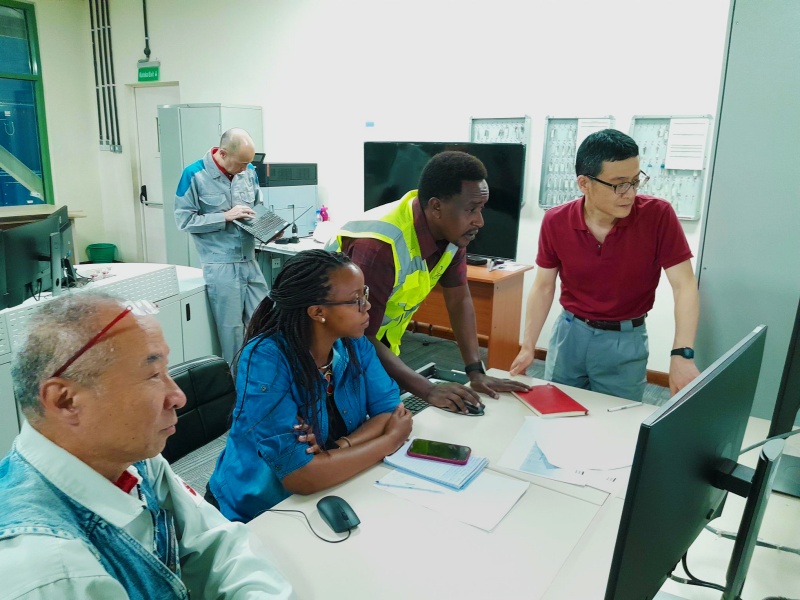
(Kawazoe Seiki, a veteran engineer from West Japan Engineering Consultants Inc, seated far left, participates in a lecture at Kenya’s Olkaria Geothermal Power Station in 2024/ Photo: Kyuden International)
Series : Africa in Focus
To mark the 9th Tokyo International Conference on African Development (TICAD9) in August 2025, JICA is sharing a series of stories that explore Africa’s challenges and promise. While showcasing JICA’s contributions, the series also brings attention to the broader efforts, ideas and potential across the continent. This latest instalment focuses on creating a green energy hub in Africa.
Kevin Nyafwa first arrived at Doshisha University in Kyoto from Kenya in 2017 as one of 19 fellows for the African Business Education Initiative for Youth (ABE Initiative), a two-year master’s degree and internship programme operated by JICA.
At his international dormitory, he often cooked chicken and rice and was struck by how every kitchen stove was fitted with uninterrupted clean gas.
Growing up in Rarieda, a town in Siaya County about 400 kilometres northwest of Nairobi, he remembered his mother gathering firewood to cook meals and challenges that came with that.
“Even today, access to clean cooking technologies remains one of Kenya’s greatest challenges. So, as much as you’re making your meal to improve your health, the process also exposes you to a lot of health concerns,” said Nyafwa.
The contrast of his experiences in Kenya and Japan inspired Nyafwa to join JICA Kenya office in 2021, where he now works on green energy projects and strategies.
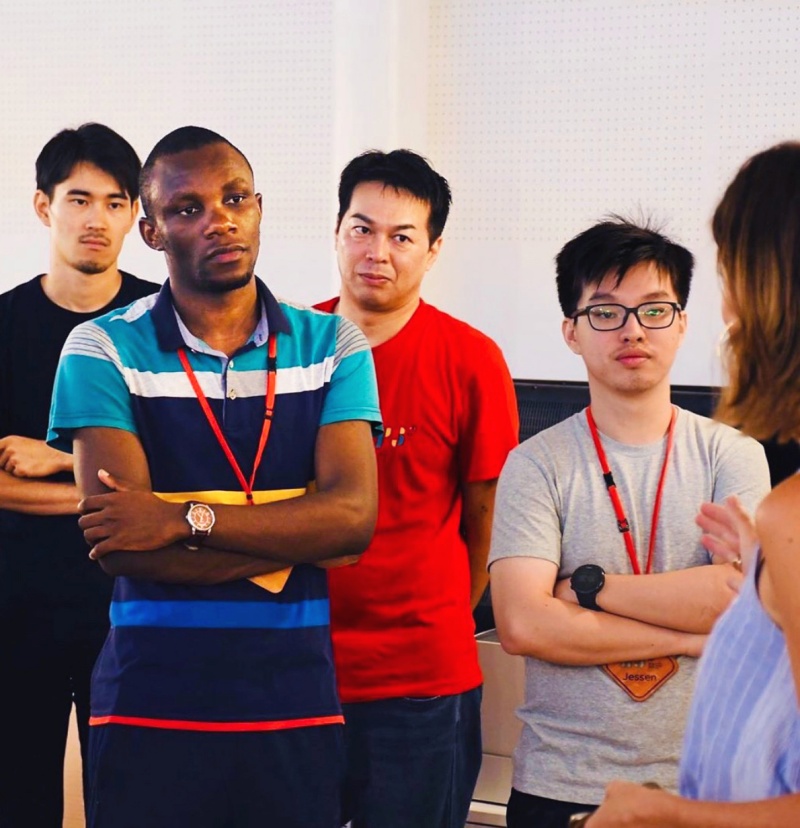
(Kevin Nyafwa, second from the left, attends a summer programme at Kyoto Institute of Technology in 2019/ Photo: Kevin Nyafwa)
Now as Programme Officer for Energy and Regional Green Industrialisation Strategy, Nyafwa has been advancing JICA’s efforts to establish the Northern Economic Corridor as a key green energy hub.
The corridor connects the port of Mombasa in Kenya with other East African countries such as landlocked Uganda, Rwanda, Burundi, and the Democratic Republic of Congo, driving regional green growth.
Since JICA developed the Northern Corridor Master Plan in 2017 at the request of the Kenyan and Ugandan governments, it has supported both “hardware” infrastructure such as roads and ports, and "software" such as institutional frameworks and human resource development.
To build a green economy and energy hub, Nyafwa emphasises the importance of public-private partnerships (PPP) alongside traditional intergovernmental cooperation.
“The Kenyan government is, now more than ever, seriously considering a public-private partnership as an alternative way of delivering projects,” he said.
One example is the introduction of fuel-efficient cranes at the Port of Mombasa imported from Japan, according to Wada Akira, the managing director of CFAO (Corporation For Africa and Overseas) Kenya, a group company of Toyota Tsusho Corporation.

(Wada Akira, Managing Director of CFAO Kenya/ Photo: CFAO)
In 2017, the state operated Kenya Ports Authority (KPA) signed a contract to purchase 16 cranes from Toyota Tsusho under JICA’s Special Terms for Economic Partnership (STEP) loan scheme, designed to promote the export of high-quality Japanese infrastructure.
The cranes, manufactured by Mitsui E&S Co., Ltd, (formerly Mitsui Engineering & Shipbuilding Co,), included 12 Rubber Tyred Gantry (RTG) cranes powered by a hybrid system, which improves fuel efficiency by up to 50 per cent while reducing carbon emissions.
This initiative is part of the Mombasa Port’s Green Port Policy, which seeks to boost sustainability by adopting environmentally friendly cargo handling equipment and renewable energy.
“To support JICA’s ‘green corridor’ vision, we’re looking for ways to work together on eco-friendly infrastructure as a whole, not just in isolated parts,” Wada said.
In addition to “green infrastructure,” CFAO Group also focuses on mobility, healthcare, and consumer goods in Africa. Since 2022, they’ve been investing in BasiGo, a Kenyan green transportation start-up that provides electric buses for public transportation in Nairobi to reduce emissions.
According to BasiGo, the transportation sector accounts for over 30 per cent of Africa’s carbon emissions. However, every electric bus they deploy in Nairobi mitigates 50 tonnes of CO2 emissions annually.
In collaboration with CFAO, the start-up, founded in 2021, aims to locally assemble 1,000 buses by 2027, a move that will create more than 300 green manufacturing jobs in Kenya. BasiGo’s website states that their electric buses are “designed for Kenya, built in Kenya, and powered by Kenya’s abundant renewable energy.” The company is also expanding into Rwanda.
To boost the number of electric vehicles in Kenya, Wada says his company needs to invest in more charging and maintenance stations, an area where CFAO and JICA could potentially partner in the future.
“We haven’t been able to work with JICA on EV projects yet,” Wada said. “But I understand JICA also intends to invest in developing green infrastructures, including EV charging stations, promoting more electric vehicles, and possibly adopting hydrogen-fueled cars in the future.”
Infrastructure is not the only area where JICA-led public-private partnerships have been transformative.
Kawazoe Seiki, a veteran engineer from West Japan Engineering Consultants Inc., a subsidiary of Kyushu Electric Power Company, contributed to a JICA-led project at the Olkaria Geothermal Power Stations, Kenya’s largest renewable power supplier.
The multiyear initiative aimed to train local engineers and strengthen operations and maintenance using IoT (Internet of Things) technologies provided by the United Nations Industrial Development Organization.
Between 2020 and 2025, under JICA’s “Project for Strengthening Operation and Maintenance Capacity of Olkaria Geothermal Power Stations Using IoT Technology,” Kawazoe delivered both in-person and remote training sessions.
Although the Covid-19 pandemic initially kept his team in Japan, they later conducted hands-on training in Kenya for engineers from the Kenya Electricity Generating Company (KenGen), covering skills such as record-keeping, performance analysis, and maintenance planning.
“At first, I felt (the local engineers) were a little wary of the new technology, and it was awkward because all the training was conducted online,” said Kawazoe, who is now retired and works as an independent consultant.
"I felt we were gradually able to earn their trust over time. As we engaged in face-to-face discussions about technical issues and methods, they became more willing to understand and accept us. That gave me great joy."
At the completion of the project, Kawazoe and his colleagues had prepared training materials and identified potential trainers within KenGen to continue capacity-building in-house.
Thanks in part to JICA’s long-term support and emphasis on partnerships, Kenya is now recognised as a regional leader in the green economy.
The country ranks as the sixth-largest producer of geothermal power worldwide, and about 90 per cent of its electricity comes from renewable sources such as hydroelectric and geothermal power. By 2030, Kenya aims to achieve 100 per cent renewable energy.
“If we have this renewable energy potential, (that) means we have the potential to produce very low-cost power that makes sense for industrial production,” said Joyce Kabui, Renewable Energy and Green Industrialisation Lead at the Office of Kenya’s Special Envoy for Climate Change.

(Joyce Kabui, Renewable Energy and Green Industrialisation Lead at the Office of Kenya’s Special Envoy for Climate Change, second from the right, speaks at the Africa Investment Exchange in Nairobi, Kenya, March 2024/ Photo: Joyce Kabui)
Under Kenyan President William Ruto, the African Green Industrialisation Initiative (AGII), was officially launched at COP28 (the 28th UN Climate Change Conference) in Dubai in 2023.
The framework seeks to accelerate green industrialisation across the African continent, in order to drive economic growth, create jobs, and boost trade through large-scale investment in green industries.
Kabui said Kenya, in collaboration with JICA, is creating a master plan to promote environmentally friendly industrial development across Africa.
This plan will focus on utilising green energy, enhancing transportation networks, and developing sustainable industries along the Northern Corridor — a key trade route in East Africa.
Nyafwa added that although the master plan is still at an early stage, the goal is to position East Africa as a “Green Growth Hub” with public-private partnership as its driving force and to offer a practical model for green economic growth that other African countries can follow.
“At the core of this concept is what you call ‘co-creation,’” said Nyafwa.
“Therefore, one of the key questions for our master plan will be: ‘How can we promote the right green investment policies so that Japanese companies see the environment as stable and conducive to investment?’ We indeed view the Japanese private sector as an essential partner in this journey.”