
Supporting National Development through Capacity Building for Civil Servants
2026.02.17





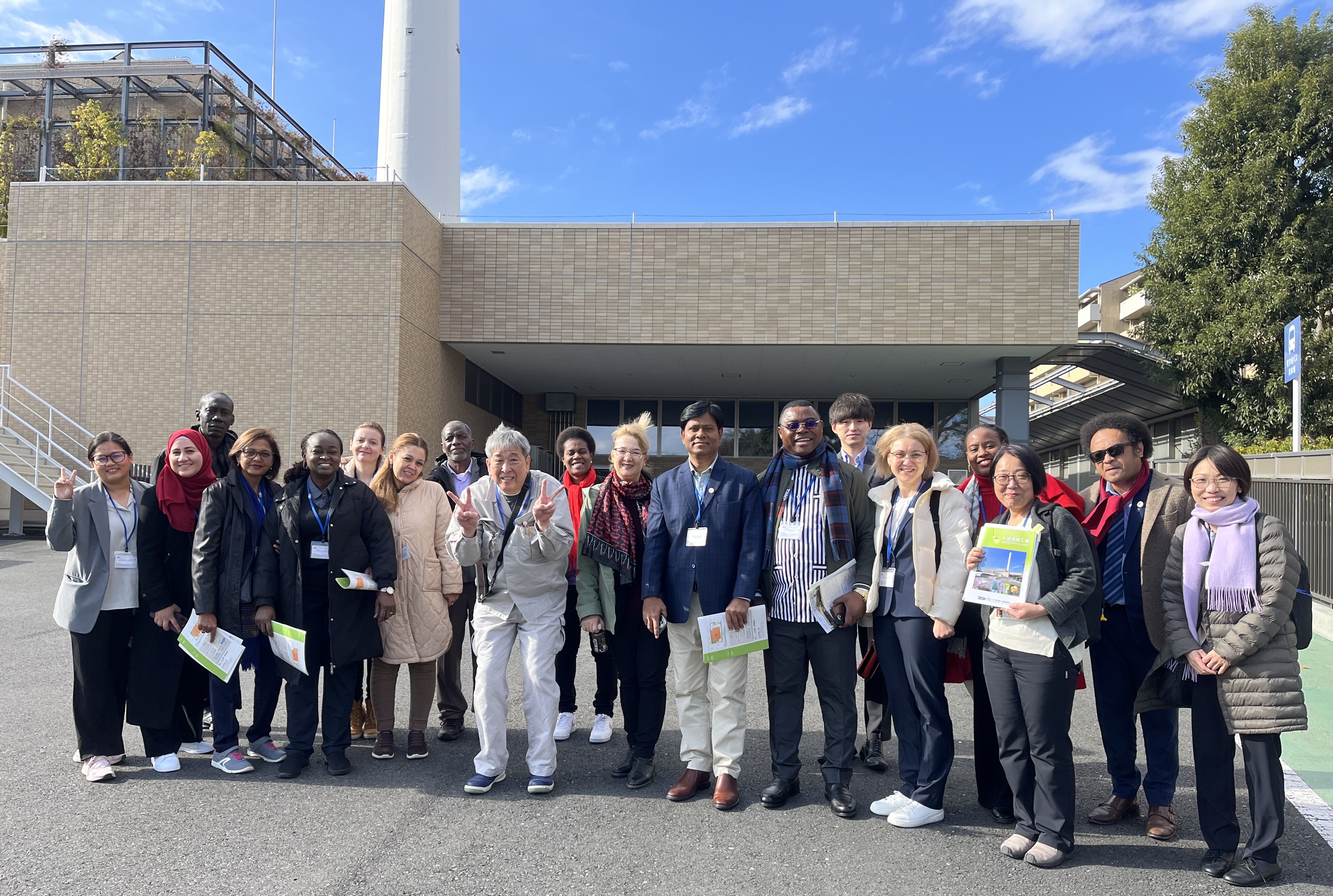
Participants came from various regions, including Oceania, South Asia, and Africa, during the field visit to the Suginami Incineration Plant.
Japan International Cooperation Agency (JICA) Tokyo Center, with the cooperation of the National Personnel Authority (NPA), conducted an 18-day “National Government Administration for Senior Officials” knowledge co-creation program from November 26 to December 13, 2025, in partnership with the Japan International Cooperation Center (JICE) as the implementing agency. The program aims to enhance the policy-making capabilities of senior national civil servants from developing countries.
The program targets senior-level national civil servants involved in policy decision-making within ministries and agencies of developing countries. Participants came from Albania, Bangladesh, Bhutan, Cameroon, Fiji, Liberia, Malawi, Mauritius, Nigeria, Palestine, North Macedonia, Tanzania, Turkmenistan, Ukraine, and Vanuatu. They represented various ministries and agencies, including the Ministry of Public Service and Administrative Reform and the Federal Ministry of Budget and Economic Planning.
To build a society where every individual can live with security and develop society and the economy, enhancing the capabilities of national public servants to formulate and implement flexible and appropriate policies plays a vital role. Through this program, we respect the ownership of each participating country, encouraging them to proactively select and develop their own systems. The program provides opportunities to learn about Japan's administrative systems while facilitating comparative analysis and dialogue between Japan's systems and those of the participants' countries. This approach encourages participants to formulate and implement their own plans for achieving better national administration. This program has been conducted continuously since 1986. To date, over 400 participants have taken part, contributing to the development of positive relations between Japan and the participating countries.
Experts from the National Personnel Authority—the agency responsible for hiring and personnel management of Japan's national civil servants—as well as academics and other institutions delivered lectures and facilitated discussions on topics including Japan's civil service system, personnel management and human resource development for national public servants, the relationship between Japan's local governments and central government, transparency and accountability in developing countries, and the leadership role of senior administrative officials.
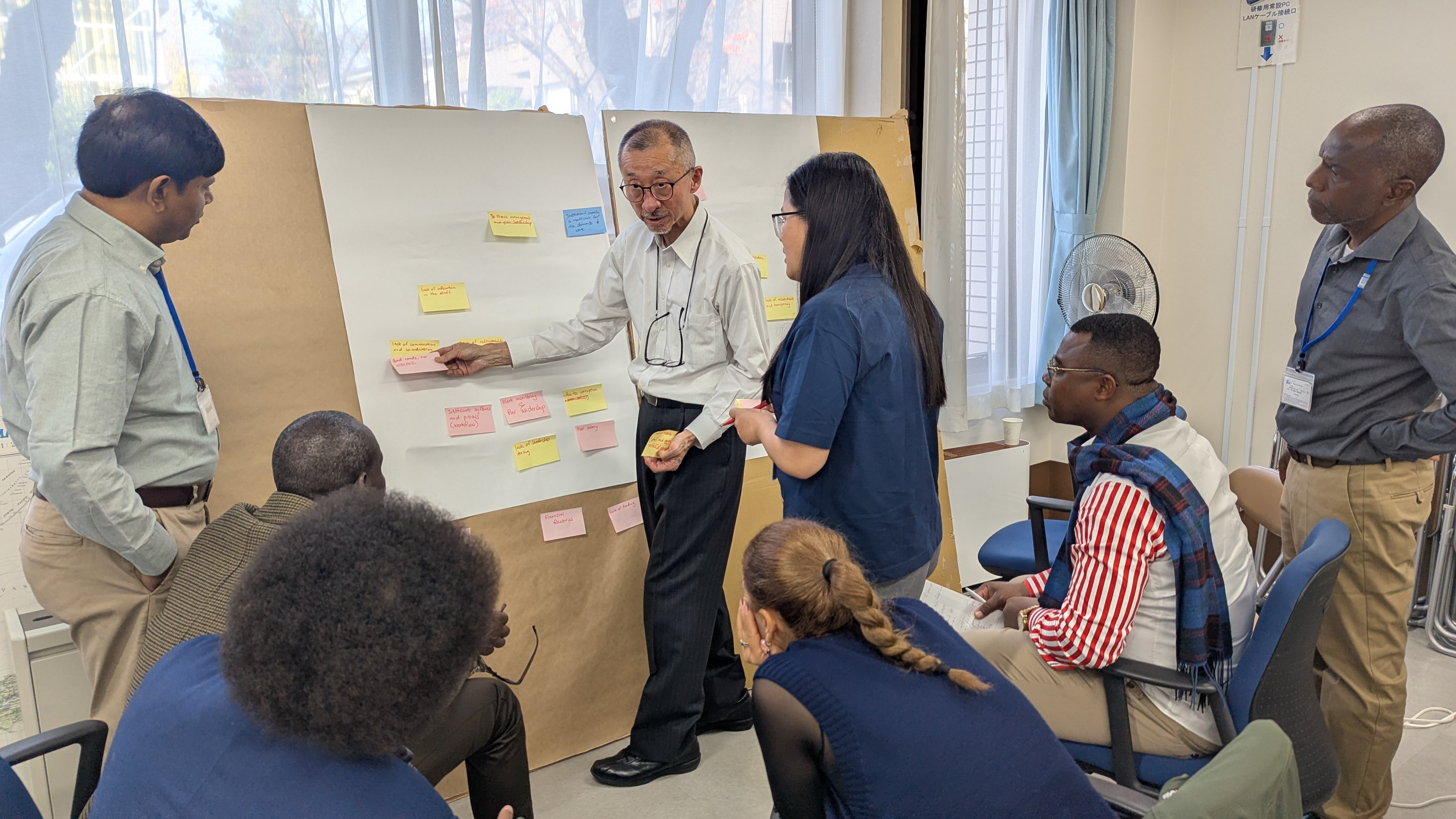
Workshop on learning how to create feasible improvement plans
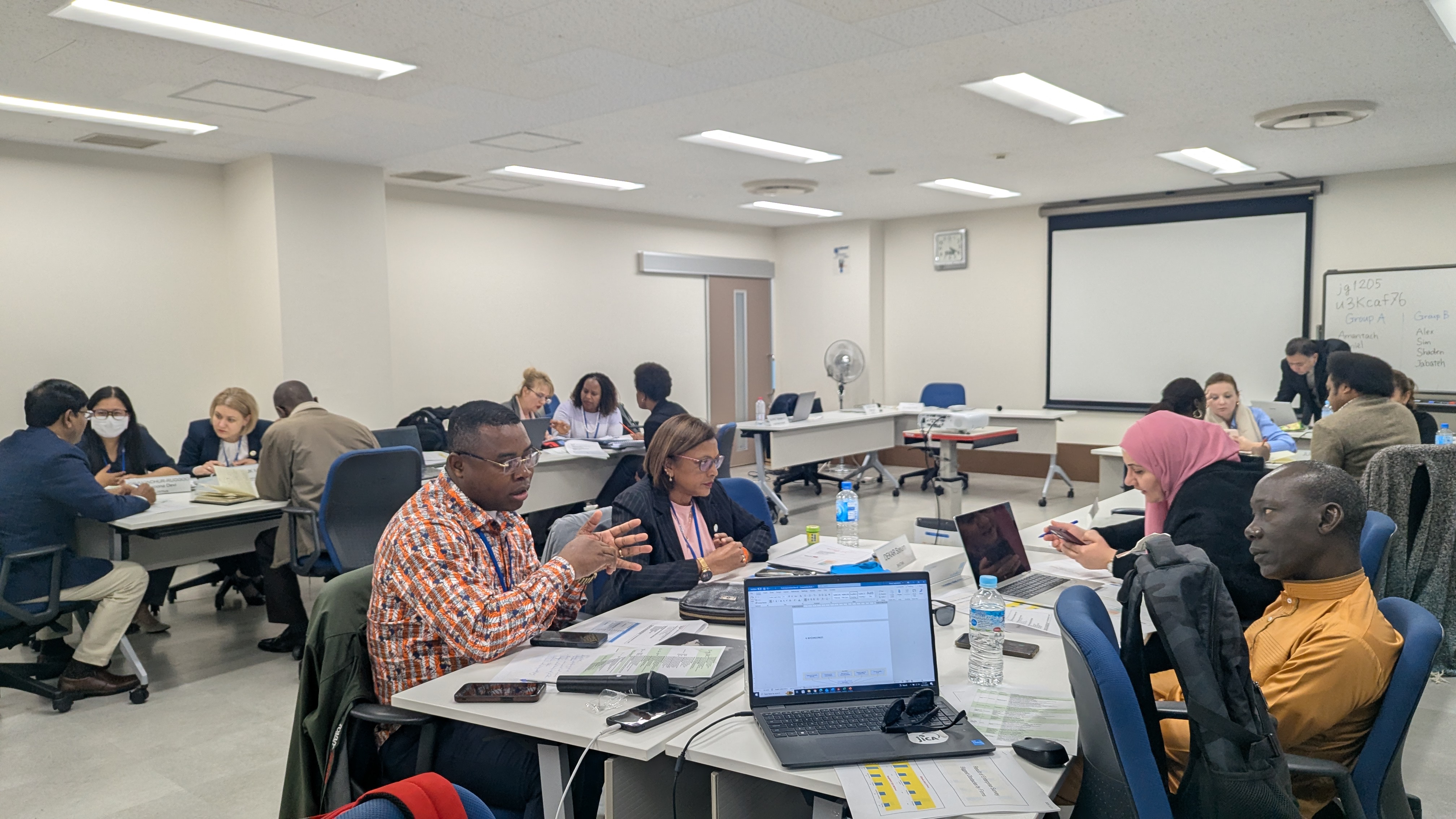
Participants also learned project planning methods to create “Improvement Plans”—concrete tasks and schedules for solving their respective organizations' challenges. During group work, they discussed major issues such as “How can organizational capacity be sufficient for the demands of work” and “How can we properly monitor and evaluate the performance of services?” step by step, examining underlying causes and objectives.
This year's program integrated lectures on global challenges such as climate change, disaster countermeasures, and waste management—issues requiring international cooperation—alongside an onsite visit to environmentally friendly waste treatment facilities.
During the visit to the Suginami Incineration Plant in Suginami Ward, Tokyo, participants learned about measures to prevent dioxin emissions, which include incinerating waste at high temperatures in the incinerator. They also observed the plant’s design, which incorporates an underground tunnel specifically for collection vehicles. This feature was implemented to minimize noise, traffic congestion, and odors, taking into consideration the lives of local residents.
The participants were particularly interested in how the area surrounding the combustible waste incineration facility is kept hygienic and in the system that ensures waste transported from the community is incinerated smoothly, following proper procedures. Questions were raised about the companies that designed and constructed the facility, as well as its estimated lifespan.
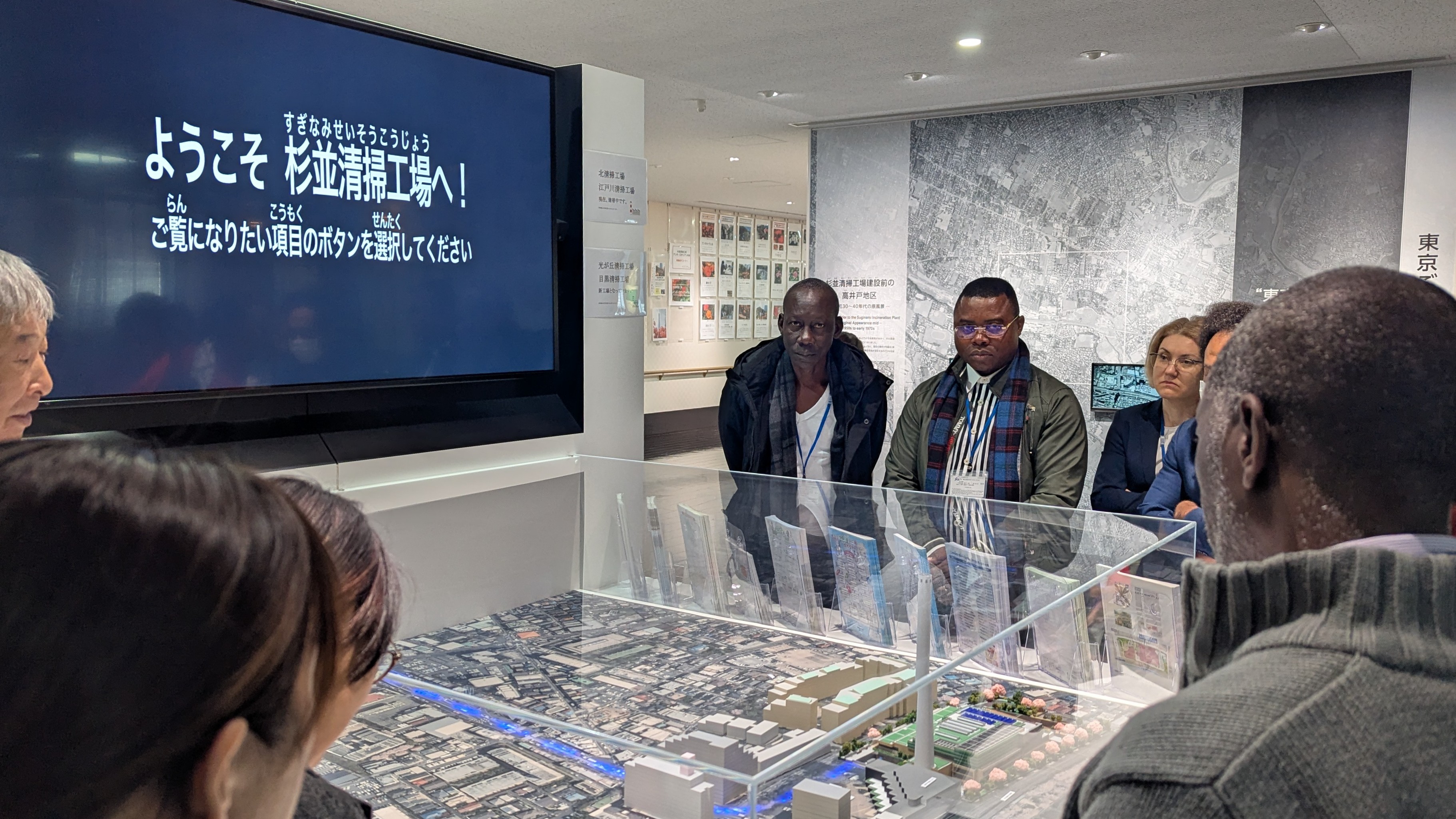
At the Suginami incineration plant, participants learned about the route that garbage trucks take through the underground passage to transfer waste.
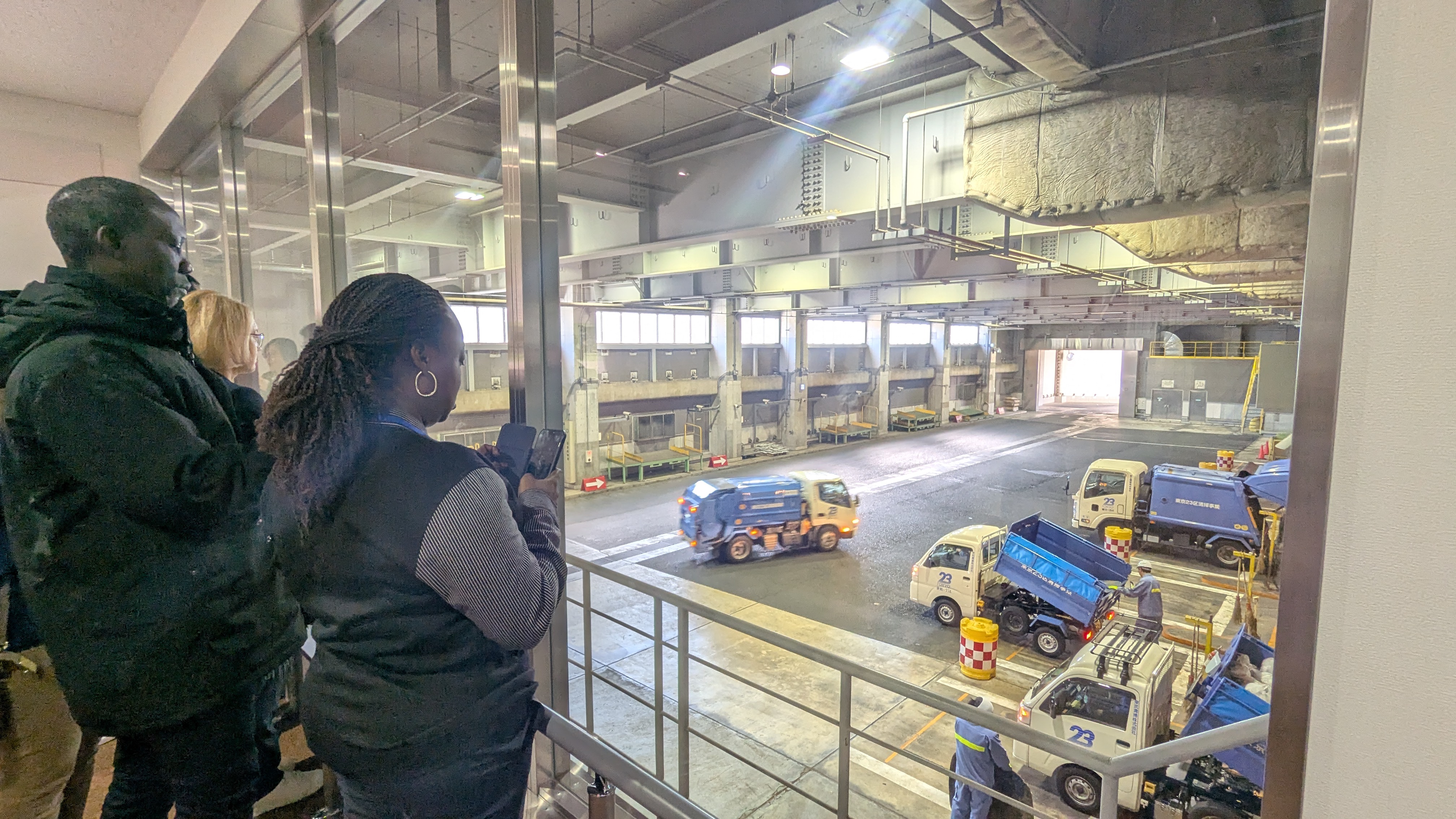
Participants observed garbage trucks arrive at the Suginami Incineration Plant and waste is unloaded.
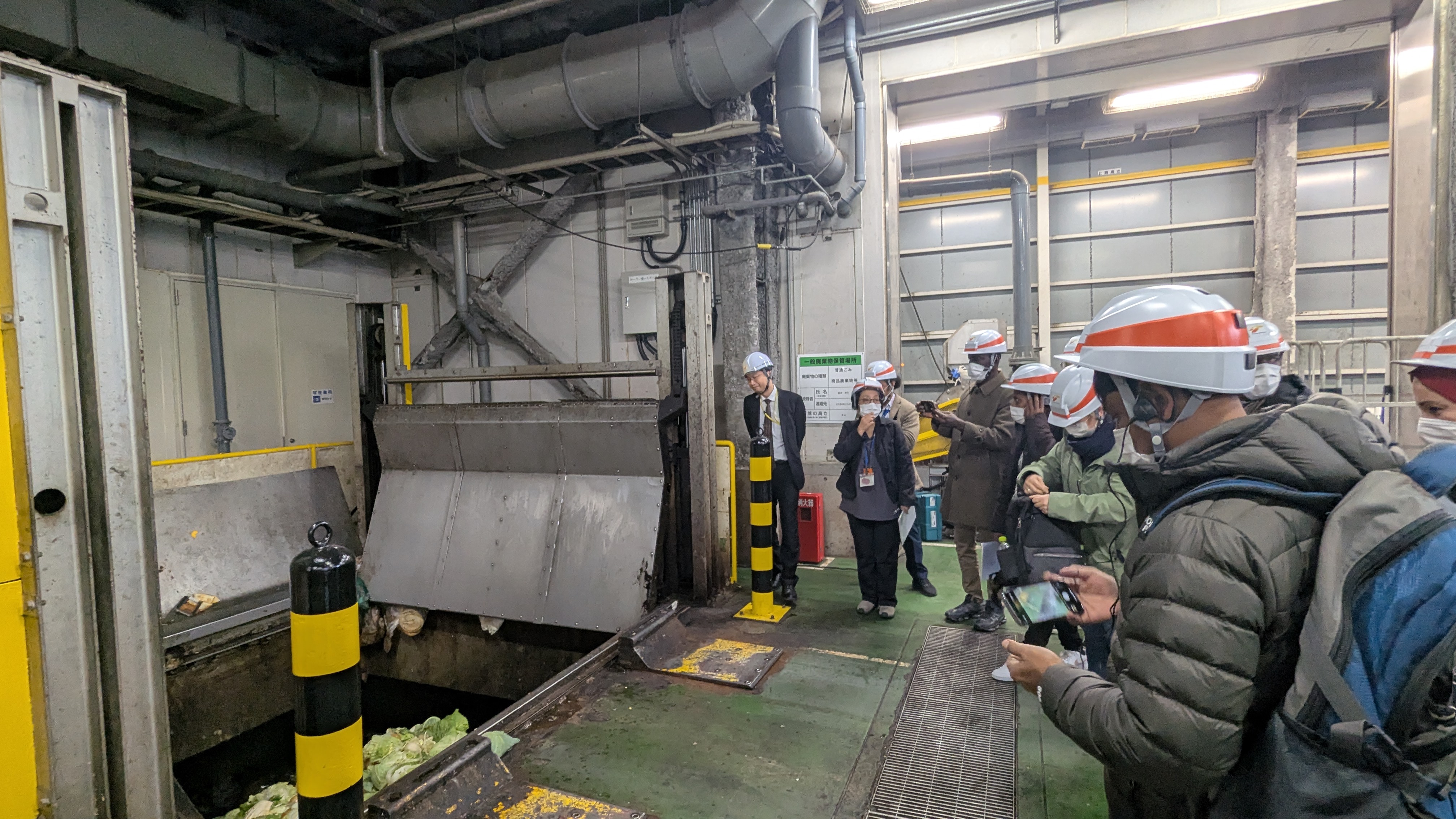
Field visit to BIOENERGY Corporation’s food recycling facility in Ota Ward, Tokyo
The participants also visited BIOENERGY Cooperation's food recycling facility, one of the facilities set up under the “Super Eco-Town” project promoted by the national government and Tokyo Metropolitan Government to solve waste issues. This facility recycles food waste collected from supermarkets and other sources in the metropolitan area into energy by producing biogas through methane fermentation, converting it into electricity and city gas. After receiving an explanation about Japan's Food Recycling Law, the participants toured the facility, showing interest in how the facility collects food waste from nearby businesses.
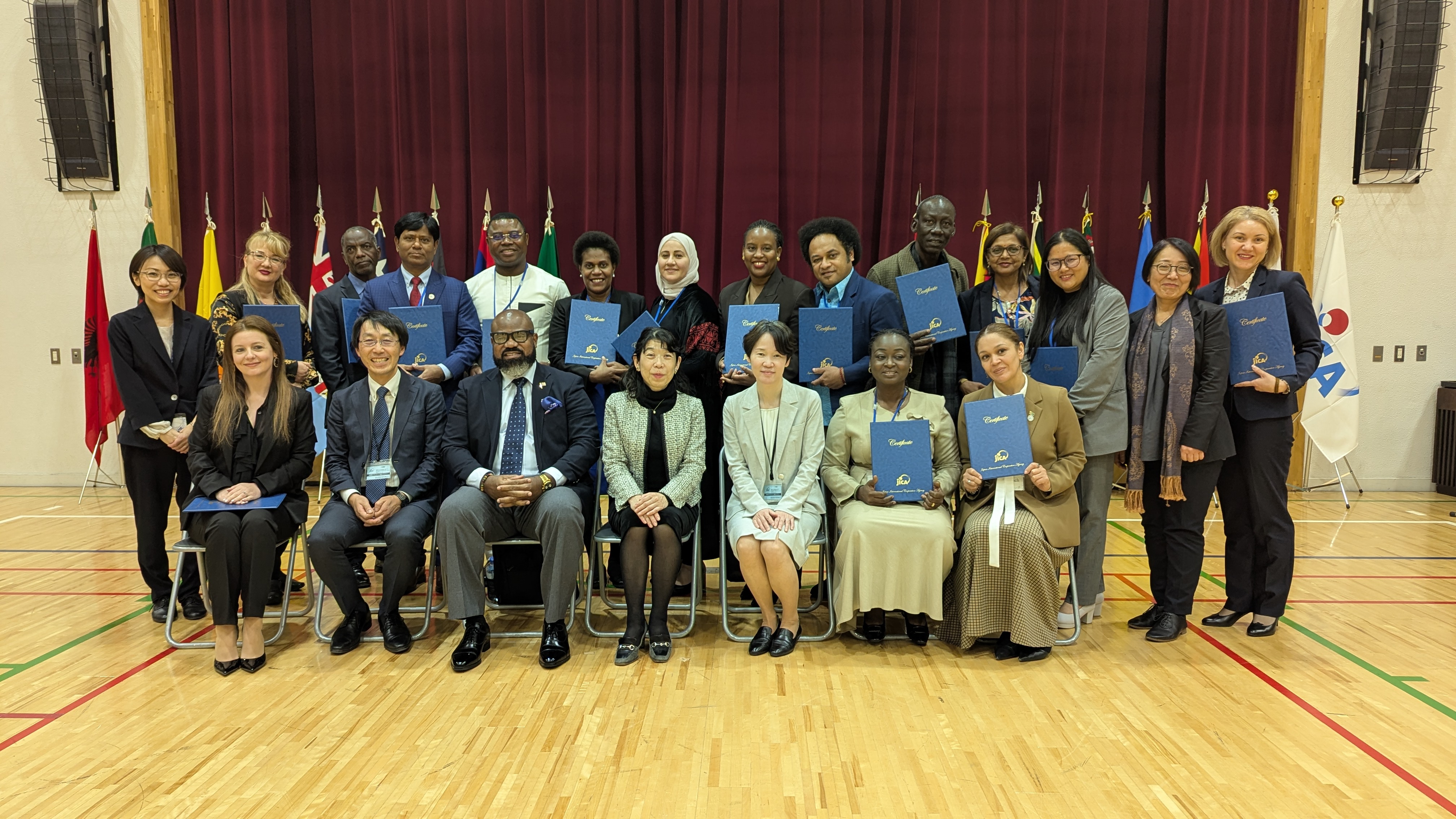
At the closing ceremony, certificates were handed to the participants.
At the conclusion of the program, participants presented their Improvement Plans—actionable strategies to apply their learning to policy development in their home countries. Themes spanned a wide range, including approaches to appointing top officials in public institutions to gain citizens’ trust, accountability and transparency for better administrative services, and data management improvements for more efficient public administration. Participants exchanged views with each other and the lecturers.
Participants are now back in their respective countries and about to embark on their own improvement plans. Their plans will be implemented over the months and years ahead.

"Many of us shared afterwards how these teachings challenged us to rethink our own systems—from policy formulation to HR management, from coordination mechanisms to service delivery. We were immersed in a learning environment where discipline, respect, punctuality, and intentional leadership were not just taught—they were lived out daily by everyone we met.
Our study visits were equally impactful. Standing inside the waste management facilities, watching the precision and commitment to environmental sustainability, many of us were struck by the level of civic responsibility embedded in Japanese society. These institutions reminded us that strong systems are built over time—with consistency, transparency, and trust.
We return to our countries with clearer perspectives, renewed energy, stronger networks, and a deeper commitment to national development. Dōmo arigatō gozaimasu."
More information about JICA’s activities on Governance
Sns share!


