Dispatch after the Türkiye–Syria Earthquakes
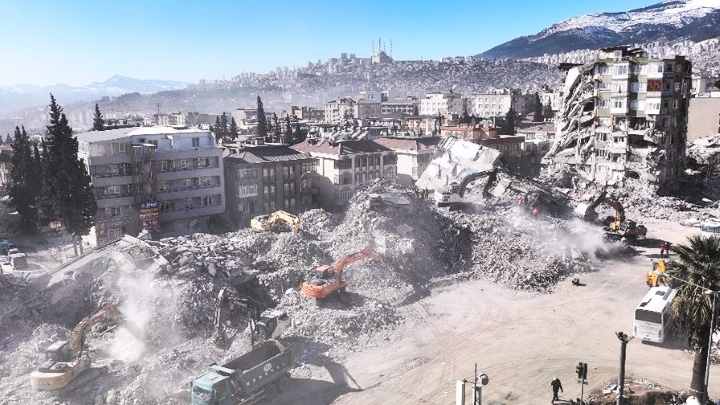
I was posted to Türkiye after the Türkiye–Syria earthquakes of February 6, 2023. Beginning my work there while memories of the disaster were still vivid in society, I found myself reflecting on how people were coming to terms with its aftermath and trying to move forward. Through these experiences, I began to reconsider what “recovery” means.
Scenes of Recovery Observed in Fukushima in 2011
My own point of departure for thinking about disasters and recovery dates back to 2011. Just before I was due to study abroad, the Great East Japan Earthquake struck. At the time, I felt a strong need, as a Japanese person, to be able to explain the situation in my own words. I participated in volunteer activities in Namie Town, Fukushima Prefecture, and visited small and medium-sized enterprises in Fukushima City, where I heard directly about their experiences—including severe business impacts caused not only by physical damage but also by reputational harm.
At that time, railway services had not yet been restored, and reaching Namie required multiple bus transfers. The town still bore the marks of ongoing recovery. In discussions with local community groups, I heard voices such as, “Even if we are forced to live apart, we do not want to lose the connections we have built.”
What left a strong impression on me was that recovery is not only about restoring buildings, but also about how to sustain people’s lives, relationships, and livelihoods.
Forms of Recovery Shaped by People’s Voices in Türkiye
More than a decade later, I once again found myself confronting the aftermath of a major disaster—this time in Türkiye. While I felt that awareness of disaster risk reduction had steadily taken hold, I also sensed that when people spoke of “recovery,” the focus differed from the image I had formed in Japan.
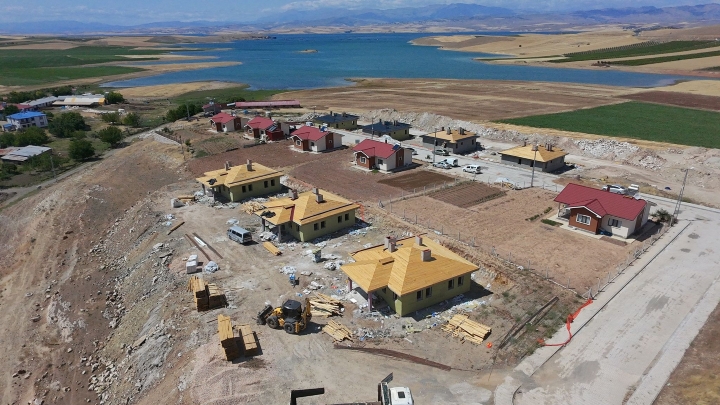
In Türkiye, disasters have often been spoken of as events people wish to put behind them as quickly as possible, and discussions of recovery have tended to center on housing reconstruction. In one exchange with a local government official, I heard the following: “We understand why Japan emphasizes planning. However, residents need places to live immediately. Responding to that urgent need is what the administration must prioritize right now.”
Losing one’s home does not mean losing only a building; it means losing the foundation of everyday life. Within this strong desire to move beyond the disaster as quickly as possible, restoring living conditions has naturally been placed at the center of recovery.
At the same time, as people in Türkiye experienced this major earthquake, I began to notice changes in how recovery was discussed. I increasingly heard voices asking what could be learned from the disaster and how similar suffering could be prevented for future generations.
In recent years, there has also been a growing recognition that disasters can be better managed—and their impacts reduced—through scientific knowledge. Questions such as “What can be done to reduce future risks?” do not reject the importance of housing reconstruction; rather, they reflect an emerging effort to consider what should be carried forward beyond it.
The “Present” and “Future”
Japan, too, did not arrive at a clear balance between restoring the present and preparing for the future from the outset. After the Great Kanto Earthquake of 1923, rapid restoration was prioritized, but urban planning and land-use adjustments could not keep pace, and similar challenges reappeared in later disasters. Through reflecting on such experiences, the idea of “building back better”—reducing future risk rather than simply restoring what was lost—gradually took shape.
Engaging with discussions in Türkiye led me to question assumptions about recovery that I had previously taken for granted in Japan. How far should recovery extend? What should be prioritized? These dialogues suggested that Japan’s own understanding of recovery remains something that continues to be questioned and revisited.
As Societies That Have Experienced Disasters
Japan and Türkiye have supported each other in past disasters, including the 1999 Marmara earthquake and the Great East Japan Earthquake in 2011. Through these experiences, I feel that the two countries, as societies that have experienced disasters, share a relationship that goes beyond one of teaching and learning, and instead involves thinking together.
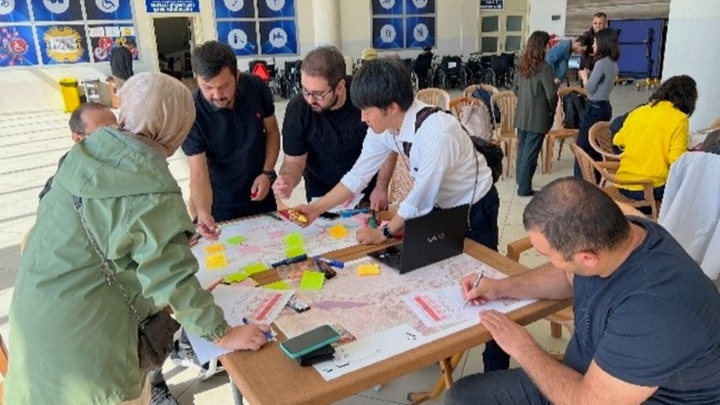
JICA is supporting both the immediate and longer-term aspects of recovery in Türkiye. This includes the Emergency Earthquake Recovery Project (ODA Loan) to help restore people’s daily lives, as well as technical cooperation and human resource development—such as seismic retrofitting design and support for recovery planning—to strengthen future preparedness. I see these efforts as one way of engaging with both the “present” and the “future.”
Reflections from the Field of International Cooperation
There is no clear line dividing countries that are “ahead” or “behind” in recovery. Each society, shaped by different experiences and conditions, seeks its own way of navigating the balance between the present and the future.
Through my work in Türkiye, I have come to see recovery not simply as restoring what was lost, but as a continuous process of making choices aimed at ensuring that future generations do not go through the same experiences. From this perspective, international cooperation is not about offering definitive answers. Rather, it is about staying alongside societies, engaging with the questions they face, and thinking through them together.