
Sharing lessons with the world: 15 years after the Great East Japan Earthquake
[Goal 11] Sustainable Cities and Communities
2026.03.19





2026.03.19
Japan is one of the world’s most disaster-prone countries. While many lives have been lost to earthquakes, tsunamis, and severe weather, Japan has continually learned from these experiences and developed knowledge and technologies to protect people’s lives, society, and the economy. JICA is working to apply these lessons in developing countries.
Fifteen years after the Great East Japan Earthquake, this report highlights JICA’s ongoing efforts.
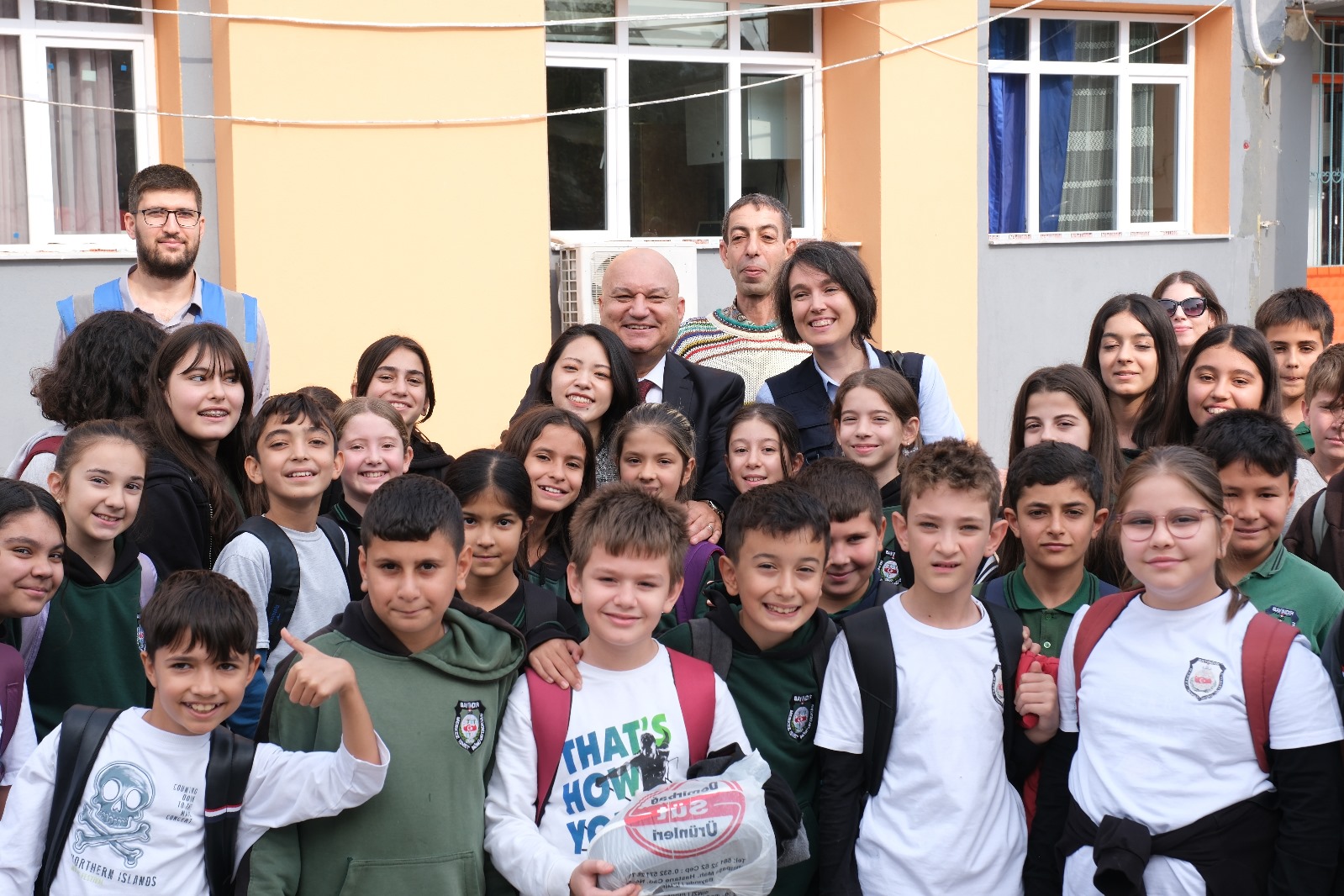
Students at a Turkish middle school that was reinforced with Japanese earthquake-resistant technology.
“Let’s make our school safe together!”
On November 6, 2025, students at Ismet Inonu Middle School in Izmir Province, Türkiye, recited this slogan in unison.
A ceremony was held that day to mark the completion of the school’s seismic reinforcement work.
“The 2023 Türkiye–Syria earthquakes destroyed 160,000 buildings and claimed many lives. I am proud that Japanese technology can help protect children here,” said Yamada Riko from the JICA Türkiye Office, speaking with deep emotion during the event.
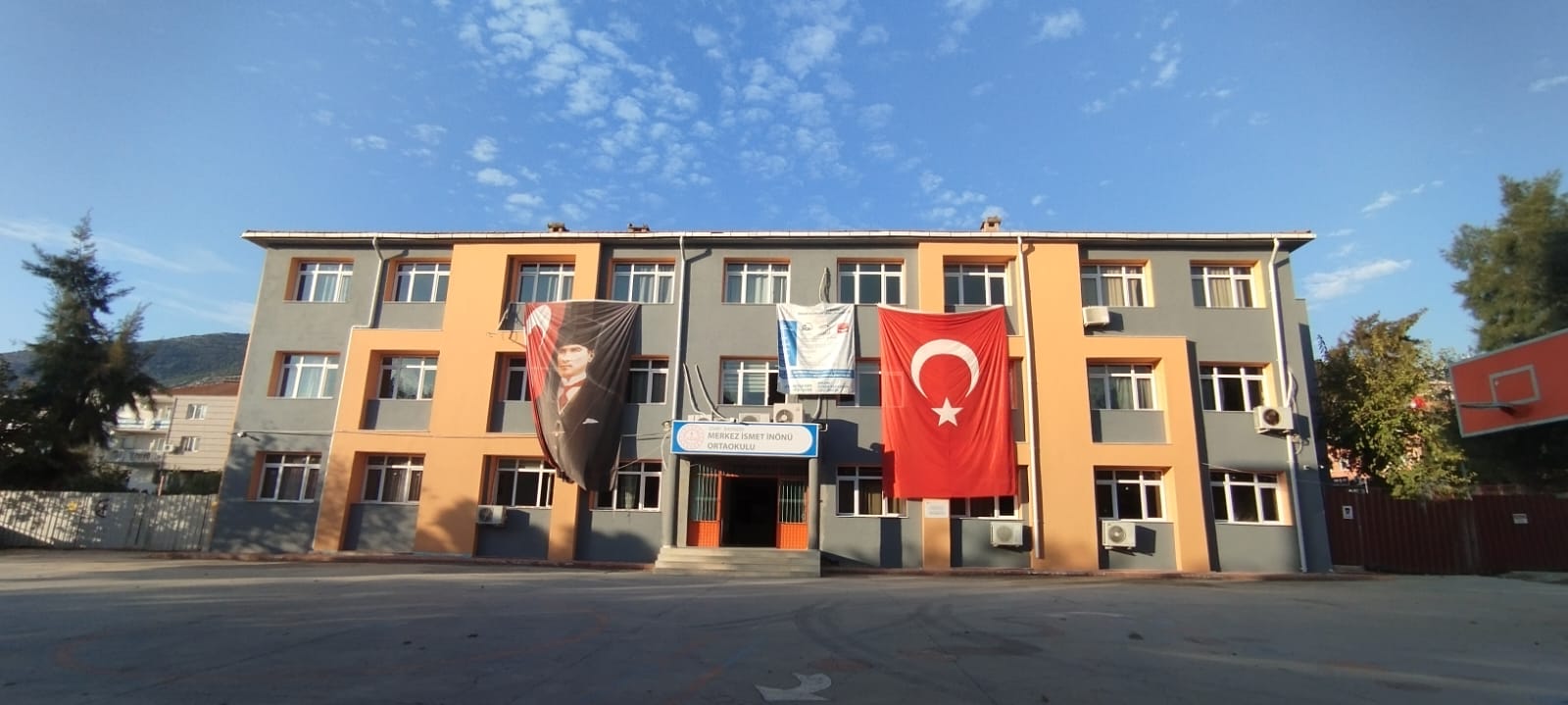
Seismic Retrofitted Ismet Inonu Middle School in Türkiye.
Yamada has been involved in a project to strengthen the Turkish government’s earthquake disaster management capacity since 2023. The seismic reinforcement of Ismet Inonu Middle School —carried out together with UNESCO and the Turkish government — is part of this effort.
In this project, JICA introduced diagnostic and design technologies to Turkish government officials. As a result, the Turkish Ministry of National Education adopted a technique called the “outer-frame construction method,” which reinforces buildings from the outside. This method allows schools to continue operating during construction. The technique was developed in Japan, where the need to reinforce public facilities such as schools grew after the 1995 Great Hanshin–Awaji Earthquake.
Yamada explains, “Both Türkiye and Japan are located in regions where earthquakes occur frequently. This seismic reinforcement initiative is extremely important. By deepening our cooperation, we hope to create a project that can serve as a model for the world.”
The Turkish government highly values the results of the reinforcement project, noting that it significantly reduced both time and cost compared with demolishing and rebuilding the structure. The government now plans to expand seismic reinforcement work to schools across the country that are at high risk of collapse.
JICA is also advancing similar initiatives in other earthquake-prone countries including Mongolia and El Salvador.
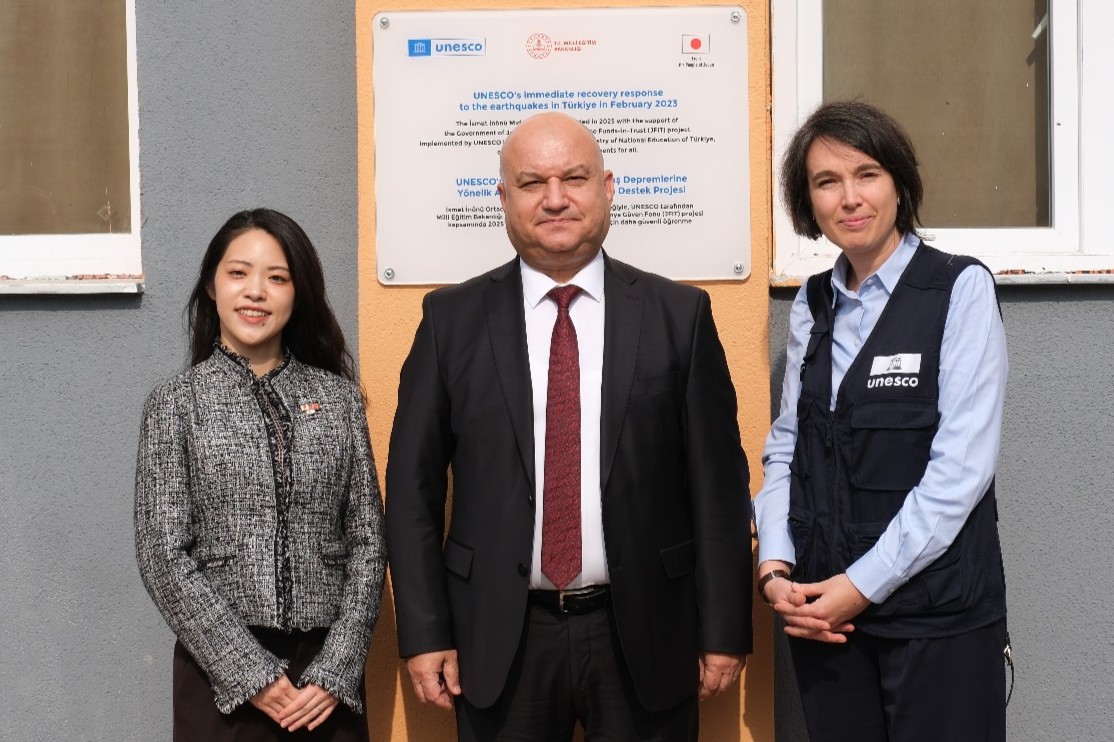
Yamada Riko from the JICA Türkiye office (left)
From 2022 to 2025, a project was implemented in Indonesia for capacity development on operation of earthquake and tsunami analysis and warning dissemination with the Agency of Meteorology, Climatology and Geophysics of the Republic of Indonesia (BMKG).
In 2018, the country experienced a series of earthquakes and volcanic eruptions that triggered multiple tsunamis. However, problems emerged, such as tsunami warnings not being issued or the warnings lacking accuracy. JICA launched this project to help address these issues.
Project leader Furuta Akihiro recalls, “When we conducted a survey on-site, we found that seismometers were not installed properly and that the observation data was not being used effectively. Through this project, we worked on everything from maintenance of observation equipment to improving the processes for issuing earthquake information and tsunami early warnings, as well as enhancing the information dissemination process.”
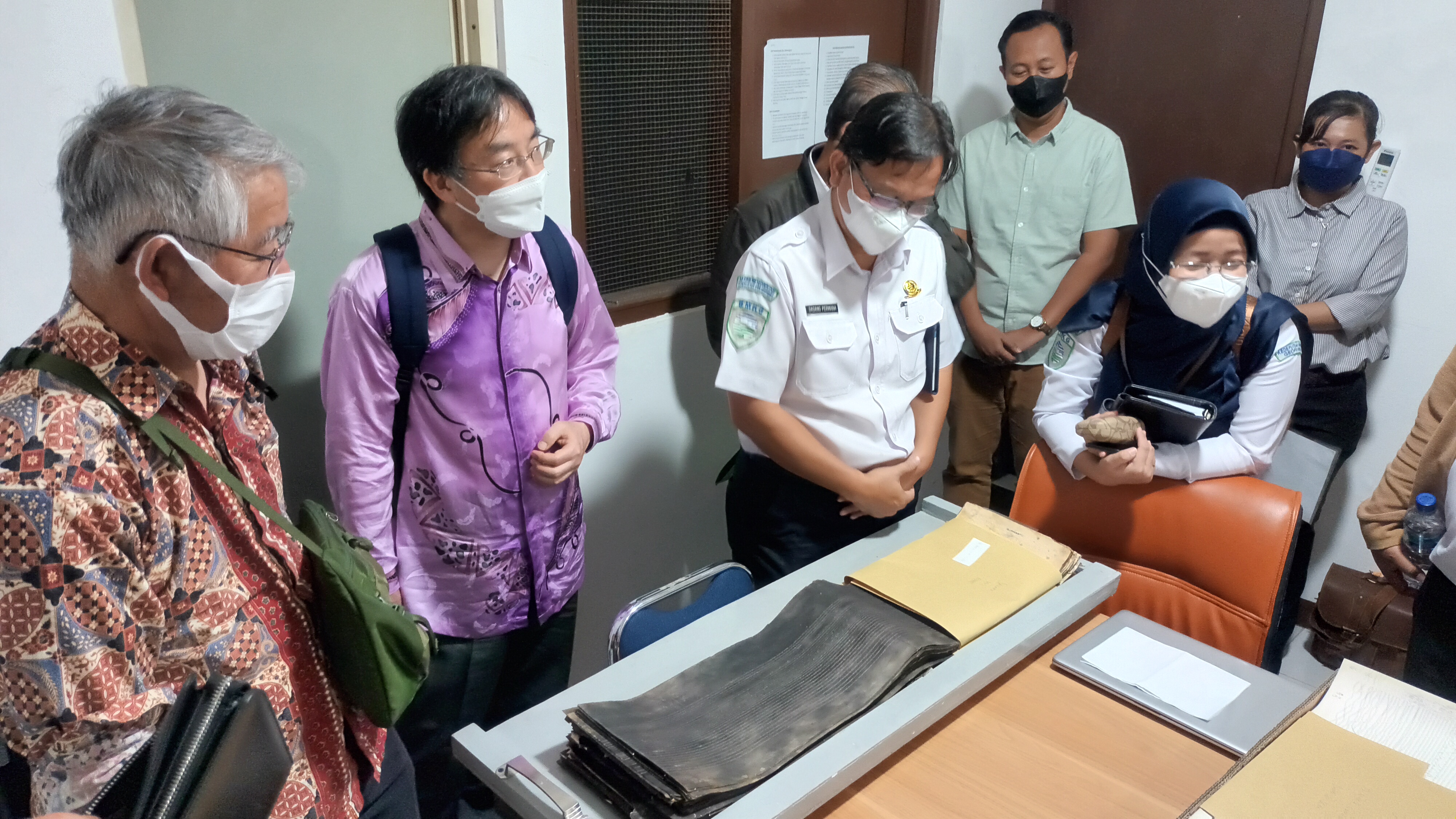
Project members review past observation data.
The project faced many challenges, from differences in culture and customs to coordination with numerous local agencies and various divisions within BMKG. Yet after three years of effort, the time required to issue seismic intensity information after an earthquake, which had previously taken tens of minutes, was reduced to within two minutes. In addition, to educate and raise awareness among local disaster management staff and residents, training programs were conducted to improve the transmission of earthquake and tsunami information, and educational materials were developed summarizing evacuation procedures in the event of a tsunami warning.
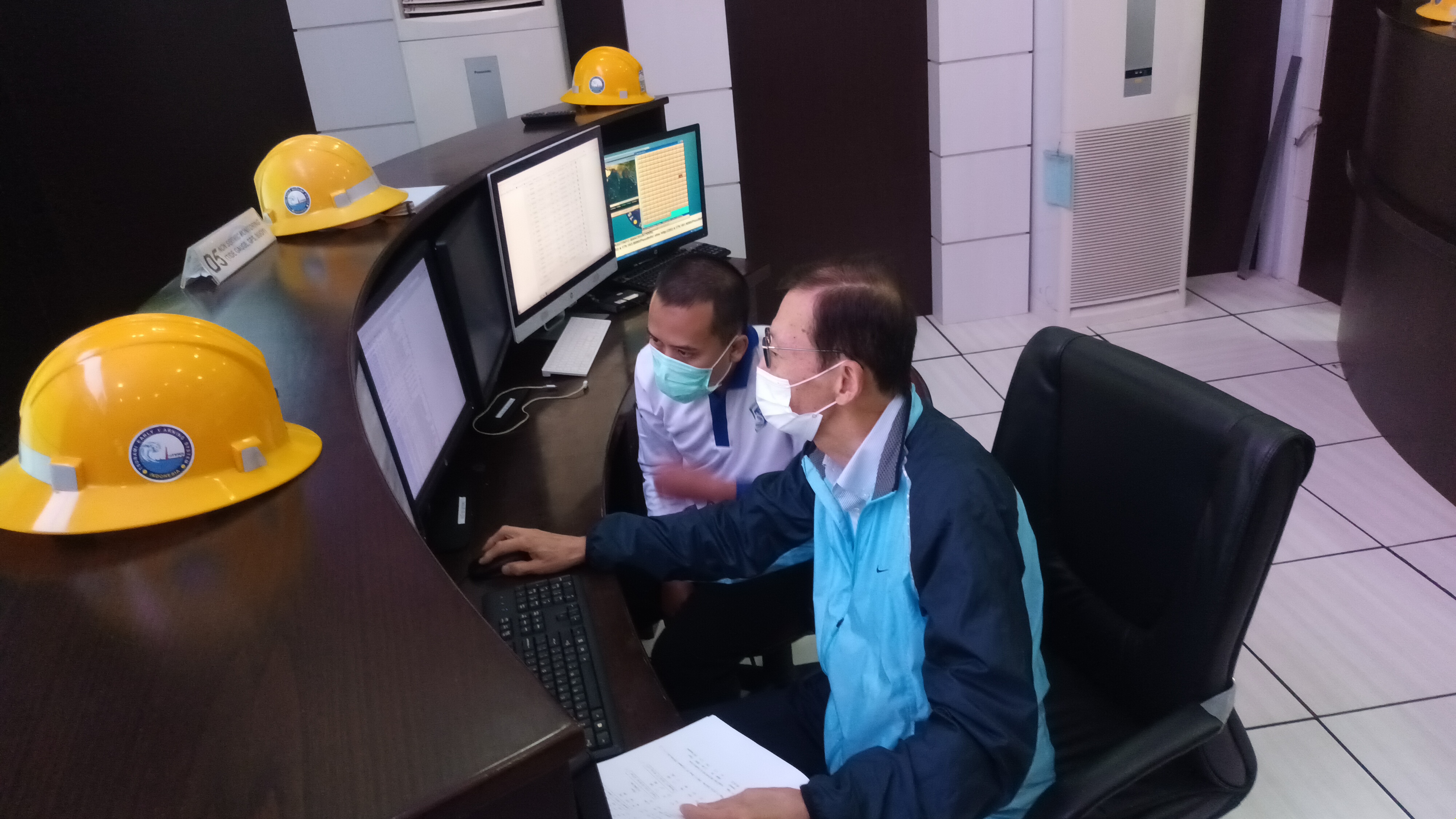
A Japanese specialist (foreground) provides guidance to a local worker.
Technical specialist Kamigaichi Osamu explains:
“How to reduce the damage caused by earthquakes and tsunamis is a shared challenge for people living throughout the Pacific Rim. Japan is the country that has accumulated the most lessons in this area. In this project, we introduced a magnitude-calculation program equivalent to that developed by the Japan Meteorological Agency, as well as measures to address massive earthquakes. These systems have improved in accuracy through years of reflection and feedback based on Japan’s earthquake observation experience. With these Japanese technologies, we can help protect many lives.”
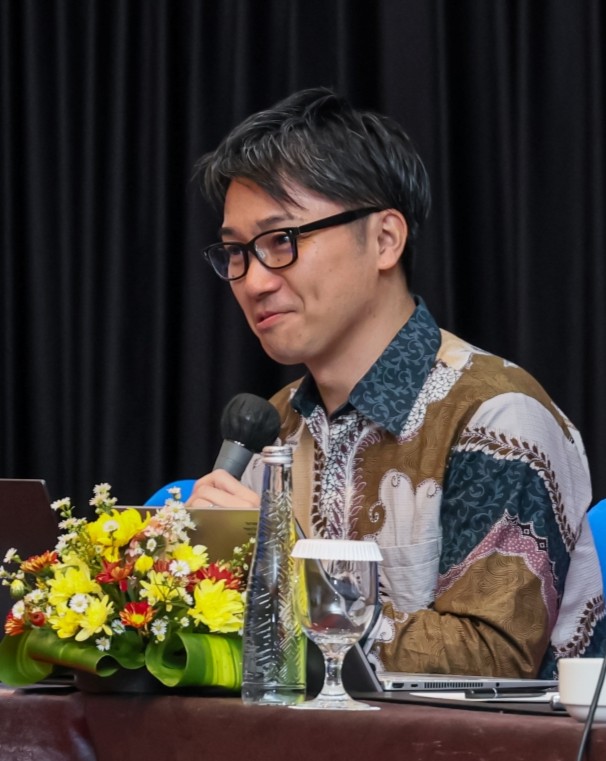
Furuta Akihiro reports on the project’s activities in Indonesia. (Photos courtesy of the Agency of Meteorology, Climatology and Geophysics of the Republic of Indonesia (BMKG))
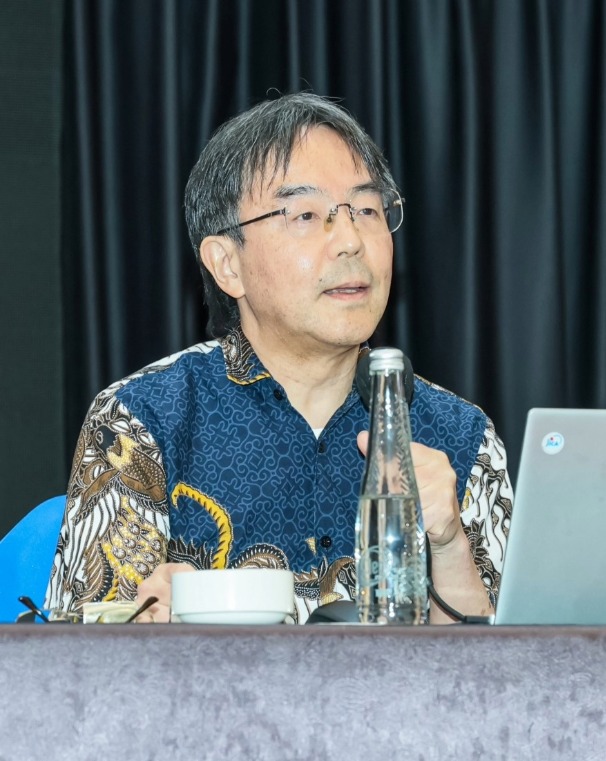
Kamigaichi Osamu reports on the project’s activities in Indonesia. (Photos courtesy of the Agency of Meteorology, Climatology and Geophysics of the Republic of Indonesia (BMKG))
JICA dispatched support teams to the Tohoku region immediately after the Great East Japan Earthquake struck in March 2011, and it opened the JOCV Training Center in Nihonmatsu, Fukushima Prefecture, as an evacuation shelter. In the Miyagi Prefecture city of Higashimatsushima, JICA also provided supplementary support by deploying community reconstruction facilitators, among other measures. Drawing on these experiences in the Tohoku region, JICA has since expanded its efforts to share the lessons of the disaster with other countries.
One such initiative is a grassroots technical cooperation project in Banda Aceh, Indonesia, aimed at strengthening understanding of disaster preparedness. The city suffered devastating damage during the 2004 Indian Ocean earthquake and tsunami, but in recent years, fading memories of the disaster and declining disaster awareness have become major concerns.
Hosoe Eri, from Nebama MIND, an organization in Kamaishi, Iwate Prefecture, which is dedicated to preserving memories of the disaster and led this project, explains: “In the Nebama district, which was severely affected by the tsunami, we have been working to enhance disaster awareness not only through physical measures such as seawalls but also by preserving and passing down the memories of the disaster. These efforts help people prepare for future tsunamis. We wanted to share these experiences and know-how with the people of Aceh.”
The project, launched in 2022, designated two local middle schools as model schools. After learning about disaster preparedness activities and recovery efforts in Kamaishi, teachers created lesson plans and, together with students, developed a tsunami preparedness program through workshops. Some students even created maps showing evacuation routes in the event of a tsunami.
Hosoe recalls, “What struck me through this initiative was when a student said, ‘If we prepare, we can survive a tsunami.’ Hearing those words made me truly happy.”
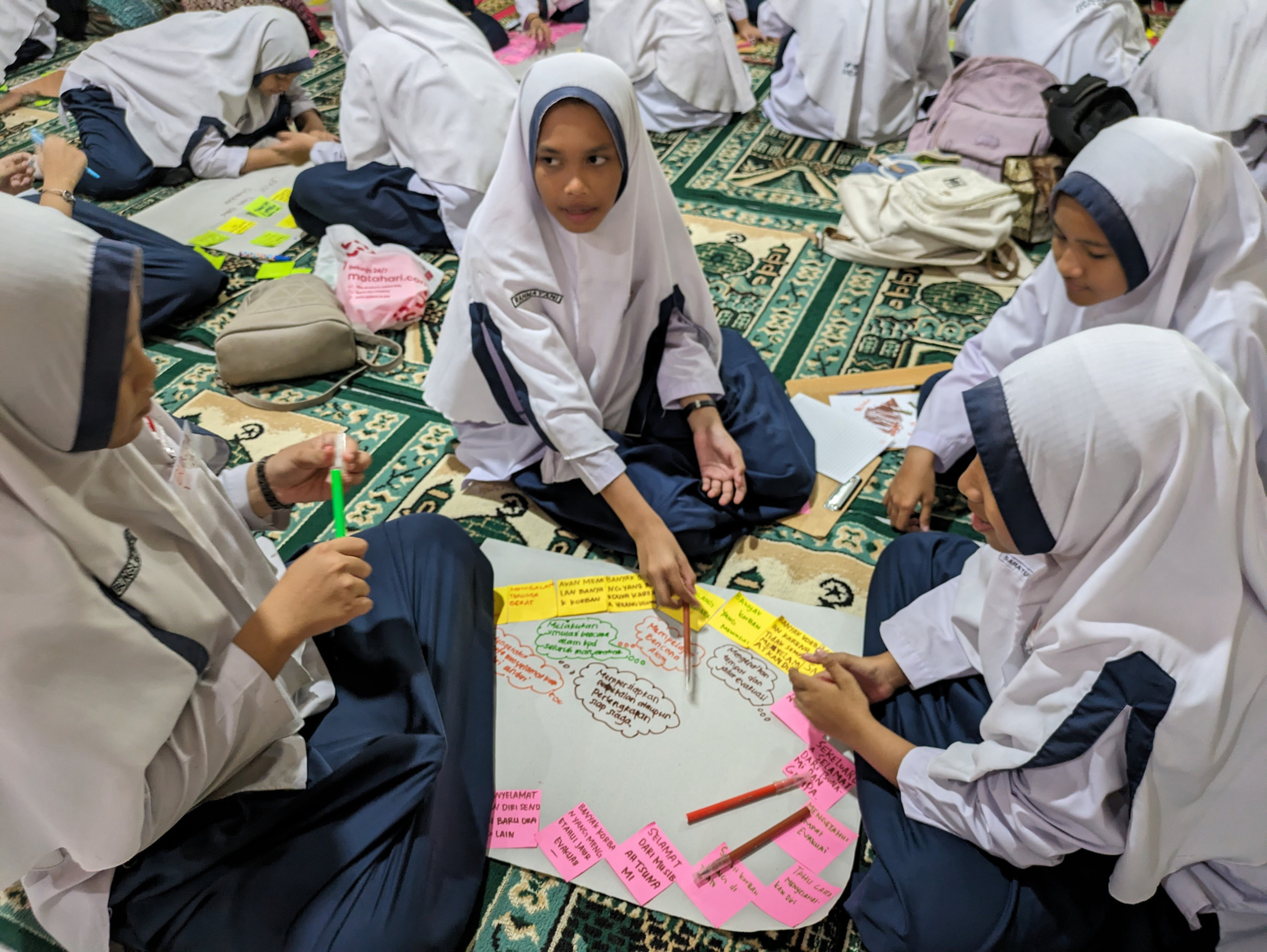
Students outline tsunami safety issues in a workshop. (Image courtesy of Nebama MIND)
Sasaki Yuji, who lost relatives in the tsunami, shared his personal experience as a trainer in the program. He said, “One of the most important lessons that the city of Kamaishi and the Nebama district learned from the disaster — whether in disaster preparedness or in recovery and reconstruction — is the need for people to adopt "a sense of ownership."Through this project, I believe the people of Aceh were also able to develop an awareness that disaster preparedness is something residents themselves must actively engage in.”
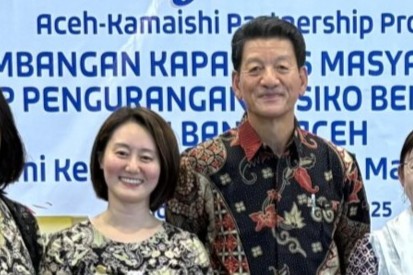
Hosoe Eri (left) and Sasaki Yuji of Nebama MIND (Photo courtesy of Nebama MIND)
Kobayashi Kenichi, director of the disaster management group in JICA’s Global Environment Department, explains the significance of the disaster-related projects being implemented in various countries:
“For developing countries, disaster risk reduction is not only about protecting people’s lives and livelihoods. By strengthening a nation’s foundations, it also helps break the cycle of poverty and supports stable economic development. In today’s world, economic activities and manufacturing supply chains are highly globalized. When factories were inundated during the 2011 floods in Thailand, for example, global computer production was disrupted, and automobile factories in Japan were forced to halt operations. In this context, reducing disaster risks in other countries is also important for Japan.”
Sharing Japan’s disaster experiences with the world.
JICA’s efforts also contribute to Japan’s own safety.
Sns share!


