Hello, my name is Koji Nakanishi, a JICA Volunteer currently working with the Provincial Works Supervision Unit in Milne Bay Provincial Government. In this article, I would like to share our efforts to investigate and restore a section of road that was damaged by heavy rainfall in Milne Bay Province in late April 2026.
The damaged road is the North Coast Road, which is managed by the Provincial Government. This road serves as an important lifeline connecting communities along the northern coast of the Milne Bay Peninsula with Alotau, the provincial capital. It supports daily life by providing access to schools, health services, workplaces, and markets.
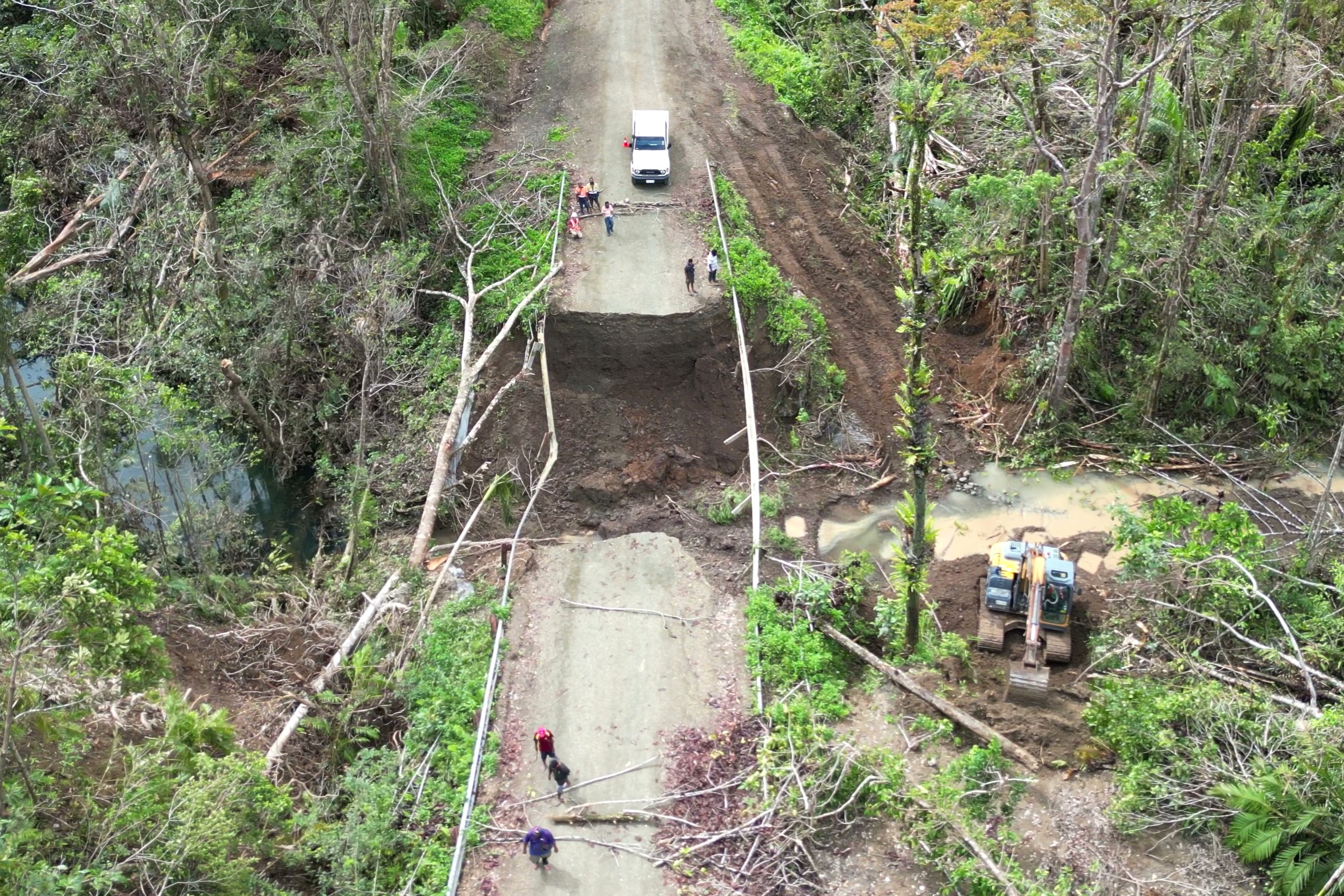
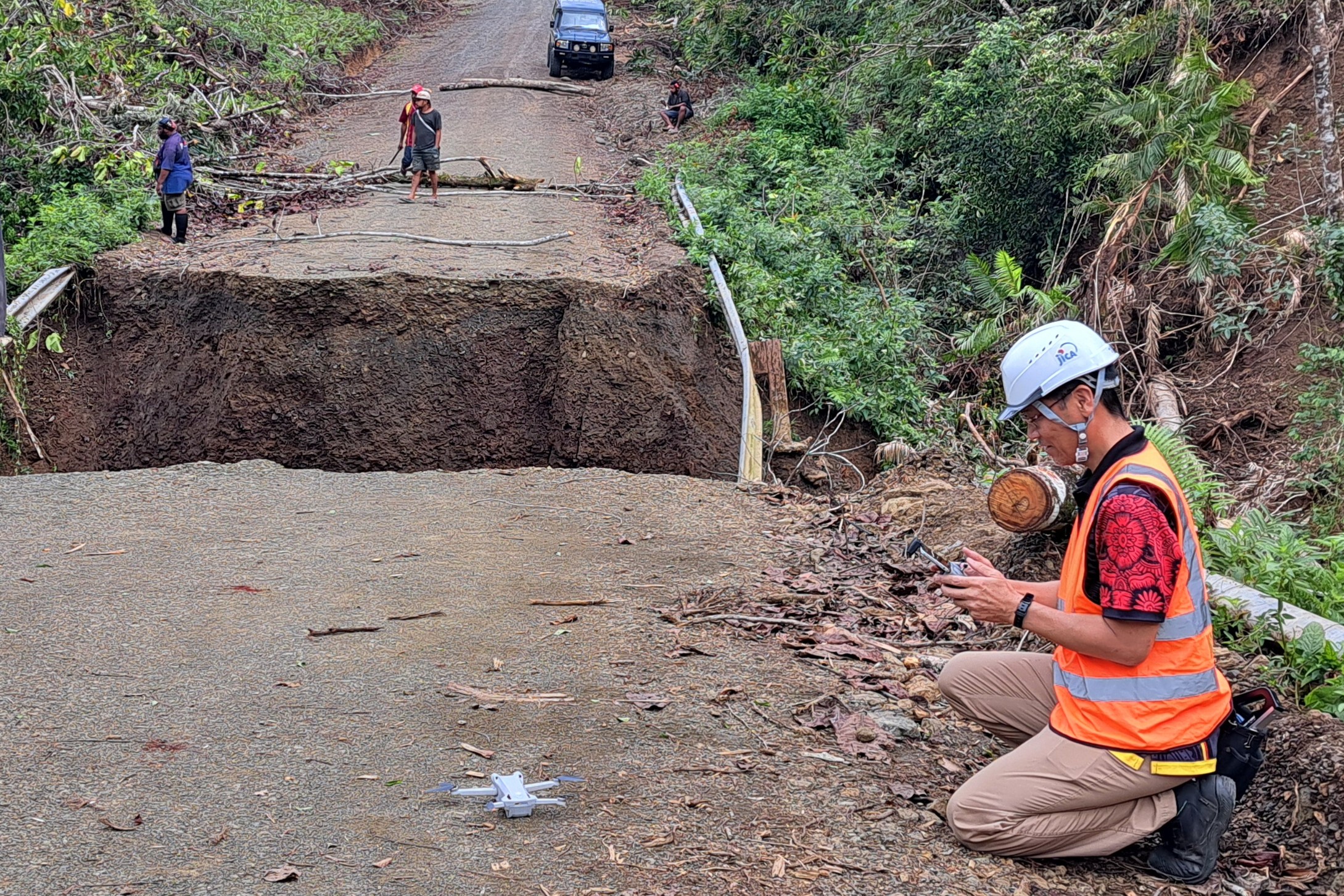
Following the heavy rainfall, part of the road embankment was washed away, making the road impassable for vehicles. To maintain access for local communities, temporary bypass works are currently being carried out.
(Photo 1)
Before planning recovery works, it was necessary to understand exactly what caused the damage. Together with provincial government staff, we conducted a detailed site investigation.
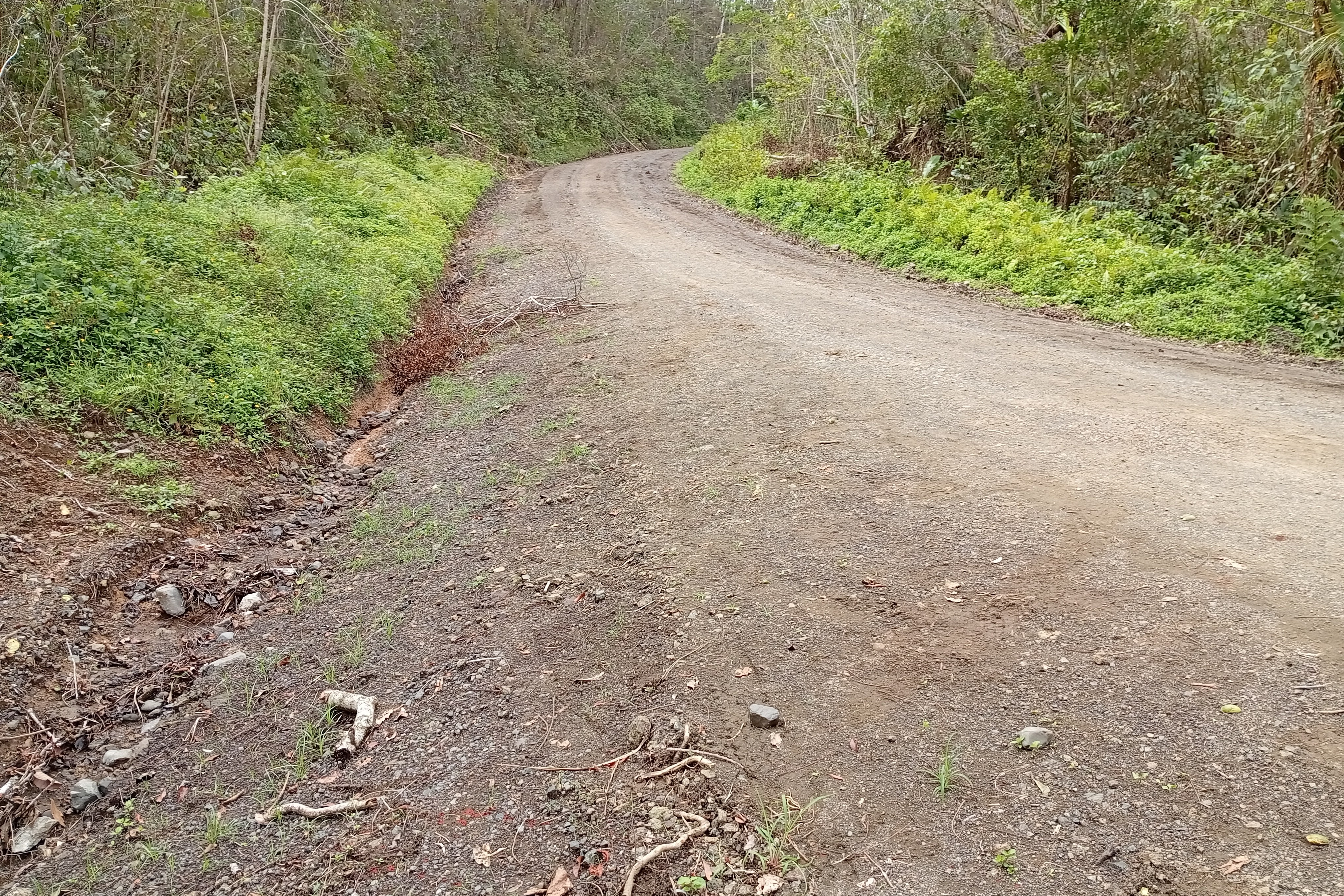
Our first step was to examine whether runoff from the road surface had caused the embankment failure. However, the road's cross slope was functioning properly, and rainwater was draining away as intended. This suggested that surface runoff was not the main cause of the damage.
(Photo 2)
Next, we investigated the upstream creek using a drone.(Photo 3)
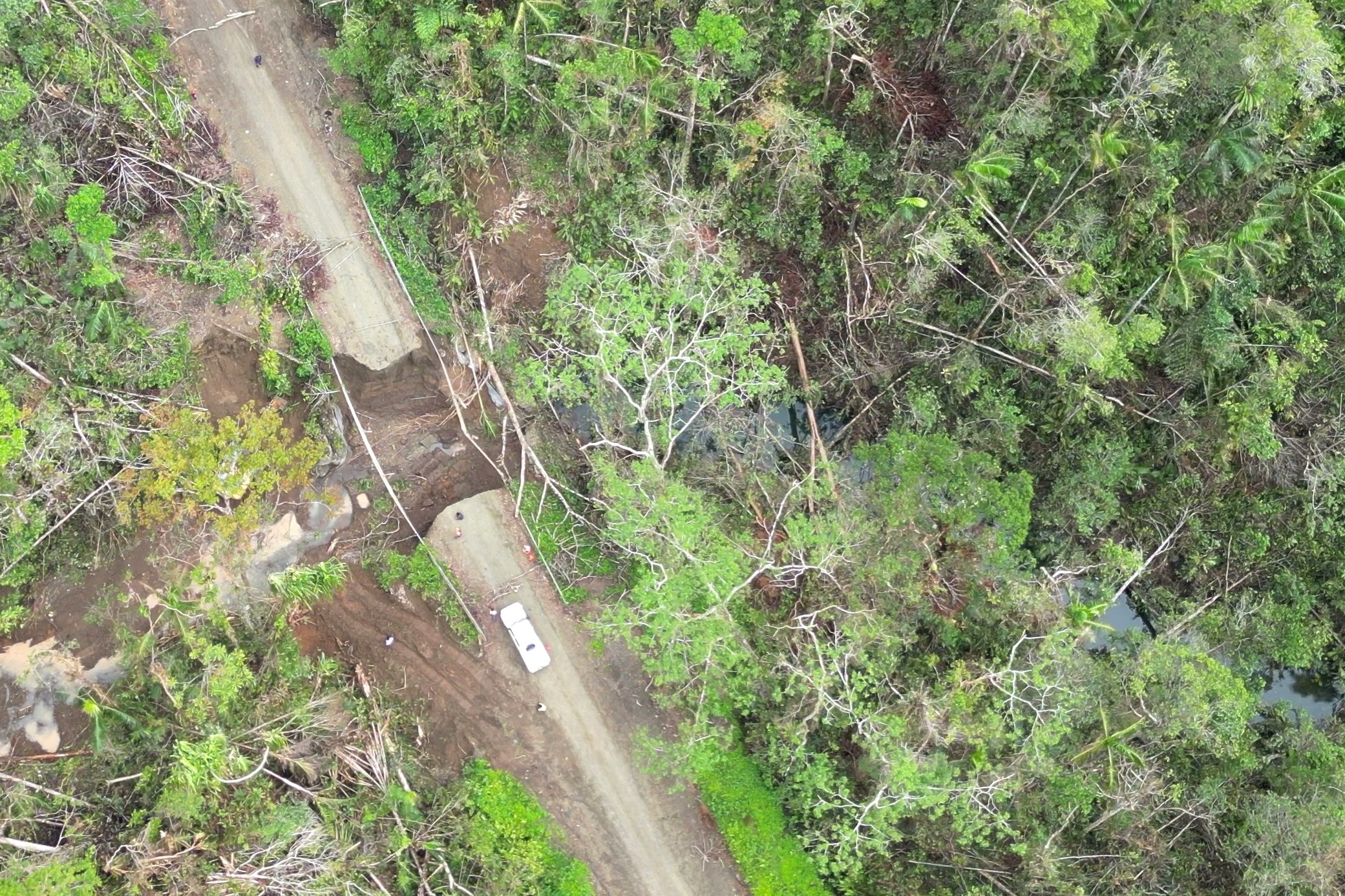
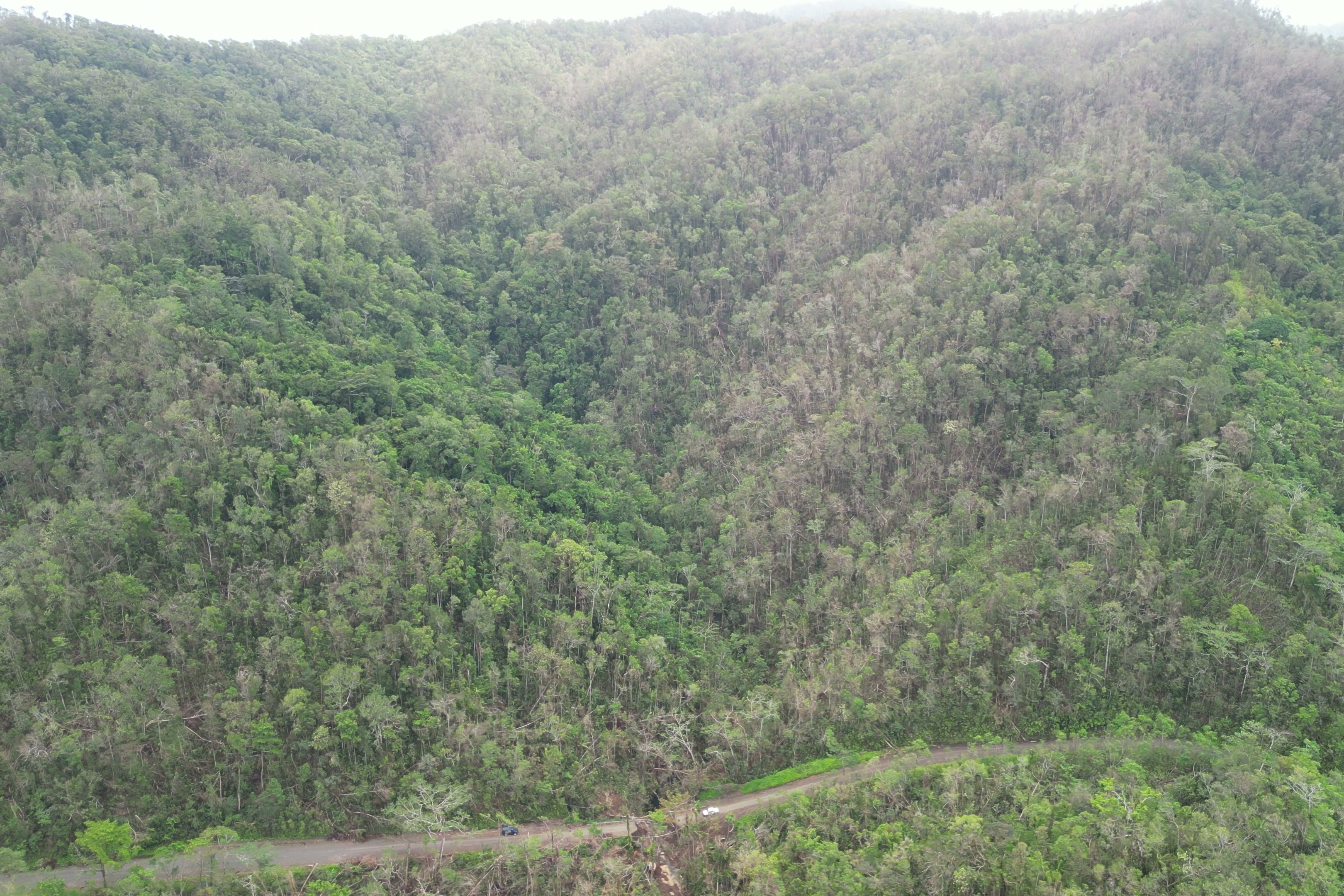
The aerial survey revealed accumulated water and a significant amount of fallen trees and debris around the creek. We then expanded the survey area to examine the entire catchment.(Photo 4 and Photo 5)
Fortunately, no large-scale landslides or debris flows were identified. However, the survey suggested that fallen trees and sediment, likely carried downstream during the cyclone that affected Papua New Guinea in early April, had blocked the culvert beneath the road embankment.
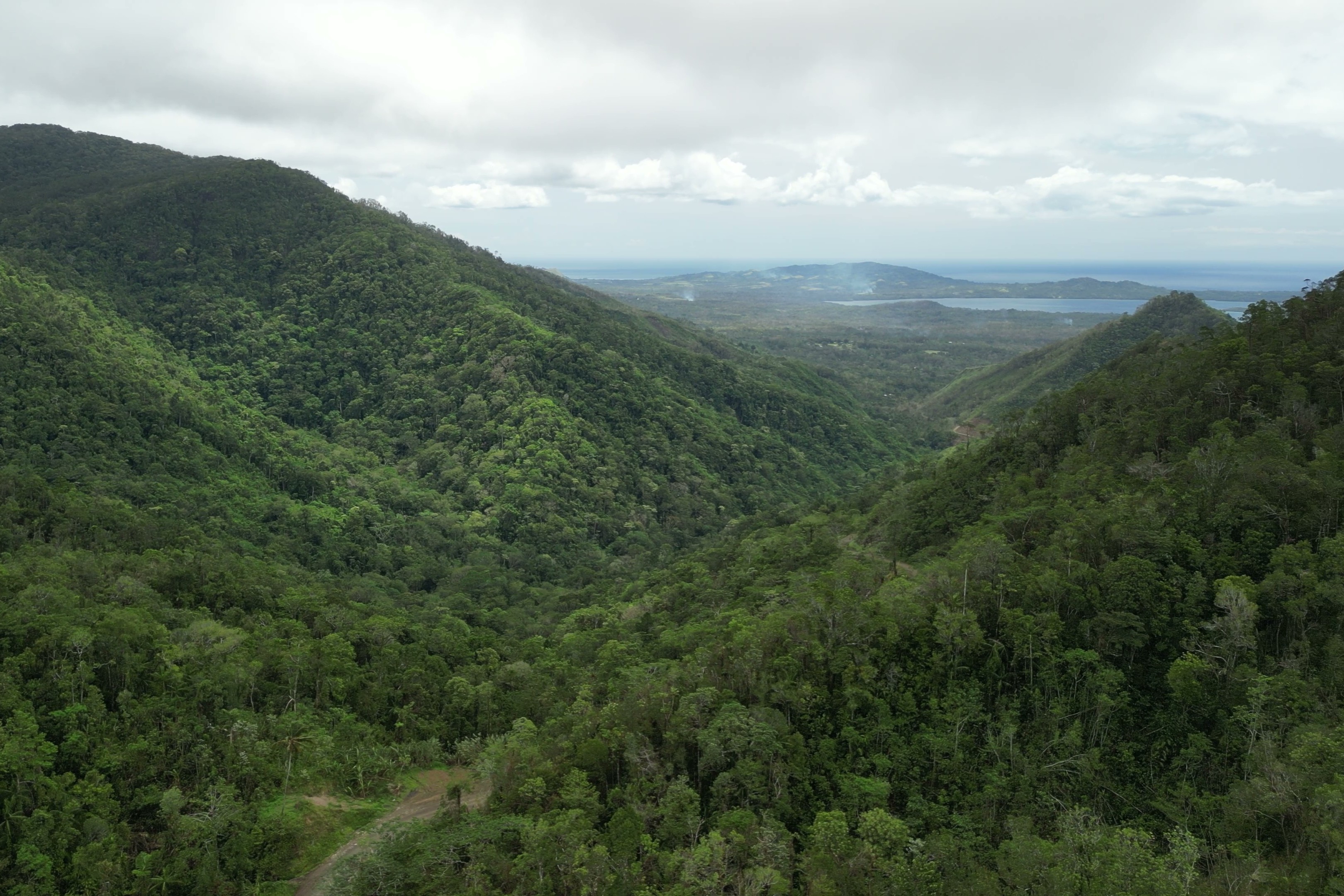
As a result, the drainage capacity of the culvert was reduced. When heavy rainfall occurred later in April, water levels rose upstream and eventually washed away a section of the embankment. Based on these findings, future recovery works will need to focus not only on restoring the damaged road but also on improving drainage capacity and removing debris from upstream areas to reduce the risk of similar damage occurring again. To complete the investigation, we used the drone to inspect nearby sections of the road corridor toward the Solomon Sea. We confirmed that there were no major slope failures or shoulder collapses in the surrounding area.
(Photo 6)
The drone images collected during this assessment were also shared with local media and have helped provide information to residents regarding the condition of the road and ongoing recovery efforts.
Roads are more than just infrastructure. They are vital lifelines that connect people to schools, health services, jobs, and markets. When a road is damaged, the impact extends beyond transportation and affects entire communities.
According to media reports, at least 11 people lost their lives as a result of the cyclone that affected Papua New Guinea in April 2026. We would like to express our deepest condolences to the families and communities affected by this disaster. We also sincerely hope for the swift recovery and reconstruction of the impacted areas.
Through the JICA Volunteer Program, we work alongside our PNG counterparts, sharing technical knowledge and supporting solutions to local challenges.