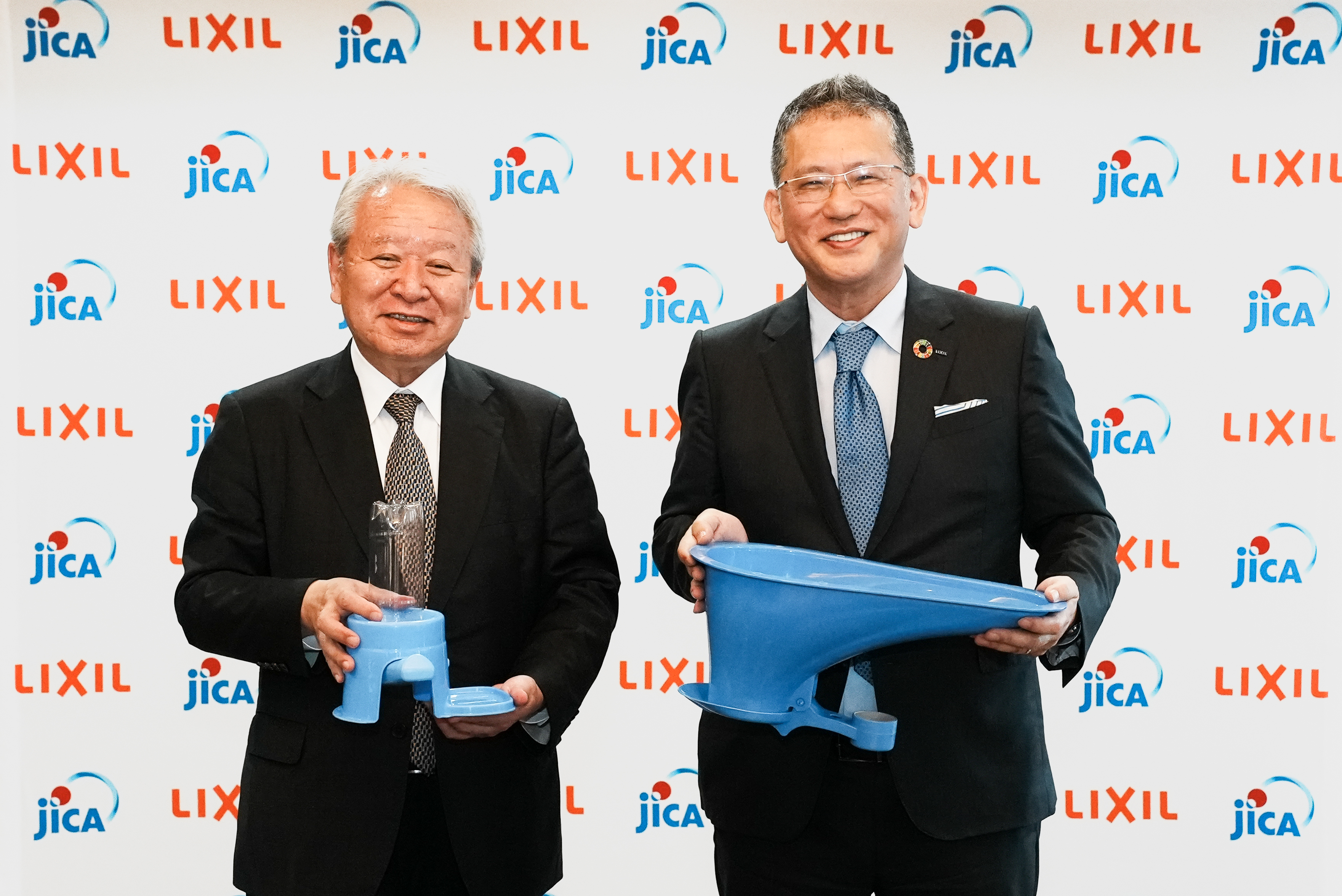
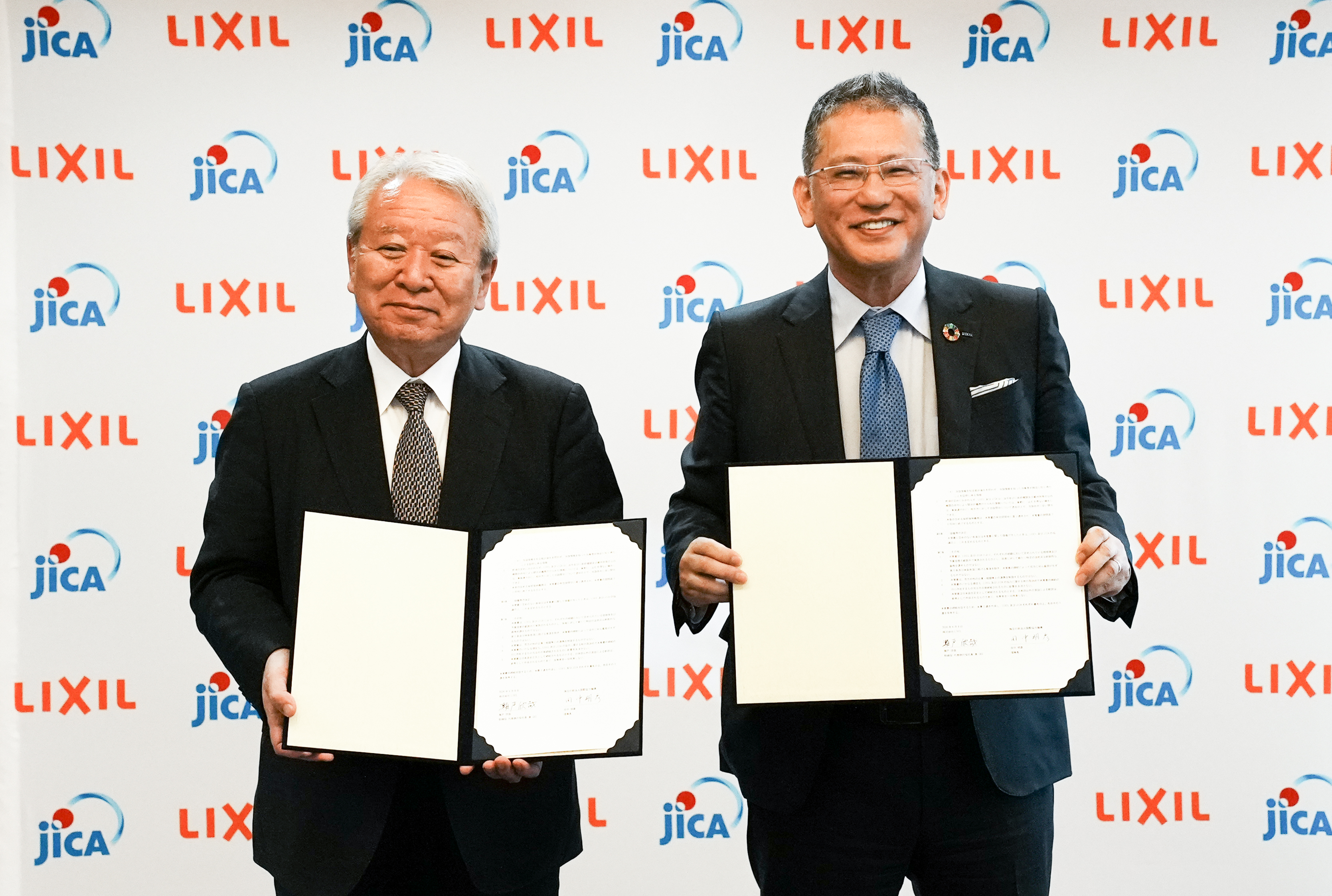
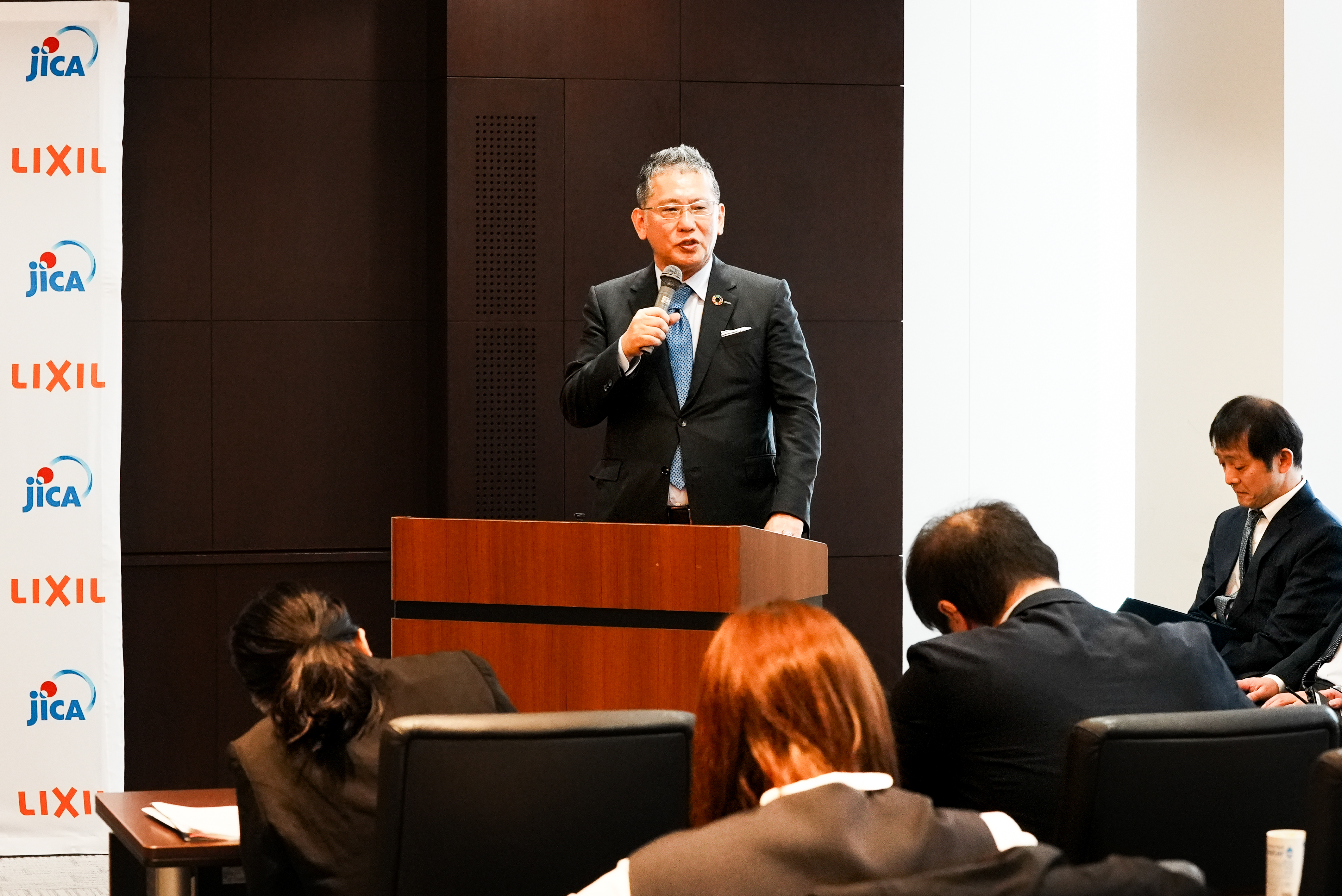
On June 8, the Japan International Cooperation Agency (JICA) and LIXIL Corporation (LIXIL) signed a Memorandum of Understanding (MOU), establishing a framework for collaboration and cooperation aimed at solving water, sanitation and hygiene (WASH) challenges in developing countries. The MOU was signed by JICA President Tanaka Akihiko and LIXIL Director, Representative Executive Officer, President and CEO Seto Kinya.
This partnership aims to further advance initiatives in the WASH sector, delivering sustainable sanitation solutions through a public-private collaboration.
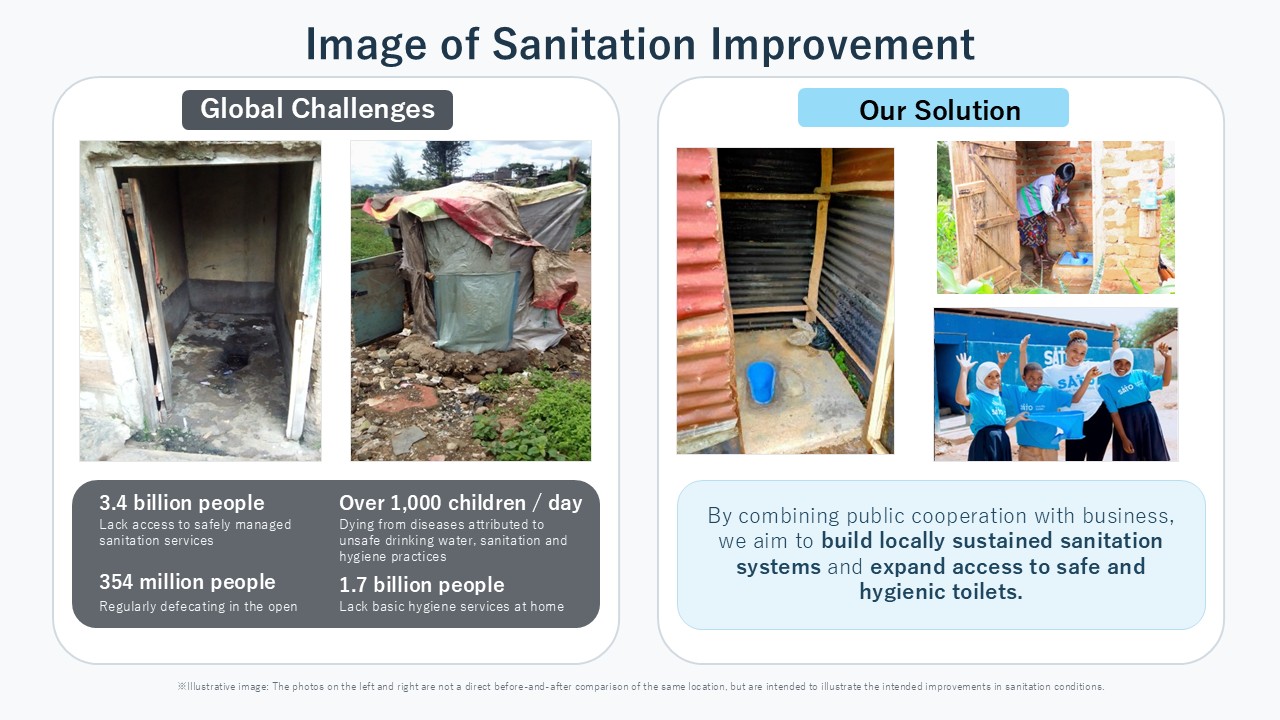
While safe WASH facilities are widely available in Japan, many people around the world still face significant challenges in accessing these services, posing significant threats to their lives.
Globally, access to safe toilets and handwashing facilities is still severely lacking in many regions, making the improvement of the sanitation and hygiene environment a critical development issue deeply connected to health, education, nutrition, gender equality, peacebuilding, and humanitarian assistance. For instance, diarrheal diseases caused by unsanitary conditions claim the lives of more than 1,000 children every day, totaling approximately 440,000 annually. Furthermore, the increasing frequency and severity of floods and droughts driven by climate change, the spread of infectious diseases, and the rising number of refugees and internally displaced persons have made the resilience of water and sanitation services more crucial than ever.
JICA has long been supporting the improvement of WASH services through water supply and sewerage systems, hygiene education, and human resource development, leveraging its longstanding partnerships with national governments and local networks. Meanwhile, LIXIL, through its social business SATO, provides accessible and affordable toilets and collaborates with various partners to build self-sustaining ecosystems in which the manufacturing, sales, and installation of its products are managed locally. Through these efforts, LIXIL has successfully improved sanitation and hygiene for over 100 million people across 59 countries and territories to date.
Under this MOU, the partnership leverages JICA’s expertise in policy and institutional development and its strong relationships with partner-country governments, together with LIXIL’s capabilities in product development, market creation, and business expansion. This synergy will drive the creation of a "Sanitation Economy," where sanitation products and services are sustainably provided through local market mechanisms. Moving beyond conventional aid approaches, this initiative strives to build a mechanism where local communities manufacture, sell, install, maintain, and continuously use these products.
Specifically, the initial phase will focus on schools, healthcare facilities, refugee and host communities as well as households in Kenya and Malawi, targeting the widespread adoption of safe toilets and handwashing facilities and promoting good hygiene practices. Concurrently, the partnership will cultivate local human resources to handle the sales, installation, and maintenance of sanitation facilities and establish supply chains, firmly embedding sanitation services as sustainable businesses.
- In Kenya, focusing on the Kakuma refugee camp and its host communities, the initiative will align with the Kenyan government's "Shirika Plan," which aims to enable refugees to participate in economic and social activities. By linking JICA’s water supply infrastructure development projects with LIXIL’s SATO business, the partnership will expand market-driven sanitation improvements to provide inclusive WASH services for refugees and host communities alike.
- In Malawi, the partnership will aim to develop resilient WASH services that function even during prolonged inundation caused by natural disasters, promoting initiatives that include the introduction of SATO products in alignment with JICA’s ongoing projects.
These initiatives do more than solve local challenges; they also contribute to international stability and infectious disease control, ultimately contributing to global security and shared prosperity. Furthermore, the partnership is expected to boost the global deployment of innovative technologies and expertise, while strengthening trusted partnerships.
By pairing JICA’s policy-formulation support through national government networks with LIXIL’s business solution and development capabilities, the partnership will drive broad societal implementation that would be difficult for any single entity to achieve alone.
Moving forward, using the achievements in Kenya and Malawi as a starting point, this "Sanitation Economy" model will be expanded to other regions, aiming to provide safe and hygienic toilets to 500,000 people across Africa, the Middle East, and Asia.
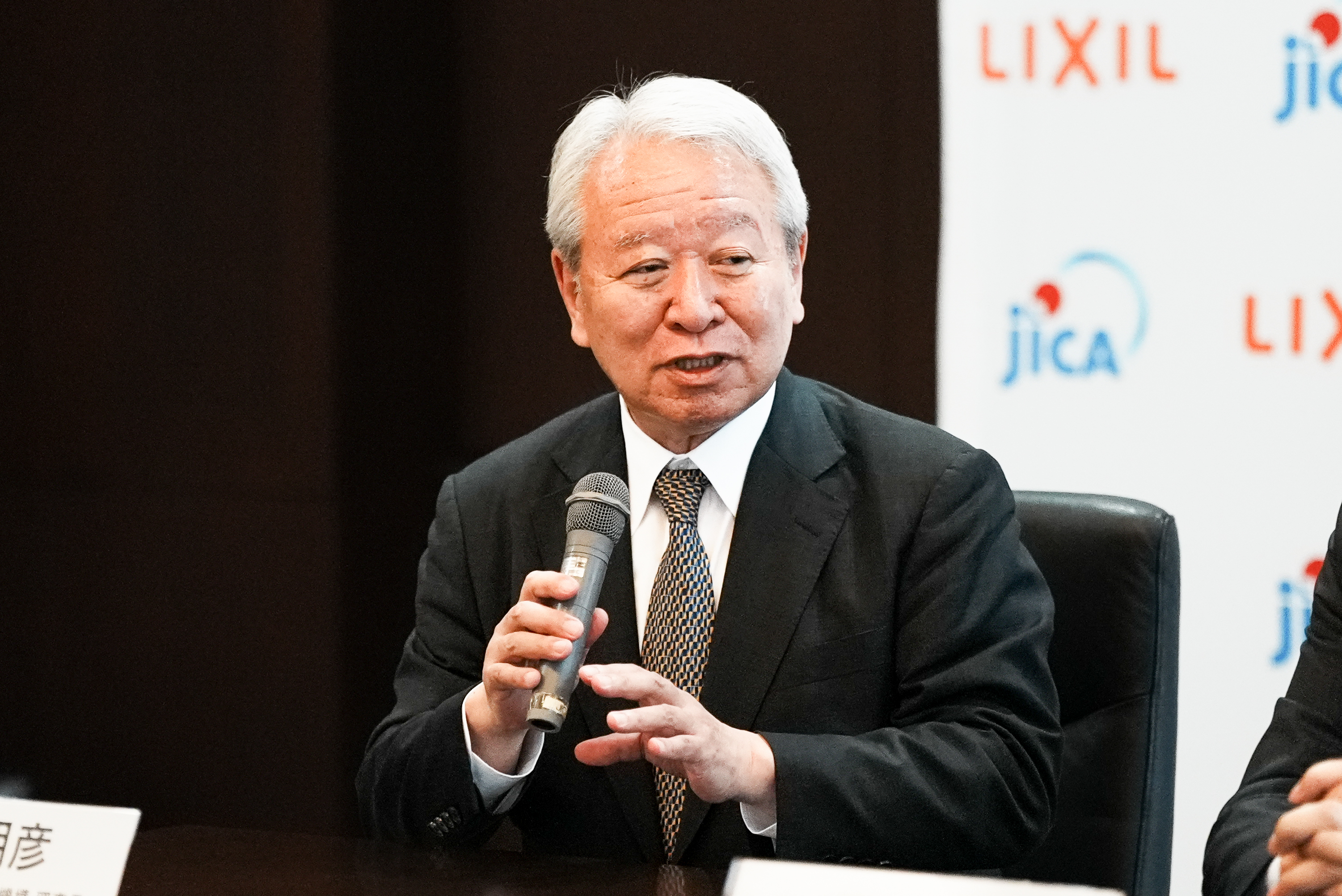
Comments by Tanaka Akihiko, President of JICA
"Global challenges surrounding water, sanitation and hygiene remain severe, and many people still lack access to safe sanitation and hygiene services. It has also become clear that providing infrastructure alone does not lead to sustained hygiene practices, highlighting the urgent need to create mechanisms that function sustainably on the ground. This partnership with LIXIL brings together JICA's strengths in building institutional frameworks and working closely with governments with LIXIL's expertise in product development, market creation, and business expansion in the field. By doing so, we aim to move beyond conventional aid approaches and realize a 'Sanitation Economy' where sanitation services can be sustained locally. By accumulating concrete achievements on the ground, starting with Kenya and Malawi, we will deliver sustainable changes to the lives of people in developing countries through this model of Japanese public-private partnership."
Comments by Seto Kinya, President and CEO of LIXIL
"Globally, approximately 3.4 billion people still lack access to safely managed sanitation services. LIXIL has set a goal to improve sanitation and hygiene for the 'next 100 million people' by the end of the Japanese fiscal year ending in March 2031. To address complex and profound global challenges, including sanitation access, refugee self-reliance, and climate change, we must further accelerate the creation of a market-driven 'Sanitation Economy' that grows autonomously within local communities, leveraging this new public-private partnership with JICA and national governments."
Reference: Pillars of Collaboration
1. Assessments
and
Interventions
to
Address WASH
Challenges in Developing Countries
: Through JICA’s technical cooperation, survey, and financial cooperation projects, the parties will jointly assess and address WASH challenges arising in contexts such as refugee situations, infectious disease outbreaks, disasters, and climate change.
2. Awareness-R
aising
and Educational Activities on
WASH
Challenges in Developing Countries
: To contribute to the achievement of the SDGs, the parties will implement awareness-raising campaigns, development education, training programs, and events both domestically and internationally to promote understanding of WASH issues and encourage behavioral change.
3. Information Exchange
on WASH
Challenges in Developing Countries
: To enhance project quality and effectiveness, the parties will continuously exchange information on WASH needs and response measures tailored to regional and thematic priorities.